.png)
 简体中文
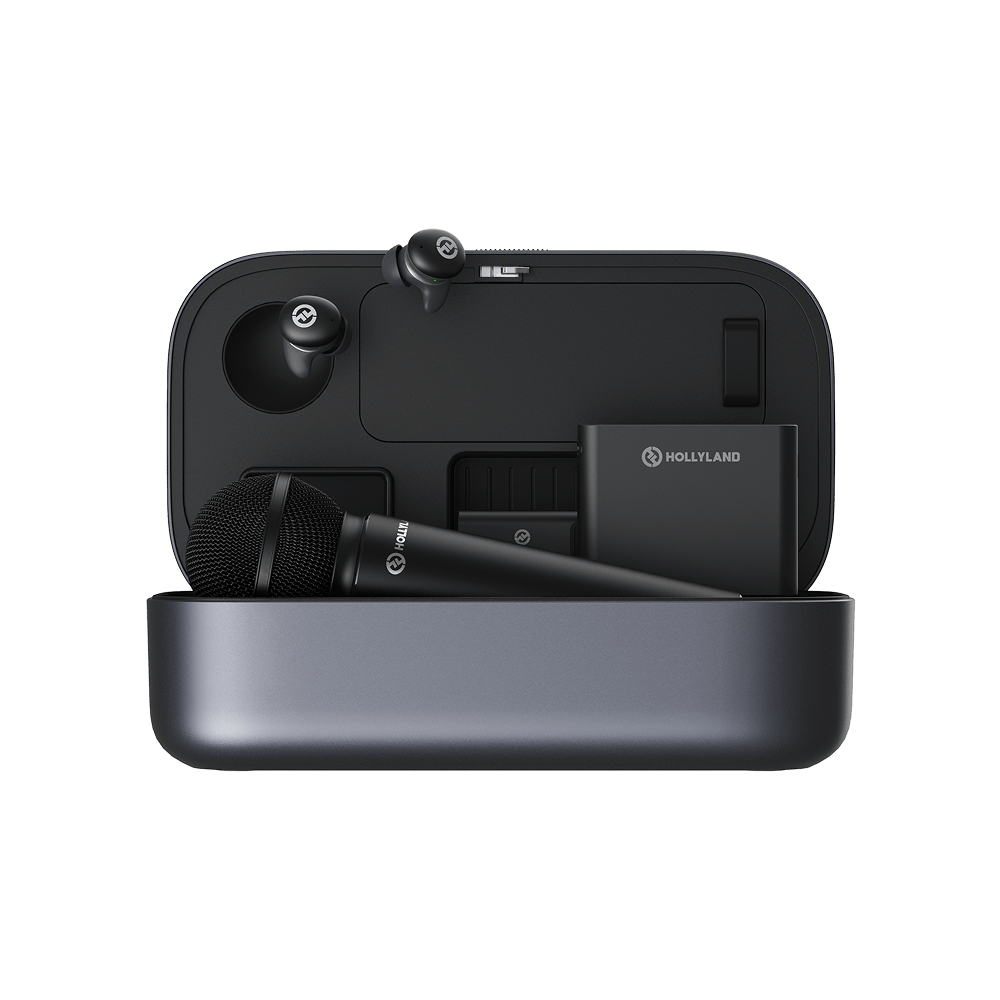
MELO P1
Record guitar, sing, stream — one wireless system does it all
- 25mm Large-Diaphragm Condenser
- 32-bit Float / 48kHz
- All-in-One Wireless System

Capture your acoustic guitar's full warmth and detail without breaking the bank. Whether you're recording at home, creating content, or live streaming, this guide covers the best budget microphones for acoustic guitar — with expert picks matched to your setup and goals.
Works with smartphones, laptops & audio interfaces via USB-C · No audio interface required
Record guitar, sing, stream — one wireless system does it all
The microphone type you choose shapes your acoustic guitar's recorded tone more than any other single factor — including price.
Condenser microphones are the standard choice for acoustic guitar recording. Their wide frequency response (typically 20Hz–20kHz on quality condensers) captures the full harmonic picture of an acoustic instrument — the warmth in the low-mids, the sparkle of fingerpicked strings, and the subtle room character that makes acoustic recordings feel alive. In a reasonably quiet space, a budget condenser on a stand will outperform a dynamic at the same price point on nearly every acoustic guitar track.
Dynamic microphones trade some high-frequency detail for durability and noise rejection. Their natural roll-off in the upper frequencies is actually useful in untreated rooms or noisy environments — they pick up less room reverb, ambient hum, and flutter. Many budget dynamics also double as reliable vocal mics, which can justify the purchase for singer-songwriters who need to cover both bases.
Clip-on / instrument microphones attach directly to the guitar body, eliminating the need for a stand entirely. They're practical for live performance or quick mobile recordings, but generally deliver less tonal depth and natural character than a well-positioned stand-mounted mic.
At a glance:
n- Clean home recording, detailed tone capture → Condenser on a stand
n- Untreated room, noisy environment, live use → Dynamic
n- Live performance, maximum portability → Clip-on
This question trips up many first-time buyers — and the answer directly affects your total upfront cost.
XLR microphones deliver the highest signal quality but require an audio interface (or mixer) between the mic and your computer or phone. The interface converts the analog signal to digital and provides phantom power, which most condenser mics need to operate. If you're building a longer-term home studio setup, XLR gives you the most upgrade flexibility — but budget an additional $30–$100+ for a basic interface.
USB microphones plug directly into a laptop or desktop with no additional hardware. They're genuinely plug-and-play: open your recording software, select the mic, start recording. Sound quality at budget price points has improved significantly, making USB condensers a practical and popular entry point for home recording and content creation.
Mobile-compatible microphones (USB-C, Lightning, or TRRS) connect directly to smartphones and tablets. Worth considering if your entire recording workflow runs on a mobile device — but verify compatibility with your specific device before purchasing.
Simple rule:
n- Already own an interface? → An XLR mic will generally give you more performance per dollar.
n- Starting from scratch and want simplicity? → A USB mic is the faster, lower-cost starting point.
Most budget acoustic guitar microphones use a cardioid polar pattern — and that's exactly what you want.
A cardioid mic captures sound from the front while rejecting sound from the sides and rear. For acoustic guitar recording, this means:
Multi-pattern microphones (with switchable omni or figure-8 modes) exist in the budget category, but the added cost and complexity delivers little practical benefit for most acoustic guitar applications. Cardioid is the right default for the vast majority of recording scenarios.
Even a quality budget microphone will underperform if the room is working against it. Before buying, honestly assess your recording space.
If your room has some natural acoustic treatment — rugs, curtains, bookshelves, soft furniture:
n- A condenser microphone will reward you with open, detailed acoustic tone
n- A reliable starting position: 6–12 inches from the guitar, aimed at the 12th fret or the junction between the neck and the upper bout, angled slightly toward the soundhole
If your room is completely reflective or noisy (hard floors, bare walls, HVAC hum, street traffic):
n- A dynamic microphone's natural high-frequency roll-off acts as a passive noise filter
n- Alternatively, look for mics with onboard hardware-level noise cancellation — processing that happens in the microphone's signal chain itself, not just a software filter applied in post-production
On AI noise cancellation: Some microphones feature onboard AI noise reduction. Look for systems where this processing is designed to reduce ambient sound — traffic, fans, HVAC — without suppressing the guitar's natural tonal character. The goal is signal isolation, not frequency shaping. When evaluating, check whether the noise cancellation is optimized for clarity or aggressively tuned for voice, as voice-optimized processing can thin out an acoustic guitar's warmth.
For budget buyers, versatility is often the most important value lever.
If you only need to record acoustic guitar in a fixed home studio setup, a dedicated stand-mounted condenser — XLR or USB — is your most efficient investment. Single-use simplicity, maximum value for the recording task.
If you also sing, a large-diaphragm cardioid condenser with a full frequency range can capture both guitar and vocals in a single take — a workflow many singer-songwriters prefer, and a genuine way to stretch a limited budget further without buying two separate microphones.
If you also stream, create video content, or perform live, the value equation shifts considerably. A setup that handles acoustic guitar, vocals, live streaming, and real-time monitoring in a single portable package can justify spending slightly more than a single-use guitar mic — because you're replacing several purchases at once.
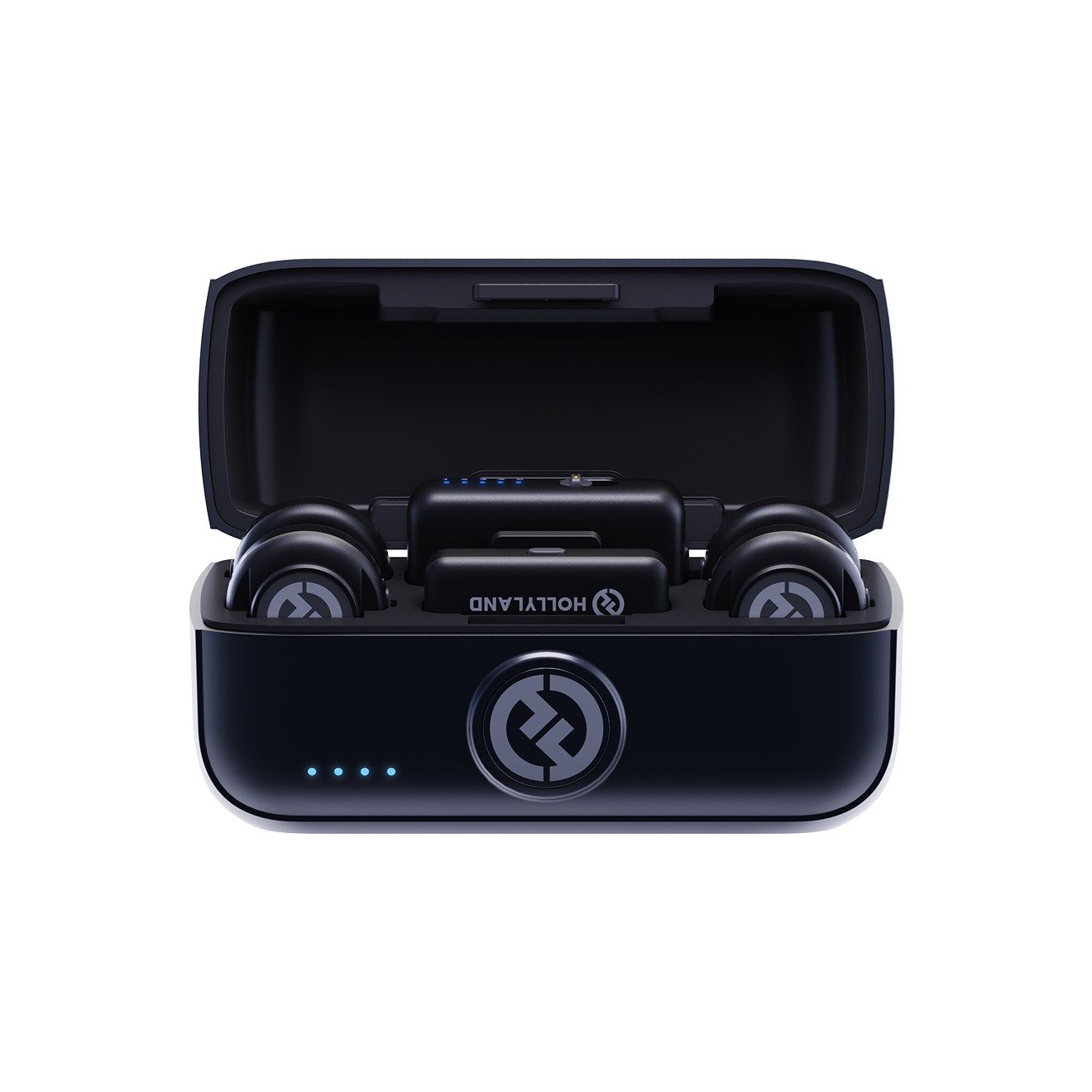
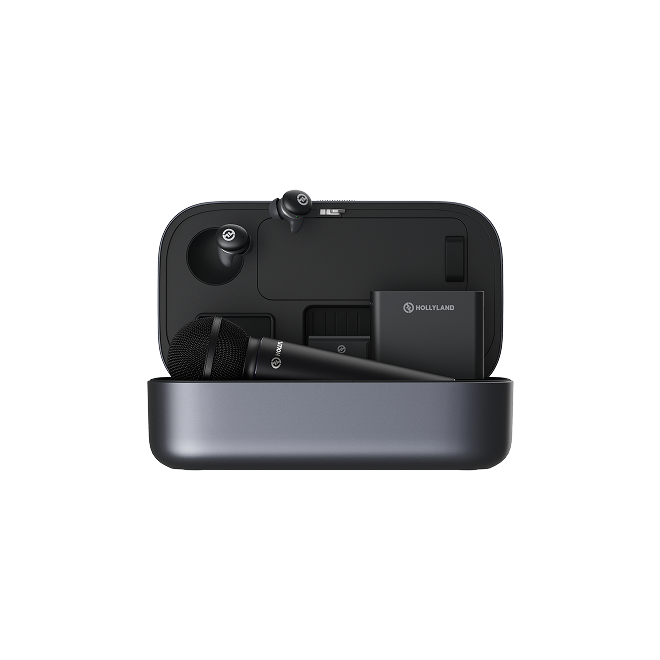
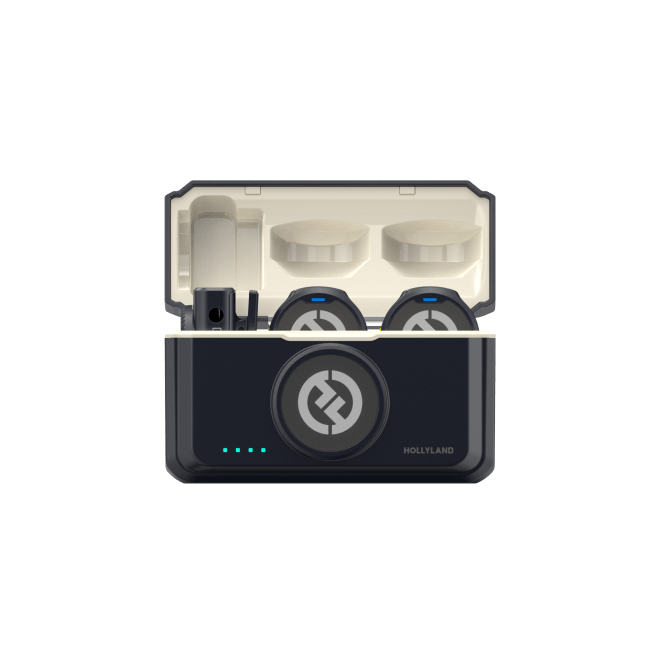
For this specific user — creators and performers who need more than a dedicated guitar mic — the Hollyland MELO P1 is worth evaluating. Its 25mm large-diaphragm condenser capsule (20Hz–20kHz, cardioid) is well-suited for acoustic guitar recording when positioned on a stand, and its 32-bit float / 48kHz output captures the instrument's full dynamic range with no risk of clipping or gain-staging errors. The integrated wireless system handles vocals, live streaming, and zero-latency monitoring in the same portable package — giving buyers who would otherwise purchase a guitar mic and a streaming mic separately meaningful combined value from a single rig.
How and where you record determines how much portability should factor into your decision.
Fixed home setup:
nPrioritize sound quality and connection simplicity over everything else. Portability is a non-issue — most standard mic stands and boom arms handle cable-tethered condensers cleanly.
Mobile recording and travel:
nWeight, pack size, and wireless capability become important. A large condenser on a studio stand isn't practical outside a fixed space, and cables create friction in fast-moving content creation workflows.
Key portability checkpoints before buying:
n- Case or pouch included? Protecting the mic capsule during travel is important, especially for condensers
n- Cable length — is the included cable long enough for your typical setup, or will you need an extension?
n- For wireless systems: What is the actual transmission range, and is there perceptible latency? 2.4GHz transmission generally delivers lower latency than Bluetooth audio, which matters for real-time monitoring during recording or performance
n- Battery life: For wireless or battery-powered mics used in long sessions or live performance, aim for at least 8 hours of continuous use per charge. Systems with a dedicated charging case that significantly extends total system battery life add meaningful convenience for creators who record on the go
I love my new LARK M2 mics. These were so good, and I really enjoyed testing out the new LARK M2 from Hollyland.
Sarah Grace Tech Creator · 3.2M YouTube subscribers
The Hollyland LARK MAX is the wireless microphone system with the clearest and crispest audio of any wireless mic system I have ever tried.
Goenrock Cinematographer · 107K Instagram subscribers
LARK MAX is doing an excellent job of dropping the sound of the air conditioner, which is something l always have to remove and post with our shotgun mic.
Film Riot Filmmaking Educator · 2.2M YouTube subscribers
