.png)
 简体中文
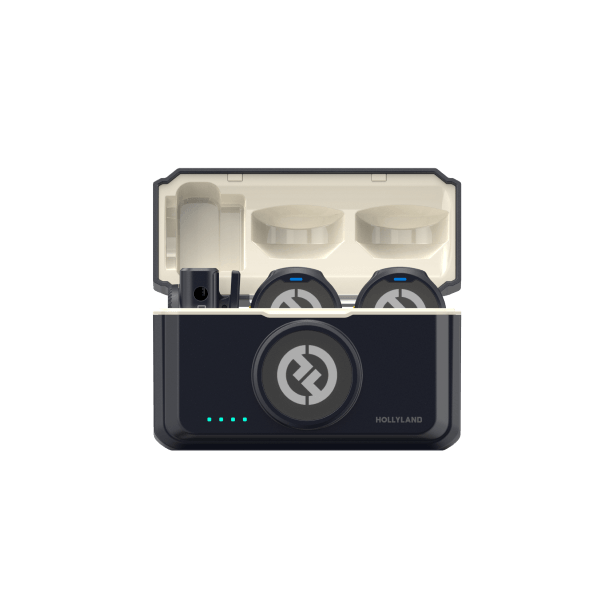
LARK M2
Plug-and-play wireless for creators and camera users
- 24-bit / 48kHz
- 300m LOS Range
- ENC Noise Cancellation

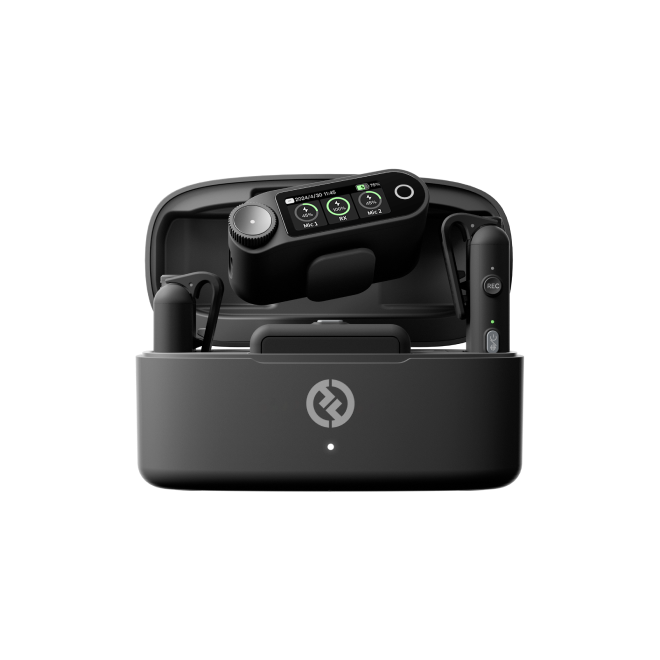
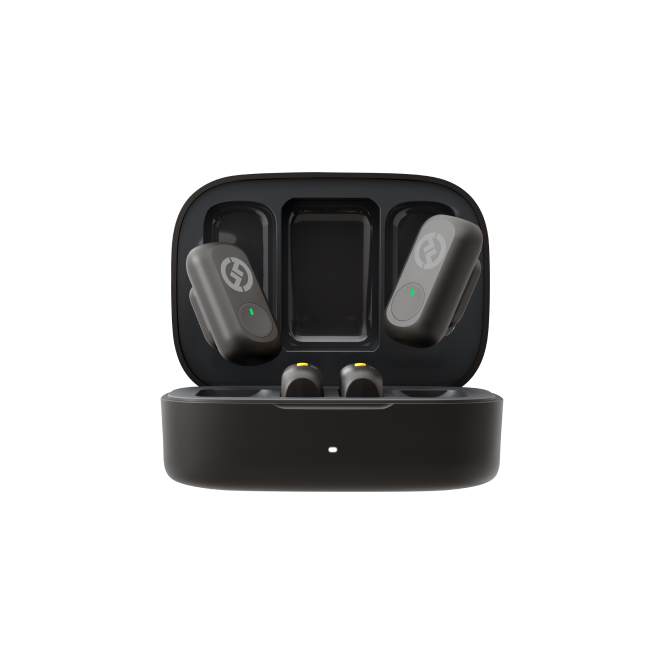
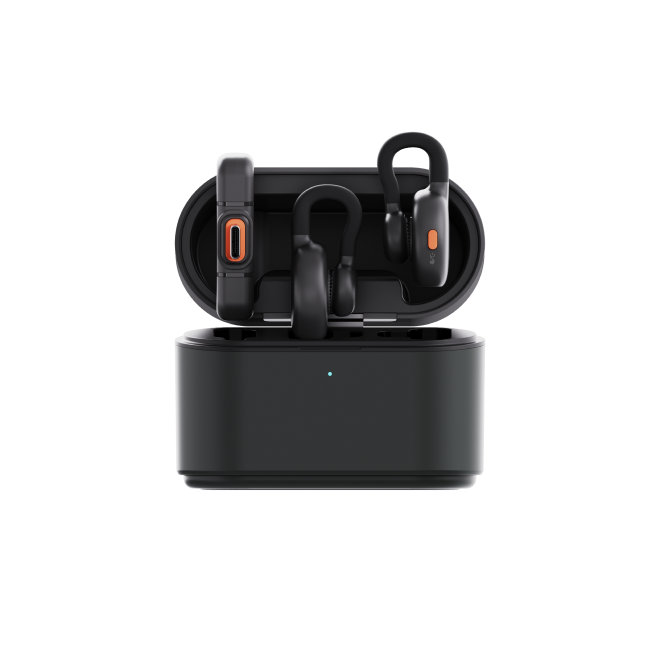
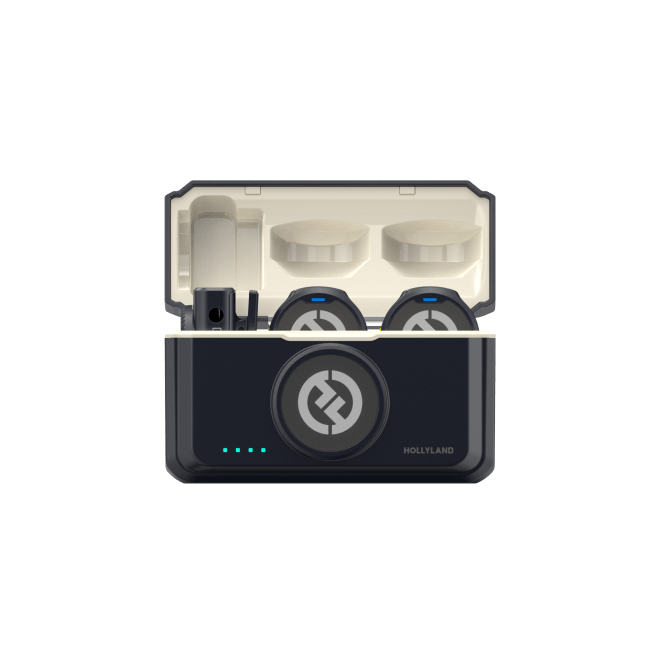
Explore the Hollyland LARK lineup — six wireless lavalier microphones engineered for creators, filmmakers, and live presenters. From featherlight plug-and-play clip-ons for smartphones to 32-bit float multi-TX systems with AI noise cancellation and 340m range, find the right wireless lav mic for your workflow.
Compatible with iOS, Android, DSLR & mirrorless cameras — no drivers required
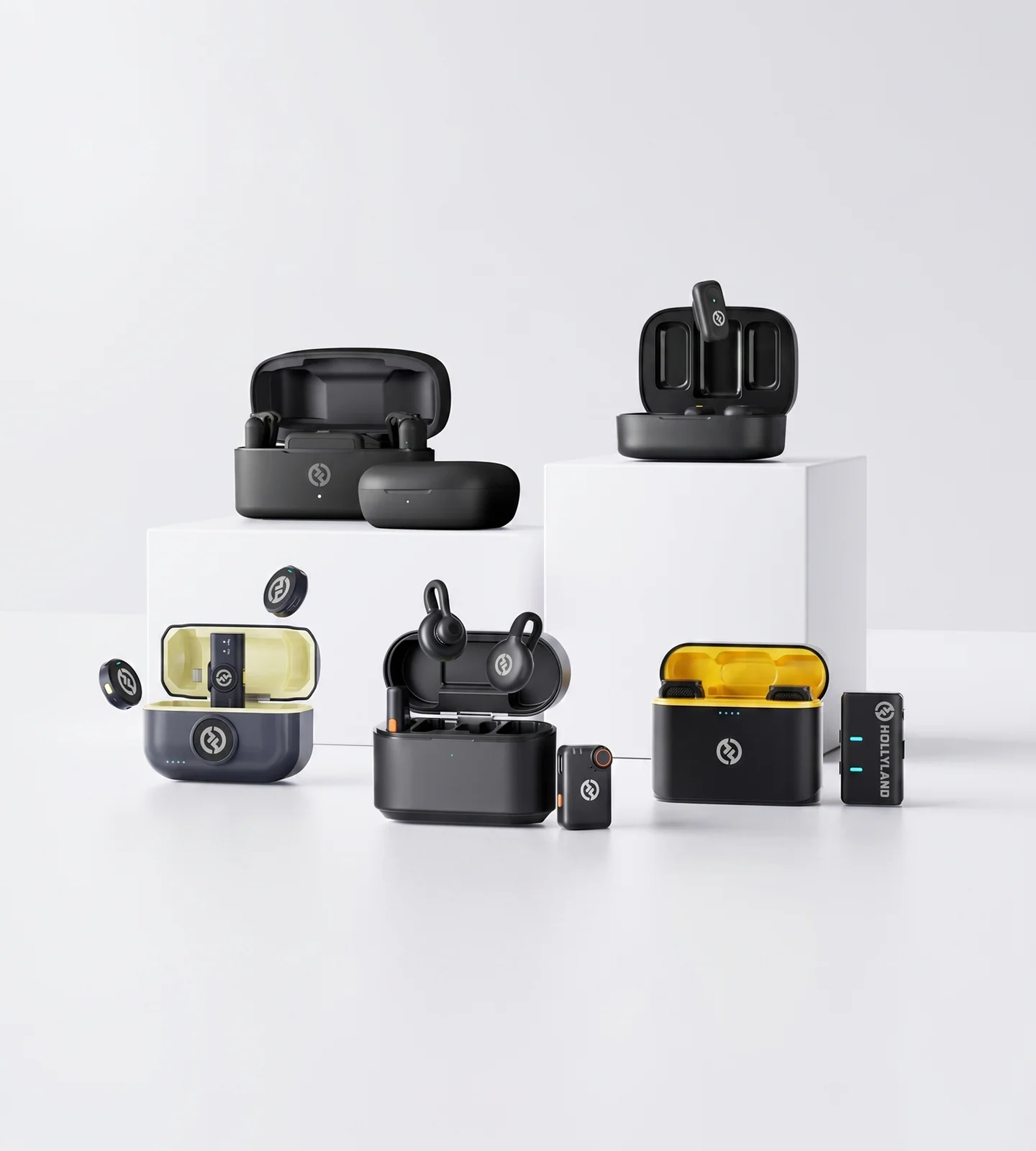
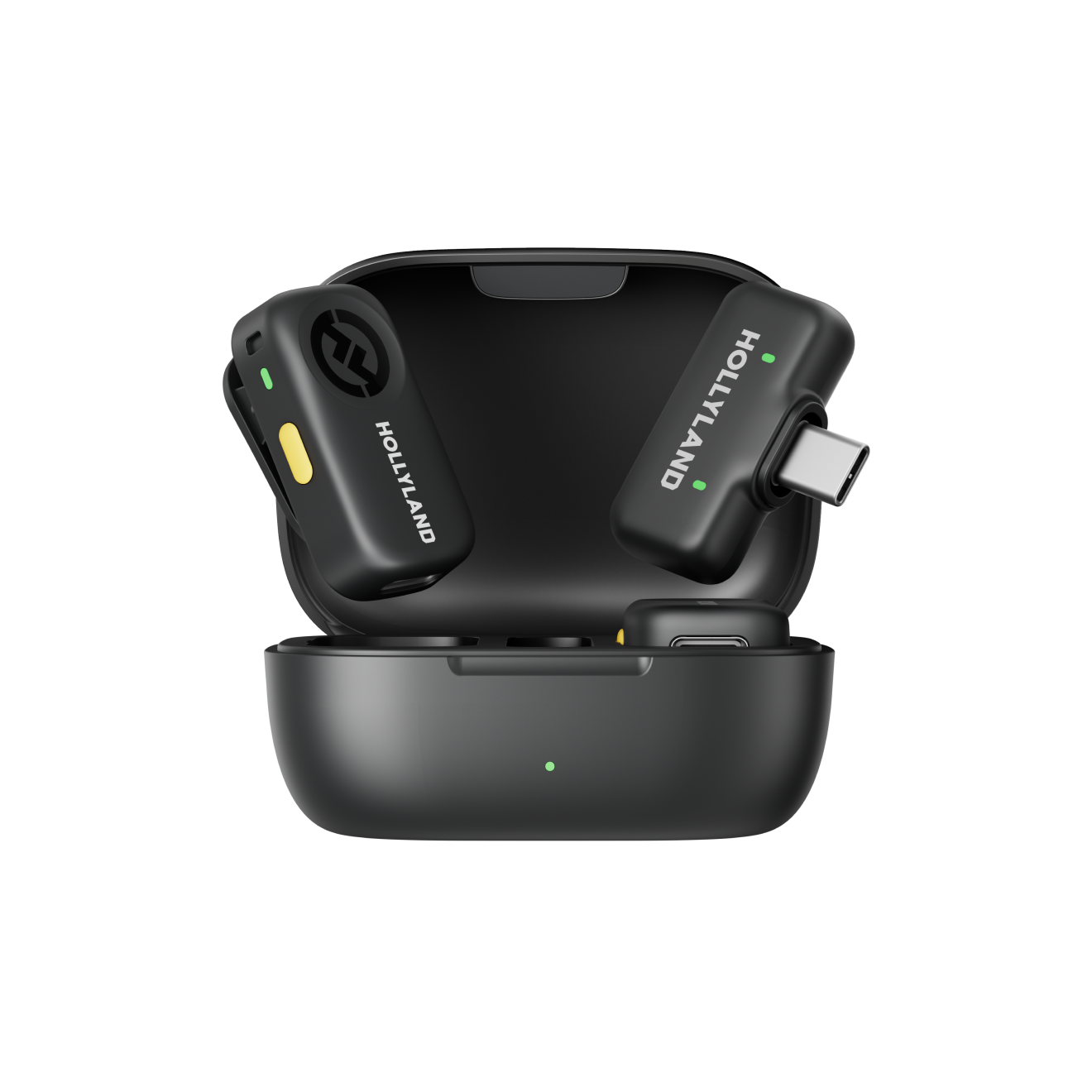
Plug-and-play wireless for creators and camera users
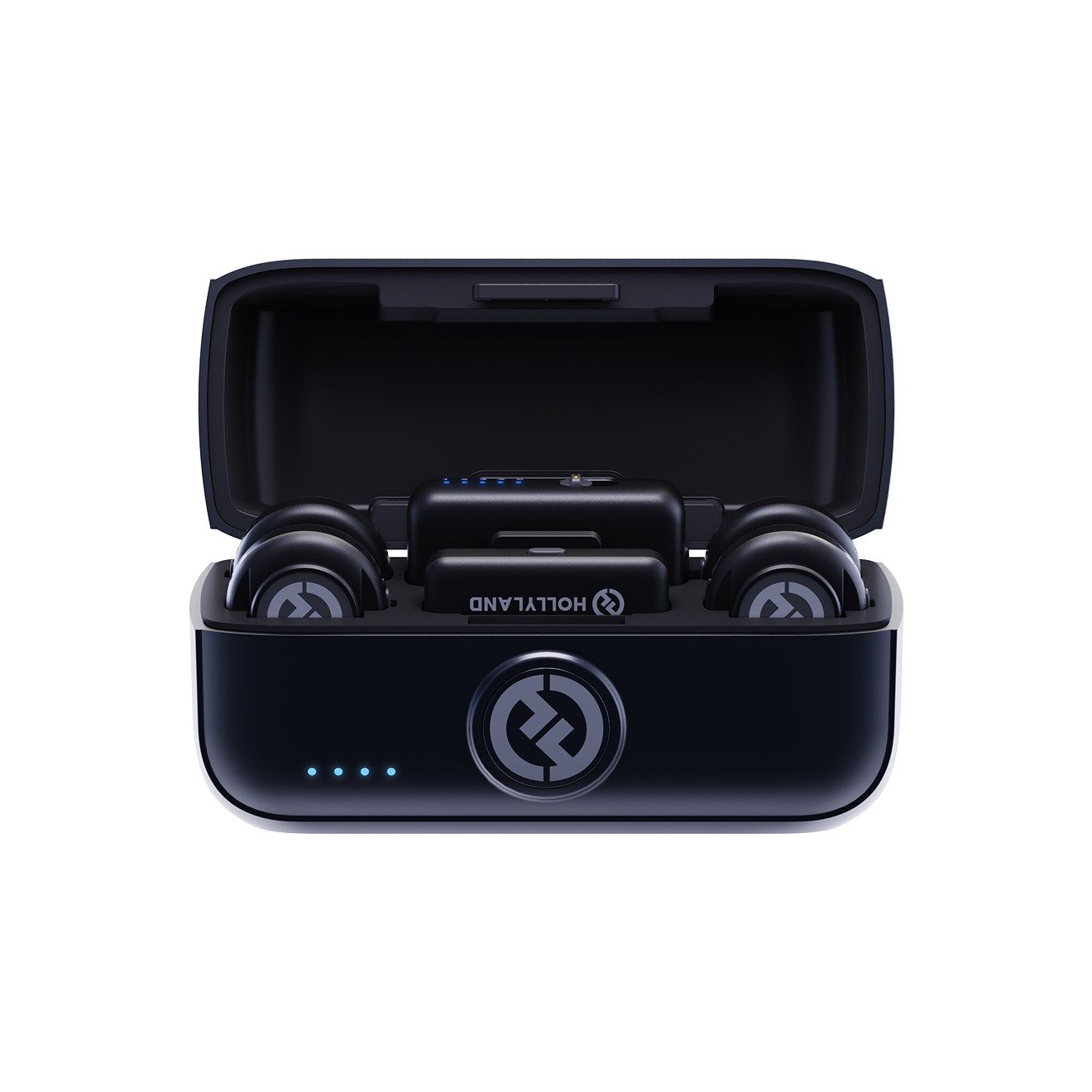
Ultra-light titanium build for invisible on-camera wear
Smartphone lavalier with intelligent noise control
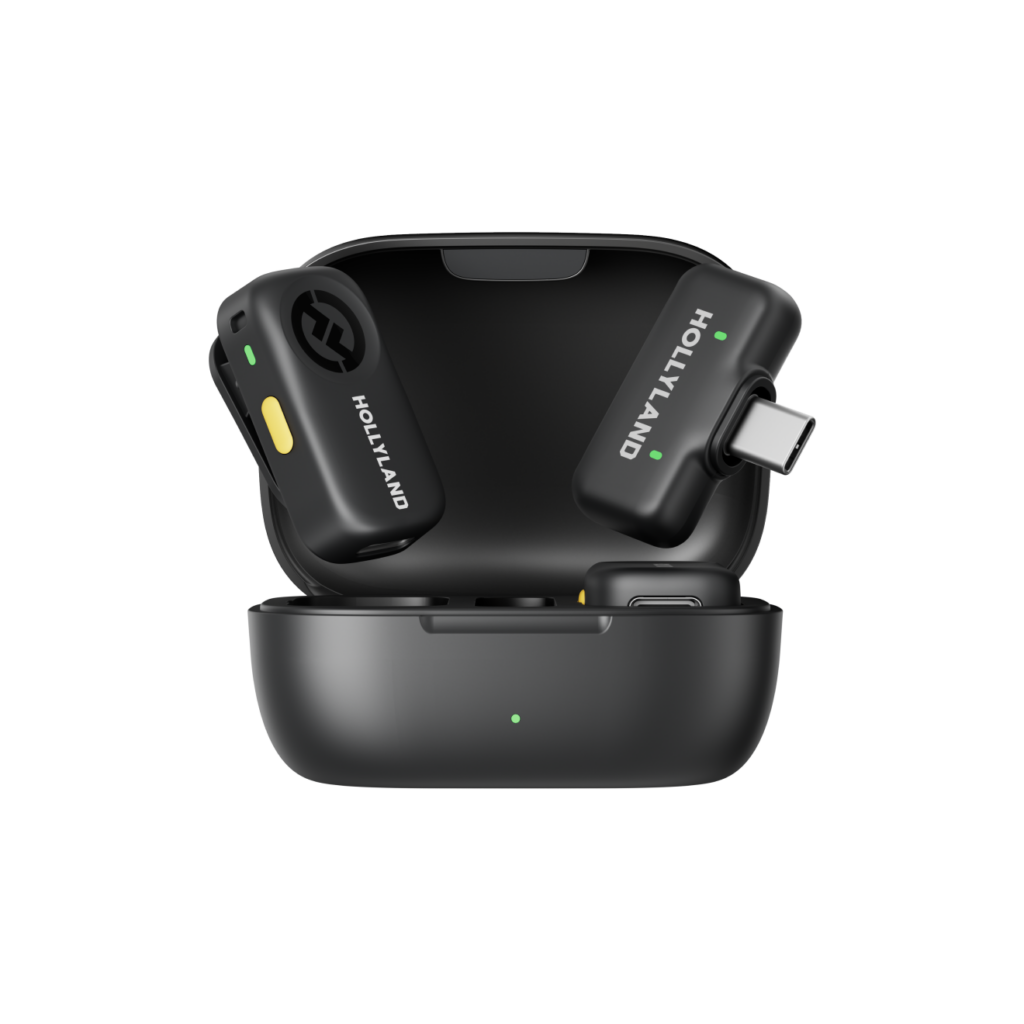
AI-powered mobile recording with built-in clip protection
Pro filmmaking with 32-bit float, timecode, and live monitoring
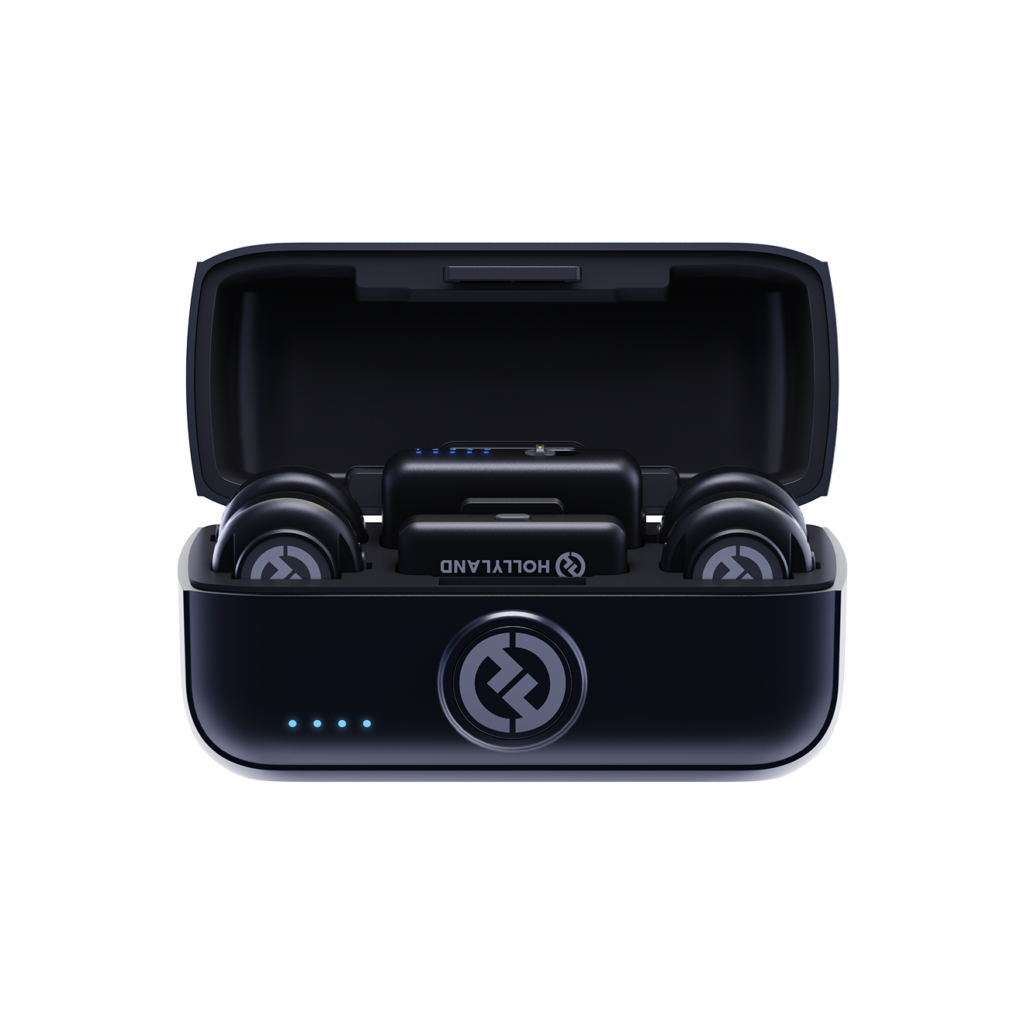
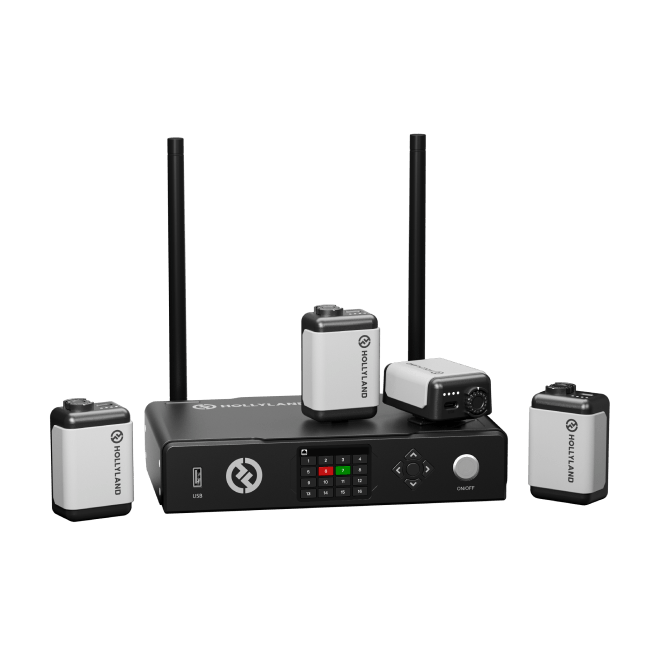
Broadcast-grade multi-mic system for full productions
| Model |
LARK M2
|
LARK M2S
|
LARK A1
|
LARK A2
|
LARK MAX 2
|
LARK M3
|
|---|---|---|---|---|---|---|
| Audio Format | 24-bit / 48kHz | 24-bit / 48kHz | 24-bit / 48kHz | 24-bit / 48kHz | 32-bit Float / 24-bit | 32-bit Float / 24-bit |
| Wireless Range (LOS) | 300m / 1000ft | 300m / 1000ft | 200m / 650ft | 200m / 656ft | 340m / 1115ft | 300m / 1000ft |
| Noise Cancellation | ENC | ENC | 3-Level Intelligent NC | AI Noise Cancellation | AI Noise Cancellation | Adaptive AI NC |
| TX Weight | 9g | 7g | 8g | 8.5g | 14g | 9g |
| TX Battery Life | ~10h | ~9h | ~9h | ~7h | ~11h | ~8h |
| Total Battery Life | Up to 40h | Up to 30h | Up to 54h | Up to 21h | Up to 36h | ~48h |
| Max SPL | 115dB | 116dB | 128dB | 120dB | 128dB | 125dB |
| Internal Recording | — | — | — | Safety Track | 32-bit Float (up to 14h) | — |
| Max TX Channels | Up to 2 TX | Up to 2 TX | Up to 2 TX | Up to 2 TX | Up to 4 TX | Up to 4 TX + 4 RX |
| Compatibility | Camera / Smartphone / Combo | Camera / Smartphone / Combo | Smartphone | Smartphone | Camera | Camera |
| Shop | Shop | Shop | Shop | Shop | Shop |
Compatibility is the first decision — and it shapes everything else.
Ask yourself first: What am I plugging this into — a phone, a camera, or both?
Bit depth determines how much dynamic range your audio system captures — and how much room you have to correct it in post.
24-bit / 48kHz is the professional broadcast standard for the vast majority of content production. It delivers clean, high-fidelity audio for vlogging, interviews, podcasting, live streaming, and most commercial or event work. For creators at any level, 24-bit is a proven, capable starting point.
32-bit float captures a significantly wider dynamic range. The practical benefit: even if your gain is set incorrectly or a speaker suddenly raises their voice mid-take, the audio can typically be recovered in post without distortion or clipping. This matters most when:
For structured film productions, broadcast work, or any shoot where the audio must be right the first time, a system with 32-bit float recording — such as the LARK MAX 2 or LARK M3 — is worth serious consideration.
Background noise is one of the most common problems in field recording. Two technologies address it at different levels:
Environmental Noise Cancellation (ENC) uses hardware-level processing at the microphone capsule to reduce ambient noise at the source. It performs well in moderate background noise — indoor environments, event spaces with background hum, or general-purpose content creation in reasonably controlled conditions.
AI-powered noise cancellation applies intelligent, real-time voice isolation to separate speech from surrounding sound. It's the stronger choice for more demanding conditions: busy streets, crowded public venues, outdoor locations with wind or traffic, and any environment where the soundscape is genuinely unpredictable.
If you record primarily indoors or in controlled settings, ENC is likely sufficient. If you frequently shoot on location where you can't manage the acoustic environment, prioritize a system with advanced AI noise cancellation.
Not all range specs are equal — and the number that matters most depends on your shooting context.
For solo content creation in a studio or small set, an NLOS range of 40–60m is more than adequate. For event presenters, on-location filmmakers, or anyone recording across a large space, a longer LOS range and a solid NLOS figure give you meaningful headroom.
Adaptive frequency hopping is worth prioritizing if you regularly shoot in crowded RF environments — conferences, city streets, or multi-camera productions — where competing wireless devices can cause interference. A system that automatically shifts frequency maintains a stable, dropout-free connection without any manual intervention.
Running out of power mid-take is one of the most avoidable disruptions on set. When comparing systems, look at two figures:
For travel shoots, day-long events, or multi-location days, total case capacity matters as much as the per-charge TX figure. For multi-day productions, prioritize systems with the highest combined capacity.
The best-sounding mic is useless if it's uncomfortable to wear, obvious on camera, or prone to shifting during movement.
Transmitter weights in this category range from 7g to 14g. At the lighter end, a transmitter is nearly imperceptible on clothing and straightforward to hide under fabric. Even at the heavier end, these are compact devices — but clip design and form factor still affect how securely they stay in place during active use.
If on-camera appearance and wearability are important to your workflow, look for:
How many people need to be mic'd simultaneously is a fundamental question — and one worth thinking through beyond your next immediate shoot.
If there's any realistic chance your needs will grow — from solo to interview to multi-speaker — choosing a scalable system from the start saves you from reinvesting in a new ecosystem when your workflow expands.
Different workflows call for different levels of control — and neither end of the spectrum is objectively better.
Plug-and-play systems pair and connect automatically with no drivers, no app requirement, and no manual setup. They're the fastest to deploy in the field and the most accessible for creators who are new to wireless audio. If speed and reliability are what matter most, these should be at the top of your shortlist.
App-controlled systems add an adjustability layer — gain, EQ, noise cancellation level, and monitoring — all accessible from your phone without external gear. Useful for creators who want meaningful control over their final sound without carrying a dedicated audio monitor or mixer.
Production-grade feature sets — including timecode sync, wireless audio monitoring, internal recording backup (safety track), and 32-bit float capture — are designed for structured film and video productions where precise sync, real-time monitoring, and recording redundancy are genuine workflow requirements. These features are most relevant to filmmakers, documentary crews, and broadcast professionals.
A useful rule of thumb: if you're spending more time shooting than adjusting settings, lean toward simplicity. If audio precision and post-production workflow are central to your final product, invest in the control that pro-level features provide.
I love my new LARK M2 mics. These were so good, and I really enjoyed testing out the new LARK M2 from Hollyland.
Sarah Grace Tech Creator · 3.2M YouTube subscribers
The Hollyland LARK MAX is the wireless microphone system with the clearest and crispest audio of any wireless mic system I have ever tried.
Goenrock Cinematographer · 107K Instagram subscribers
LARK MAX is doing an excellent job of dropping the sound of the air conditioner, which is something l always have to remove and post with our shotgun mic.
Film Riot Filmmaking Educator · 2.2M YouTube subscribers
The right LARK depends on your device, workflow, and production level:
Not sure where to start? The LARK M2 is a dependable all-rounder for most creators.
Compatibility varies by model:
If you're unsure which version to choose, the Combo version of the LARK M2 or M2S is the safest option for mixed-device workflows.
All LARK mics are engineered for strong, stable transmission well beyond typical shooting distances:
Line-of-sight (LOS) figures reflect open, unobstructed conditions. Real-world NLOS range — through walls, in crowds, or around obstacles — is shorter but still more than sufficient for most studio, event, and location shooting scenarios. All models use 2.4GHz adaptive frequency hopping to minimize interference and maintain a stable connection in crowded RF environments.
Every LARK mic includes active noise reduction technology, with more advanced systems on higher-tier models:
For demanding environments — street interviews, outdoor shoots, live events — the AI noise cancellation systems on the A2, MAX 2, and M3 deliver the strongest voice isolation.
TX (transmitter) battery life per charge:
| Model | TX Battery Life |
|---|---|
| LARK MAX 2 | ~11 hours |
| LARK M2 | ~10 hours |
| LARK A1 / LARK M2S | ~9 hours |
| LARK M3 | ~8 hours |
| LARK A2 | ~7 hours |
Total battery life including the charging case:
| Model | Total Battery Life |
|---|---|
| LARK A1 | Up to 54 hours |
| LARK M3 | Up to 48 hours |
| LARK M2 | Up to 40 hours |
| LARK MAX 2 | Up to 36 hours |
| LARK M2S | Up to 30 hours |
| LARK A2 | Up to 21 hours |
Every model ships with a charging case so you can top up between takes without reaching for a wall outlet.
32-bit float is a recording format that captures an exceptionally wide dynamic range — wide enough that sudden loud peaks don't clip and very quiet sounds don't get lost in noise. In practice, it means you don't need to manually set gain levels before recording; any level issues can be corrected cleanly in post-production without quality loss.
The LARK MAX 2 and LARK M3 both support 32-bit float recording. The LARK MAX 2 also stores up to 14 hours of 32-bit float audio internally on the transmitter itself as a wireless backup.
32-bit float is most valuable for filmmakers, documentary shooters, journalists, and anyone recording in unpredictable audio environments where retakes aren't always possible. For creators shooting in controlled conditions, 24-bit recording — available across all LARK models — delivers studio-grade audio quality and is more than sufficient.
Yes. Several LARK models are built for multi-mic configurations:
Multiple protection systems are available across the LARK lineup depending on the model:
For loud speakers, unpredictable environments, or any shoot where a ruined take isn't an option, the 32-bit float models or Safety Track on the A2 provide the strongest insurance.
All LARK transmitters are compact enough to clip under clothing or sit unobtrusively on a collar:
| Model | Transmitter Weight |
|---|---|
| LARK M2S | ~7g |
| LARK A1 | ~8g |
| LARK A2 | ~8.5g |
| LARK M2 / LARK M3 | ~9g |
| LARK MAX 2 | ~14g |
The LARK M2S is the most discreet option on camera — its titanium finish and no-logo design make it virtually invisible when worn on clothing. The LARK MAX 2 uses excimer nano-coated skin-friendly material for extended wear comfort. All models are light enough to conceal under a shirt or jacket for run-and-gun and film shoots.
Yes — two models include dedicated backup recording capabilities:
For any shoot where retakes aren't possible — live events, documentary interviews, or unrepeatable moments — internal recording or a safety track is an essential safeguard.