.png)
 简体中文
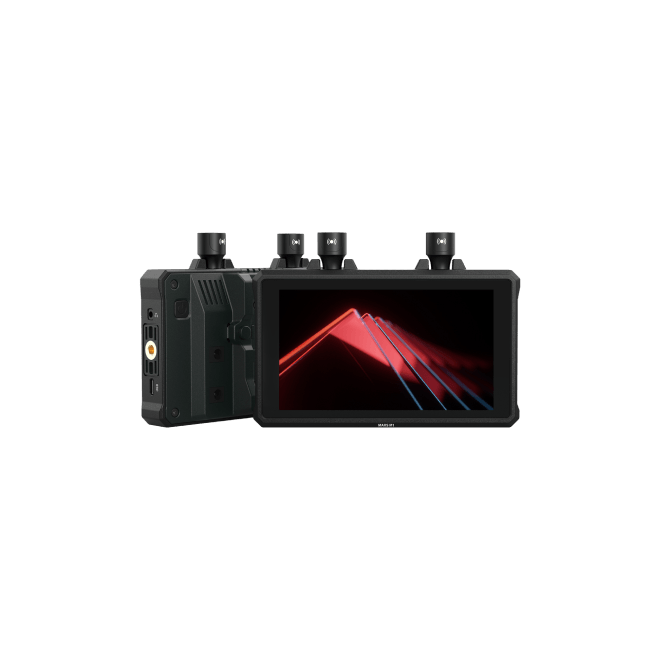
Mars M1 Enhanced
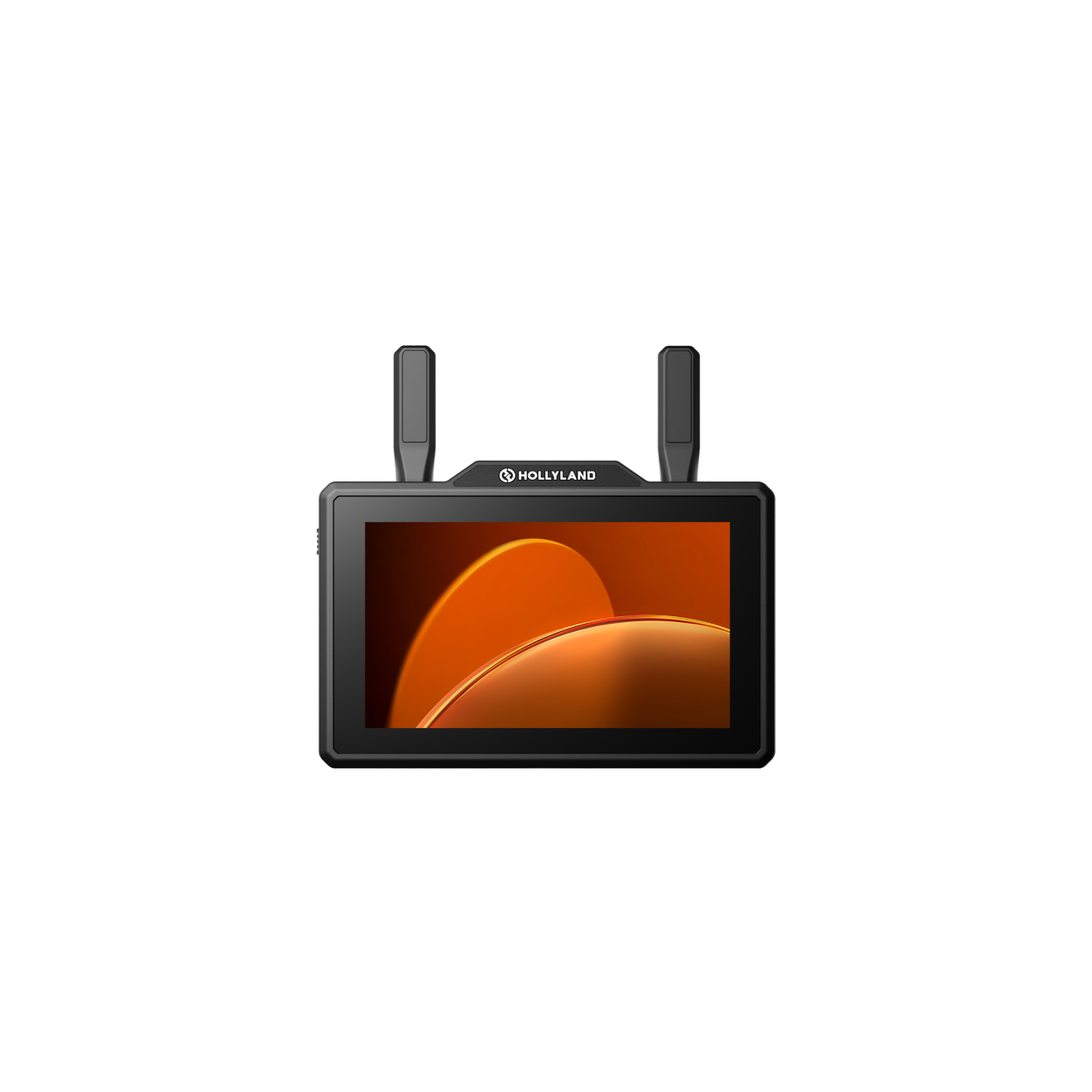
Compact all-in-one for indie filmmakers and mirrorless camera rigs
- 5.5" / 1,000 nits
- 450ft range
- HDMI + SDI

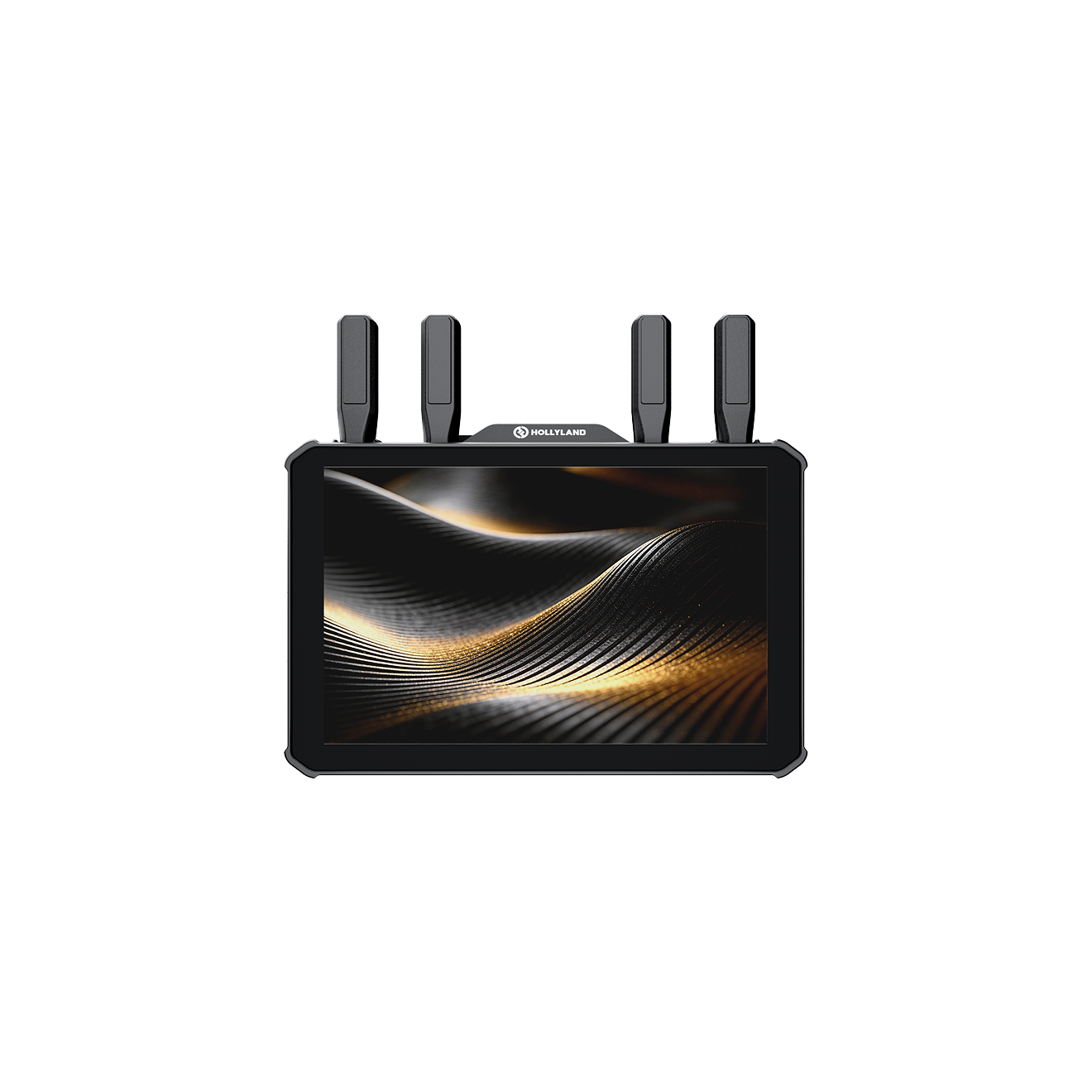
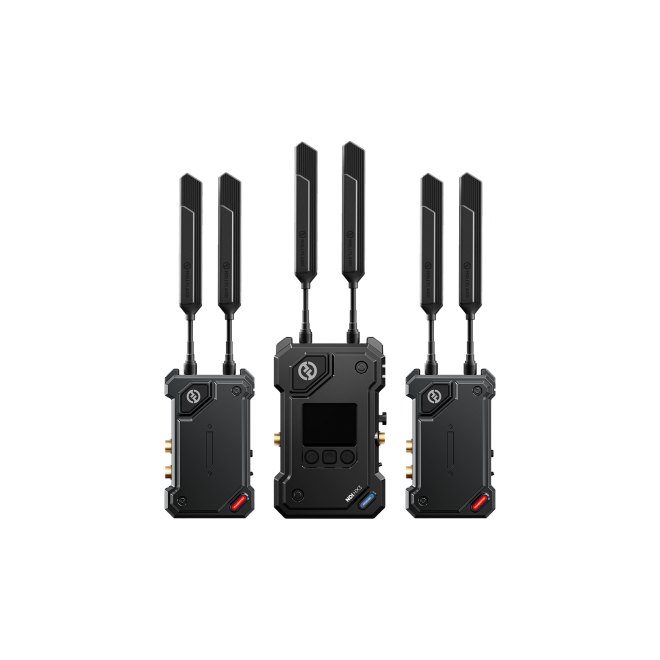
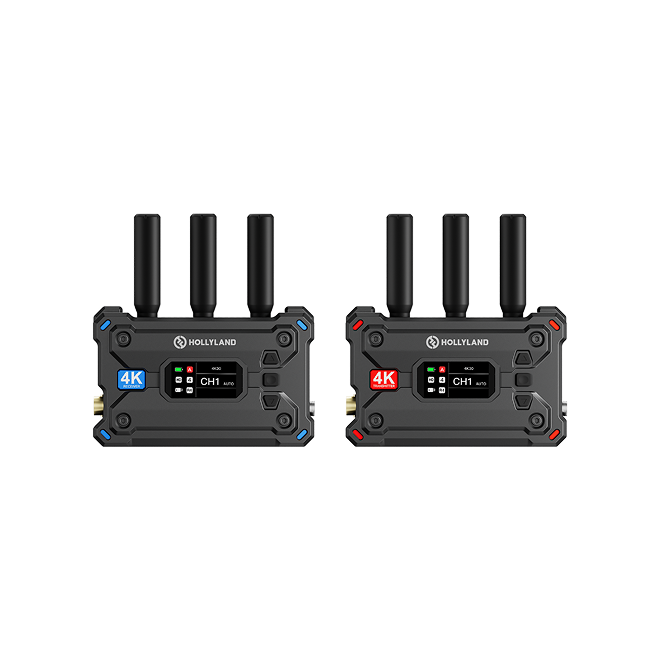
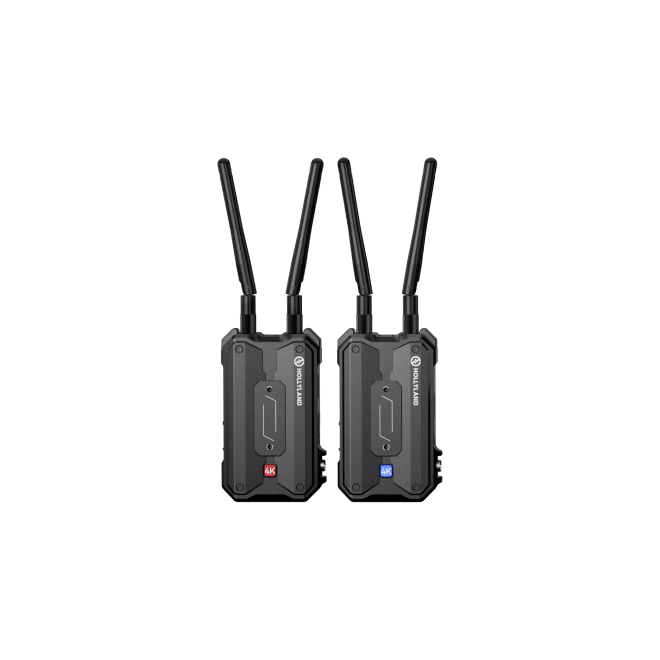
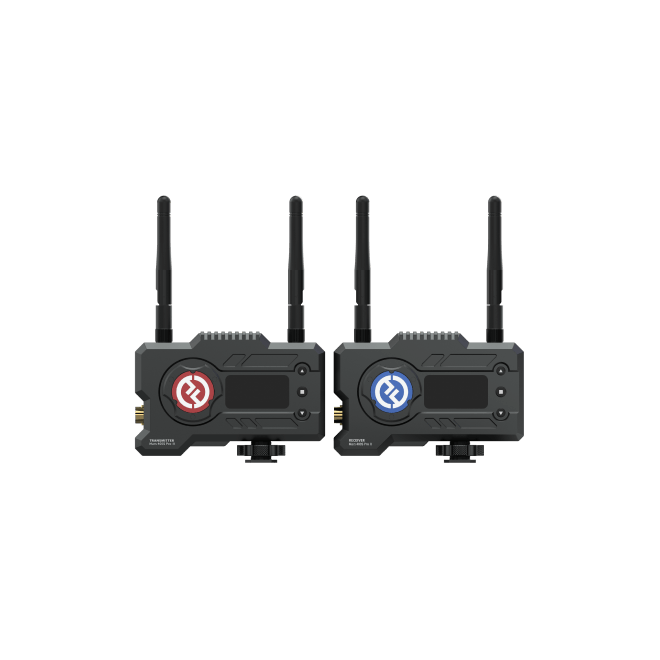
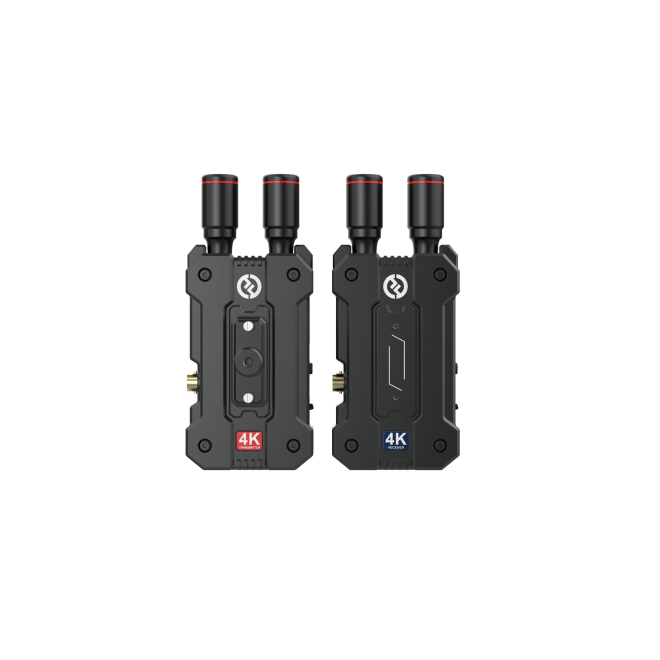
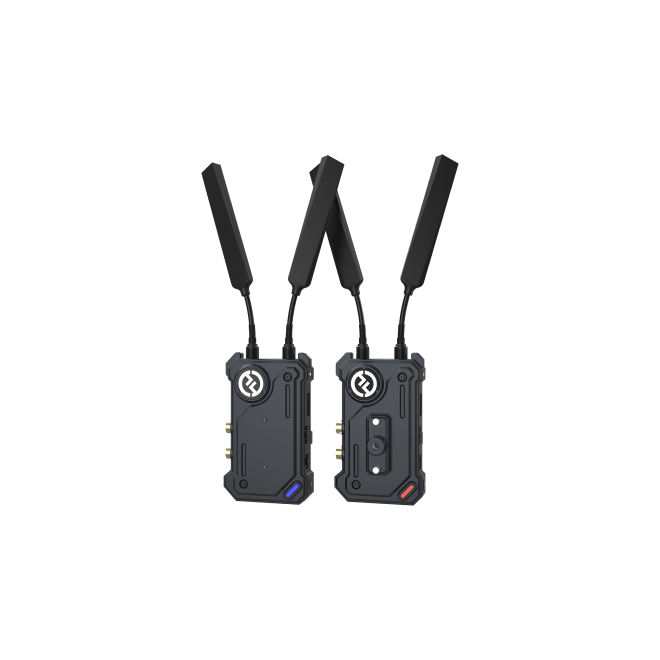
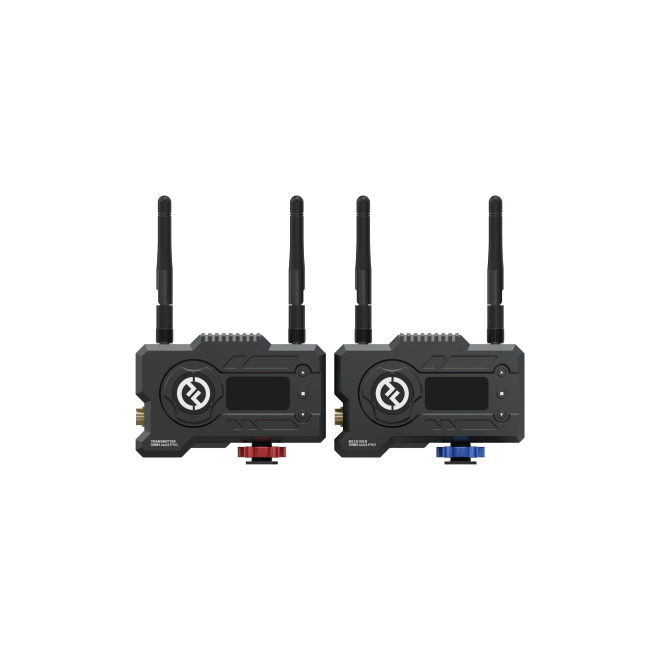
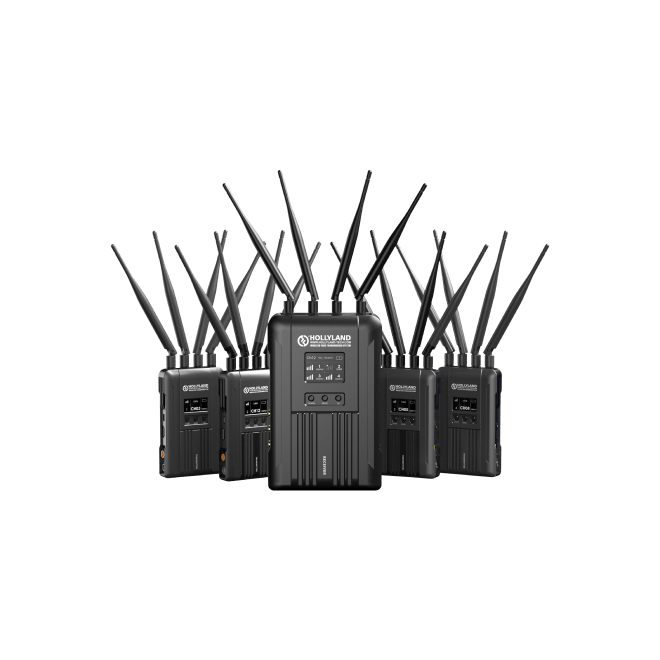
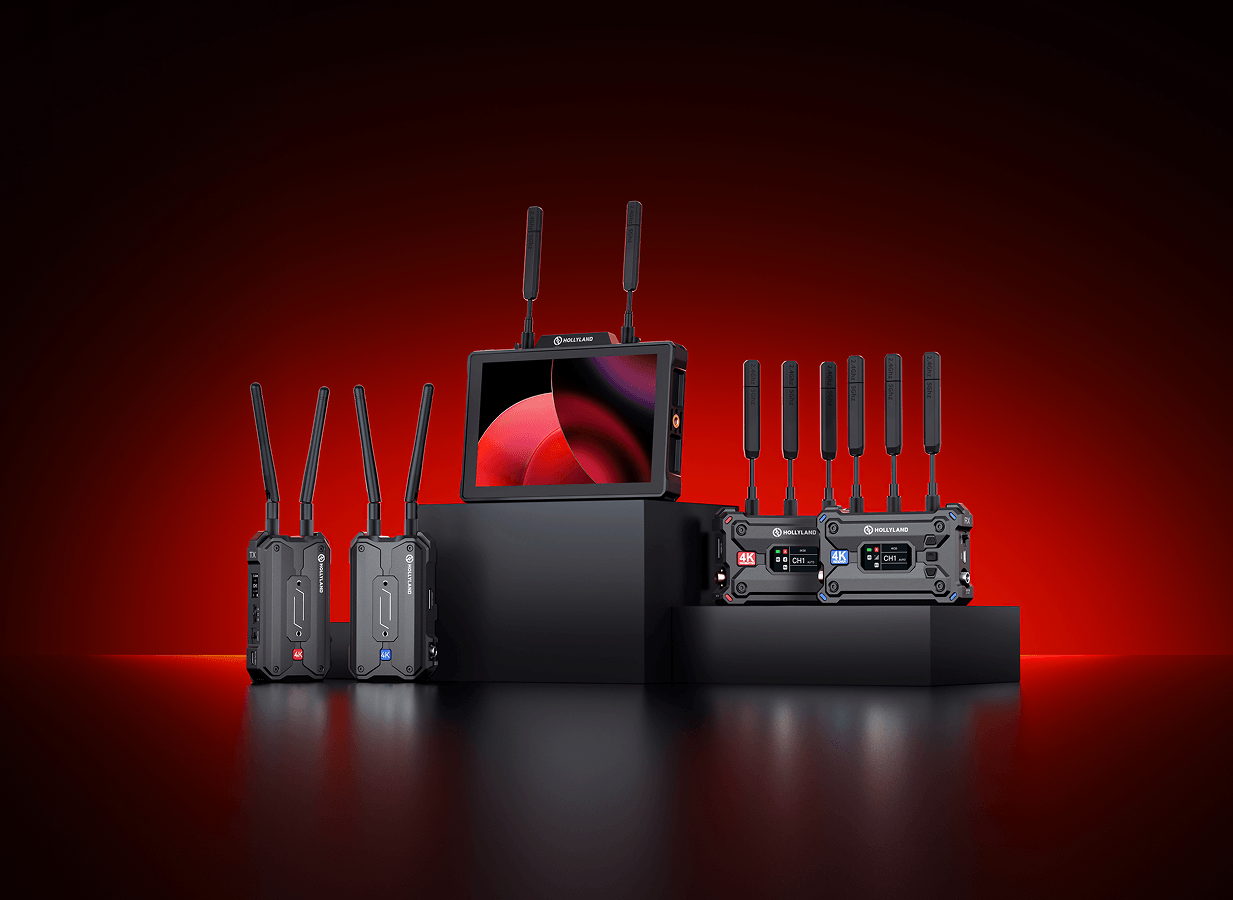
One device replaces your transmitter, receiver, and monitor. Hollyland's wireless camera monitors span from 150m entry-level to 1,000m flagships, with up to 1,500-nit outdoor displays and latency as low as 20ms — engineered for every crew size and production type.
HDMI & 3G-SDI compatible — works with mirrorless, cinema & broadcast cameras.
Compact all-in-one for indie filmmakers and mirrorless camera rigs
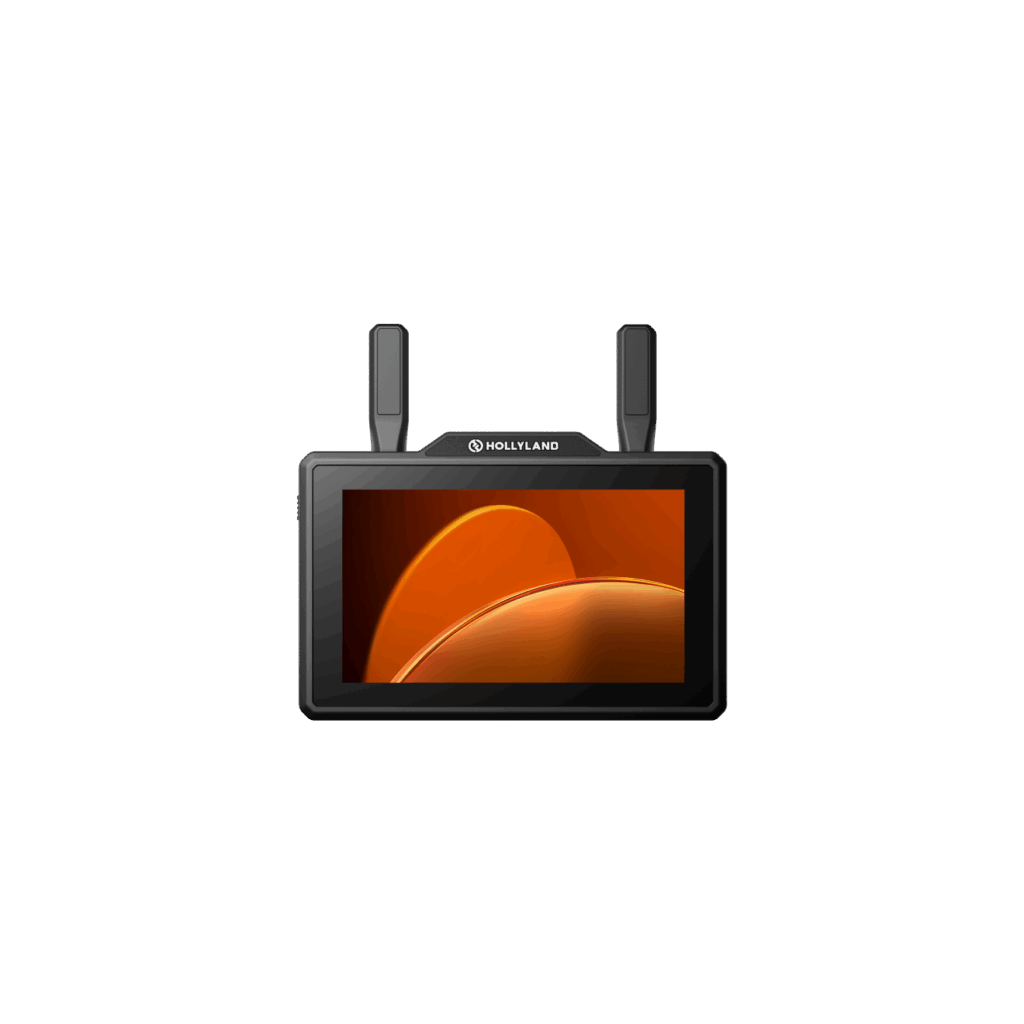
Dual-band all-in-one for run-and-gun and mobile productions
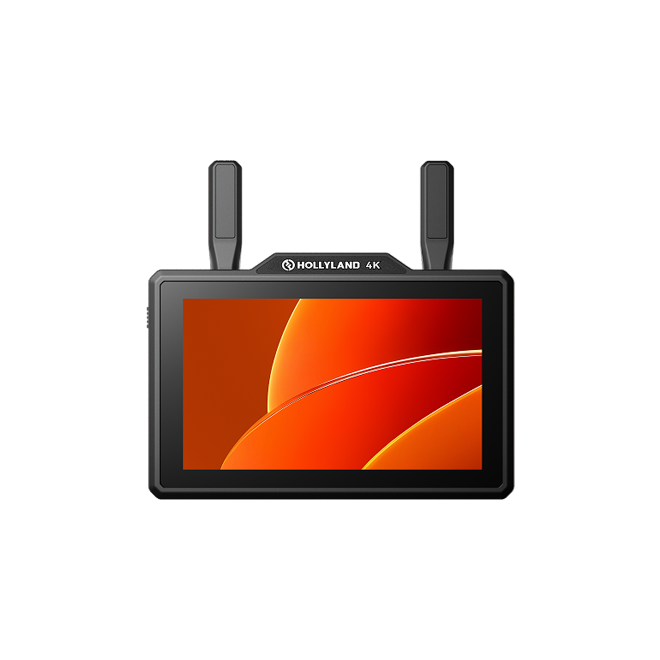
4K-ready compact monitor for cinema and high-end mirrorless workflows
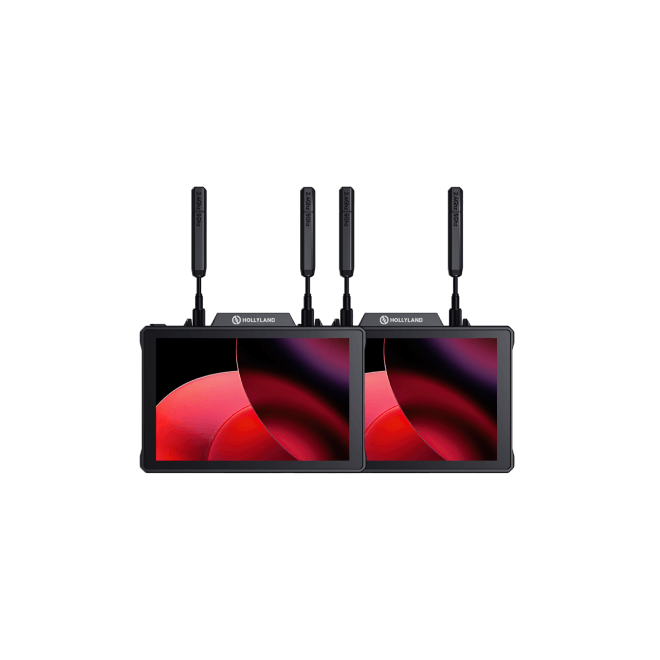
7" director's monitor with dual-camera switching for multi-camera sets
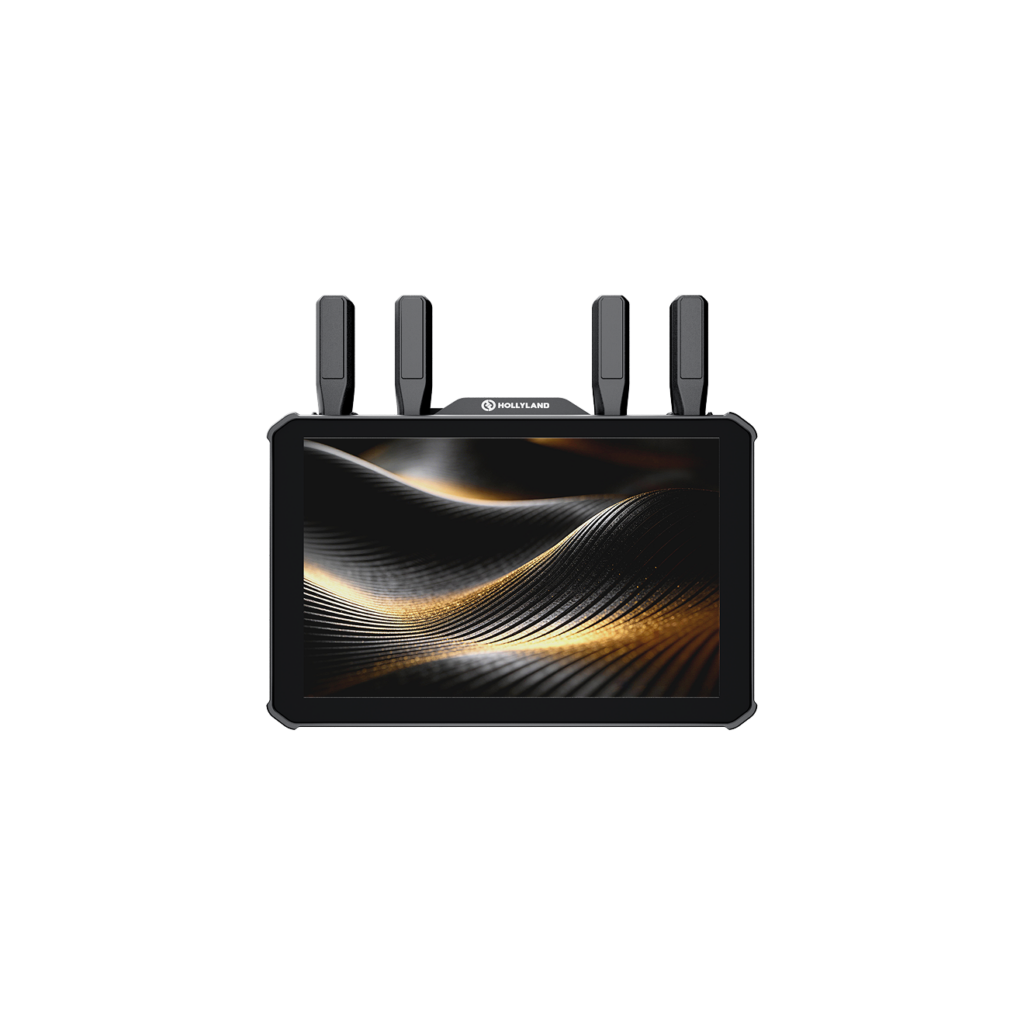
Flagship director's monitor for broadcast, commercial, and narrative productions
| Model |
Mars M1 Enhanced
|
Pyro 5
|
Pyro 5 4k
|
Pyro 7
|
Pyro 7 Ultra
|
|---|---|---|---|---|---|
| Screen Size | 5.5" LCD | 5.5" LCD | 5.5" LCD | 7" LCD | 7" QD-LCD |
| Display Brightness | 1,000 nits | 1,500 nits | 1,500 nits | 1,500 nits | 1,500 nits |
| Wireless Range | 450ft / 150m | 1,300ft / 400m | 1,300ft / 400m | 1,300ft / 400m | 3,300ft / 1,000m |
| Transmission Latency | ~80ms | ~60ms | ~60ms | ~60ms | 20ms (Focus Mode) |
| Frequency Band | Single-band 5GHz | Dual-band 2.4 & 5GHz | Dual-band 2.4 & 5GHz | Dual-band 2.4 & 5GHz (ADH) | Dual-band 2.4 & 5GHz (TWiFi) |
| Max HDMI Input | 4K30 (HDMI 1.4b) | 1080p60 (HDMI 1.4b) | 4K30 (HDMI 1.4b) | 4K30 (HDMI 1.4b) | 4K60 (HDMI 2.0) |
| Multi-Receiver Broadcast | Up to 2 RX | 1 TX → 4 RX | 1 TX → 4 RX | 1 TX → 4 RX | Unlimited (Broadcast Mode) |
| Battery System | Single NP-F | Single NP-F | Single NP-F | Dual NP-F | V-Mount |
| Proxy Recording | No | Yes (SD Card) | Yes (SD Card) | Yes (SD Card) | No |
| Color Accuracy | Rec.709 | Rec.709 | Rec.709 | Rec.709 | ΔE ≤ 1.5 / DCI-P3 ≥ 95% |
| Shop | Shop | Shop | Shop | Shop |
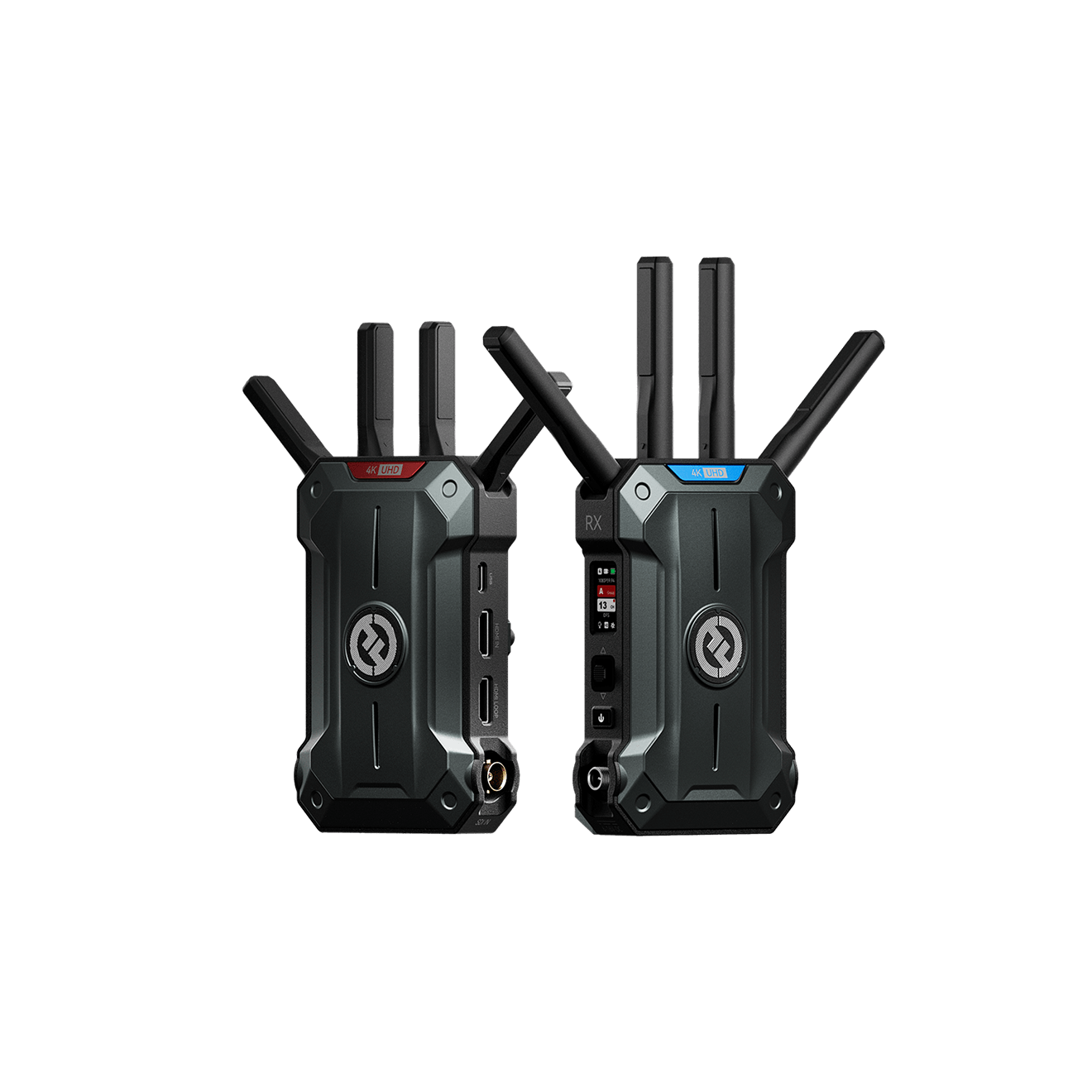
Traditional wireless monitoring setups require three separate pieces of gear: a transmitter, a receiver, and a monitor. All-in-one wireless camera monitors combine all three into a single device that switches roles with a single tap.
This isn't just about reducing gear costs — it's about:
If you're building a lean run-and-gun kit or setting up a dedicated director's monitor on a narrative production, an all-in-one design is almost always the smarter starting point.
Screen size is one of the first decision points to work through:
If the monitor primarily lives on a director's chair or a monitor stand rather than on-camera, the larger format pays off quickly.
A monitor's nit rating determines whether it's usable in direct sunlight — and this matters enormously on exterior shoots.
If you're regularly shooting outside — ENG, documentary, commercials, run-and-gun — treat brightness as a non-negotiable minimum, not an optional upgrade.
For most on-set monitoring, a factory-calibrated Rec.709 display is entirely sufficient. If your workflow demands on-set color grading decisions, dailies review, or broadcast delivery accuracy, look for a display spec that includes ΔE ≤ 1.5 color accuracy and DCI-P3 gamut coverage — the standard for cinema-grade image evaluation. This level of display performance is found in flagship-tier units designed for high-end narrative and broadcast work.
Range requirements vary significantly by production type. As a practical reference:
A key rule: always choose more range than you think you'll need. Published line-of-sight (LOS) specs are measured under ideal conditions. Physical obstructions, crowded RF environments, and large crew movement all reduce real-world effective range. Building in headroom protects your signal on critical shots.
Latency — the delay between what the camera captures and what appears on the monitor — is irrelevant for some roles and critical for others.
If focus pulling or real-time lens control is a primary use case in your workflow, latency should sit near the top of your decision criteria — ahead of range, screen size, or most other specs.
Wireless camera monitors transmit in the 5GHz band, the 2.4GHz band, or both.
If you're shooting in cities, convention centers, stadiums, or any location dense with competing wireless signals, dual-band auto-hopping is a meaningful protection against a dropped feed mid-take.
Before purchasing, map the monitor's connectivity to your specific camera ecosystem:
Most wireless camera monitors in this category display in 1080p Full HD — this is the transmitted resolution, not a display limitation. The key distinction is whether the device supports 4K signal input and passthrough:
If you're shooting with a high-end mirrorless or cinema camera, verify 4K input and passthrough support before buying to avoid having to compromise your camera settings on set.
Battery type shapes your runtime, your power ecosystem, and how you manage energy across a full day on set.
For a compact indie, documentary, or run-and-gun kit, NP-F is usually the right fit. For full-scale production rigs or broadcast environments where V-Mount is already the power standard, the V-Mount option is worth the investment in runtime and ecosystem consistency.
Most devices in this category also accept DC power input as an alternative to batteries — useful when the monitor is mounted to a production cart, vehicle rig, or external battery distribution system.
A wireless monitor is only as useful as the tools it gives you to evaluate what you're seeing. Look for a device running a full professional monitoring OS that includes:
The more monitoring tools are built into the device, the less reliant you are on a separate DIT station or external monitoring unit for basic image evaluation on set.
Some wireless monitors extend beyond monitoring to offer on-board proxy recording via SD card. This captures a compressed reference file simultaneously with the main camera recording — useful for immediate on-set playback, same-day editorial reference, or offline cutting while primary footage is still in post.
RTMP live streaming is a separate capability worth evaluating: it allows the monitor to push a live video signal directly to streaming platforms without a capture card or laptop. This is particularly relevant for live events, hybrid productions, press junkets, or any scenario where the camera feed needs to reach a remote audience in real time.
Neither feature is essential for every production — but if either workflow applies to your shooting, it's worth confirming native support rather than adding a separate device to handle it.
The number of receivers a single transmitter can feed simultaneously determines how many people on set can view the same live image at once:
If you're currently running a one-person or two-person operation but expect your productions to grow, factor in multi-receiver headroom as part of a longer-term investment decision — it's significantly easier to scale within a compatible ecosystem than to replace your entire monitoring chain.
But l was really confident because we had a very reliable wireless video transmission system for this production we've been using the Hollyland Pyro Series now.
Armando Ferreira Filmmaker · 507K YouTube subscribers
Pyro 7 just came out which is freaking good, I think it's actually really awesome l like how it's all built into one and can be both a transmitter or receiver which is pretty clutch.
Cam Mackey Photographer · 81.8K YouTube subscribers
We're using the Hollyland Pyro S, they've been great because they're able to actually have four running at the same time.
Chris Brockhurst Video Creator · 234.4K Instagram subscribers
Every Hollyland wireless camera monitor in this lineup is a true all-in-one TX/RX/Monitor — the transmitter, receiver, and display are fully integrated into a single unit. One tap switches the device between TX mode (mounted on-camera) and RX mode (used as a director's or operator's monitor). There are no separate transmitter boxes to rig, no receiver modules to cable up, and no additional pairing steps between components.
This applies to every model in the range: Mars M1 Enhanced, Pyro 5, Pyro 5 4K, Pyro 7, and Pyro 7 Ultra.
Screen size reflects your role on set more than personal preference.
5.5" models (Mars M1 Enhanced, Pyro 5, Pyro 5 4K) are built for camera-mounted use and mobile operators. At roughly 410g, they rig quickly and are the natural choice for camera operators, 1st ACs, and run-and-gun shooters who need a monitor that moves with the camera.
7" models (Pyro 7, Pyro 7 Ultra) are designed as director's monitors and DIT references. The larger 1920×1200 panel gives directors, script supervisors, and colorists more screen real estate to evaluate composition and exposure. The Pyro 7 adds a dual NP-F battery plate and F1/F2 quick-switch keys for toggling between two camera feeds — purpose-built for multi-camera setups. The Pyro 7 Ultra upgrades to a quantum dot QD-LCD panel with ΔE ≤ 1.5 color accuracy for on-set grading decisions.
General rule: 5.5" for camera-top rigs; 7" for the director's chair and DIT cart.
Yes. All five models are built for daylight-viewable use:
At 1,500 nits, the Pyro series eliminates the need for a sun shade in most outdoor scenarios — a real advantage for run-and-gun documentary work, ENG, and outdoor narrative shoots where a bulky hood breaks situational awareness and slows down the rig.
The Pyro 7 Ultra pairs that 1,500-nit brightness with a quantum dot QD-LCD panel (ΔE ≤ 1.5, ≥95% DCI-P3, ≥99% Rec.709), so the image you're evaluating in bright sunlight is a genuinely accurate representation of your footage — not just a bright one.
It depends on which model you choose:
If focus pulling accuracy is a primary concern, the Pyro 7 Ultra with Focus Mode activated is the clear recommendation in this lineup.
Multi-receiver support scales across the lineup to match your production size:
All Pyro models share full ecosystem compatibility, so you can pair any combination of Pyro units as TX and RX across the same production workflow.
The Pyro series (Pyro 5, Pyro 5 4K, Pyro 7, Pyro 7 Ultra) all feature dual-band 2.4GHz & 5GHz transmission with auto frequency hopping, which actively scans for interference and switches to cleaner spectrum in real time. In practice, this makes them significantly more resilient in RF-congested environments — packed city locations, convention centers, multiband broadcast venues — compared to single-band systems.
The Pyro 7 Ultra goes further with Hollyland's proprietary TWiFi technology, engineered specifically for broadcast and high-end commercial environments where RF interference is a known operational risk.
The Mars M1 Enhanced operates on the 5GHz band only. While 5GHz is generally less congested than 2.4GHz in urban environments, it doesn't have the benefit of dual-band hopping. For mission-critical RF resilience on a busy set, any Pyro model is the stronger choice.
Every model in this lineup accepts both HDMI and 3G-SDI inputs, covering virtually the full range of professional cameras:
For 4K input support specifically:
| Model | 4K HDMI Input | Max Input Resolution |
|---|---|---|
| Mars M1 Enhanced | ✓ | 4K UHD/DCI @ 30fps |
| Pyro 5 | ✗ | 1080p @ 60fps |
| Pyro 5 4K | ✓ | 4K UHD @ 30fps |
| Pyro 7 | ✓ | 4K UHD @ 30fps |
| Pyro 7 Ultra | ✓ | 4K UHD @ 60fps (HDMI 2.0) |
Important note on 4K: The wireless transmission stream is compressed (H.264, up to 12Mbps), and all monitor panels are 1080p FHD. However, the 4K input signal is preserved and passed through in full quality via HDMI loopout to a connected recorder or additional monitor, so your 4K production chain remains intact even as the wireless feed is downconverted for transmission.
Battery systems are tiered by production level:
NP-F Series (Mars M1 Enhanced, Pyro 5, Pyro 5 4K)
Industry-standard Sony NP-F series batteries — widely available, affordable, and compatible with common NP-F550, NP-F770, and NP-F970 cells. The larger the cell you use, the longer your runtime between swaps.
Dual NP-F with Hot-Swap (Pyro 7)
The Pyro 7 features a dual NP-F battery plate. Load two batteries simultaneously to extend shooting sessions without powering down. When one battery depletes, swap it in the field without interrupting the other — a critical advantage on long shooting days or busy multi-camera sets.
V-Mount with Wide-Voltage DC (Pyro 7 Ultra)
The flagship uses a cinema-standard V-Mount battery plate, compatible with the high-capacity V-Mount batteries common on broadcast and commercial productions. It also supports a wide-voltage DC input (10–28V), so you can run the unit directly from a production power tap on a DIT cart or studio rig without a battery installed at all.
All Hollyland wireless monitors in this lineup run HollyOS, which includes a full suite of professional image analysis tools:
Beyond image analysis tools, Pyro 5, Pyro 5 4K, Pyro 7, and Pyro 7 all support on-board proxy recording via SD card for immediate on-set playback and faster post handoff, plus direct RTMP live streaming to push your video feed directly to online platforms without a capture card or PC.
The Pyro 7 Ultra adds hardware-level color accuracy behind those software tools: its quantum dot QD-LCD panel (ΔE ≤ 1.5, ≥99% Rec.709, ≥95% DCI-P3) means your LUT previews and vectorscope readings are grounded in a genuinely calibrated display — a meaningful advantage when colorists and DITs need to make on-set decisions with confidence.
Here's a quick-reference guide based on the most common use cases:
Mars M1 Enhanced — Solo shooters, small crews, and productions on a tighter budget. 150m range, 1,000 nits, 4K HDMI input, and the full HollyOS monitoring toolkit at an accessible entry point.
Pyro 5 — Run-and-gun, ENG, and documentary crews. Dual-band anti-interference, 1,500 nits, 400m range, proxy recording, and RTMP live streaming — all in a compact 5.5" form factor.
Pyro 5 4K — The same capabilities as the Pyro 5, plus a clean 4K30 HDMI input and loopout for workflows that originate from high-end mirrorless or cinema cameras.
Pyro 7 — Directors, script supervisors, and multi-camera productions. The 7" screen, dual NP-F hot-swap battery plate, F1/F2 camera preset quick-switch keys, and full dual SDI+HDMI loopout make it the most capable director's monitor in the range.
Pyro 7 Ultra — High-end narrative, broadcast, and commercial productions where nothing is optional. 1km wireless range, 20ms Focus Mode latency for 1st ACs, QD-LCD quantum dot display with ΔE ≤ 1.5 color accuracy, unlimited receivers in Broadcast Mode, 4K60 HDMI 2.0, and V-Mount power. The uncompromised flagship.