.png)
 简体中文
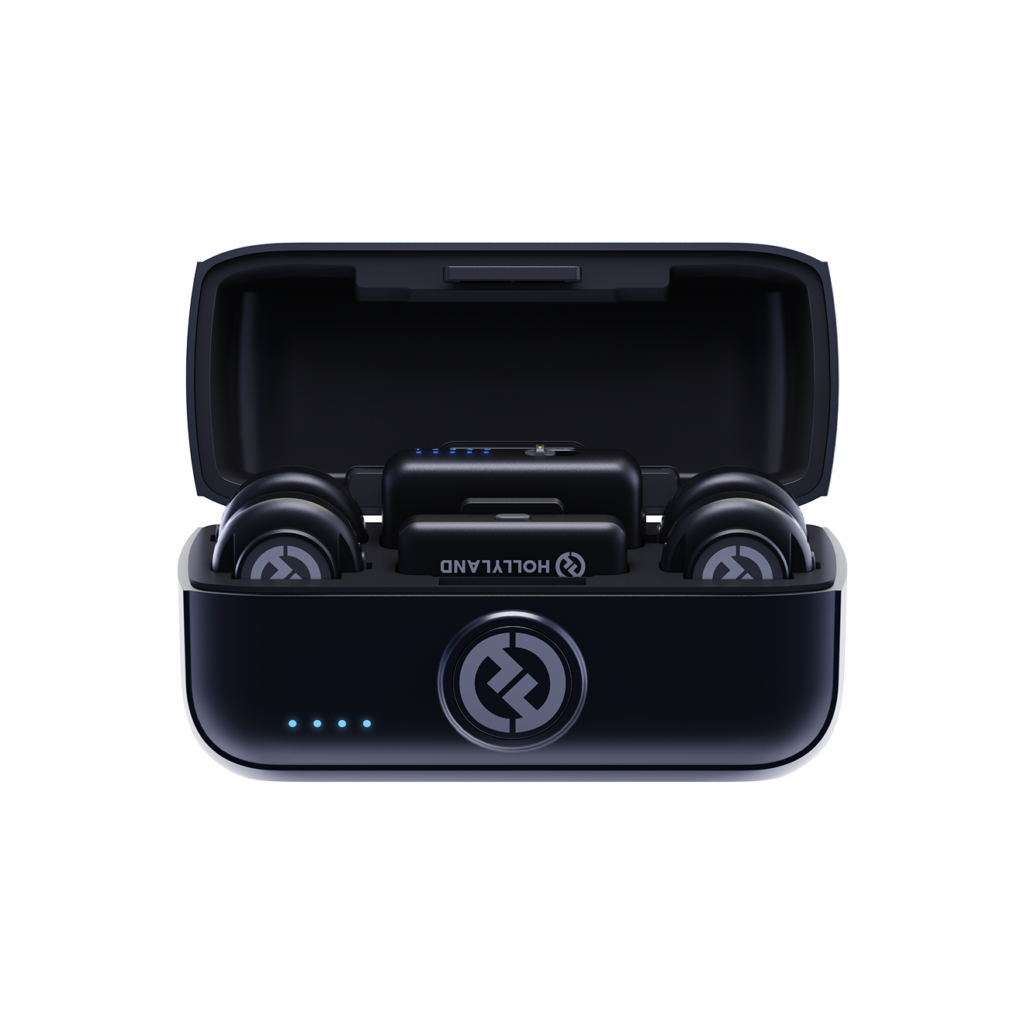
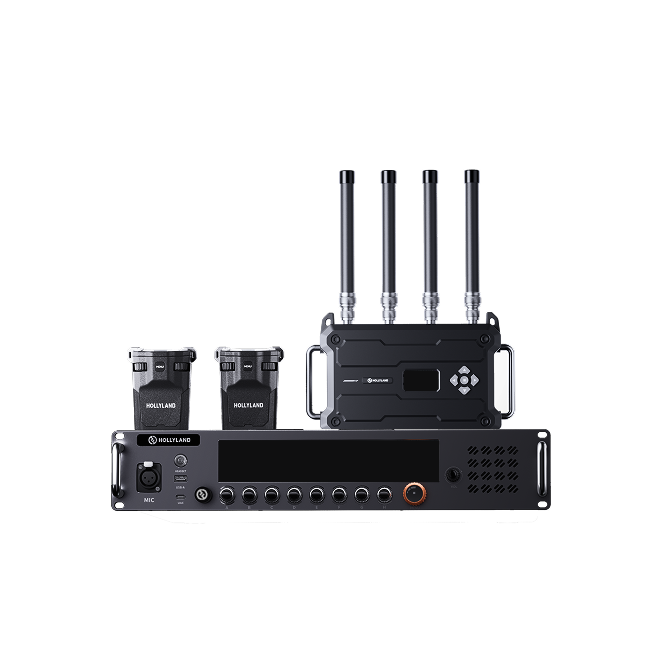
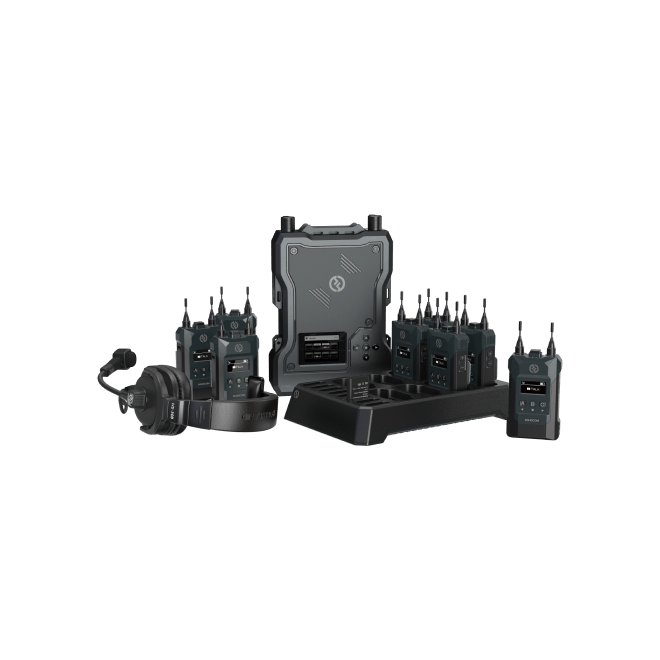
LARK M3
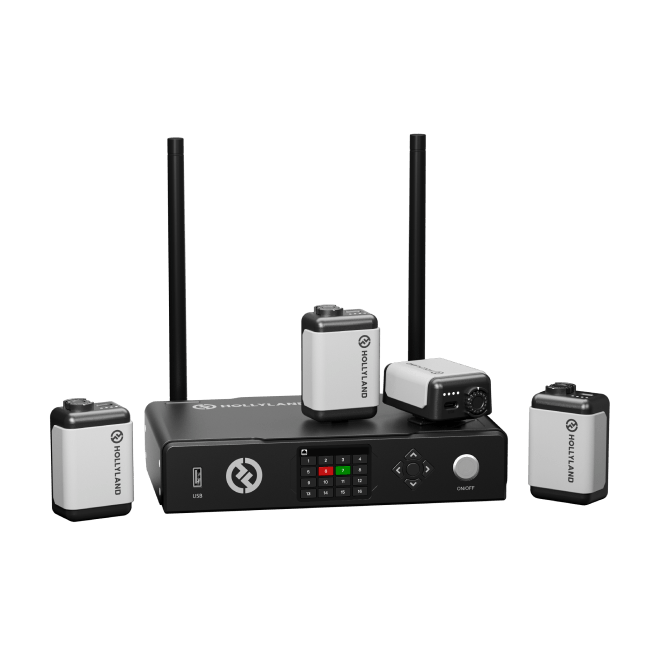
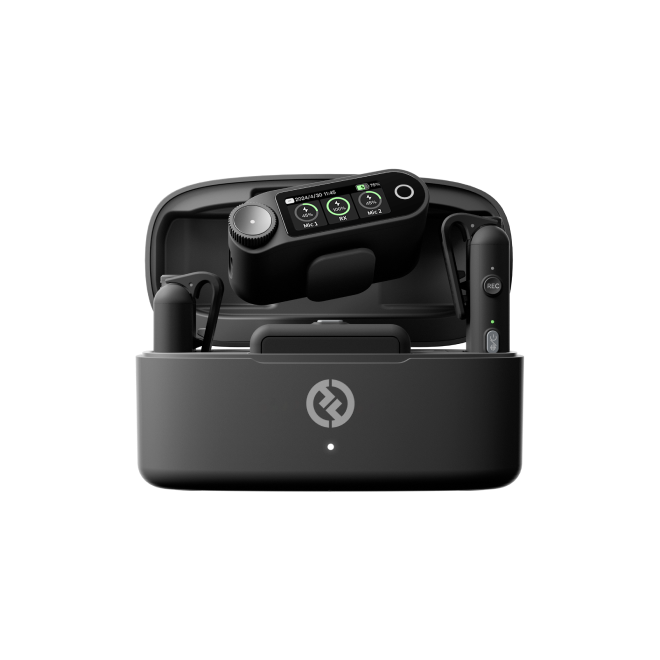
Scalable broadcast-grade multi-mic system for professional production
- 32-Bit Float
- 4TX × 4RX
- 48H Battery

Explore Hollyland's complete wireless microphone lineup — from featherlight clip-on mics for content creators to professional 32-bit float systems for filmmakers. AI noise cancellation, plug-and-play setup, and up to 300m range across every product. Find the right mic for your camera, phone, or stage.
Compatible with iPhone, Android, DSLR & mirrorless cameras — plug-and-play on every device
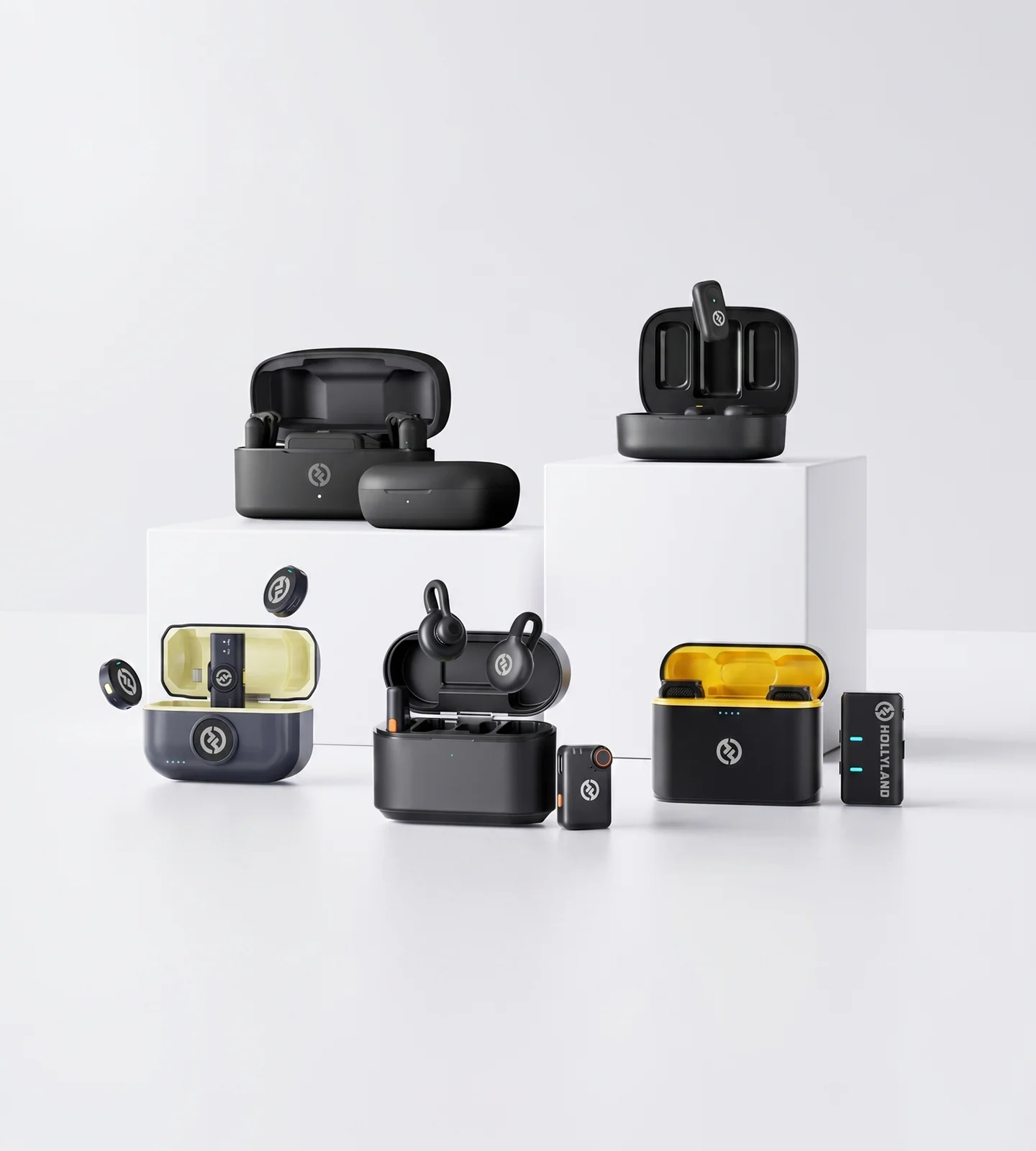
Scalable broadcast-grade multi-mic system for professional production
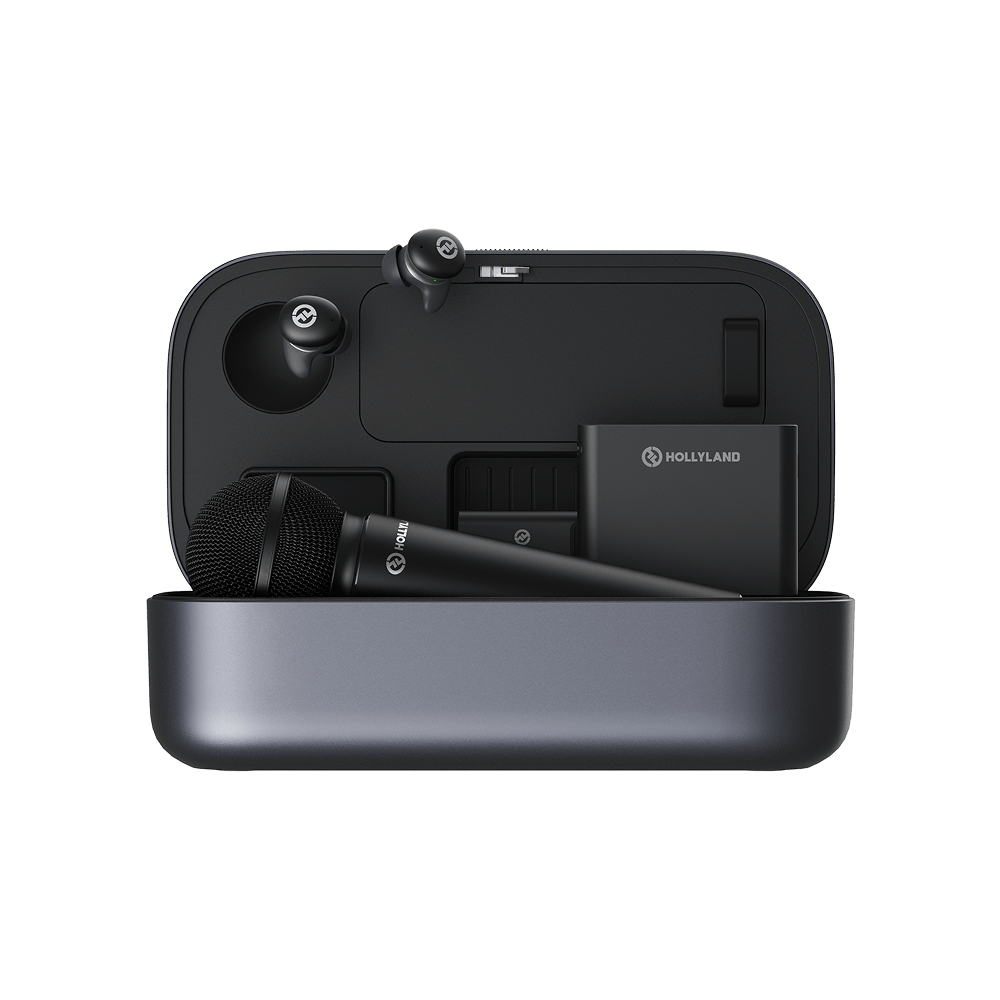
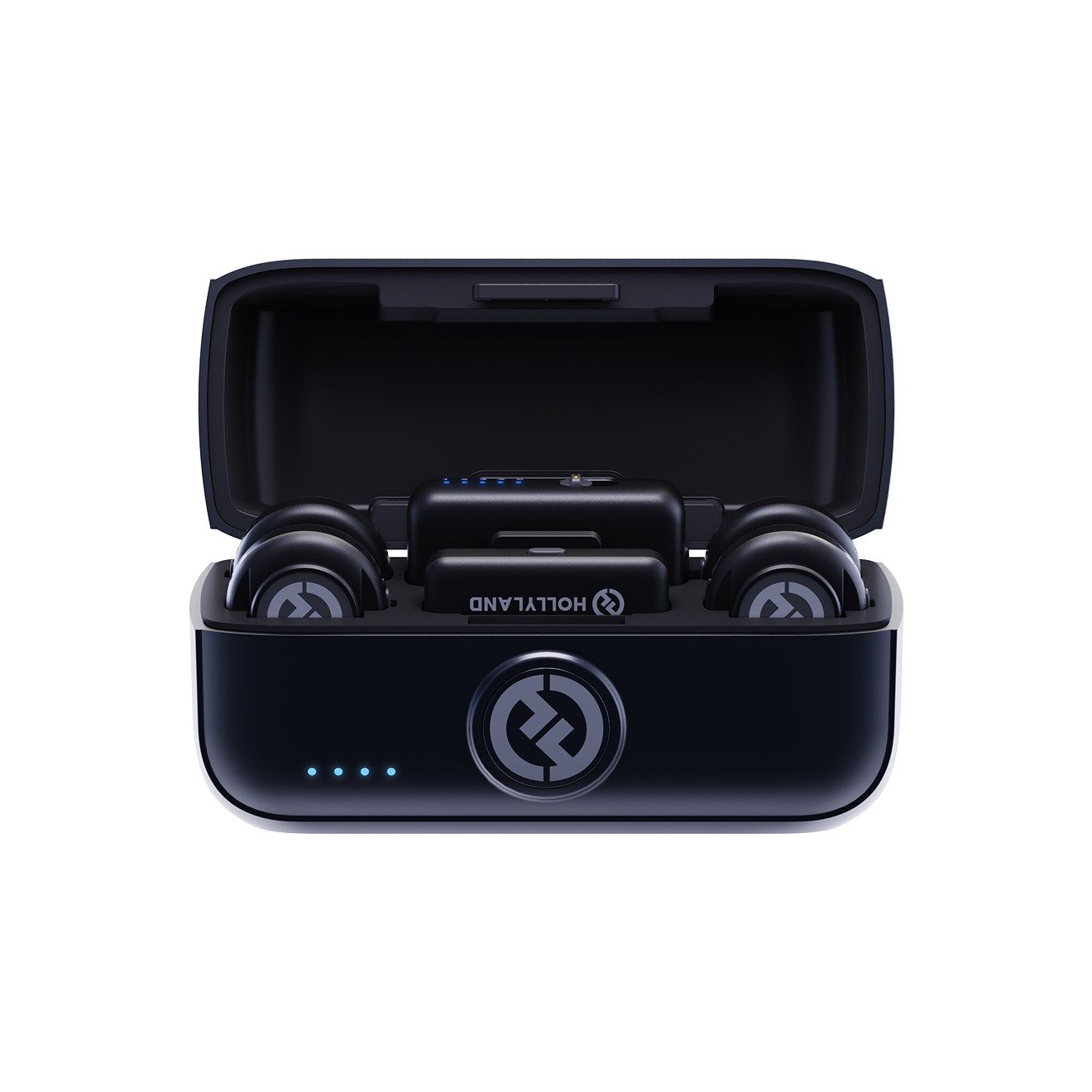
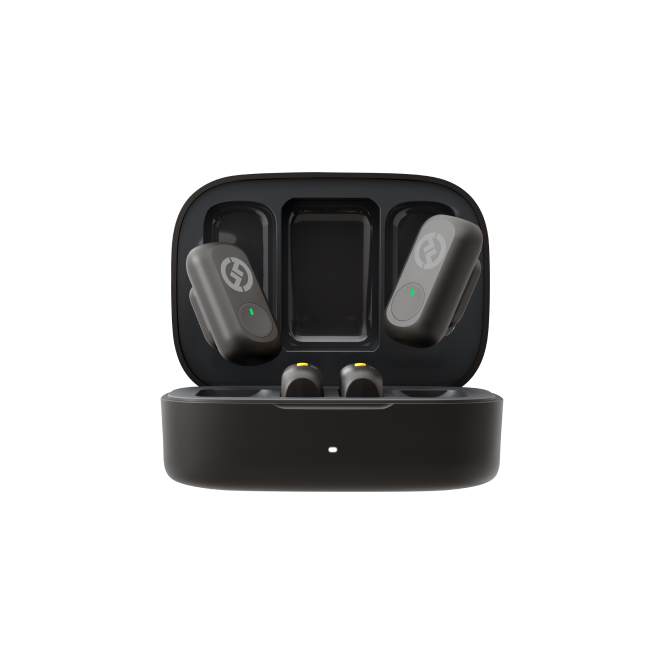
All-in-one wireless studio for live performance, streaming, and podcasting

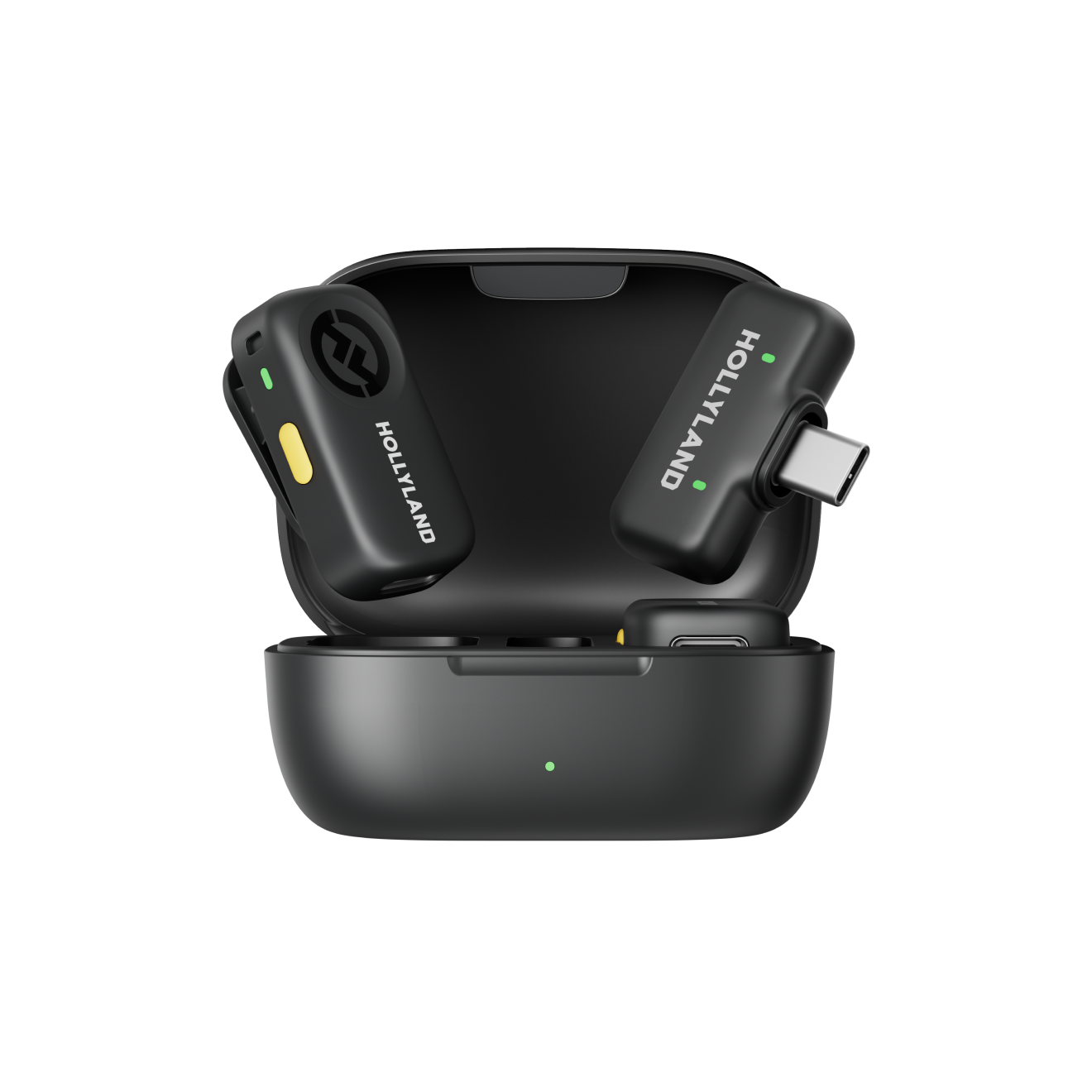
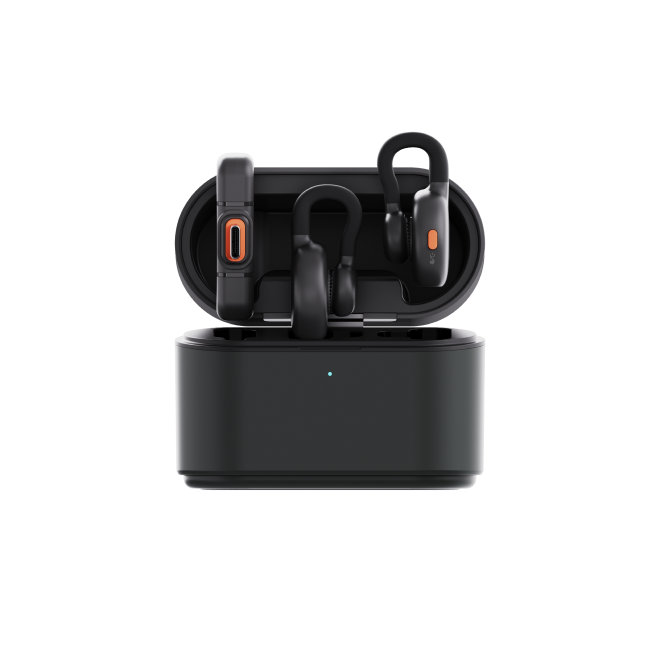
Your everyday wireless mic for cameras and phones

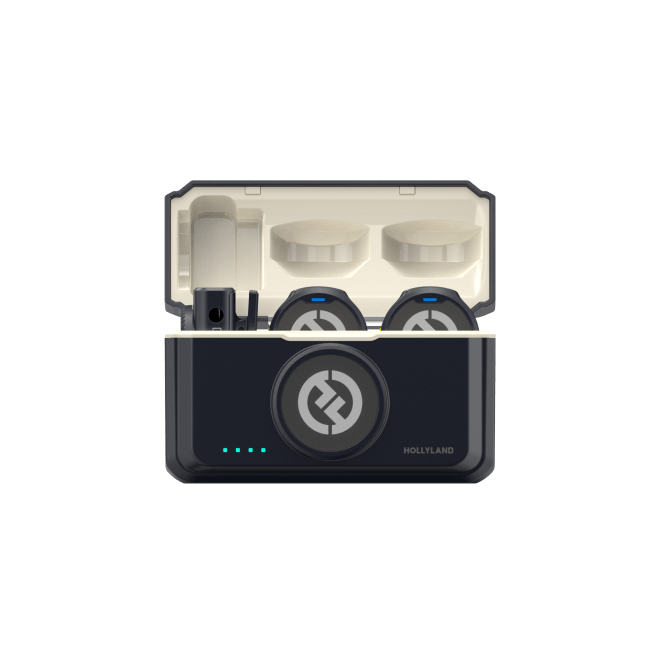
Ultra-light, no-logo wireless mic for on-camera creators

AI-powered wireless mic built for smartphones

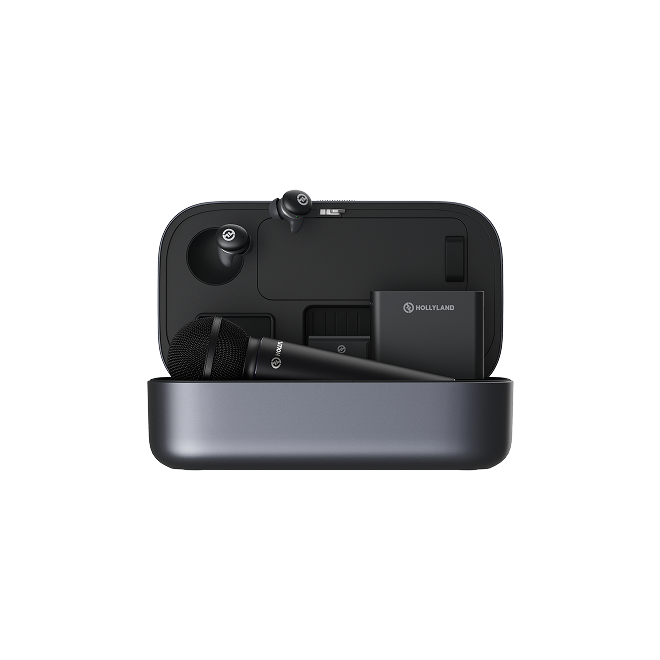
Pro wireless system with 32-bit float, timecode, and wireless monitoring
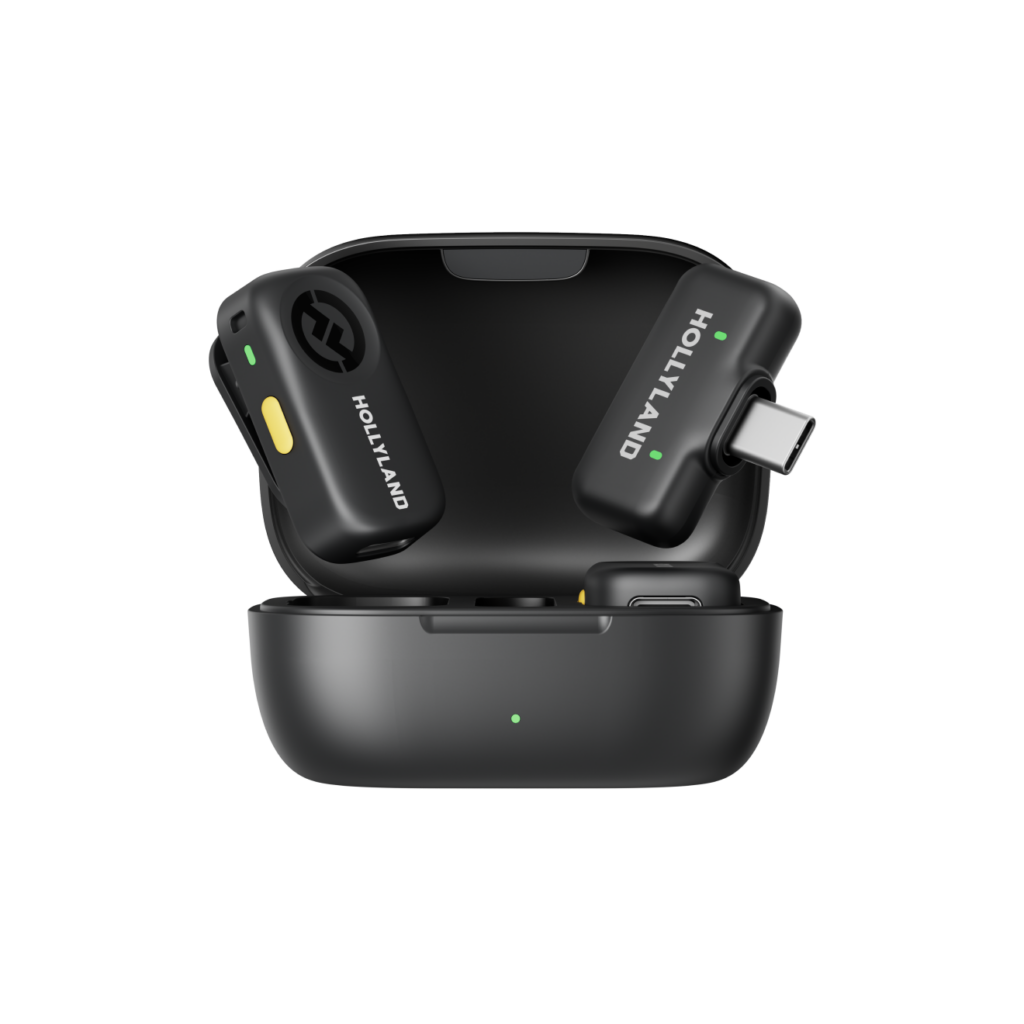
Clip-and-go mobile mic with AI noise cancellation and voice tuning
| Model |
LARK M3
|
MELO P1
|
LARK M2
|
LARK M2S
|
LARK A1
|
LARK MAX 2
|
LARK A2
|
|---|---|---|---|---|---|---|---|
| Best For | Multi-camera broadcast & large-scale production | Live performers, streamers & podcasters | Vloggers & everyday content creators | On-camera creators & fashion / beauty content | Mobile-first creators & smartphone video | Pro filmmakers & professional production crews | Casual to intermediate smartphone creators |
| Audio Format | 48kHz / 32-bit Float | 48kHz / 32-bit Float | 48kHz / 24-bit | 48kHz / 24-bit | 48kHz / 24-bit | 48kHz / 32-bit Float | 48kHz / 24-bit |
| Wireless Range (LOS) | 300m / 1000ft | 60m / 196ft | 300m / 1000ft | 300m / 1000ft | 200m / 650ft | 340m / 1115ft | 200m / 656ft |
| Total Battery Life | Up to 48h | Up to 40h | Up to 40h | Up to 30h | Up to 54h | Up to 36h | Up to 21h |
| Weight | 9g (TX) | 55g (Mixer) / 255–312g (Mic) | 9g (TX) | 7g (TX) | 8g (TX) | 14g (TX) | 8.5g (TX) |
| Noise Cancellation | Adaptive AI Noise Cancellation | 25dB AI Noise Cancellation | ENC | ENC | 3-Level AI Noise Cancellation | AI Noise Cancellation | AI Noise Cancellation |
| Works With | Camera + Smartphone | Smartphone + USB-C devices | Smartphone + Camera | Smartphone + Camera | Smartphone only | Camera + Smartphone | Smartphone only |
| Multi-Mic Support | Up to 4 TX × 4 RX | Up to 2 microphones | 1 TX + 1 RX | 1 TX + 1 RX | 1 TX + 1 RX | Up to 4 TX per RX | 1 TX + 1 RX |
| Shop | Shop | Shop | Shop | Shop | Shop | Shop |
The first decision is the form factor — and it largely comes down to how you appear on screen or on stage.
Clip-on (lavalier) wireless systems attach directly to clothing, staying discreet or invisible on camera. They're the default choice for:
Handheld wireless microphones are built for performance and presentation — live music, event hosting, public speaking, and streaming setups where the microphone is part of the visual. They deliver direct, dynamic vocal capture and can be easily passed between speakers.
Quick rule: If the mic needs to disappear on camera, go clip-on. If you're going to hold it, go handheld.
Compatibility is one of the most common sources of confusion when buying a wireless mic. Before anything else, confirm your primary recording device.
Always check the receiver version, not just the transmitter. The transmitter clips on; the receiver is where compatibility decisions are made.
Wind, crowd noise, HVAC hum, traffic — unwanted background noise is the single biggest threat to clean wireless audio, especially outside a controlled environment. Modern wireless mics address this in two ways:
ENC (Environmental Noise Cancellation) operates at the hardware level, applying a filter to reduce ambient noise before the signal is transmitted. It handles general background noise effectively with no added processing latency.
AI Noise Cancellation uses machine learning to actively separate voice from background interference in real time. It adapts to complex, unpredictable environments — busy streets, live events, outdoor locations — far more effectively than static ENC filtering.
For most indoor or studio-style use cases, ENC is sufficient. If you regularly record outdoors, at events, or in noisy public spaces, prioritize AI noise cancellation — and pay attention to the depth of suppression (measured in dB). A system capable of 25dB of AI noise reduction will perform significantly better in challenging conditions than a basic ENC filter.
Wireless microphone specs can feel overwhelming. Here's what to actually focus on:
Bit depth and sample rate
The broadcast standard for quality audio is 48kHz / 24-bit — it captures a wide dynamic range with a low noise floor, suitable for video, podcast, and broadcast production. 32-bit float is the professional benchmark: it records an extremely wide dynamic range and effectively eliminates the risk of clipping, even if gain was set incorrectly. It's most valuable in high-stakes recording scenarios where you cannot repeat a take.
Signal-to-Noise Ratio (SNR)
A higher SNR means less audible hiss or self-noise in the captured signal. For clean, broadcast-quality audio, look for an SNR of ≥70dB — especially important in quiet recordings where background noise would otherwise surface.
Maximum SPL
The SPL ceiling determines how loud a source the mic can handle before distorting. For conversational recording, a 115–120dB rating is more than adequate. For live performance, singing, or high-energy environments, look for 125dB or higher.
Frequency response
A full 20Hz–20kHz range captures the complete audible spectrum — from low-end warmth to high-end clarity and air. This is the range you want for natural, detailed voice capture across any use case.
Range specs are typically quoted as LOS (line-of-sight) — open air with no obstructions. In real-world conditions with walls, furniture, and people between transmitter and receiver, NLOS (non-line-of-sight) range is what you'll actually experience.
What range do you actually need?
In practice, 40m NLOS comfortably covers most single-room and on-location shooting scenarios. Extended range becomes meaningful at scale — large sets, outdoor events, or productions where the transmitter may be far from the receiver.
Battery life involves two separate figures, and both matter:
| Workflow | What to Prioritize |
|---|---|
| Short-form content (TikTok, Reels, YouTube Shorts) | 7–9h TX battery is more than enough |
| Full-day shoots or multi-scene productions | 10–12h TX battery + charging case for backup |
| Events, conferences, and live performances | Total system battery of 36–48h for extended coverage |
| Multi-day or traveling productions | A case that provides 2+ full TX recharges without a wall outlet |
Most wireless mic systems include a charging case that stores and recharges transmitters between sessions. Don't judge battery life by the single-charge figure alone — check how many additional full charges the case provides, especially for consecutive shooting days.
For most solo creators recording to a single device, one transmitter and one receiver is all you need. But as production complexity grows, so does the case for multi-mic support.
If your productions are growing, choose a system that supports 4TX expansion from the start, even if you only use two transmitters now. It's more cost-effective than replacing an entire kit when your workflow scales.
Higher-tier wireless systems include capabilities that are genuinely valuable in professional contexts — but unnecessary overhead for simpler workflows. Here's an honest breakdown:
32-bit float internal recording
The transmitter records audio locally as a failsafe, independent of the wireless connection. If signal drops during a take, the audio is still captured on the transmitter itself.
→ Worth it for: professional film production, live events, or any high-stakes shoot where a dropped wireless connection would mean a ruined take.
Timecode sync
Synchronizes audio to video across multiple cameras for frame-accurate alignment in post-production.
→ Worth it for: narrative filmmaking, music videos, or any multi-camera setup where precise sync is required. Irrelevant for single-camera work.
Wireless audio monitoring
Allows real-time listening to the live audio feed through a wireless earphone, without cables.
→ Worth it for: productions where a director or sound operator needs to monitor audio quality actively during a shoot — or for performers who need in-ear monitoring on stage.
App-based control
Adjusts gain, noise cancellation depth, EQ, and other parameters from a smartphone app, without touching the transmitter.
→ Worth it for: creators who want to fine-tune audio on the fly, especially in varied or unpredictable recording environments.
Onboard DSP mixing with effects and presets
Real-time compression, EQ, reverb, and vocal effects applied before output — no external mixer required.
→ Worth it for: live performers, streamers, and podcasters who want broadcast-quality audio processing built into the microphone system itself.
Finally, consider how much setup friction you're willing to manage — and how much control you actually need.
Plug-and-play systems require zero configuration. Clip the transmitter on, plug the receiver into your device, and start recording. Best for:
- Creators who value speed and simplicity over customization
- Run-and-gun or field recording where setup time is limited
- Anyone new to wireless audio who wants it to just work
App-controlled systems add an optional layer of audio adjustment — noise cancellation levels, gain, EQ — without adding physical controls to the hardware. A clean middle ground between simplicity and flexibility.
Full-featured systems with onboard DSP, Bluetooth remote controllers, and a deep software ecosystem deliver studio-grade control in the field. The tradeoff is more components to manage and a steeper learning curve.
The best system is the one that fits your actual workflow. If your use case is clipping a mic to your shirt and hitting record, a compact plug-and-play transmitter will serve you faster and better than a full mixing system. If you're performing live or producing at a professional level, that extra capability earns its place in your kit.
I love my new LARK M2 mics. These were so good, and I really enjoyed testing out the new LARK M2 from Hollyland.
Sarah Grace Tech Creator · 3.2M YouTube subscribers
The Hollyland LARK MAX is the wireless microphone system with the clearest and crispest audio of any wireless mic system I have ever tried.
Goenrock Cinematographer · 107K Instagram subscribers
LARK MAX is doing an excellent job of dropping the sound of the air conditioner, which is something l always have to remove and post with our shotgun mic.
Film Riot Filmmaking Educator · 2.2M YouTube subscribers
The best place to start is your primary use case:
If you're still undecided, the LARK M2 is the most versatile starting point for general-purpose use.
Most Hollyland mics are built to cover multiple device types:
Check each product page for specific connector types and full compatibility details.
Every Hollyland wireless mic in this lineup records at 48kHz / 24-bit — the same standard used in professional broadcast and film production. Three models go further with 32-bit float recording (LARK MAX 2, LARK M3, and MELO P1), which delivers an ultra-wide dynamic range that virtually eliminates clipping and gain-staging errors in post-production.
Key quality benchmarks across the lineup:
- Signal-to-noise ratio: ≥67–72dB depending on model, ensuring a clean, low-noise signal even in imperfect recording environments
- Frequency response: 20Hz–20kHz (full audible spectrum) on most models
- Maximum SPL: 115–145dB across the range, handling loud environments, live instruments, and high-energy performances without distortion
Whether you're recording casual social content or a professional production, the specs hold up to serious scrutiny.
Every Hollyland wireless system ships with a charging case that significantly extends total runtime beyond a single charge. Here's a quick reference across the lineup:
| Model | Per-Charge TX Battery | Total Battery (with Case) |
|---|---|---|
| LARK A1 | ~9h | Up to 54h |
| LARK M3 | ~8h | Up to 48h |
| LARK M2 | ~10h | Up to 40h |
| MELO P1 | ~12h (mic) | Up to 40h |
| LARK MAX 2 | ~11h | Up to 36h |
| LARK M2S | ~9h | Up to 30h |
| LARK A2 | ~7h | Up to 21h |
For most shoot days, full-day events, or extended streaming sessions, a single transmitter charge is more than sufficient. The charging case keeps everything topped up between uses, so you're ready to go again without hunting for a wall outlet.
Hollyland addresses ambient noise at the hardware level across the entire lineup — not just as a software afterthought:
All clip-on transmitters also ship with a windscreen for outdoor use. For creators shooting in streets, events, or windy locations, the combination of the windscreen and built-in noise cancellation handles most real-world conditions effectively.
Hollyland wireless mics use 2.4GHz transmission with Adaptive Frequency Hopping, which actively switches to the clearest available channel to minimize interference — reducing the risk of dropouts in crowded RF environments like events, studios, or busy urban locations.
Line-of-sight ranges across the lineup:
- LARK MAX 2: Up to 340m / 1,115ft
- LARK M2 / M2S / M3: Up to 300m / 1,000ft
- LARK A1 / A2: Up to 200m / 656ft
- MELO P1: Up to 60m / 196ft for wireless audio
For real-world use — through walls, around corners, or across a room — NLOS (non-line-of-sight) range is shorter but still practical for the vast majority of indoor and outdoor scenarios. For most creators, the range is not a limiting factor. For professional field work or large venue use, the LARK MAX 2 or LARK M3 offer the most headroom.
Most Hollyland wireless mics are designed to be plug-and-play with zero configuration required. Transmitters and receivers come pre-paired from the factory — clip the mic on, plug the receiver into your device, and you're recording.
If you've never used a wireless mic before, the LARK A1, LARK A2, or LARK M2 are the most frictionless starting points.
Yes. Several systems in the Hollyland lineup are built specifically for multi-mic setups:
For solo content creation, any single-transmitter kit works perfectly. For production crews or multi-subject recordings, the LARK MAX 2 or LARK M3 offer the most scalable architecture.
32-bit float is a recording format with an ultra-wide dynamic range — wide enough that it's virtually impossible to clip (distort) the audio, even if the source suddenly gets much louder or quieter than expected. Unlike standard 24-bit recording, you don't need to nail your gain settings before you hit record, because the format preserves full detail at both extremes of the volume range.
In practice, this means:
- No clipped audio if a speaker raises their voice unexpectedly during an interview
- No noise floor problems if a performance is quieter than anticipated
- Full flexibility to adjust levels cleanly in post-production without sacrificing quality
Which Hollyland mics have 32-bit float?
- LARK MAX 2 — 32-bit float internal recording (up to 14h onboard) plus full-chain 32-bit audio transmission
- LARK M3 — 48kHz / 32-bit float broadcast-grade audio
- MELO P1 — 48kHz / 32-bit float output via the Smart Audio Mixer
If you're shooting run-and-gun documentary work, live events, or any scenario where you can't afford to re-record, 32-bit float is a meaningful safety net. For controlled content creation or social video, 24-bit performs excellently and is the standard across the rest of the lineup.
Hollyland clip-on transmitters are among the smallest wireless mic transmitters available:
All clip-on transmitters are designed to attach at collar or chest level, keeping them out of frame in most standard shooting angles. For close-up shots where the mic may be partially visible, the LARK M2S's no-logo finish makes it the most discreet option in the range.