.png)
 简体中文

LSi Meets Hollyland at IBC 2026: Inside the Solidcom H1 Intercom System
At IBC 2026, LSi spoke with Hollyland about the Solidcom H1 wireless intercom system, exploring its key features, flexible scalability and networked communication capabilities for professional productions. Read on to discover LSi’s full report from IBC 2026.
Hollyland’s Solidcom H1 intercom was a highlight at IBC 2026. Scalable from a single antenna and a few belt packs to 80 packs across 100 channels, it offers web and app control, third-party interfacing, free updates and global cloud connectivity. Discover how it could transform your production communications . . .
Amidst the noise of IBC 2026, Hollyland used its central stand in Hall 11 to showcase its latest production technology, including the Solidcom H1 wireless intercom system. LSi’s Max Mowbray spoke to Alessio Gerschlauer, technical support specialist, about the company’s flagship intercom platform and its approach to scalable, networked communication . . .
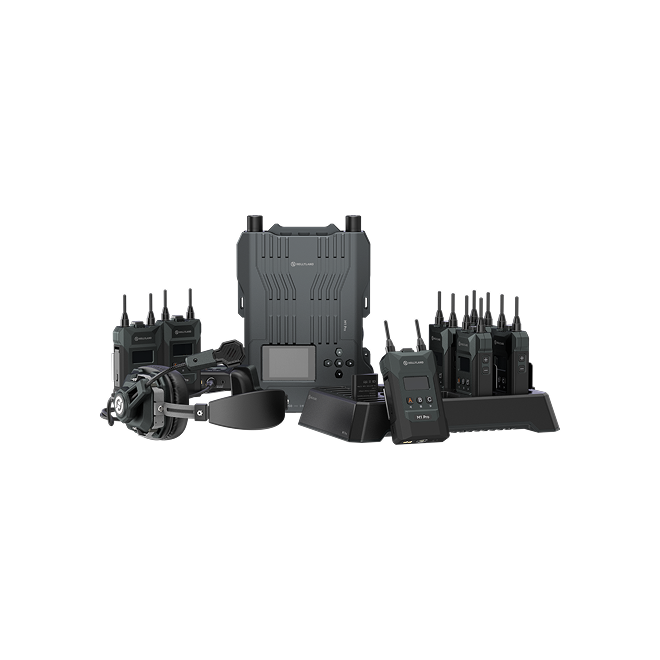
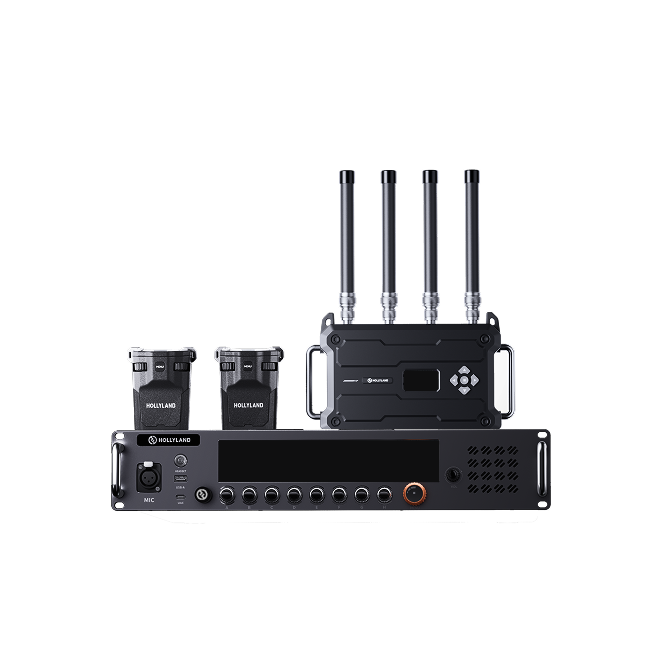
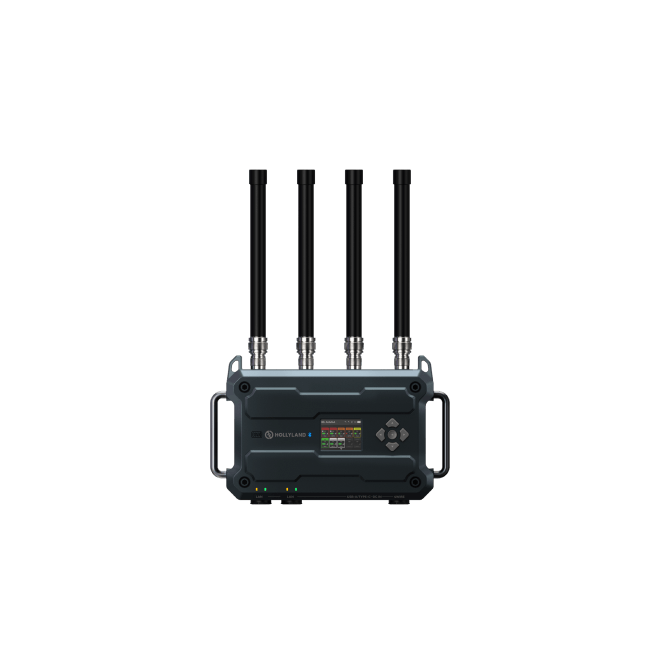
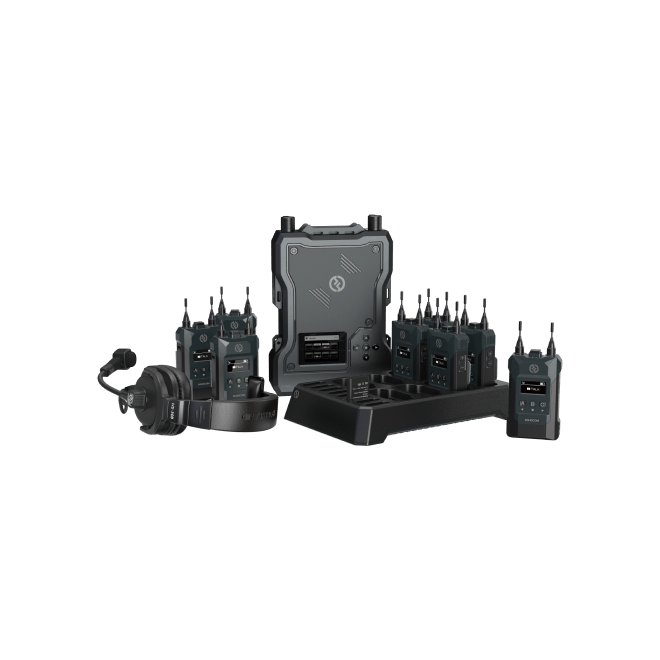
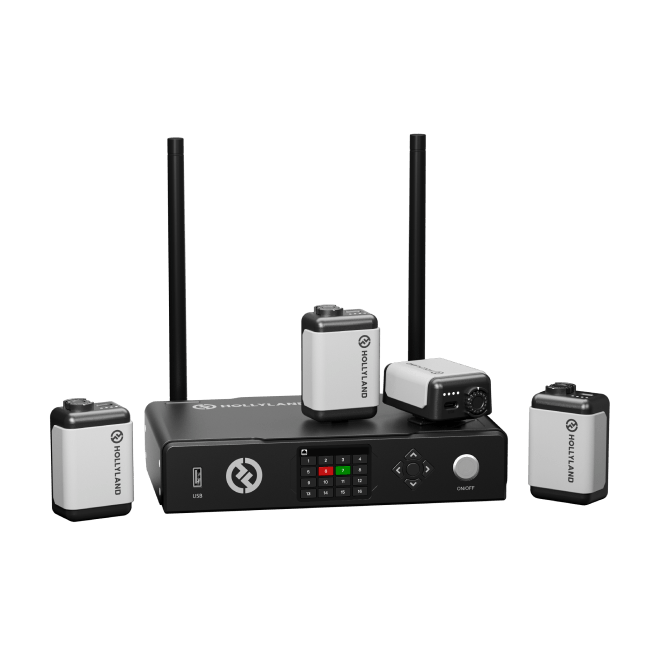
“As our flagship intercom system, the H1 features all the latest Hollyland technology. There are three parts – you have the Geo Central Station, the antenna (ANT01), and the belt packs (BPK01). And you can actually just use the antenna with the belt packs.

“In standalone mode, each antenna has 12 channels that can be assigned to up to 20 belt packs. Three devices can be connected, to assign up to 30 belt packs. If you need all the inputs and outputs on the back, you have the Geo Central Station, which will give you more features and allow up to eight antennas and 80 belt packs on up to 100 channels.”
The Geo Central Station comes equipped with 2W and 4W interfaces, providing connectivity ports for third party systems. Inputs and outputs include ethernet, 3-pin XLR, RJ45 and a walkie-talkie port. Diverse interfacing with existing third-party audio and intercom equipment means the H1 does not necessarily require a completely Hollyland-based setup. However, a full Hollyland ecosystem is available.
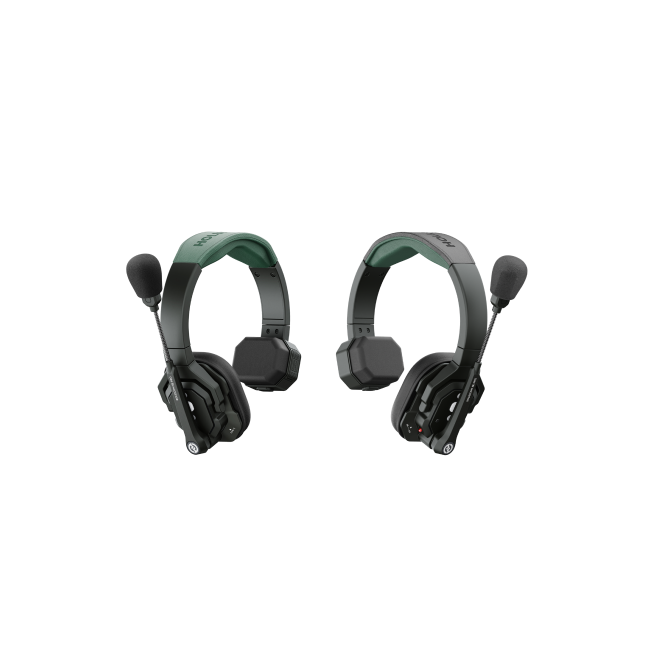
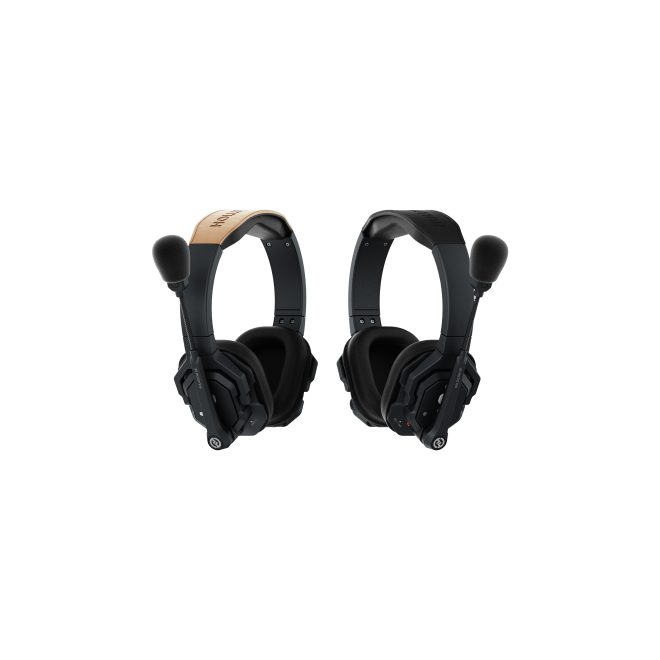
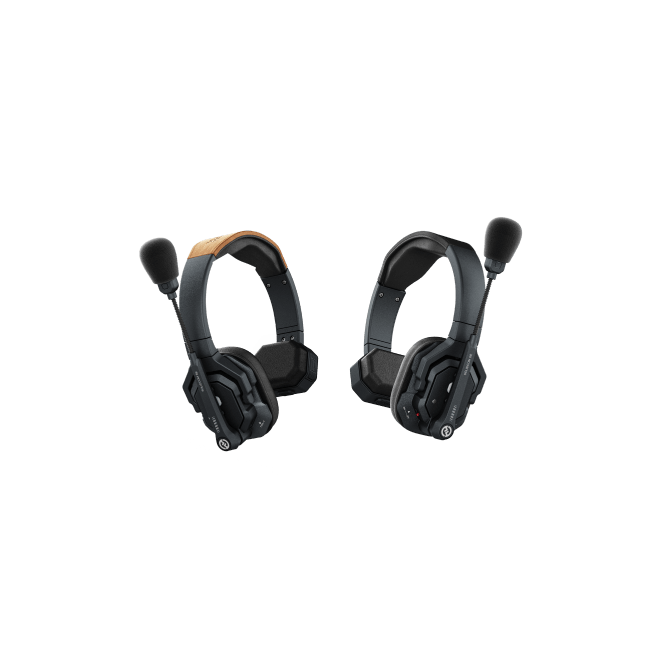
The BPK01 belt packs are compact and adaptable, featuring four buttons – A, B, C and D – which can be assigned to up to four channels. Each belt pack supports simultaneous full-duplex communication with up to 16 channels.

“You can remote kill the mic,” says Gerschlauer, “so if someone forgets to mute themselves, you can just go in here and mute the mic.”
He adds: “We also have the call function – if someone’s maybe turned the channel off and they can’t hear you, you can still call them. For example, if I now set the call destination to my colleague and hold this button, we start vibrating. And then they know to turn the channel on.”
These modes can be configured online or in the app. The H1 operates on a ‘very easy web interface’ which collaborates each part of the system and allows control of all settings. Full system configuration, available both online and via the mobile app, removes the need for constant on-site adjustments. Cloud access and smart grouping add to the ease of coordination across teams of varying sizes.
“You don’t need to link these antennas via a cable, either – you just connect them both to a router or network, and they can talk to each other. You can have one antenna here and one in a completely different country, and they can communicate via the online network,” says Gerschlauer.
Just connect to the same Wi-Fi network (of the central station or the antenna), and then open the IP address in any browser to access all kinds of settings. And then you can also change the password, so no one else can change the settings.”
The final element in the system is the charging base. “With this we can charge up to 10 devices at the same time. You can also buy additional batteries and charge them in here too. Once connected to the station or the antenna, it pairs all of them automatically, which allows you to do updates across all devices.”
Firmware updates can be managed via the web interface. The web interface and app are both completely free, as are the licenses and Dante integration. The only additional paid element is the cloud services, which grants virtual configuration and global remote access.
The H1 is designed to scale from smaller productions to larger deployments using the same communication system. Each antenna provides coverage of up to 500m, and roaming cascade technology allows multiple antennas to extend the overall coverage area. At its maximum configuration, Hollyland claims coverage of more than four million square metres.
“This is brand new for us in the market in general. We’ve had the chance to collect a lot of feedback and we roll out firmware updates every few weeks. The updates, of course, are free. The only paid service is for the cloud – this service operates on a subscription-based model.”
All this makes the H1 particularly suited to productions where communication requirements change from job to job. A small crew can deploy an antenna and a handful of beltpacks, while larger productions can add antennas using the central station and integrate the system with existing intercom infrastructure. This also gives rental companies and production teams scope to configure the system around the size and complexity of each job.

The H1 reflects the increasing convergence between dedicated intercom systems and wider networked production infrastructure, being highly adaptable and interfacing with existing equipment rather than requiring it to be replaced. Combined with its network-based configuration and cloud services, Hollyland is positioning the H1 as a scalable layer of communication with a range of applications across different types of production.


Subscribe us
to get the latest news!


