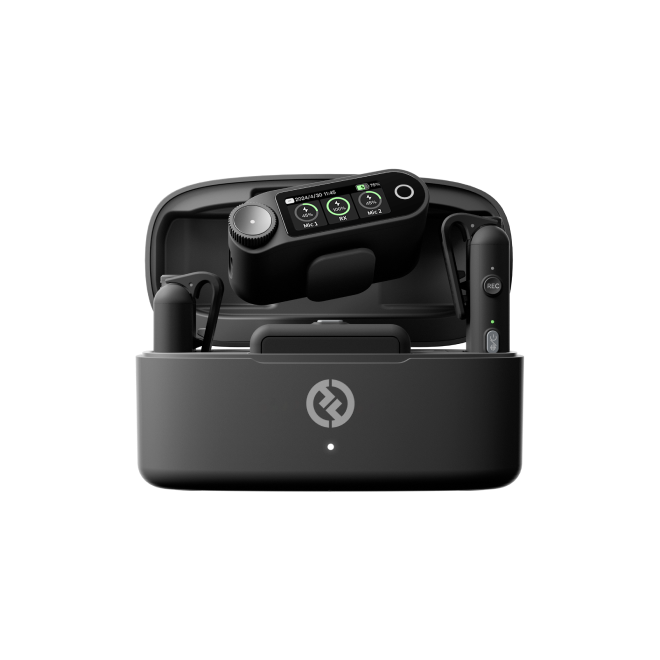
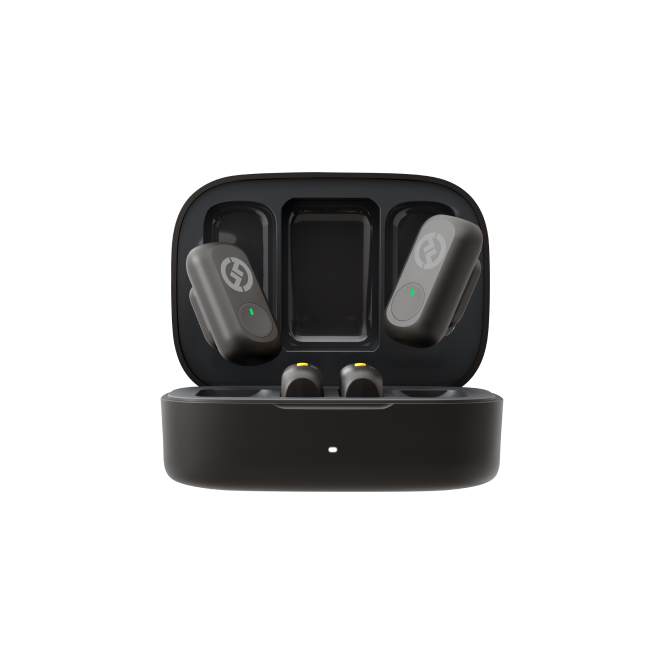
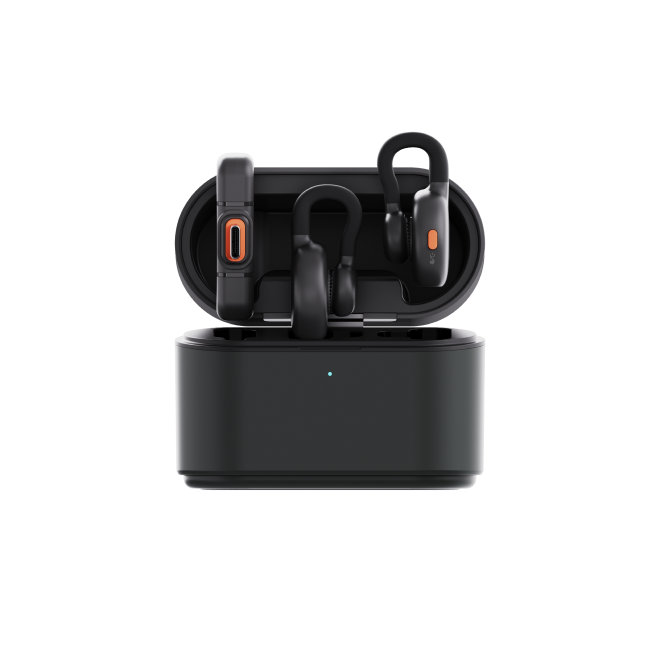
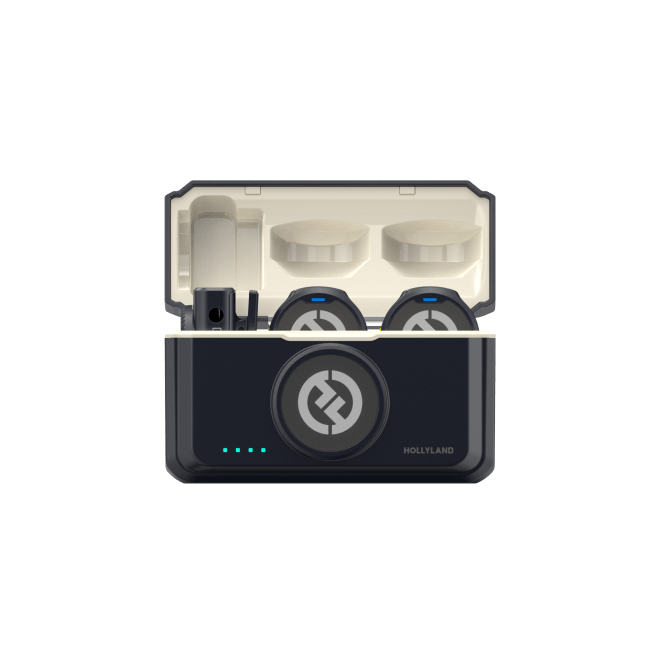
.png)
 简体中文

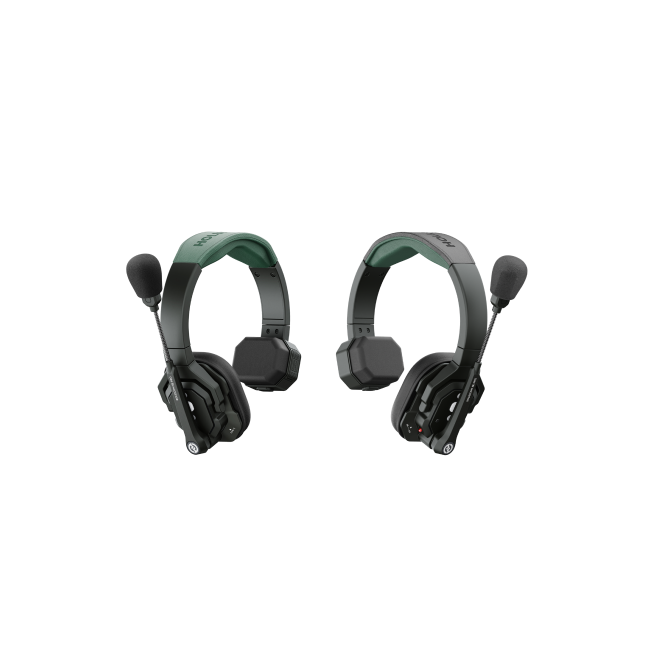
Solidcom C1
Beltpack-free all-in-one comms for 2–8 person crews
- Up to 8 Users
- 1.9GHz DECT
- 350m Range

From 2-person content teams to 80-user stadium broadcasts, Hollyland's Solidcom lineup delivers beltpack-free wireless crew communication that scales with your production. Interference-free 1.9GHz DECT, dual-mic noise cancellation, and all-day battery life—ready out of the box.
Compatible with Clear-Com, RTS & Dante · Available for crews of 2–80 · Ships pre-paired, ready in minutes
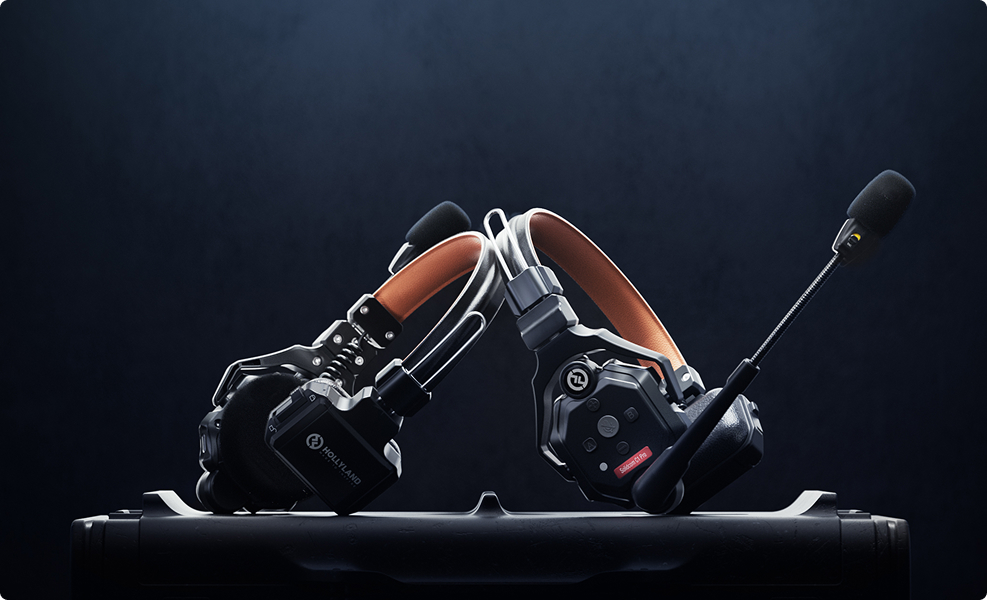
Beltpack-free all-in-one comms for 2–8 person crews
Noise-cancelling wireless comms for demanding mid-size productions

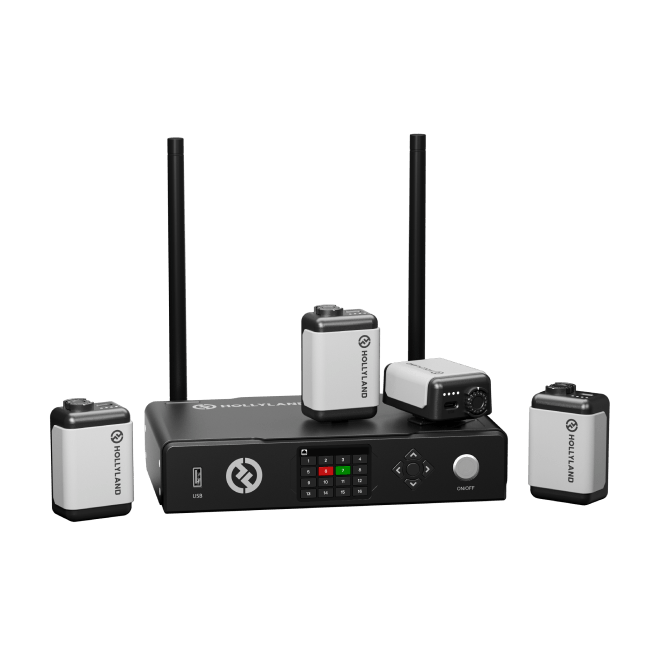
Seamless multi-zone coverage for large sets and live venues

Ready-out-of-box comms for small content and field teams

Hub-free 11-user system for outdoor and field production

Broadcast-ready beltpack system for live events and studio

Noise-cancelling beltpack comms for loud live productions

Enterprise intercom infrastructure for stadium and broadcast facilities
| Model |
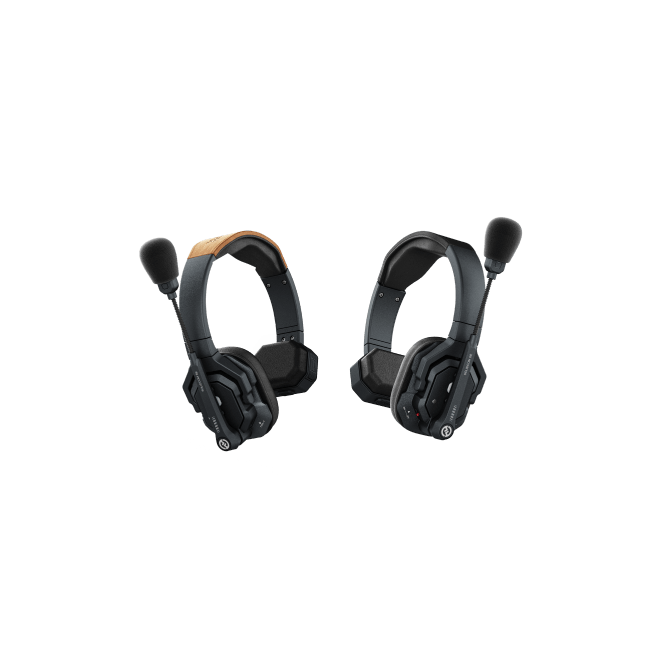
Solidcom C1
|
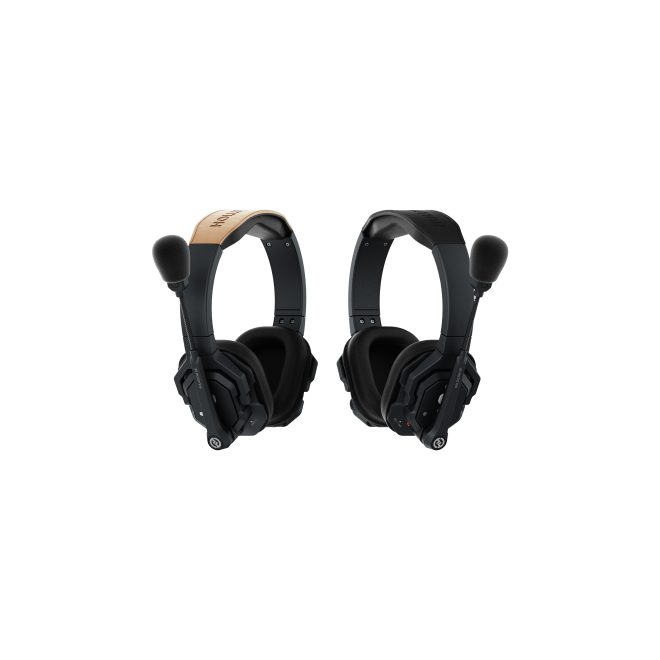
Solidcom C1 Pro
|
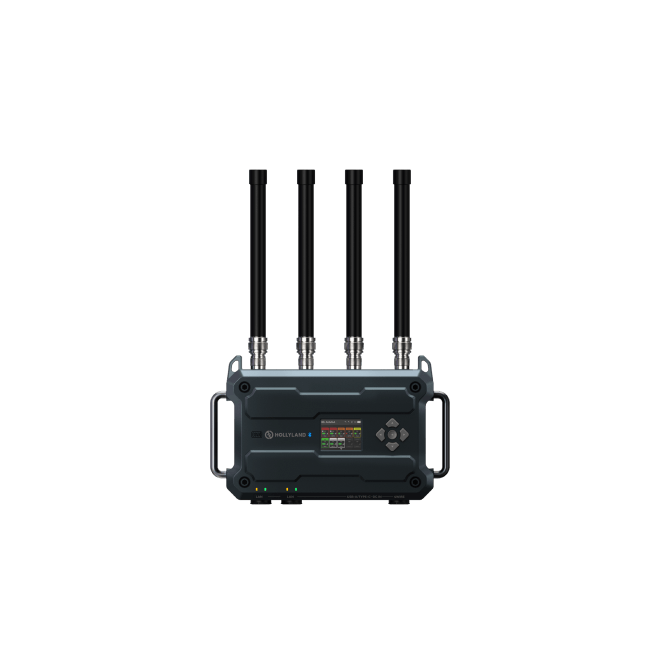
Solidcom C1 Pro – Roaming Hub
|
Solidcom SE Global Version
|
Solidcom SE Pro
|
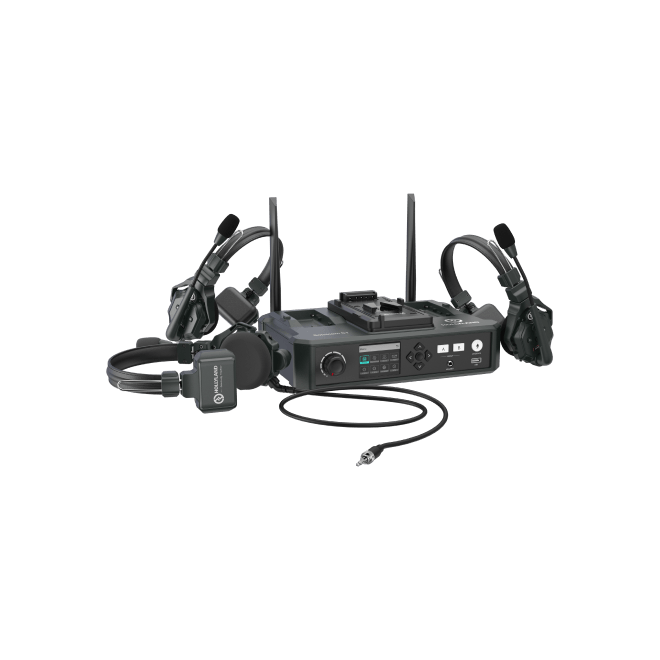
Solidcom M1
|
Solidcom M1 Pro
|
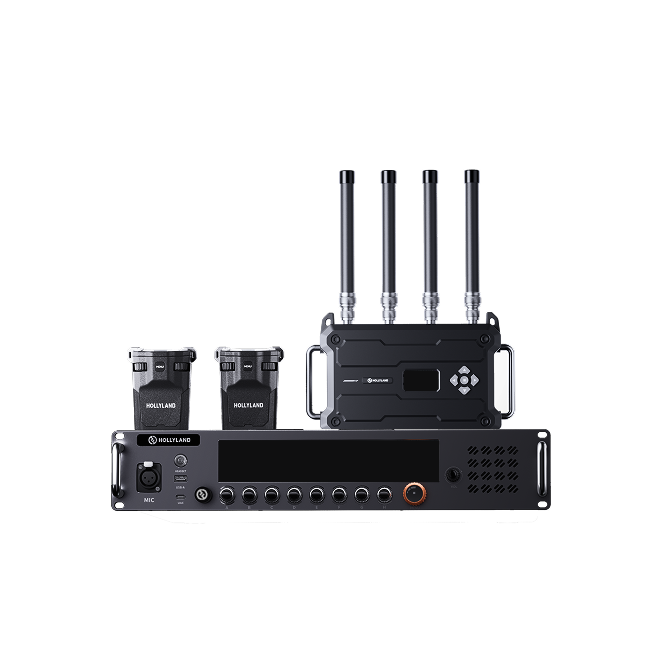
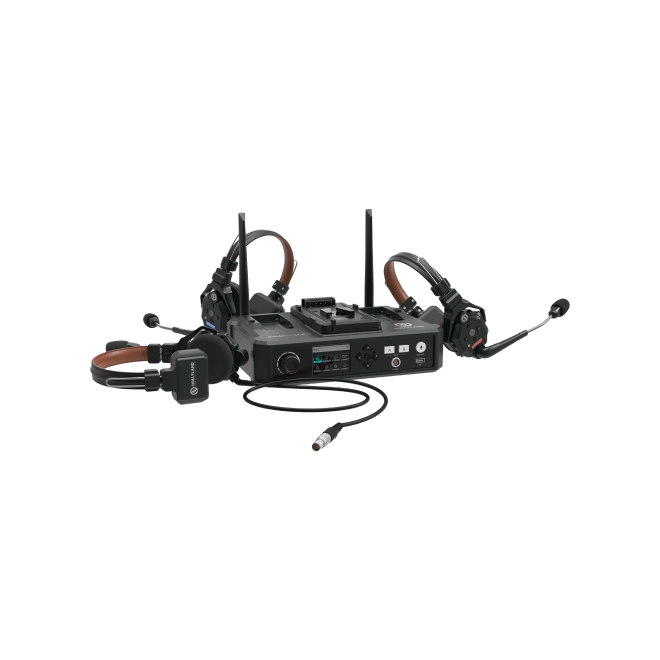
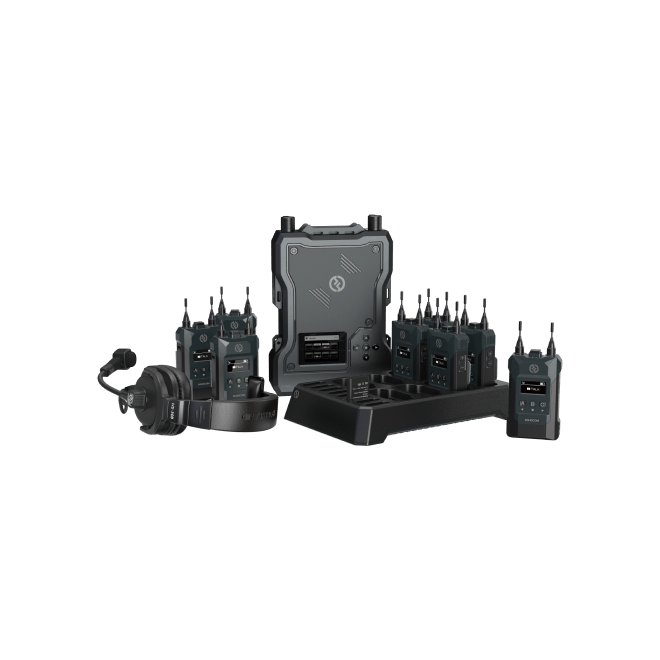
Solidcom H1 Wireless Intercom System
|
|---|---|---|---|---|---|---|---|---|
| MAX USERS PER SYSTEM | Up to 9 (HUB version) | Up to 9 (Hub version) | Up to 20 | Up to 5 | Up to 11 | Up to 8 | Up to 8 | Up to 80 (with Central Station) |
| Form Factor | All-in-One Headset | All-in-One Headset | All-in-One Headset | All-in-One Headset | All-in-One Headset | Beltpack + Headset | Beltpack + Headset | Beltpack + Headset |
| Max Range (LOS) | 350m / 1,100ft | 350m / 1,100ft | 500m / 1,600ft | 350m / 1,100ft | 400m / 1,300ft | 400m / 1,300ft | 400m / 1,300ft | 500m / 1,640ft per antenna |
| RF Frequency | 1.9GHz DECT | 1.9GHz DECT 6.0 | 1.9GHz DECT | 2.4GHz (license-free global) | 1.9GHz DECT | 1.9GHz DECT | 1.9GHz DECT | 1.9GHz DECT |
| Noise Cancellation | — | Dual-Mic ENC | Dual-Mic ENC | Dual-Mic ENC (>20dB) | Dual-Mic ENC (>20dB) | — | Dual-Mic ENC (20dB) | 20dB ENC |
| Battery Life | >10h (remote) | >10h (remote) | >10h (remote) | Up to 12h (remote) / >10h (master) | >10h (remote) | >6h (beltpack) | >6h (beltpack) | >15h (beltpack) |
| Talk Groups | 2 groups (HUB) / 1 partyline | 2 groups (HUB) / 1 partyline | 6 independent groups | 1 shared partyline | 1 shared partyline | 3 groups (A / B / C) | 3 groups (A / B / C) | Up to 100 groups |
| Broadcast Integration | 2-Wire, 4-Wire, UAC (HUB) | 2-Wire, 4-Wire, UAC (HUB) | 2-Wire, 4-Wire, UAC | — | — | 2-Wire (XLR), 4-Wire (RJ45) | 2-Wire (XLR), 4-Wire (RJ45) | 2-Wire, 4-Wire, Dante |
| Seamless Roaming | — | — | Seamless | — | — | — | — | Seamless (4km²+) |
| Hub / Base Station | Optional HUB | Optional HUB | Hub included | Hub-free | Hub-free | Base Station required | Base Station required | ANT01 + Central Station |
| Shop | Shop | Shop | Shop | Shop | Shop | Shop | Shop |
Your crew size today — and your likely growth over the next one to two years — is the first variable to establish before evaluating anything else.
Most wireless intercom systems are rated for a maximum number of simultaneous users. This number determines both your base configuration and how much headroom the system has before you hit its ceiling.
A practical framework by crew size:
Key question to ask before buying: Does the system support user expansion through cascade or hub additions — or does growing beyond the initial configuration require replacing the entire system?
Modular scalability protects your investment. A system that lets you add users incrementally through additional hardware means your intercom infrastructure can grow alongside your production without a full reinvestment.
Wireless intercoms come in two fundamentally different form factors. The right choice depends on your crew's workflow, comfort preferences, and the professional context you're operating in.
The transmitter, receiver, battery, and microphone are all built directly into the headset unit itself. Users wear nothing on their body except the headset.
Strengths:
- No body cables, beltpack, or worn hardware beyond the headset itself
- Faster to deploy — power on and go, with pre-paired systems ready within seconds
- Cleaner physical profile for camera-visible crew members
Best suited to: Film and video production crews, small content teams, commercial shooters, corporate AV, and any operator who values a minimal-gear profile and quick deployment at any location.
One practical consideration: Because the battery and radio hardware are headset-mounted, all-in-one units weigh more than traditional acoustic headsets. Look for ergonomic designs rated for all-day wear, and prioritize models with swappable battery modules to avoid pulling a headset from service to recharge.
The radio unit and battery move to a beltpack clipped to the belt or harness, while a lightweight acoustic headset connects via a professional LEMO or 3.5mm connector.
Strengths:
- Battery and RF hardware moved to the waist — lighter and less fatiguing on the head
- Full control over headset choice, including single-ear and in-ear monitor options
- Compatible with the professional LEMO headset ecosystem
- Standard form factor in broadcast, live event, and stage production environments
Best suited to: Broadcast engineers, live event crews, stage managers, OB truck operators, and any team running 10–14 hour production shifts where waist-worn hardware meaningfully reduces head fatigue.
The beltpack form factor is also the established standard in professional broadcast infrastructure environments — particularly where 2-Wire or 4-Wire intercom matrix integration is required.
The wireless frequency your intercom operates on directly determines how reliably it performs in crowded RF environments — and busy production sets are among the most RF-dense spaces you'll encounter.
2.4GHz is the world's most congested wireless band. Wi-Fi networks, Bluetooth devices, wireless camera control systems, and a wide range of consumer electronics all compete for the same spectrum. On a large production set, live venue, or festival ground with hundreds of wireless devices in play, 2.4GHz congestion can cause audio dropouts, increased latency, and reduced effective range.
1.9GHz DECT is a dedicated voice communication band purpose-built for wireless telephony and professional intercom use. Operating outside the 2.4GHz congestion zone, DECT systems are significantly less susceptible to interference from Wi-Fi and Bluetooth — making them the preferred choice for productions in high-density RF environments.
When 2.4GHz makes practical sense:
For international productions involving travel across multiple countries, a 2.4GHz system operating on a universal license-free band eliminates frequency licensing considerations at the border. This is a relevant advantage for small crews shooting across multiple global locations, where managing DECT regulatory compliance jurisdiction-by-jurisdiction adds operational friction.
General rule: If your production operates in RF-dense environments — large sets, live events, arenas, broadcast facilities with heavy wireless traffic — DECT 1.9GHz delivers more consistent and reliable audio performance. For small crews traveling internationally on a budget, a 2.4GHz license-free system is a workable and convenient alternative.
Range specifications are quoted in line-of-sight (LOS) conditions. Real-world performance through walls, staging structures, concrete floors, and crowd density will vary — sometimes significantly. Use LOS range as a comparative baseline, not an absolute guarantee.
What to evaluate:
Single-zone vs. multi-zone deployments:
Most small and mid-size productions operate comfortably within a single radio zone and have no roaming requirement. But if your crew regularly moves across large buildings, multiple performance areas, or expansive outdoor sites, you need a system with distributed antenna support and automatic, dropout-free handoff between zones.
Manual channel switching between antenna zones is not operationally viable during a live show. True seamless roaming — where the system handles zone transitions invisibly and instantaneously — is the correct technical requirement for any multi-zone deployment. Systems built around a distributed antenna hub architecture, such as the Solidcom C1 Pro Roaming Hub, are specifically designed to address this scenario.
Audio intelligibility in noisy environments is one of the most critical — and most commonly underestimated — performance factors in professional intercom systems.
A single-microphone design relies entirely on microphone proximity to the mouth to isolate voice from background noise. In loud environments — concerts, sports arenas, outdoor shoots, busy broadcast trucks — this is often insufficient.
Dual-microphone ENC (Environmental Noise Cancellation) uses a secondary microphone to sample ambient sound and actively subtract that noise from the primary voice signal. The result is significantly cleaner, more intelligible voice transmission in high-noise conditions.
What to look for:
When ENC is a hard requirement vs. a secondary feature:
ENC is essential for live event crews, sports production teams, concert venue operators, outdoor broadcast coordinators, and anyone working in persistently high-noise environments. For controlled studio sets, quiet production offices, or corporate AV applications, it remains useful but is less operationally critical.
Running out of battery mid-production is a failure with no recovery option. Evaluate battery specifications carefully against your actual shooting schedule — not ideal lab conditions.
Runtime per charge:
Swappable vs. sealed battery designs:
Hub and base station power flexibility:
For location-based and outdoor deployments, check whether the system's hub or base station supports field batteries — V-Mount, NP-F, or wide-voltage DC input — in addition to standard AC power. This determines whether your infrastructure can be deployed on mobile carts, light stands, or remote locations without access to reliable mains power.
On multi-department productions, not every crew member should hear every other crew member. Group separation allows you to isolate departments — keeping camera operators, lighting, audio, and stage management on independent channels — while giving select users the ability to monitor or bridge across multiple groups.
Key factors to evaluate:
For professional broadcast productions, a wireless intercom system rarely operates standalone. It typically needs to interface with an existing intercom matrix, broadcast switcher, or digital audio network.
Key interface types to evaluate:
Systems in the Solidcom M1, M1 Pro, and H1 lines include native 2-Wire and 4-Wire interfaces, making them directly compatible with professional broadcast infrastructure without additional conversion hardware.
Who needs broadcast integration:
This is essential for OB truck operators, live TV production teams, broadcast studio coordinators, and stadium event crews. For standalone field productions — indie film, small live events, content creation — it is typically not required, and prioritizing it unnecessarily increases system cost and setup complexity.
How quickly and confidently you can get a system operational is a real production factor — especially for crews without dedicated RF technicians or systems engineers on staff.
Pre-paired, plug-and-play systems:
All-in-one headset systems that ship already paired allow a crew to power on and be communicating within seconds of unboxing. This is particularly valuable for teams that move frequently, set up and break down across multiple locations, and cannot afford lengthy RF configuration time on site.
App-based and web GUI configuration:
Most modern professional systems include a mobile app or web browser interface for group assignment, gain control, battery level monitoring, and RF status visibility. This makes real-time adjustments during a show or production day significantly easier than navigating physical menus on hardware under pressure.
Infrastructure deployments:
Distributed antenna systems designed for large venues require network configuration, antenna placement planning, and in some cases a formal RF site survey. These setups are typically managed by a dedicated systems engineer or experienced AV technician, and setup time should be built into the production schedule as a deliberate technical phase — not an afterthought.
Practical rule of thumb: If your crew is deploying in under 30 minutes with minimal technical staff, prioritize pre-paired, out-of-box-ready systems. If you're planning a permanent installation or a large, multi-zone venue deployment, treat configuration as a proper technical project and resource it accordingly.
I love my new LARK M2 mics. These were so good, and I really enjoyed testing out the new LARK M2 from Hollyland.
Sarah Grace Tech Creator · 3.2M YouTube subscribers
The Hollyland LARK MAX is the wireless microphone system with the clearest and crispest audio of any wireless mic system I have ever tried.
Goenrock Cinematographer · 107K Instagram subscribers
LARK MAX is doing an excellent job of dropping the sound of the air conditioner, which is something l always have to remove and post with our shotgun mic.
Film Riot Filmmaking Educator · 2.2M YouTube subscribers
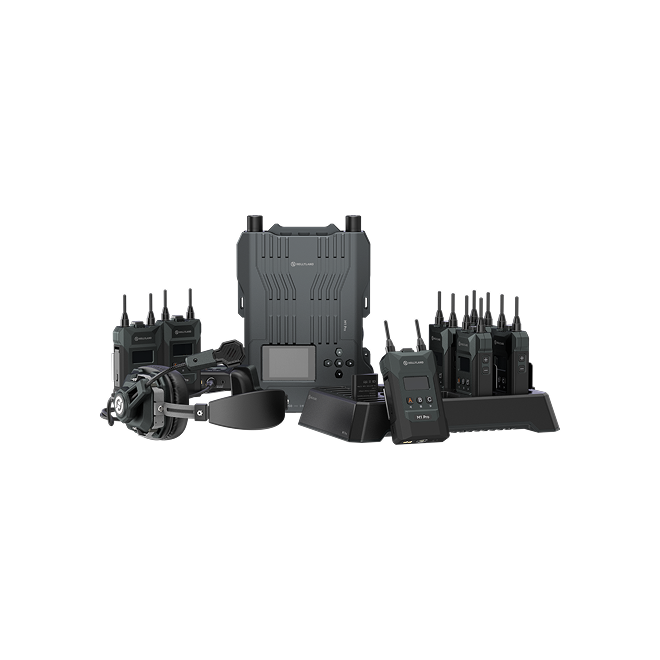
Hollyland makes wireless intercom systems for crews from 2 to 80+ users. Here is a quick guide by scale:
Yes. The majority of Hollyland intercom systems — including the Solidcom C1, C1 Pro, C1 Pro Roaming Hub, SE Pro, M1, M1 Pro, and H1 — operate on the 1.9GHz DECT band, which is entirely separate from the congested 2.4GHz spectrum used by Wi-Fi routers, Bluetooth devices, and most consumer wireless gear. On a busy broadcast compound, festival stage, or convention floor packed with competing wireless signals, DECT systems continue to operate without interference or dropouts.
The one exception is the Solidcom SE Global Version, which uses the 2.4GHz band to achieve maximum international license-free compatibility. It mitigates interference through automatic frequency hopping, which continuously scans and switches to the cleanest available channel in real time.
Yes — the Solidcom M1, M1 Pro, and H1 all feature native broadcast integration interfaces built directly into their base stations:
No external converter boxes are required for 2-Wire or 4-Wire connections. If you are running an OB truck or broadcast studio that already has a partyline backbone, the M1/M1 Pro and H1 can slot in as a wireless extension of that infrastructure without disrupting your existing setup.
All Hollyland intercom systems are engineered for production-length endurance. Here is a breakdown by system:
For all HUB-based and base station systems (C1 HUB, M1, M1 Pro, H1), the fixed infrastructure side can be powered continuously via DC adapter, PoE Ethernet, or V-Mount / NP-F field batteries, so your base of operations never goes dark mid-production.
Beltpack-free (all-in-one) systems — the Solidcom C1, C1 Pro, SE Global, and SE Pro — integrate the radio, battery, and microphone directly into the headset. There are no body cables, no clip-on beltpacks, and nothing attached to your belt or vest. The headset weighs approximately 170–185g all-in. This makes them fast to deploy, comfortable for extended wear, and ideal for film crews, field production teams, and content creators who want a clean, cable-free setup.
Beltpack systems — the Solidcom M1, M1 Pro, and H1 — use the traditional form factor: a beltpack worn on the body handles all radio and battery hardware, while a lightweight wired headset connects to it. Moving the hardware off the head reduces cranial fatigue during 12+ hour live events. Beltpacks also support professional locking LEMO headset connectors and 3.5mm IEM jacks, making them compatible with a wider range of professional broadcast headsets.
In summary: Beltpack-free systems prioritize deployment speed, cable-free freedom, and simplicity. Beltpack systems prioritize broadcast-grade headset flexibility, all-day head comfort, and deep integration with professional intercom infrastructure.
Yes — every Hollyland intercom line is designed with a clear upgrade path:
Additionally, the Solidcom C1 Pro is fully backward compatible with original Solidcom C1 headsets, meaning you can upgrade your base station infrastructure without replacing every headset in your kit.
Most Hollyland intercom systems feature Dual-Mic Environmental Noise Cancellation (ENC) that delivers 20dB+ of ambient noise reduction. A secondary microphone continuously samples surrounding environmental noise and subtracts it from the outgoing voice signal in real time — so even at a 100dB+ stadium event or on a wind-swept outdoor location, your crew hears clean intelligible voice, not background roar.
Systems equipped with Dual-Mic ENC:
- Solidcom C1 Pro — ENC with a dedicated physical on/off toggle switch; 71dB SNR
- Solidcom SE Global Version — >20dB ENC; 71dB SNR
- Solidcom SE Pro — >20dB ENC; 71dB SNR
- Solidcom M1 Pro — 20dB ENC built into the headset; 60dB SNR
- Solidcom H1 — 20dB active ENC via locking LEMO headsets; 67dB SNR
The Solidcom C1 does not include ENC. If your primary use case involves high ambient noise — concerts, sports events, outdoor wind — the C1 Pro is the recommended upgrade. All ENC-equipped systems maintain their rated 10+ hour battery life with noise cancellation active.
No RF technician is required for any Hollyland intercom system. The level of setup effort scales with system size:
All systems support real-time battery monitoring, group management, and configuration via the HollyVox App (iOS/Android) or a browser-based Web GUI.
It depends on the system:
For productions traveling between multiple countries, we recommend reviewing the product's regional compliance documentation or contacting Hollyland support to confirm regulatory status for your specific shooting locations before departure.
All published range figures (350m–1,640ft depending on the model) are measured in open-air, line-of-sight (LOS) conditions. Real-world indoor range will be reduced by signal attenuation from walls, floors, staging structures, and metal equipment. Here is what to expect in practice:
For any large-venue or complex deployment, we recommend a pre-event RF walkthrough to map coverage zones and confirm antenna placement before the production goes live.