.png)
 简体中文

LARK M2
Plug-and-play wireless for solo and duo camera shoots
- 24-bit / 48kHz
- ENC Noise Cancellation
- 300m LOS Range

Upgrade your camera rig with wireless microphones built for plug-and-play camera compatibility. From solo vloggers to multi-talent productions, Hollyland's LARK series delivers studio-grade 24-bit audio, 300m+ wireless range, and AI noise cancellation — in transmitters light enough to forget you're wearing them.
Camera RX included — plug-and-play ready with Sony, Canon, Nikon, Fujifilm & more.
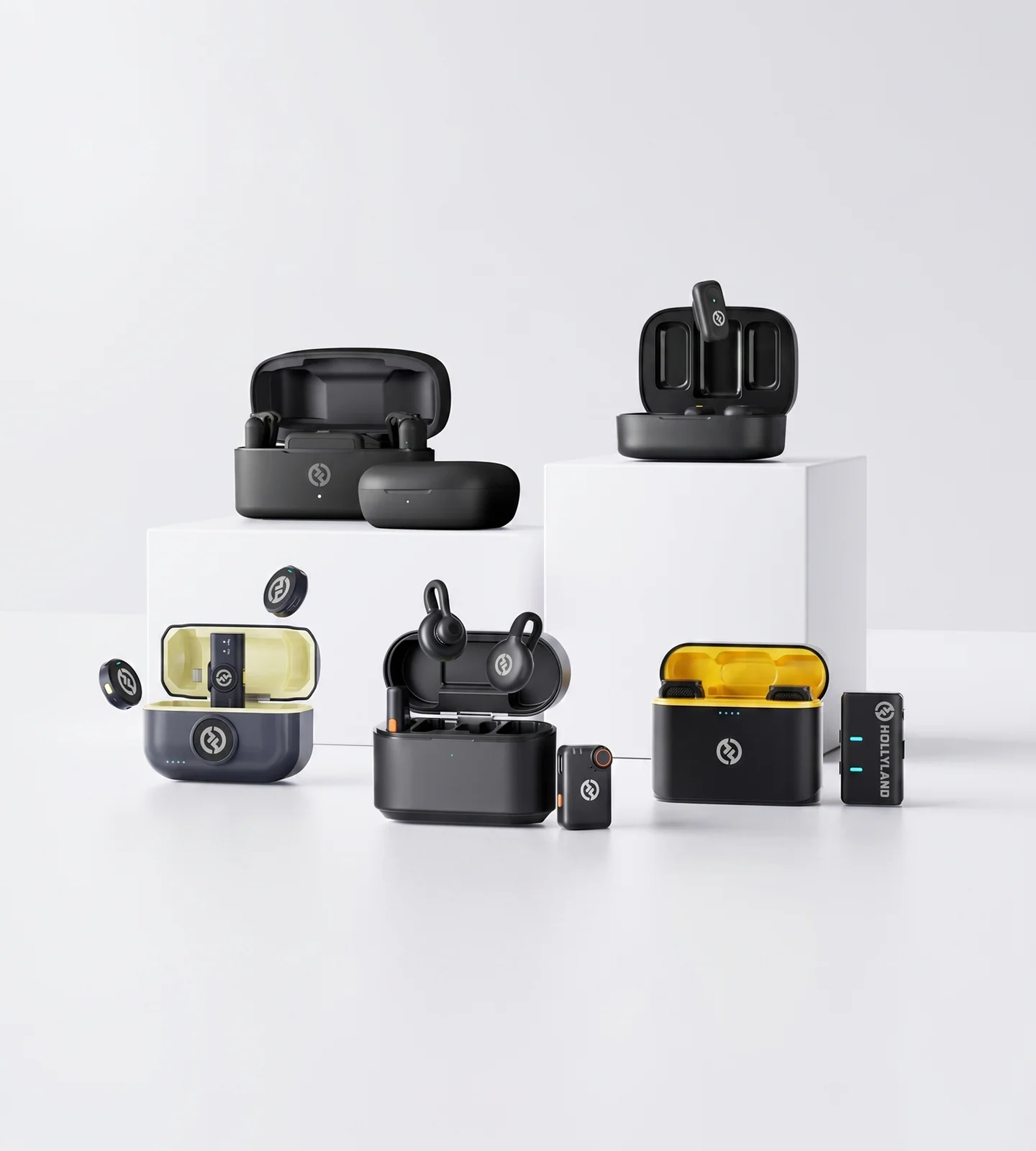
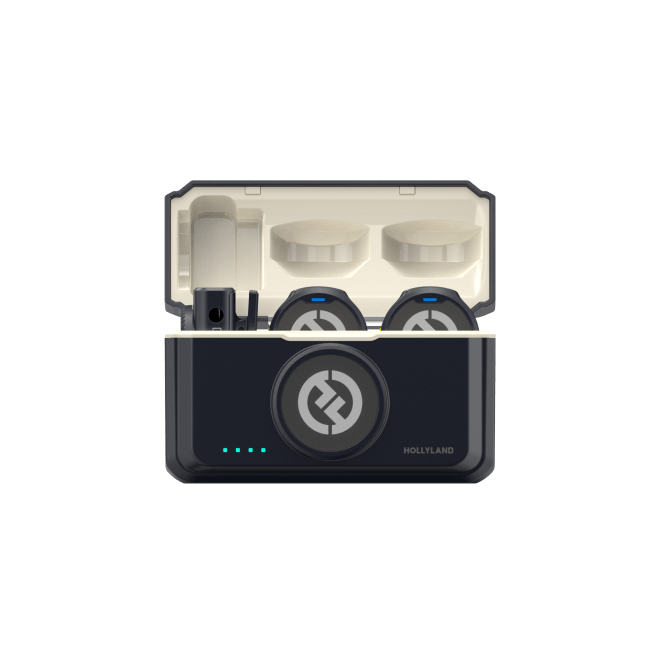
Plug-and-play wireless for solo and duo camera shoots

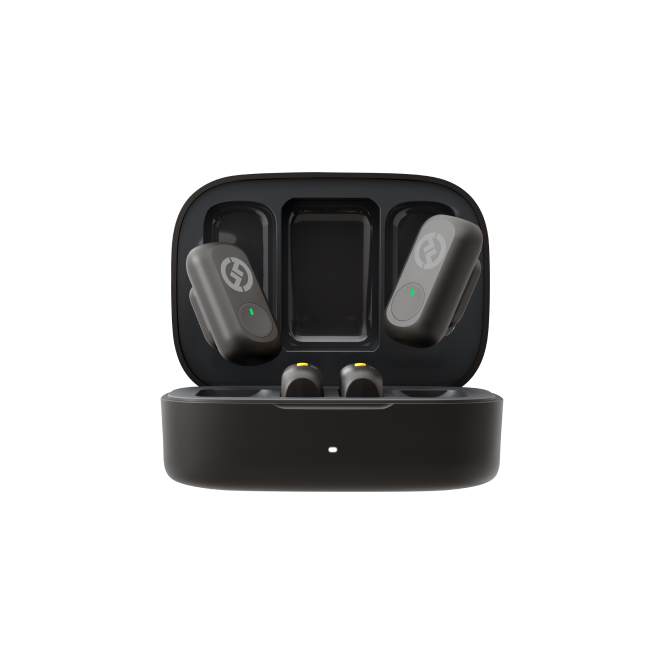
Featherlight, logo-free mic for clean on-camera setups

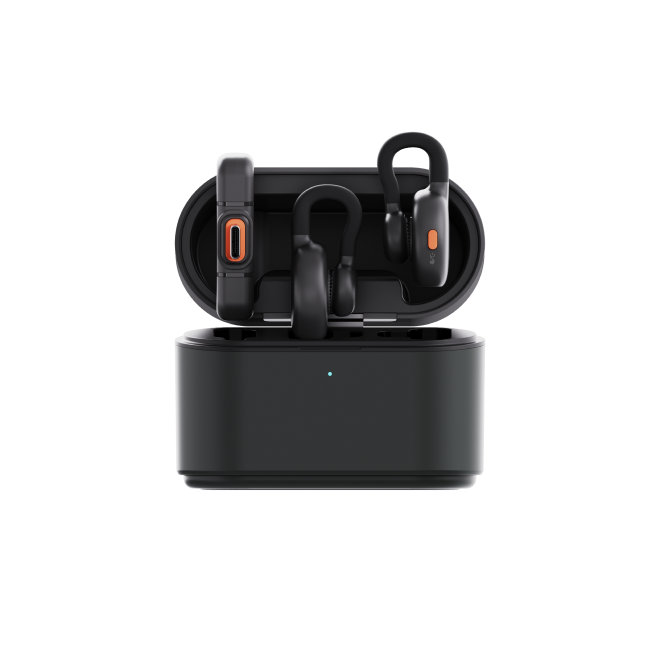
Professional multi-talent wireless for serious camera productions
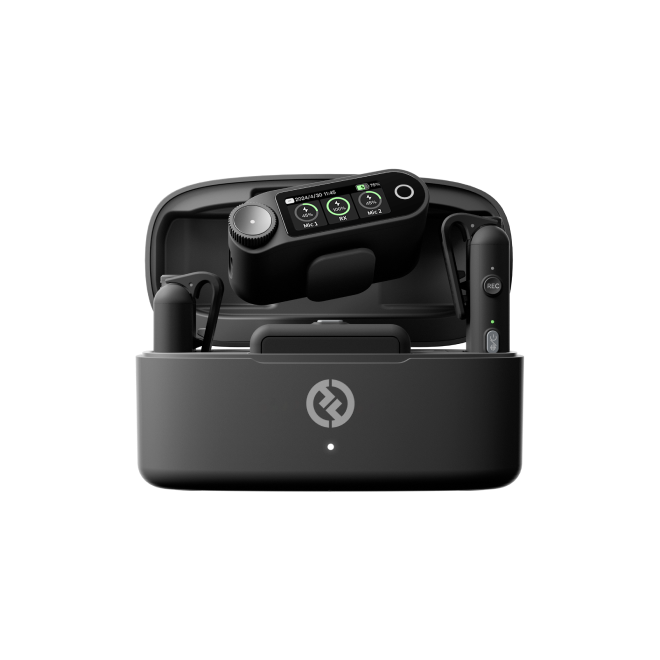
32-bit float multi-mic system for creators who need broadcast-grade audio at featherweight scale
| Model |
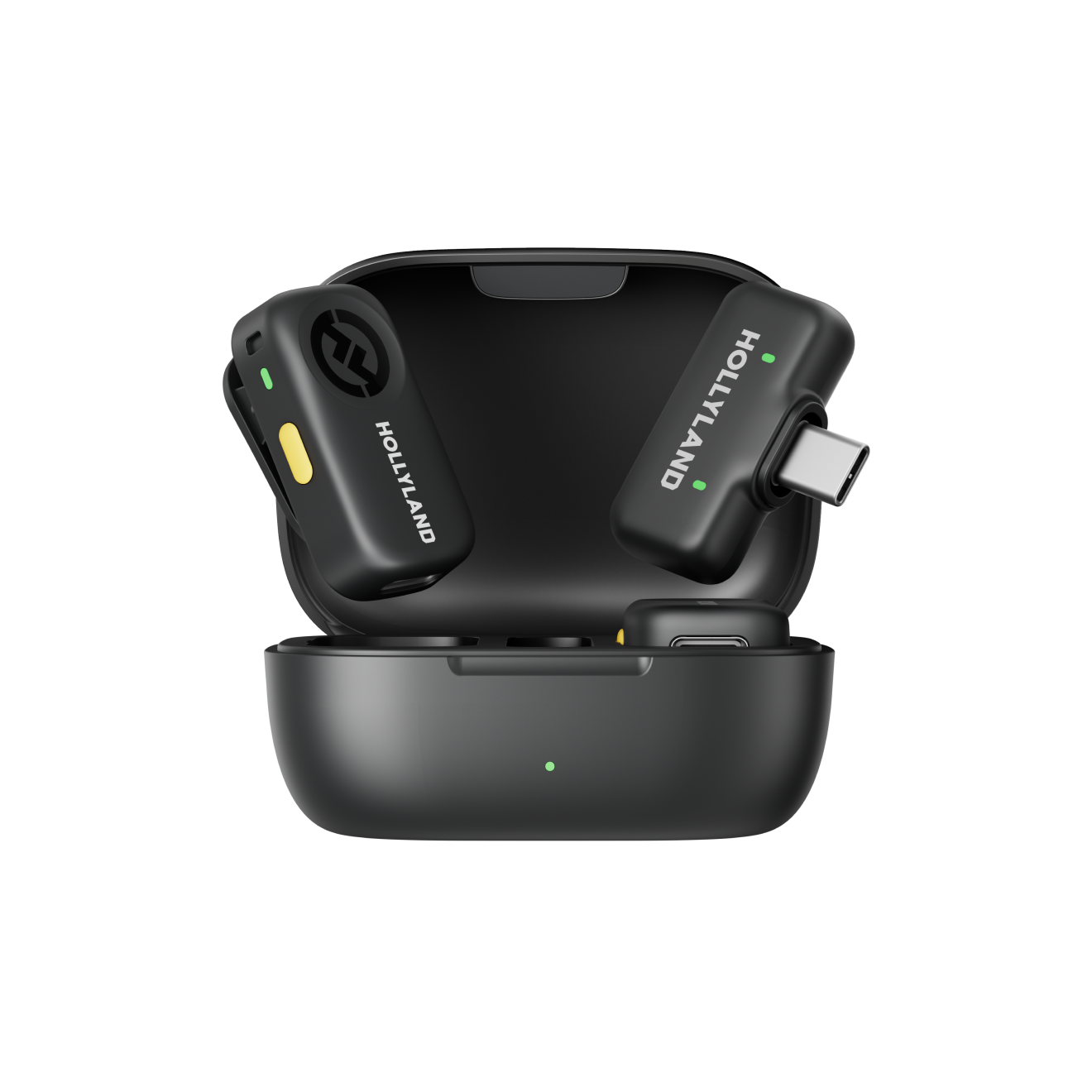
LARK M2
|
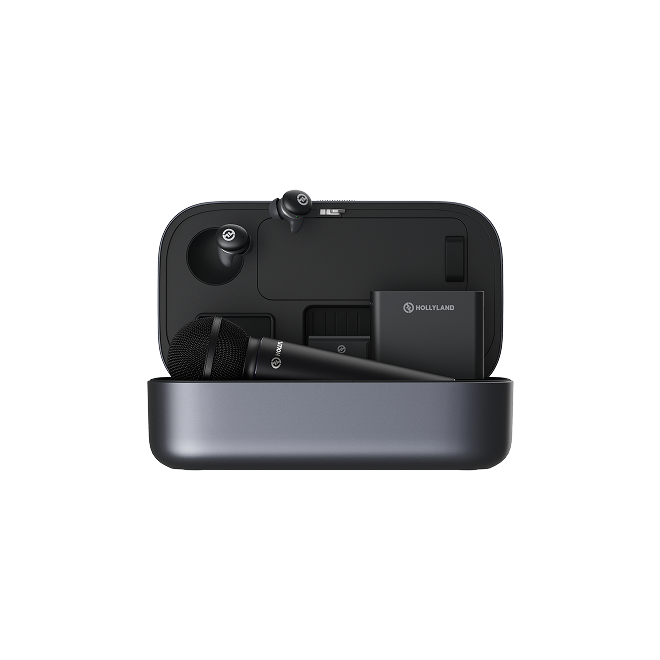
LARK M2S
|
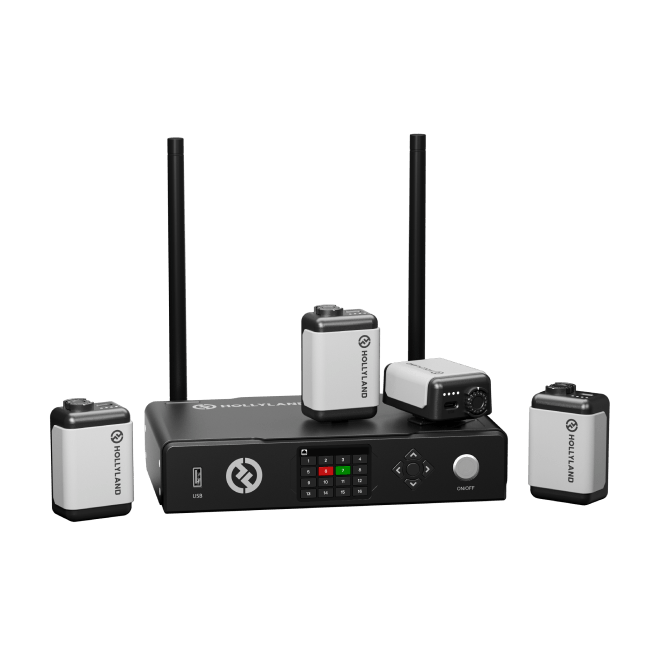
LARK MAX 2
|
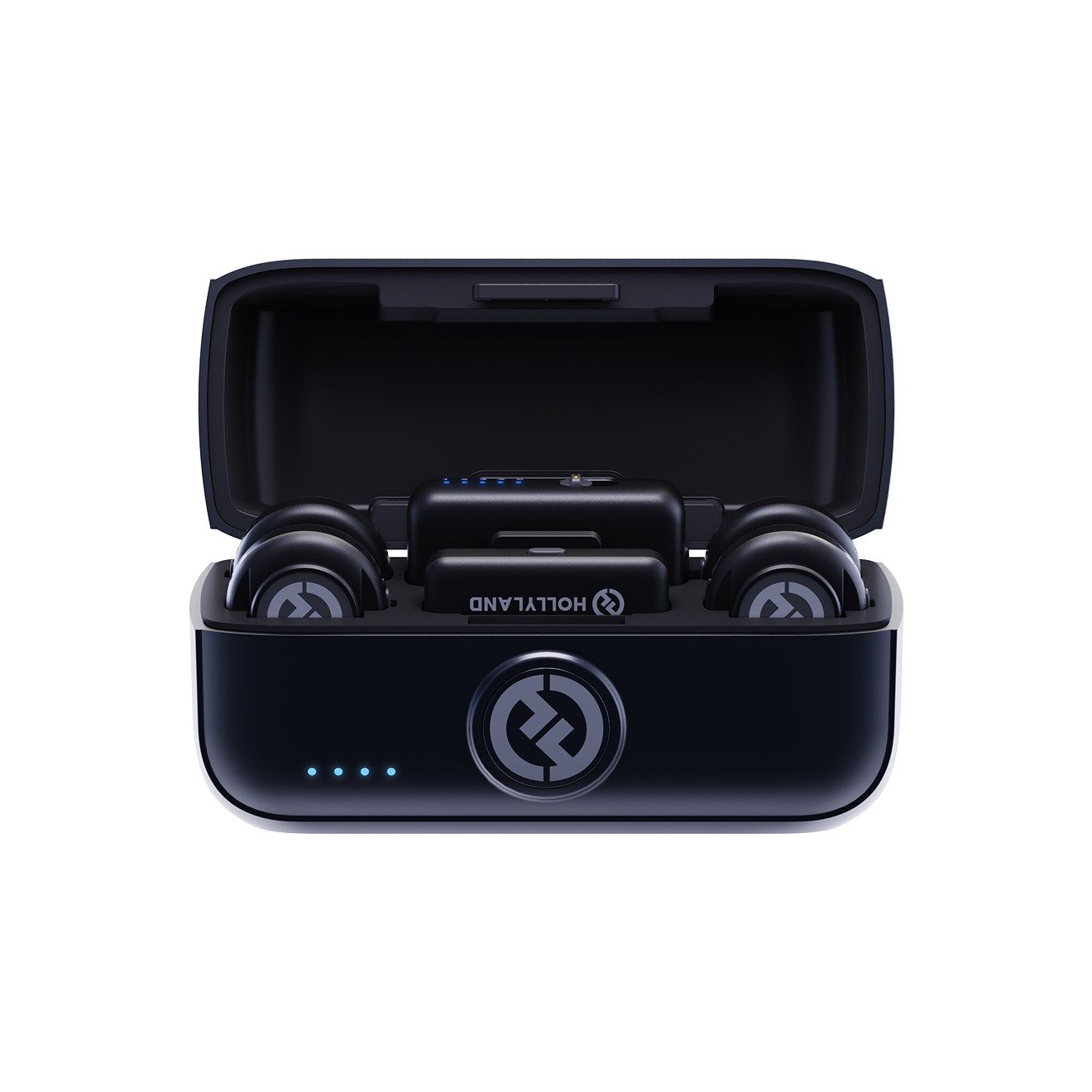
LARK M3
|
|---|---|---|---|---|
| Recording Format | 48kHz / 24-bit WAV | 48kHz / 24-bit | 48kHz / 32-bit Float | 48kHz / 24-bit & 48kHz / 32-bit Float |
| Wireless Range (LOS) | 300m / 1,000ft | 300m / 1,000ft | 340m / 1,115ft | 300m / 1,000ft |
| Camera NLOS Range | 40m / 130ft | 40m / 130ft | 70m / 230ft | — |
| Signal-to-Noise Ratio | >70dB | >70dB | ≥72dB | ≥70dB |
| Maximum SPL | 115dB SPL | 116dB SPL | 128dB SPL | 125dB SPL |
| TX Battery Life | ~10 hours | ~9 hours | ~11 hours | ~8 hours |
| Camera RX Battery Life | ~9 hours | ~8.5 hours | ~12 hours | ~9 hours |
| Transmitter Weight | ~9g | ~7g | ~14g | ~9g |
| Noise Cancellation | ENC | ENC | AI Noise Cancellation | AI Noise Cancellation |
| Max TX per RX | — | — | Up to 4 TX | Up to 4 TX |
| Internal Recording | — | — | 32-bit Float, up to 14 hrs | 32-bit Float |
| Timecode Support | — | — | Yes | — |
| Shop | Shop | Shop | Shop |
This is the most important filter before evaluating anything else. A wireless microphone designed exclusively for smartphones will not connect cleanly to a DSLR or mirrorless camera — and attempting workarounds often introduces noise, level mismatches, or unreliable signal.
What to look for:
Key distinction: Many wireless systems come in separate mobile and camera versions. Always confirm you're selecting the camera version — or a combo pack that includes both — to avoid connector mismatch out of the box.
Range specs are typically quoted as Line of Sight (LOS) — maximum distance in open, unobstructed conditions. Non-Line of Sight (NLOS) performance is what matters most in practical use.
How to calibrate your expectations:
A system rated for 300m LOS won't deliver 300m indoors — but it signals a more robust transmission architecture that holds up better when conditions aren't ideal.
Most modern wireless microphones designed for cameras record at 48kHz / 24-bit, which is more than sufficient for broadcast, YouTube, and professional video production. A few additional specifications, however, separate reliable systems from genuinely professional ones:
If you're shooting narrative, documentary, or event work where audio cannot be redone, 32-bit float is worth treating as a serious decision factor rather than a marketing spec.
Your transmitter count should match the number of people being recorded — not just for the projects you're shooting today, but for the formats you expect to grow into.
Worth checking before you buy: Verify that the receiver you're purchasing actually supports multi-TX connections. Both the LARK M3 and the LARK MAX 2 support up to 4 transmitters and 4 receivers simultaneously — making either suitable for larger productions without requiring an external mixer or additional receivers.
Clean audio in a controlled studio is achievable with almost any microphone. The real challenge is capturing clear dialogue outdoors, in busy venues, or anywhere ambient noise is out of your control.
Two technologies matter here:
For outdoor shooting, ENC is the baseline expectation. For events, busy locations, or uncontrolled environments, AI noise cancellation provides an additional layer of protection that meaningfully reduces cleanup time in post.
Note: Noise cancellation is not a substitute for a windshield in extreme wind conditions — but it significantly reduces reliance on heavy post-processing for most real-world shooting scenarios.
On-camera audio involves two distinct physical considerations: how the receiver affects your camera balance, and how the transmitter looks on your subject.
On the transmitter:
On the receiver:
The LARK M2S, at 7g, is the lightest option in this collection and features a no-logo titanium design — purpose-built for creators who want the transmitter to disappear on camera entirely. The LARK M3 matches it at 9g while adding 32-bit float recording and AI noise cancellation for creators who need broadcast-grade audio without the bulk.
Running out of battery mid-production isn't just inconvenient — it can mean lost audio that can't be recovered.
What to evaluate:
Internal recording as a failsafe:
Some transmitters include onboard backup recording that captures audio directly to the transmitter, independent of the wireless signal. This matters most for:
If backup recording is a non-negotiable for your workflow, both the LARK M3 and the LARK MAX 2 offer 32-bit float internal recording as an onboard failsafe. The LARK MAX 2 extends this to up to 14 hours of onboard capacity per transmitter.
I love my new LARK M2 mics. These were so good, and I really enjoyed testing out the new LARK M2 from Hollyland.
Sarah Grace Tech Creator · 3.2M YouTube subscribers
The Hollyland LARK MAX is the wireless microphone system with the clearest and crispest audio of any wireless mic system I have ever tried.
Goenrock Cinematographer · 107K Instagram subscribers
LARK MAX is doing an excellent job of dropping the sound of the air conditioner, which is something l always have to remove and post with our shotgun mic.
Film Riot Filmmaking Educator · 2.2M YouTube subscribers
Yes. The LARK M2, LARK M2S, and LARK MAX 2 all include a dedicated Camera Version receiver that connects to your camera's 3.5mm TRS microphone input — the standard audio port found on Sony, Canon, Nikon, Fujifilm, Panasonic, Blackmagic Design, and most other DSLR and mirrorless cameras.
The receiver mounts to your camera's cold shoe and feeds a clean analog signal directly into your recording without requiring a computer, audio interface, or additional software. Plug in, power on, and you're recording.
There are four camera-ready options, each built for a different scale of work:
If you're unsure, the LARK M2 covers the widest range of everyday camera shooting scenarios. If you need multi-mic flexibility with broadcast-grade audio, the LARK M3 is the natural next step.
All four systems offer strong range for professional fieldwork:
| System | Line-of-Sight Range | NLOS Range (Camera RX) |
|---|---|---|
| LARK M2 | Up to 300m / 1,000ft | 40m |
| LARK M2S | Up to 300m / 1,000ft | 40m |
| LARK M3 | Up to 300m / 1,000ft | — |
| LARK MAX 2 | Up to 340m / 1,115ft | 70m |
For most camera shooting scenarios — interviews, run-and-gun documentary, event coverage, or studio setups — the NLOS range is sufficient to maintain a clean, stable signal even when walls, furniture, or crowds sit between the transmitter and receiver.
No. Because the Camera Version receiver outputs audio directly into your camera's microphone input, the signal is captured in sync with your video at the recording level — the same way a wired lavalier or shotgun mic would work.
The LARK MAX 2 additionally supports low-latency wireless audio monitoring through its OWS Monitor Earphone, allowing a director or sound operator to listen back in real time with no perceptible delay during live production.
Yes. The LARK M2 and LARK M2S are available in dual-transmitter kits, giving each speaker their own clip-on transmitter while both channels feed into a single Camera RX — ideal for two-person interviews or presenter-to-camera formats with a subject at a distance.
The LARK M3 and LARK MAX 2 go further: each supports up to 4 TX & 4 RX simultaneously, with 4 independent isolated tracks — making either the right choice for panel discussions, group interviews, documentary setups with multiple subjects, or any production where more than two mics need to feed one camera.
All three systems include built-in noise cancellation to reduce environmental interference before the signal ever reaches your camera:
For outdoor shoots where wind is a factor, pairing any of these transmitters with a foam windscreen is recommended. The built-in noise cancellation handles ambient noise; the windscreen handles direct airflow at the capsule.
Yes — all four systems are rated for full-day shooting on a single charge:
| System | TX Battery | Camera RX Battery | Total (with charging case) |
|---|---|---|---|
| LARK M2 | ~10 hours | ~9 hours | Up to 40 hours |
| LARK M2S | ~9 hours | ~8.5 hours | Up to 30 hours |
| LARK M3 | ~8 hours | ~9 hours | Up to 48 hours |
| LARK MAX 2 | ~11 hours | ~12 hours | Up to 36 hours |
The charging cases on the LARK M2, LARK M2S, and LARK M3 store additional charge so you can top up transmitters between setups without carrying a separate power bank — useful for multi-setup event days or back-to-back production schedules.
The LARK M3 and LARK MAX 2 both include 32-bit float internal recording in each transmitter as an automatic failsafe. If an obstruction, distance, or unexpected RF interference causes the wireless signal to drop, your audio is preserved on-device and can be synced in post-production. The LARK MAX 2 extends onboard capacity to up to 14 hours per transmitter.
32-bit float recording also eliminates gain-staging risk at the source: even if a sudden loud moment — applause, a shout, a door slam — would clip a standard 24-bit recording, the 32-bit float file retains the full dynamic range and can be corrected in editing without distortion.
For the LARK M2 and LARK M2S, the 300m LOS transmission range and ENC noise handling are engineered to minimize the risk of signal loss under typical shooting conditions.
All three Camera Version systems are plug-and-play. Mount the receiver to your cold shoe, plug the 3.5mm TRS cable into your camera's microphone input, power on the transmitters, and you're recording. No app download, Bluetooth pairing, or menu configuration required before your first take.
Optional app control is available on the LARK M2 and LARK M2S for expanded gain adjustment, EQ, and monitoring settings when connected to a smartphone. The LARK MAX 2 also supports app-assisted configuration for advanced timecode and multi-channel workflows. For camera-first shooters, none of these apps are required to start capturing clean, broadcast-quality audio immediately.