
.png)
 简体中文
简体中文 
If you’ve ever recorded a podcast or voice-over only to hear a distracting hiss in the background, you know the frustration. Bad audio kills listener retention faster than bad video. Fortunately, learning how to use noise reduction in Audacity to clean your audio is a straightforward process that can save a ruined recording.
Audacity is a powerful, free tool, but it relies on a specific workflow to get right. If you use the wrong settings, your voice can end up sounding robotic or “underwater.”
This guide covers the exact three-step process—Noise Reduction, Noise Gate, and EQ—to make your audio sound professional, along with how to prevent the noise from happening in the first place.
Understanding Audio Noise: Why Your Recording Hisses
Before you start adjusting sliders, you need to understand what Audacity can actually fix. Not all background noise is created equal, and the “Noise Reduction” tool is designed for a very specific type of interference.
Audio noise generally falls into two categories:
- Continuous Noise: This is a consistent, unchanging sound like a computer fan, air conditioner hum, or the electrical “hiss” of a microphone. Audacity excels at removing this because the sound follows a predictable pattern.
- Transient Noise: These are sudden, irregular sounds like a dog barking, a door slamming, or keyboard clicks. The standard Noise Reduction effect struggles here because there is no constant “fingerprint” for the software to identify.
Key Takeaway: If your audio has a constant hum, you are in the right place. If you are trying to remove a siren that drove past your window, you will likely need to manually cut that section out rather than using the Noise Reduction effect.
What is Signal-to-Noise Ratio (SNR)?
To get the best results, keep the Signal-to-Noise Ratio (SNR) in mind. This measures the difference in volume between your desired audio (the Signal, usually your voice) and the background interference (the Noise).
- High SNR: Your voice is loud and clear, and the background hiss is very faint. This is easy to clean up.
- Low SNR: The background noise is almost as loud as your voice.
If your recording has a low SNR, Audacity has to work much harder to separate your voice from the static. Aggressive processing on noisy audio often results in “digital artifacts,” causing your voice to sound metallic or bubbly. The cleaner your original recording, the better the final result will be.
Step 1: The “Noise Reduction” Effect (The Core Method)
The Noise Reduction tool is the most powerful feature in Audacity for cleaning up bad audio. It works by “fingerprinting” the noise you want to remove and then mathematically subtracting that fingerprint from the rest of your audio.
Because this is a two-step process, you cannot simply apply the effect immediately. You must first teach Audacity what “noise” sounds like in your specific recording.
Follow this workflow to clean your audio:
- Identify a sample of “pure noise”: Zoom in on a section of your recording where you are not speaking (usually the first few seconds).
- Highlight the noise: Click and drag to select about 0.5 to 1 second of this silence. Ensure you do not select any breaths or the start of a word.

- Open the tool: Go to the top menu and select Effect > Noise Reduction and Repair > Noise Reduction.

- Capture the fingerprint: Click the “Get Noise Profile” button. The window will close—this is normal. Audacity has now analyzed that specific hum or hiss.

- Select your audio: Highlight the entire track by double-clicking it or pressing Ctrl + A (Windows) / Cmd + A (Mac).
- Re-open the tool: Go back to Effect > Noise Reduction and Repair > Noise Reduction.

- Apply the fix: Adjust your settings (we will cover the ideal settings in the next section) and click OK.

Why the “Noise Profile” Step is Crucial
Many beginners skip the “Get Noise Profile” step or select a section of audio that includes their voice. If you do this, Audacity will think your voice is part of the “noise” and try to remove it. This destroys your audio quality. Always ensure your initial selection contains only the background room tone.
Best Settings for Audacity Noise Reduction (Avoid the “Robot Voice”)
A common mistake is cranking every slider to the maximum, thinking “more reduction equals cleaner audio.” Unfortunately, this usually results in a digital, underwater sound—often called the “robot voice” effect.
To get professional results, you need to find a balance between removing noise and keeping your voice sounding natural. Here is what the three critical sliders actually do.
1. Noise Reduction (dB)
This slider controls how much volume Audacity subtracts from the detected noise. Think of this as the strength of the effect.
- The Danger Zone: If you push this slider above 20 dB, you will likely damage the audio quality. The software starts removing parts of your voice that share frequencies with the noise, making you sound metallic.
- The Sweet Spot: For most recordings (podcasts, voice-overs), a setting between 6 dB and 12 dB is ideal.
- Strategy: It is better to run the effect twice at a low setting (e.g., 6 dB) than once at a high setting.
2. Sensitivity
Sensitivity determines how strict Audacity is when deciding what counts as “noise” versus “voice.”
- What it does: The higher the sensitivity, the more aggressive the tool becomes. It will catch more hiss, but it risks mistaking your breath or soft consonants (like ‘s’ or ‘t’) for noise and deleting them.
- Recommended Setting: The default is 6.00.
- Increase it (to 12-18) if you still hear a lot of background hiss.
- Decrease it (to 3-4) if your voice sounds choppy or parts of words are cutting out.
3. Frequency Smoothing (bands)
When Audacity removes noise, it can sometimes leave behind digital artifacts that sound like chirping birds or “bubbling” water. This slider fixes that residue.
- What it does: It spreads the noise reduction across neighboring frequency bands to smooth out those harsh digital artifacts.
- Recommended Setting: For spoken word, a setting of 3 to 6 works best. If your audio sounds “swirly” after reduction, try increasing this number.
💡 Pro Tip: Trust Your Ears, Not the Numbers
Never click “OK” immediately. Always use the Preview button to listen to a 5-second sample of your audio.
- If the background is silent but your voice sounds metallic or tinny, lower the Noise Reduction (dB).
- If the audio sounds choppy, lower the Sensitivity.
Step 2: Using a Noise Gate for Silence Between Words
While the Noise Reduction effect lowers the volume of background hiss, it doesn’t always remove it 100%. Often, you are left with a quiet, digital “fuzz” during the pauses in your speech.
This is where a Noise Gate comes in.
Think of a Noise Gate like a security guard for your audio. It sets a specific volume level (Threshold). If a sound is loud enough (like your voice), the gate opens and lets the audio through. If the sound is too quiet (like a fan or room tone), the gate slams shut, turning that section into absolute silence.
How to Apply the Noise Gate in Audacity
- Select Your Track: Click the track header or press Ctrl + A / Cmd + A to select your entire recording.
- Open the Effect: Go to Effect > Noise Reduction and Repair > Noise Gate.
- Note: If you are on an older version of Audacity, this may be listed as a plugin or simply under “Effect.”

- Adjust the Settings: Focus primarily on the Gate Threshold.
- Apply: Click OK once you have previewed the audio.

The Critical Setting: Gate Threshold
The Gate Threshold is the most important slider here. It determines how loud a sound must be to “open the gate.”
- If set too high (e.g., -10 dB): The gate will be too aggressive. It might cut off the start of your words (turning “Hello” into “…ello”) or silence quiet whispers.
- If set too low (e.g., -60 dB): The gate will stay open all the time, and the background noise will not be removed.
How to find the sweet spot:
Analyze your waveform. If your background noise hovers around -45 dB and your voice peaks at -6 dB, a safe Threshold would be roughly -30 dB. This ensures your voice easily opens the gate, but the noise keeps it shut.
Avoiding “Choppy” Audio
To make the gate sound natural, pay attention to the Attack and Decay settings:
- Attack: How fast the gate opens. Keep this fast (around 10ms) so you don’t lose the first syllable of your sentence.
- Decay: How fast the gate closes after you stop speaking. A longer decay (around 250ms – 500ms) prevents the audio from cutting out abruptly between words, which can sound unnatural.
Step 3: Removing Rumble with Filter Curve EQ
The standard Noise Reduction tool is excellent for removing high-pitched hiss, but it often struggles with low-frequency noises. If you hear a deep hum from an air conditioner, distant traffic rumble, or the sound of your hand bumping the desk, you need an Equalizer (EQ).
Human speech generally sits above 80Hz to 100Hz. Any sound recorded below that frequency is likely just “mud” or rumble that clouds your audio. By cutting these frequencies out, you instantly clarify the voice without damaging the quality.
Here is how to apply a High-Pass Filter (also called a Low Cut) in Audacity:
- Select Your Track: Press Ctrl + A / Cmd + A to highlight the entire waveform.
- Open the Effect: Go to the top menu and select Effect > EQ and Filters > Filter Curve EQ.

- Access Presets: In the window that pops up, click the Presets & Settings button.
- Select the Filter: Hover over Factory Presets and select Low Roll-off for Speech.
- Apply: You will see the line on the graph dip sharply on the left side (the low end). Click Apply.

Why this works: This preset automatically cuts off frequencies below roughly 100Hz. Since your voice doesn’t rely on these frequencies for clarity, the rumble disappears, and your vocals immediately sound crisp and present.
The Best Noise Reduction is Prevention: Upgrade Your Source
Here is the hard truth about audio editing: every time you apply software noise reduction, you degrade your audio quality slightly.
If you push the settings too far in Audacity to remove a loud air conditioner, your voice will start to sound metallic. Software is a reparative tool—it fixes damage that has already been done. The professional approach is to capture a signal so clean that you never need to touch the Noise Reduction slider in the first place.
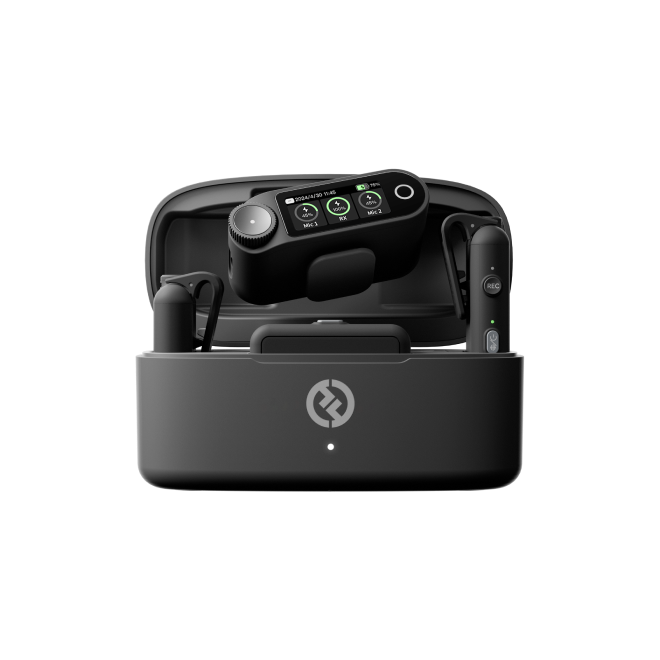
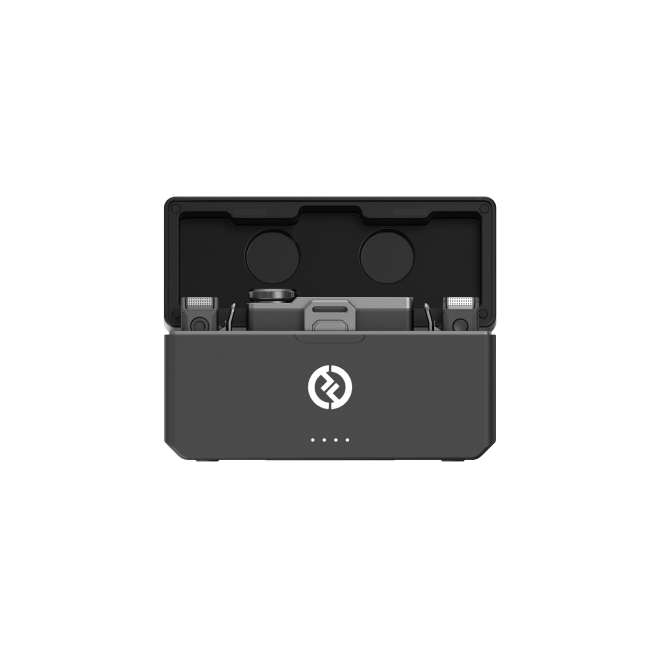
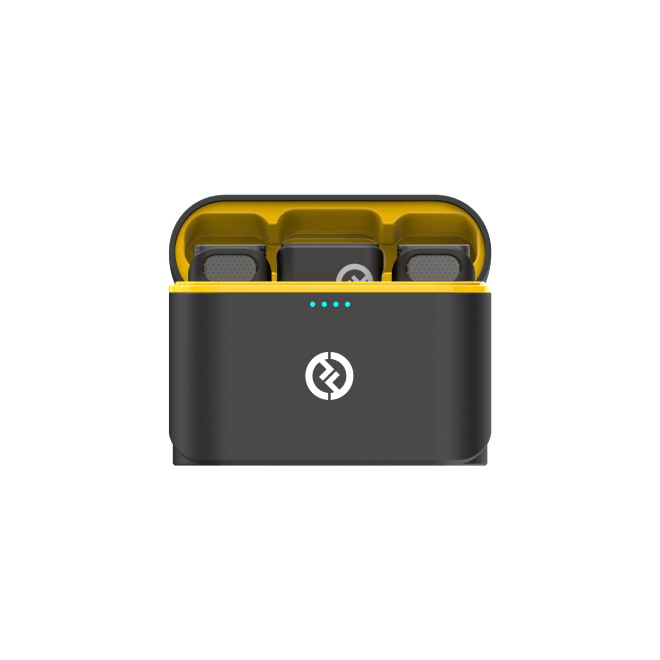
If you find yourself constantly battling background hiss, the issue isn’t your editing skills; it’s likely your hardware. This is where upgrading to a system like the Hollyland LARK MAX 2 changes your workflow entirely.
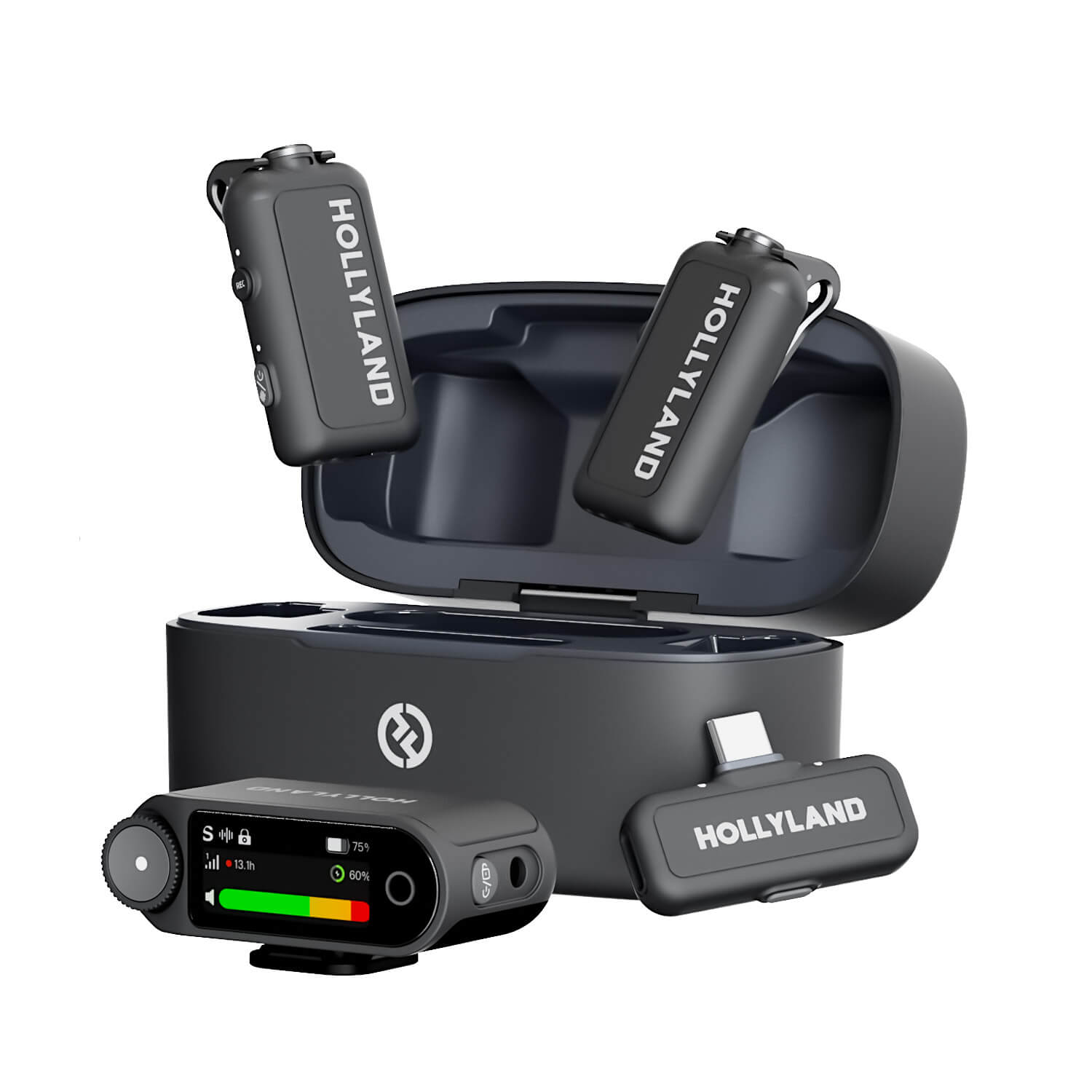

Hardware-Level Environmental Noise Cancellation (ENC)
The LARK MAX 2 solves the noise problem before it ever reaches your computer. It features professional ENC (Environmental Noise Cancellation) technology built directly into the microphone.
Unlike Audacity, which tries to guess what is noise and what is voice after the recording is finished, the LARK MAX 2 actively filters out low-frequency rumble and background chatter in real-time. This means you get a clean, isolated vocal track the moment you hit stop, saving you hours of tweaking sensitivity sliders in post-production.
The Safety Net of 32-bit Float Recording
One of the biggest causes of “hiss” in recordings is setting your gain (volume) too low and then trying to boost it later in Audacity. This boosts the noise floor along with your voice.
The LARK MAX 2 features 32-bit Float Recording, a major advantage for creators. It captures such a massive dynamic range that it is virtually impossible to distort your audio.
- Too Loud? You can lower the volume in post without clipping.
- Too Quiet? You can boost the volume significantly without introducing that dreaded static hiss.
Combined with a studio-grade 48kHz/24-bit sampling rate, the LARK MAX 2 ensures your raw file is broadcast-ready. While Audacity fixes mistakes, the LARK MAX 2 prevents them.
Common Pitfalls: Why Does My Audio Sound “Underwater”?
Noise reduction is a balancing act. The goal is to reduce the hiss just enough to make it unnoticeable, not to eliminate every single frequency of silence. When you push Audacity’s algorithms too hard, you introduce digital artifacts—often described as “bubbly,” “underwater,” or “robotic.”
This happens because Audacity subtracts the frequencies found in your Noise Profile from the rest of the audio. If your settings are too aggressive, the software starts removing parts of your voice that share frequencies with the noise.
Here is a quick troubleshooting guide to fixing the most common audio artifacts.
Troubleshooting Audacity Audio Artifacts
| Audio Symptom | The Likely Cause | The Solution |
|---|---|---|
| Voice sounds metallic, robotic, or “tinny” | Noise Reduction (dB) is set too high. You are removing too much signal along with the noise. | Undo the effect (Ctrl+Z). Lower the Noise Reduction slider to 6–12 dB. Never exceed 15 dB on a single pass. |
| Background noise “chirps” or “bubbles” | Frequency Smoothing is set too low (usually 0 or 1). | Increase Frequency Smoothing (bands) to 3 or higher. This blurs the processing artifacts, making the background sound more natural. |
| The ends of words are chopped off | Noise Gate (Release Time) is too fast. The gate is slamming shut before you finish speaking. | Increase the Release Time in your Noise Gate settings to 250ms–500ms so the audio fades out naturally. |
| The beginning of words are missing | Noise Gate (Attack Time) is too slow, or Sensitivity is too low. | Lower the Threshold on the Gate, or increase Sensitivity in the Noise Reduction tool so it recognizes your breath/start of words as “signal,” not noise. |
Pro Tip: The “Residue” Check
If you aren’t sure if you are over-processing, use the Residue feature inside the Noise Reduction window.
- Select Residue (instead of Reduce) under the “Noise” radio buttons.
- Click Preview.

You should hear only the hiss and static. If you can clearly hear your own voice in the preview, your settings are too aggressive. You are actively deleting your own vocal data. Lower the Sensitivity or Noise Reduction (dB) until the preview sounds mostly like static.
Frequently Asked Questions (FAQ)
Can Audacity remove background music from a voice recording?
No, not effectively. Audacity’s Noise Reduction tool relies on a “Noise Profile”—a sample of constant, unchanging sound (like a fan or hiss). Because music is dynamic (changing notes, rhythms, and volume), the software cannot distinguish it from your voice. Trying to remove music usually results in a garbled, unusable voice track. To remove music, you generally need specialized AI “stem separation” software.
Is Audacity Noise Reduction free?
Yes. Audacity is completely free, open-source software. All its native effects, including Noise Reduction, Filter Curve EQ, and Noise Gate, are included at no cost for both Windows and Mac users.
What is the difference between Noise Reduction and Noise Gate?
Think of them as two different cleaning tools:
- Noise Reduction lowers the volume of specific “bad” frequencies (hiss) while you are speaking. It tries to clean the audio underneath your voice.
- Noise Gate acts like an automatic door. It completely silences the track when the volume drops below a certain level (Threshold). It cleans the silence between your words but does nothing to the audio while you are speaking.
How do I remove echoes in Audacity?
Removing echo (reverb) is notoriously difficult because the echo is blended with your main voice. Audacity does not have a one-click “De-reverb” button that works perfectly.
- The Band-Aid Fix: You can use a Noise Gate with a fast “Release” time to cut off the “tail” of the echo between words.
- The Real Fix: Echo is almost impossible to fix in post-production without expensive plugins. The best solution is treating your recording environment with soft furniture, blankets, or acoustic foam to prevent sound bouncing off walls.
Conclusion
Cleaning up audio in Audacity is a vital skill for any creator on a budget, but it is always a balancing act between removing hiss and preserving the natural tone of your voice.
By following the workflow we covered—capturing a clean Noise Profile, applying gentle Noise Reduction (keeping it under 12dB), and finishing with a Noise Gate to silence the gaps—you can turn a messy recording into professional-grade content.
However, remember that software repair is ultimately a “Band-Aid.” Every time you apply a filter, you risk degrading the quality of your voice. If you find yourself spending more time tweaking sliders in post-production than actually recording, it is likely time to upgrade your source.
The Hollyland LARK MAX 2 eliminates these headaches before they happen. With its built-in Environmental Noise Cancellation (ENC) and 32-bit float recording, you capture studio-quality sound in the field, leaving the background hiss behind. Whether you choose to master Audacity or upgrade your gear to “skip the fix,” the goal remains the same: crystal-clear audio that keeps your audience listening.