.png)
 简体中文
简体中文 
If you are looking for the best camera for TikTok in 2026, along with key audio gear for pro creators, you likely know the platform has changed a lot. TikTok isn’t just for grainy, spontaneous smartphone clips anymore. The algorithm has grown up. High-quality video and clean audio are now basic requirements to reach TikTok’s FYP (For You Page) consistently.
Upgrading your camera instantly boosts your brand. It provides the cinematic depth of field, vibrant colors, and low-light performance that stops the scroll. But there is a hard truth about short-form video. Even a high-quality camera means nothing without good audio. Viewers will forgive slightly soft lighting, but harsh, echoey, or wind-blown audio causes an instant swipe away.
To compete and grow your audience this year, your content ecosystem must include these three non-negotiables:

1. Vertical Video Support (9:16): Your camera must capture native vertical metadata so you don’t have to manually rotate footage in post-production.
2. Flawless Eye-Autofocus: Whether you are dancing, vlogging on the street, or unboxing a product, your camera needs lightning-fast, sticky eye-tracking to keep you perfectly sharp while in motion.
3. Professional Wireless Audio: Built-in camera microphones are almost always poor. That’s why a dedicated wireless lapel mic is a must if you want less background noise and a close, natural voice that keeps viewers watching until the final second.
What Makes a Camera “TikTok Ready”? (Buying Guide)
Buying a camera for TikTok is completely different from buying one for landscape photography. A traditional DSLR might take stunning photos, but it will severely slow down your workflow if it lacks modern video features.
To keep pace with the algorithm, your gear should make recording and posting quick and simple. Here is what you should check when upgrading your setup.

Native Vertical Shooting (9:16 Format)
TikTok is a strictly vertical platform. If you shoot horizontally (16:9) and crop later, you lose resolution and risk ruining your framing.
You need a camera that supports native vertical shooting. This means the camera embeds auto-rotation metadata into the video file when physically turned sideways. When you transfer the footage to CapCut or the TikTok app, it automatically appears in the perfect 9:16 aspect ratio. This saves you hours of tedious editing.
Unshakable Autofocus (AF) Tracking
Blurry video will make viewers swipe away immediately on the FYP. Whether you are filming a high-energy dance trend, a walking street interview, or a sit-down makeup tutorial, you are constantly moving.
A TikTok-ready camera must feature fast face and eye-tracking autofocus. This technology locks onto your eyes and keeps your face razor-sharp, even if you step back from the lens, spin around, or move erratically.
Seamless Wireless Connectivity
Viral trends move fast. You rarely have time to pop out an SD card, connect it to a laptop, and manually transfer files.
Look for cameras with robust built-in Wi-Fi and Bluetooth connectivity. This allows you to rapidly beam high-quality, uncompressed video files directly to your smartphone’s camera roll via a dedicated companion app. The quicker you transfer footage from your camera to your phone, the faster you can post it.
Top Compact and Vlogging Cameras for TikTok (The Sweet Spot)
If you want premium video quality without lugging around a heavy camera bag, compact vlogging cameras are your best bet.
Here are the two best compact cameras dominating the TikTok space right now:
DJI Osmo Pocket 3

The DJI Osmo Pocket 3 has completely taken over the creator space, and for good reason. It is arguably the most perfectly designed camera for short-form video. The standout feature is its rotating 2-inch OLED touchscreen. With a simple flick of your thumb, the screen rotates physically, instantly switching the camera into native 9:16 vertical video mode. You get to use the entire 1-inch sensor for your TikToks without having to crop horizontal footage later.
NOTE: The vertical mode may crop the sensor, reducing 4K resolution to 3K.
Combined with a built-in mechanical gimbal, this is an ideal tool for “get ready with me” (GRWM) videos, walking vlogs, and dynamic dance trends.
Pros:
- Native Vertical Shooting: The rotating screen automatically formats your video for TikTok.
- Mechanical Stabilization: The 3-axis gimbal provides incredibly smooth, cinematic movement that no smartphone can match.
- 1-Inch Sensor: Delivers stunning low-light performance and natural background blur (bokeh).
Cons:
- Fixed Focal Length: You cannot swap lenses or optically zoom in.
- Fragility: The mechanical gimbal requires careful handling and can be damaged if dropped.
Sony ZV-1 II

If your content revolves around unboxings, beauty tutorials, or selling products on TikTok Shop, the Sony ZV-1 II is a solid pick. Sony built this camera specifically for vloggers. They upgraded its predecessor with a wider 18-50mm lens so you can easily fit yourself and your surroundings into the frame while holding the camera at arm’s length.
The absolute best feature for creators is the Product Showcase setting. Traditional cameras struggle when you hold a product up to the lens, often keeping the focus locked on your face while the product remains blurry. With Product Showcase turned on, the ZV-1 II instantly snaps focus to whatever you hold up to the lens. It then immediately shifts back to your eye the second you lower the item.
Pros:
- Product Showcase Autofocus: Flawless, instant focus transitions for product reviews and makeup routines.
- Ultra-Wide Lens: The 18mm focal length is perfect for hand-held, arm’s-length vlogging without cropping your face too tight.
- Pocket-Sized: Incredibly lightweight and easily fits into a small bag or jacket pocket.
Cons:
- Battery Life: You will need to carry spare batteries for long shooting days.
- Digital Stabilization Only: It lacks internal mechanical stabilization. Heavy walking shots may have a slight crop and jitter compared to the DJI.
Best Mirrorless Cameras for Pro TikTok Creators (High-End)
Mirrorless cameras offer the interchangeable lenses and large sensors required for cinematic depth of field, low-light mastery, and razor-sharp detail.
If you are shooting high-fashion lookbooks, creating short films, building a permanent studio setup, or expanding your content to YouTube, these are the cameras that will instantly separate you from the smartphone crowd.
Best Entry-Level Mirrorless: Sony ZV-E10 and Canon EOS R50
Stepping up to interchangeable lenses doesn’t have to bankrupt you. Both the ZV-E10 and EOS R50 are compact APS-C cameras designed specifically for creators who want professional visuals without a massive learning curve.
- Sony ZV-E10: A powerhouse for content creators. It comes with Sony’s famous Product Showcase autofocus, perfect for TikTok Shop videos. It also gives you access to a massive ecosystem of affordable E-mount lenses.
- Canon EOS R50: Canon’s answer to the creator economy. It delivers impeccable color science straight out of the camera, which saves you hours of color grading skin tones. It also features a highly intuitive touchscreen interface that feels just like using a smartphone.

Pros:
- Interchangeable lenses let you shoot a range of shots, from wide room tours to close-up portraits.
- Flawless eye-tracking autofocus keeps you sharp during dynamic movements.
- The most budget-friendly entry point into professional camera ecosystems.
Cons:
- Both cameras suffer from “rolling shutter.” Fast side-to-side panning can make vertical lines look wobbly.
- Lack of In-Body Image Stabilization (IBIS) means you will rely on stabilized lenses or a tripod for smooth footage.
The Cinematic Powerhouses: Sony FX30 and Sony A7C II
If you want a cinematic look with low lighting, shallow focus, and high-quality visuals, a top-tier sensor is necessary. These cameras are for creators who treat every 60-second TikTok like a mini-movie.
- Sony FX30: A compact cinema camera built for heavy-duty video production. It features dual base ISO for immaculate low-light performance. It also has built-in cooling fans, so it never overheats during long studio sessions or podcast recordings.

- Sony A7C II: A full-frame beast crammed into a travel-friendly body. The massive full-frame sensor delivers incredible background blur. It is backed by a dedicated AI-processing unit that practically glues the autofocus to your subject, no matter how fast they dance or move.

Pros:
- Top-tier In-Body Image Stabilization (IBIS) for incredibly smooth handheld tracking shots.
- Unmatched dynamic range and low-light performance for shooting in less-than-ideal environments.
- Professional video codecs (10-bit 4:2:2) that give you maximum flexibility if you want to color grade your footage.
Cons:
- A significant financial investment, especially once you factor in the cost of premium lenses.
- Heavier and more complex. These are overkill for casual vloggers who just want to point and shoot.
Essential Audio Gear for Pro Creators (The Secret to FYP Retention)
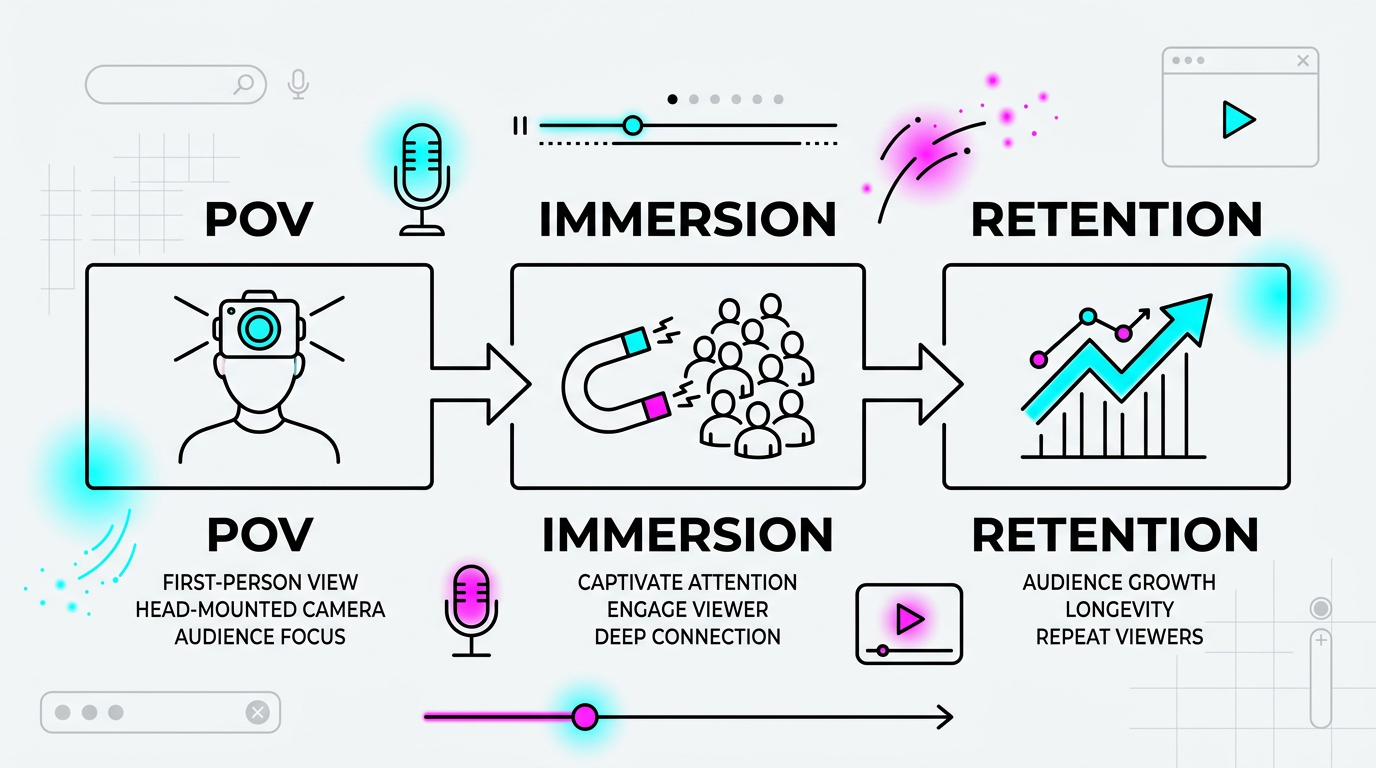
Fifty percent of the TikTok experience is audio. If your video looks like a cinematic masterpiece but sounds like you are recording inside a wind tunnel, viewers will swipe away. Relying on your camera’s built-in microphone is the fastest way to kill your audience retention.
To ensure crystal-clear sound that keeps users locked on your content, upgrading your microphone is non-negotiable. The Hollyland ecosystem provides simple, reliable wireless audio made to match your shooting style.
Here is the clear audio gear breakdown based on your creator style:
| Creator Focus | Recommended Gear | Standout Feature |
|---|---|---|
| Interviews and Pro Studio | Hollyland LARK MAX 2 | 32-bit Float Recording and OWS Monitoring |
| Fashion and Vlogging | Hollyland LARK M2 | 9g “Invisible” Design and 40-Hour Battery |
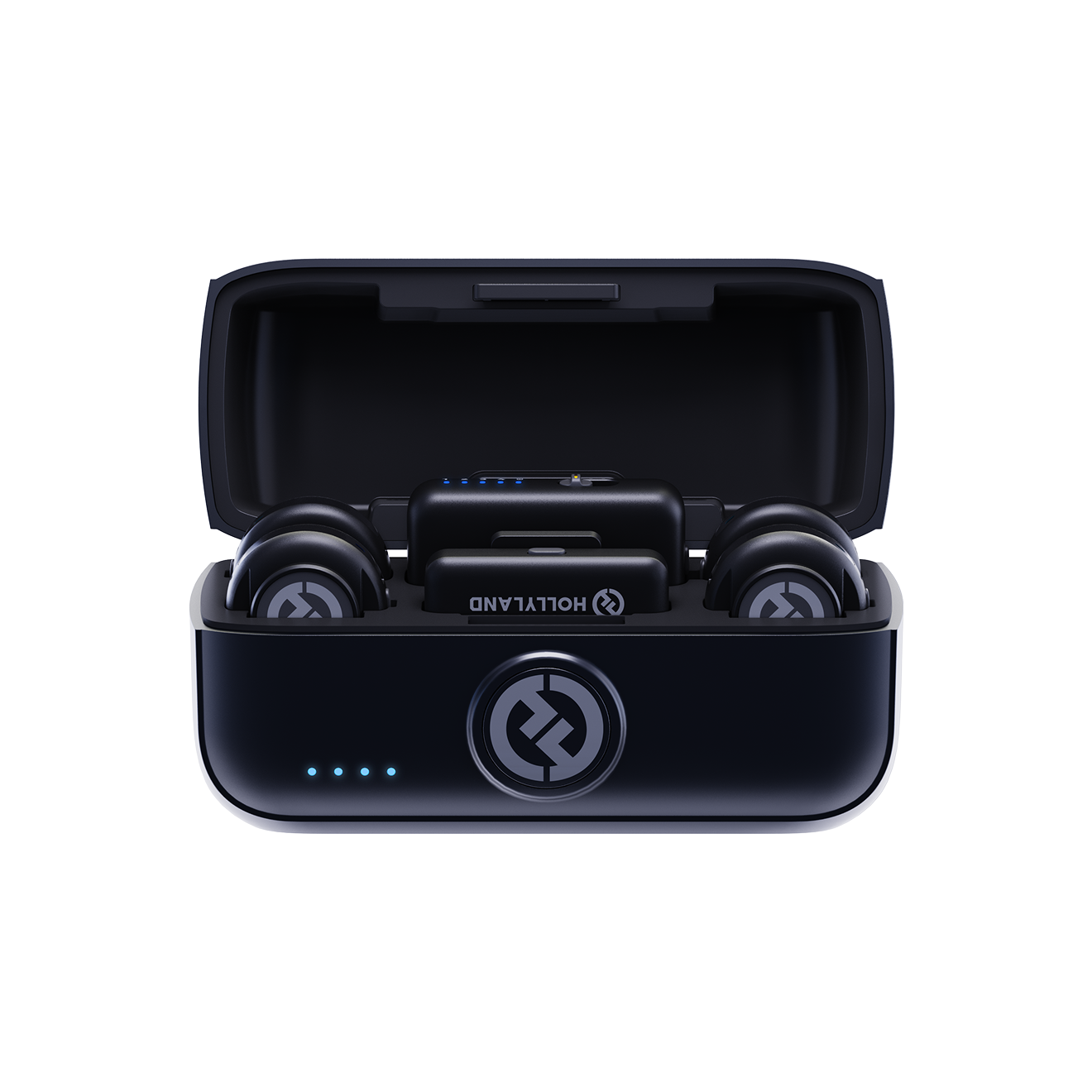
| Beginners and Budget | Hollyland LARK A1 | Plug-and-Play and 3-Level Intelligent Noise Cancellation |
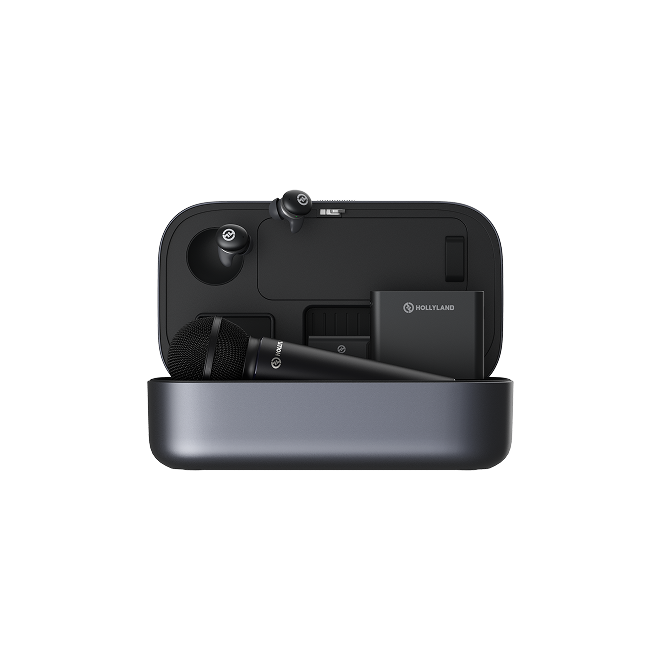
1. For Flagship and Pro Creators: Hollyland LARK MAX 2
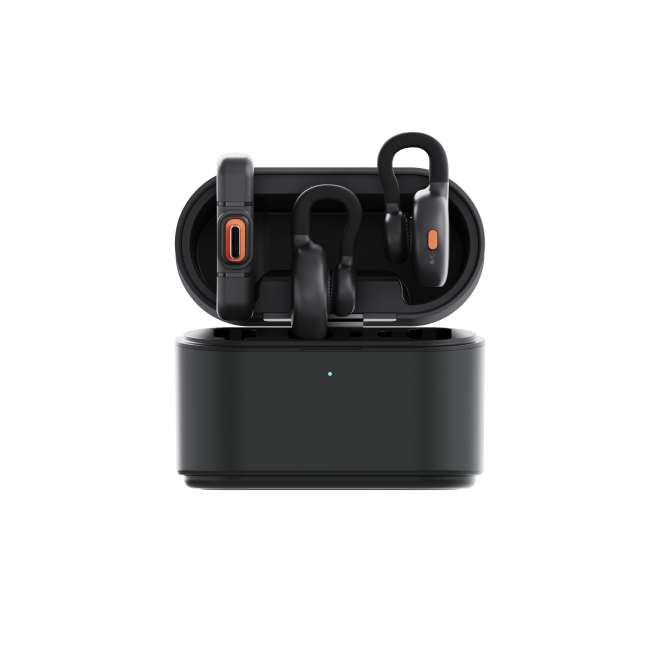
If your content depends on detailed audio, such as street interviews, podcast clips, or lively comedy, the Hollyland LARK MAX 2 acts as a strong backup.
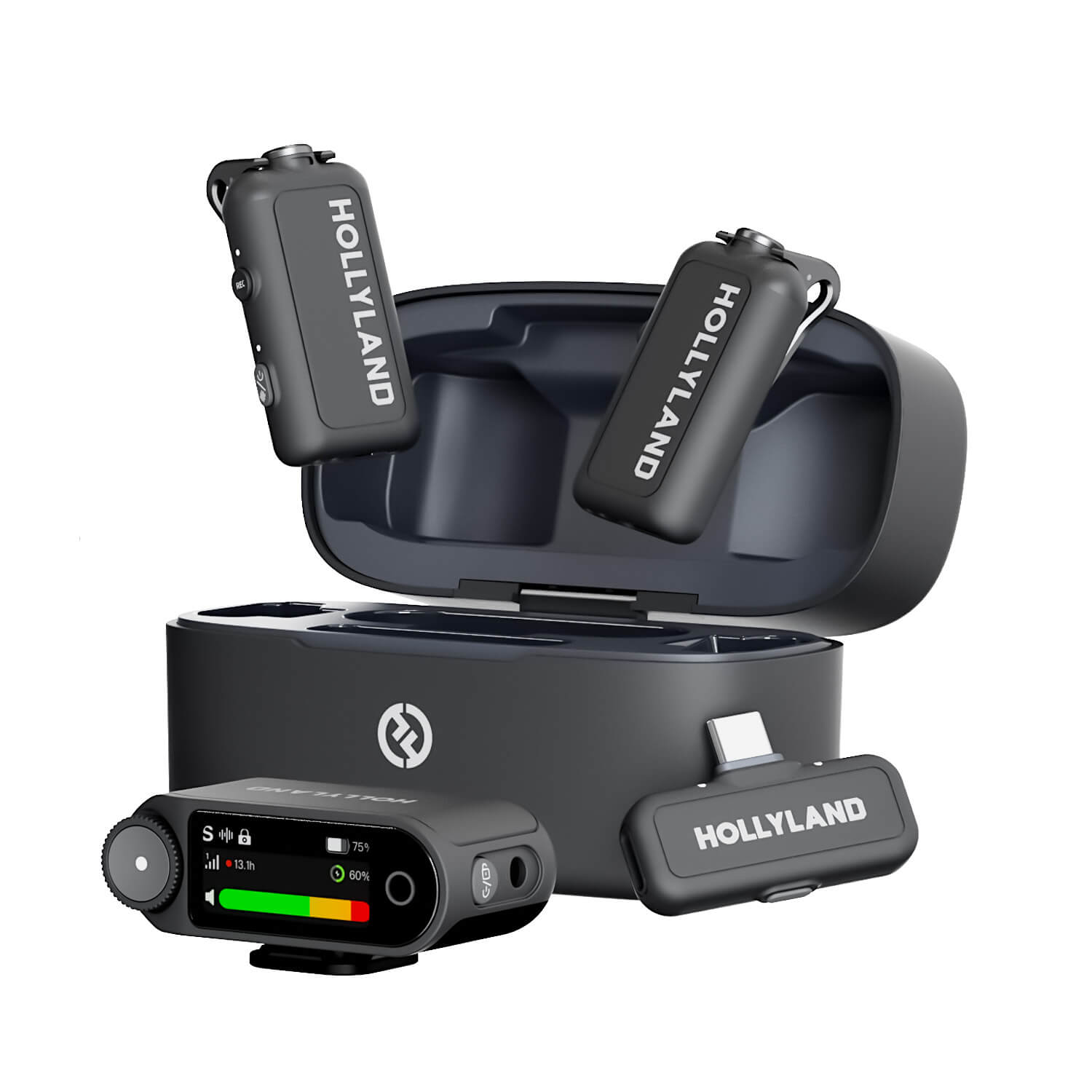
Hollyland LARK MAX 2 - Premium Wireless Microphone System
A premium wireless microphone for videographers, podcasters, and content creators to capture broadcast-quality sound.
Key Features: Wireless Audio Monitoring | 32-bit Float | Timecode
Its key highlight is 32-bit Float Recording. This technology captures a very wide sound range. Sudden screams, loud laughs, or random street noise will not ruin the audio.
You also get 48kHz/24-bit studio-quality ENC (Environmental Noise Cancellation), which reduces background noise and keeps your voice easy to hear in busy places.
It even includes OWS earphones for Wireless Audio Monitoring, so you can hear the recording live without cables.
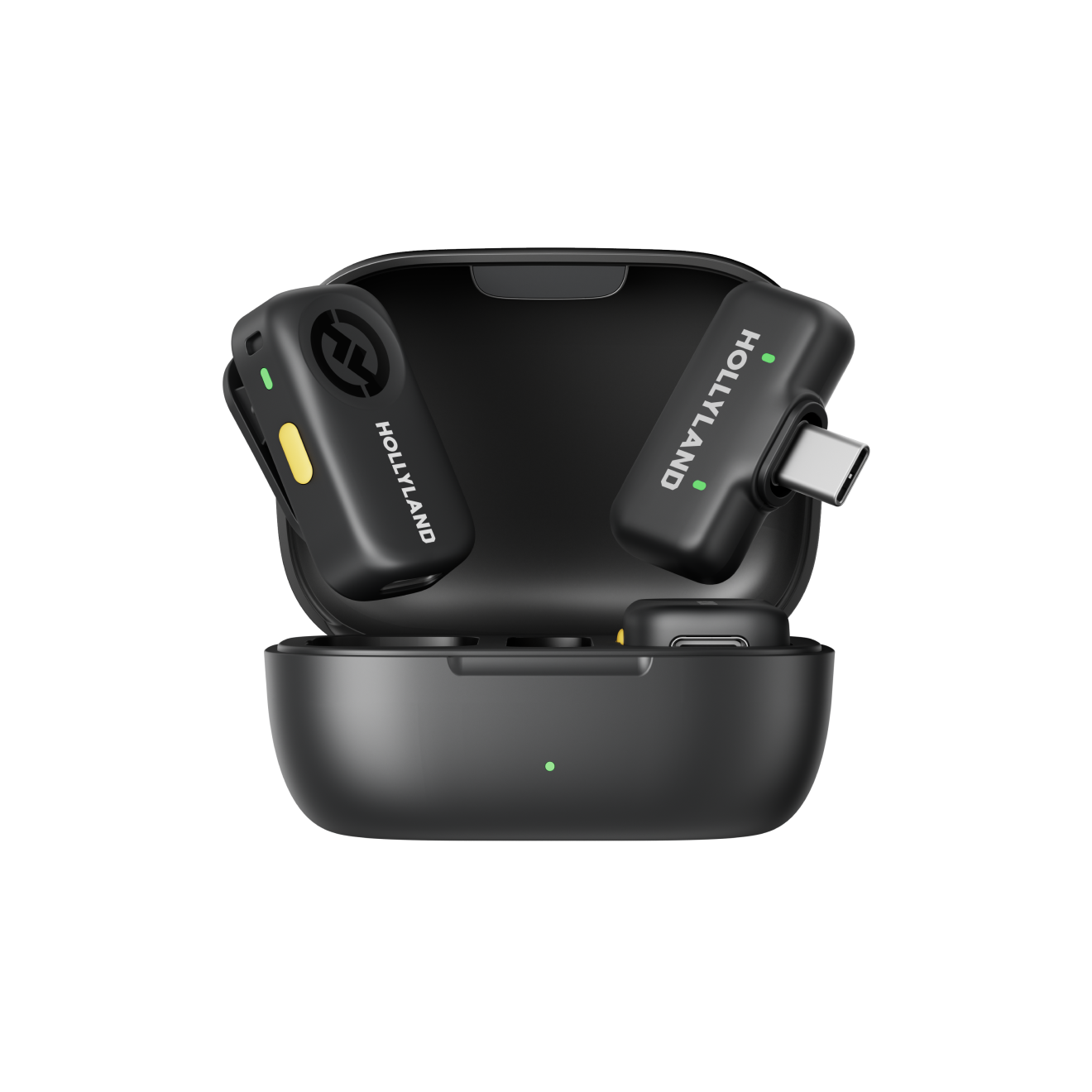
2. For Vlogging, Fashion and Outdoor Sports: Hollyland LARK M2 Series
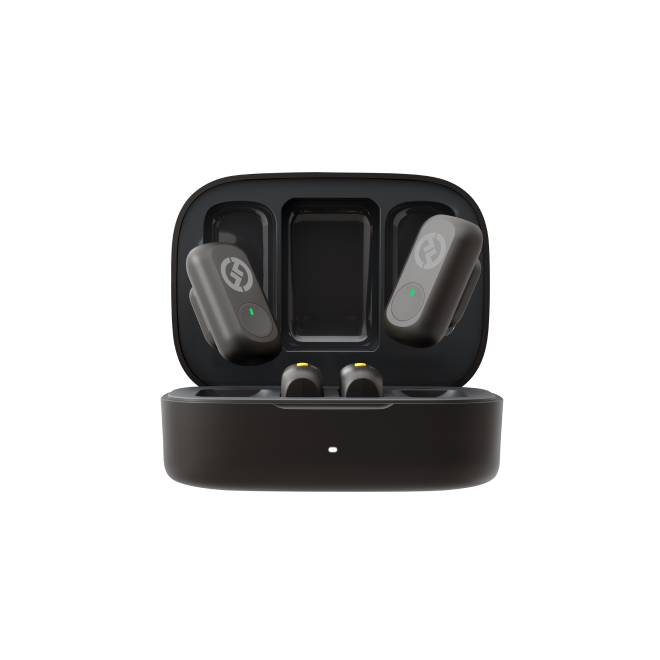
Fashion and lifestyle creators face a unique problem: bulky microphones ruin outfits and pull down collars. The Hollyland LARK M2 solves this by acting as a supreme “invisible” wireless microphone kit.
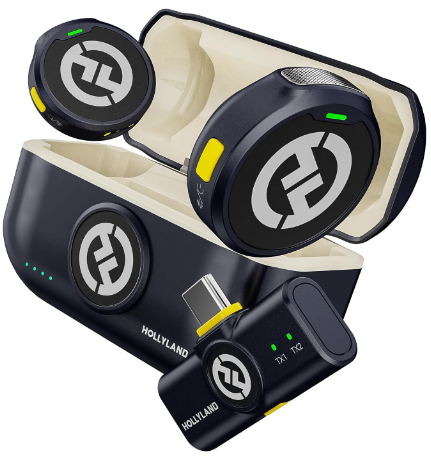
Hollyland LARK M2 - Mini Lavalier Microphone
An incredibly lightweight and compact wireless button microphone that captures high-fidelity audio.
Key Features: 9g Button Size | 48 kHz/24-bit | 40 Hours Battery
Weighing in at a coin-sized 9 grams, this mic attaches magnetically to your clothing without leaving a trace or altering your silhouette. Despite its tiny footprint, it boasts a massive 40-hour battery life, ensuring it survives a full weekend of shooting content on the go.
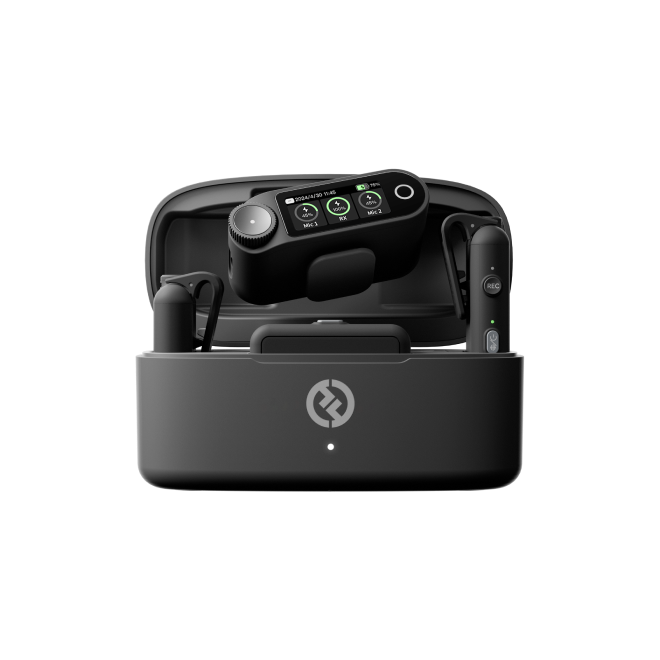
💡 Pro Tip: If you are doing general daily vlogging, the standard LARK M2 with its magnetic attachment is perfect. But if your content involves active sports, heavy dancing, or rapid movement, grab the LARK M2S. It features a built-in clip designed to stay securely fastened during intense physical activity.
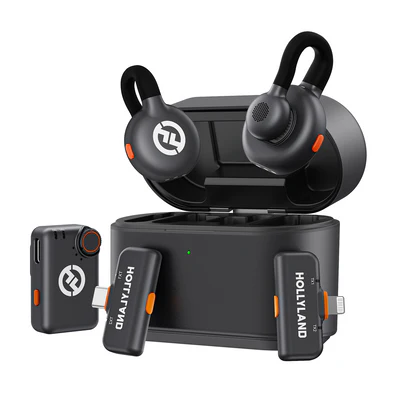
Hollyland LARK M2S - Wireless Hidden Microphone
An ultra-discreet wireless microphone featuring a clip-on transmitter for an “invisible” fit.
Key Features: No-Logo Fit | Ti+ Design | 48 kHz/24-bit
3. For Beginners and Budget Setups: Hollyland LARK A1
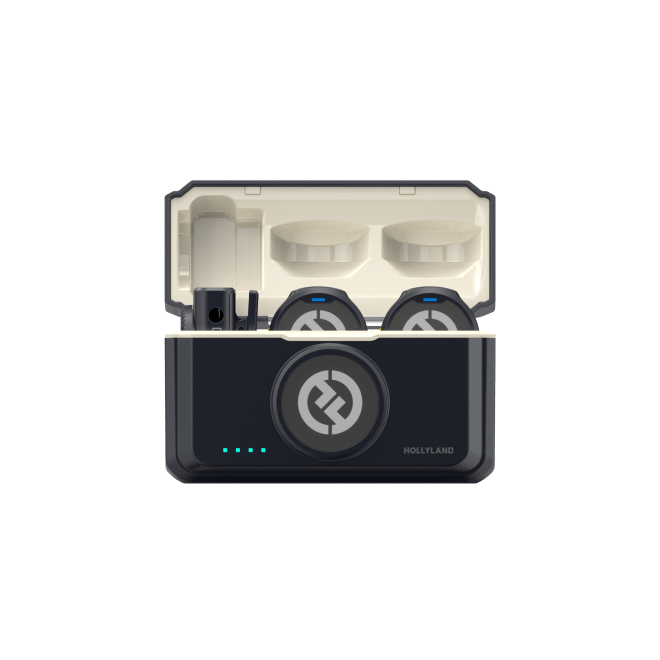
If you are just starting out and want an instant upgrade from your phone or camera’s built-in mic, the Hollyland LARK A1 is a superb entry point.

Hollyland LARK A1 - Affordable Wireless Microphone
A perfect starter mic for creators on a budget. It’s simple to use and features effective noise cancellation.
Key Features: 48kHz/24-bit | 3-Level Noise Cancellation | 54-Hour Battery
This is an ultra-affordable, plug-and-play solution that requires zero technical knowledge. Simply plug the receiver directly into your smartphone or camera, clip on the mic, and start recording. It features simple but highly effective 3-level intelligent noise cancellation. This instantly strips away background hums and wind noise to give your voice a professional, studio-quality presence.
Smartphones vs. Dedicated Cameras: Should You Just Use Your iPhone?
If you are currently shooting on a flagship smartphone like an iPhone 17 or Samsung Galaxy S26 Ultra, you already own a powerful creation tool. The TikTok algorithm doesn’t strictly care what device you use, but it heavily rewards high retention rates driven by visual clarity and pristine audio.
So when should you move beyond your phone and buy a dedicated camera? The answer comes down to real optics vs. software-based image processing.
The Case for Smartphones
Smartphones offer convenience and workflow speed. You can record, edit in CapCut, and publish to your audience all from one device in minutes. Modern phones also use aggressive computational software to stabilize footage and artificially brighten dark scenes.
But smartphone features like “Cinematic Mode” rely on AI to blur the background. If you move fast, dance, or hold up a product, the software often glitches. This leaves weird, blurry edges around your hair or hands.
The Case for Dedicated Cameras
A dedicated mirrorless or premium vlog camera houses a significantly larger sensor and uses high-quality glass lenses. This provides two massive advantages that a phone simply cannot fake:
- True Optical Depth of Field (Bokeh): A dedicated camera naturally separates you from your background using optics, not software. This creates that creamy, high-end “studio look” that instantly signals authority and stops the scroll.
- Superior Low-Light Performance: Because smartphone sensors are tiny, they introduce heavy digital grain (noise) in dim lighting. A dedicated camera absorbs drastically more light. This keeps your footage crisp, sharp, and vibrant even during moody night shoots or in poorly lit rooms.
Quick Comparison: Phone vs. Camera
| Feature | Flagship Smartphone | Dedicated Camera |
|---|---|---|
| Workflow Speed | Instant (Shoot, edit, post) | Slower (Requires Wi-Fi/Bluetooth transfer) |
| Background Blur | Artificial (Prone to edge glitching) | Authentic (Flawless optical separation) |
| Low-Light Video | Grainy, muddy, or over-processed | Crisp, clean, and professional |
| Dynamic Range | Highlights often blow out (white skies) | Recovers details in shadows and bright windows |
Pro Tip: Upgrading your visuals is great, but bad audio will still kill your viewer retention. Even if you stick with an iPhone 17 Series, bypassing the built-in mic with a plug-and-play receiver like the Hollyland LARK A1 will instantly make your content sound professional. Fix your audio first, then upgrade your camera.
Essential Lighting and Accessories for the Perfect Setup
A top-tier camera and crystal-clear audio are only two-thirds of the TikTok equation. To get the most out of your new gear, you need to control your physical environment with the right accessories.

Lighting: The Secret to Sharp Video
Even the best 4K mirrorless camera will produce grainy, blurry footage in a dark room. Start with a reliable key light to illuminate your face evenly. This also helps your camera’s autofocus lock onto your eyes.
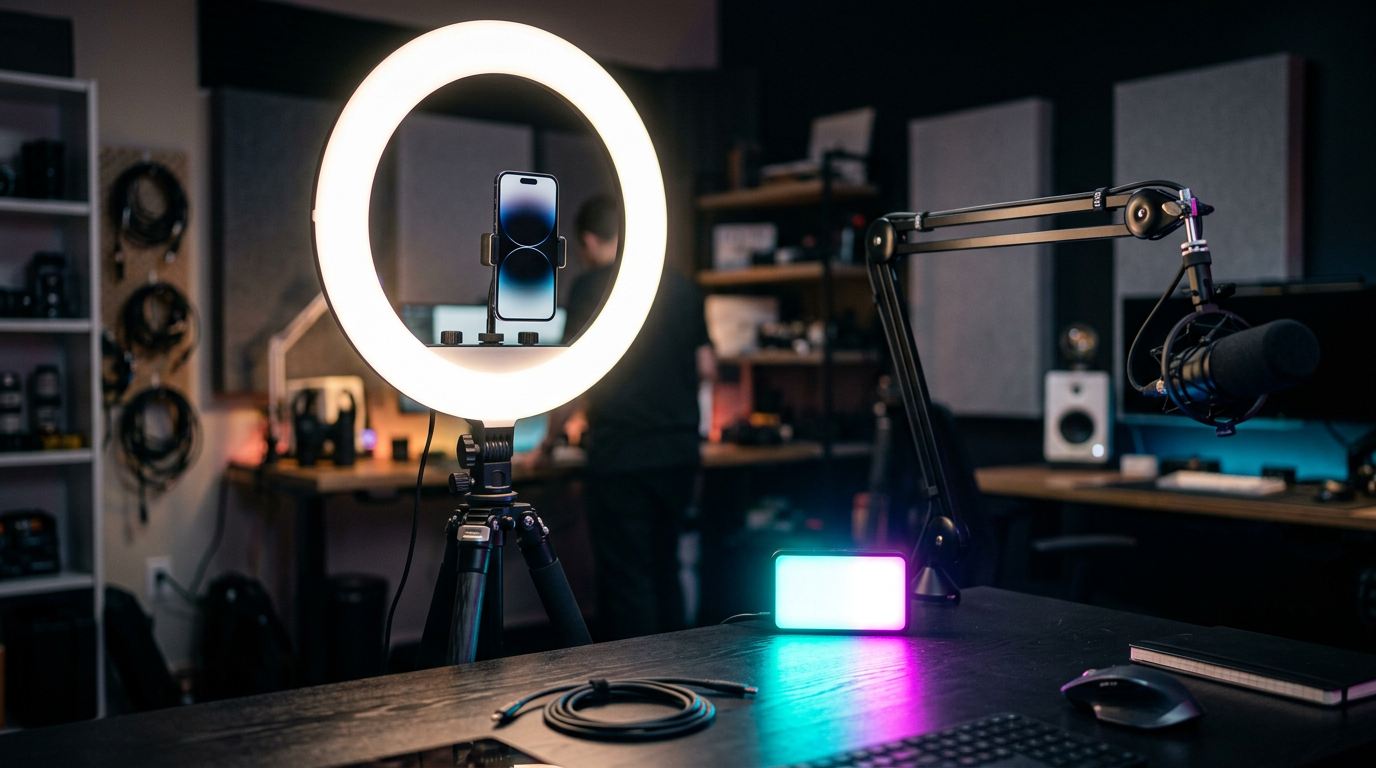
Small LED panels are perfect for desktop setups because they offer adjustable color temperatures to match your room’s natural vibe. If you shoot beauty, fashion, or close-up talking-head content, a traditional ring light remains the easiest way to get flattering, shadow-free illumination with that signature catchlight in your eyes.
Stabilization: Tripods and Gimbals
Shaky footage looks unprofessional and quickly ruins the viewing experience. Lock down your framing with a heavy-duty tripod designed to support the actual weight of a mirrorless camera. Do not trust a cheap plastic phone stand with a $1,000 setup.
If your TikTok niche involves a lot of movement or dynamic transitions, invest in a motorized gimbal (like the DJI RS 3 Mini). Gimbals provide buttery-smooth, cinematic movement that instantly upgrades your production value and keeps viewers glued to the screen.
Frequently Asked Questions (FAQ)
Do I need a 4K camera for TikTok?
Technically, no. TikTok compresses all video uploads to a maximum resolution of 1080p to save bandwidth. Conversely, shooting in 4K is still highly recommended for serious creators.
Recording in 4K gives you the flexibility to crop in, reframe, or punch-in during the editing process without losing any clarity. Also, a 4K video scaled down to 1080p will look sharper, fuller, and more detailed than a video recorded directly in 1080p.
Why does my TikTok video look blurry?
Blurry TikTok videos usually come down to three main culprits: poor lighting, a smudged lens, or sluggish autofocus. Smartphones heavily rely on software to artificially brighten dark scenes, which introduces blurry, grainy “noise” into your footage.
Upgrading to a dedicated camera solves this issue. A dedicated camera uses a larger physical sensor to capture more light naturally, keeping the image crisp. They also feature advanced eye-tracking autofocus that locks onto your face and keeps you razor-sharp, even if you are dancing or moving rapidly across the frame.
How do TikTokers get such clear audio outside?
Professional creators do not depend on the built-in microphone in a phone or camera, especially when filming outside. Wind, traffic, and background chatter can quickly ruin the audio and make viewers swipe away.
Instead, top creators use wireless clip-on microphones equipped with Environmental Noise Cancellation (ENC). By clipping a lightweight mic like the Hollyland LARK M2 directly to their shirt, they keep the microphone close to the sound source. The ENC technology actively filters out ambient street noise. This ensures the creator’s voice sounds like it was recorded in a professional studio, regardless of the outdoor conditions.
Conclusion
Upgrading your TikTok setup is one of the best investments you can make for your personal brand. But remember, the best camera for TikTok is simply a tool designed to amplify your creativity, not replace it. Whether you choose the ultra-portable DJI Osmo Pocket 3 or a pro-level mirrorless body like the Sony ZV-E10, prioritize gear that removes friction from your daily workflow.
Before you drop thousands on a new camera, honestly assess your current setup. If your visuals are acceptable but your voice sounds echoey, distant, or wind-blown, upgrade your audio first. Crisp, professional sound retains viewers much longer than 4K resolution ever will.
You can instantly transform an average smartphone or entry-level camera into a high-retention powerhouse by pairing it with the right audio ecosystem, like Hollyland wireless microphones.