.png)
 简体中文
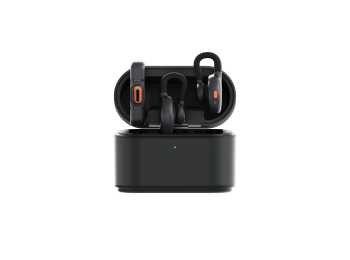
LARK M2S
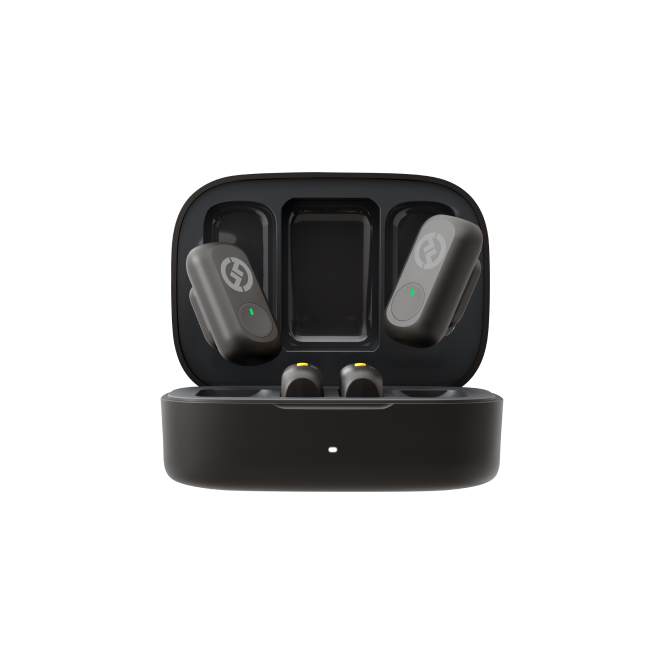
The lightest mic for invisible on-camera wear
- 7g Transmitter
- No-Logo Design
- ENC Noise Cancellation

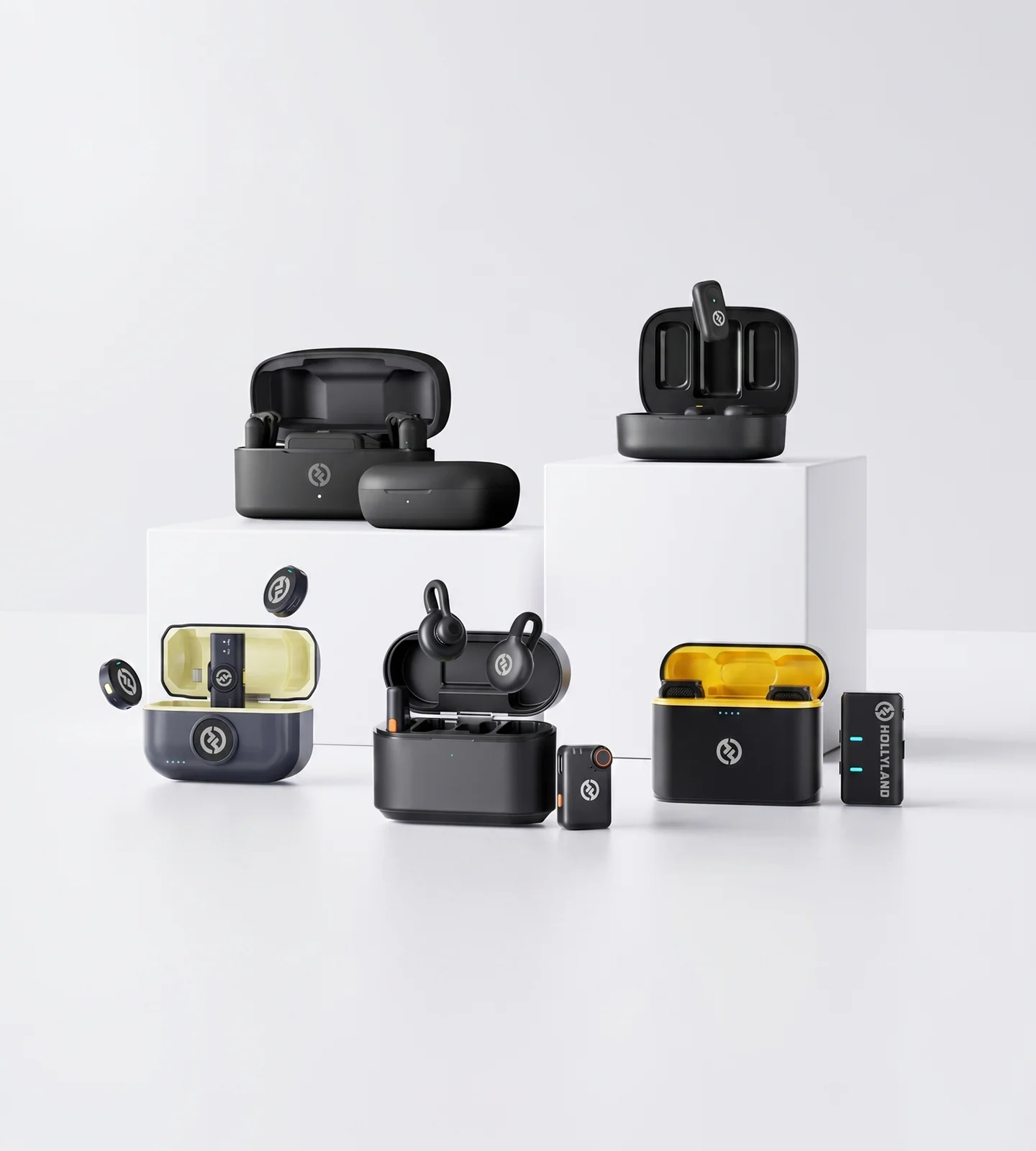
Five compact wireless mics, from 7g to 14g, built for creators who refuse to compromise on audio. Hollyland's mini microphone range delivers 24-bit studio sound, AI noise cancellation, and plug-and-play simplicity — for smartphones, cameras, and every shoot in between.
Works with iPhone, Android & cameras · Plug in and record
The lightest mic for invisible on-camera wear
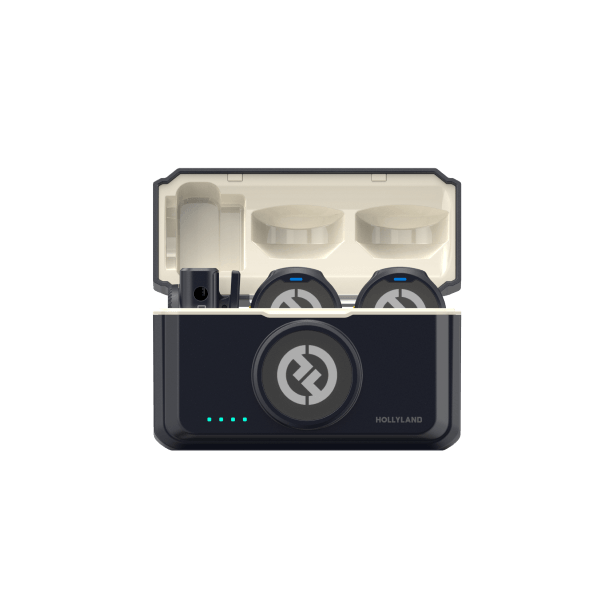
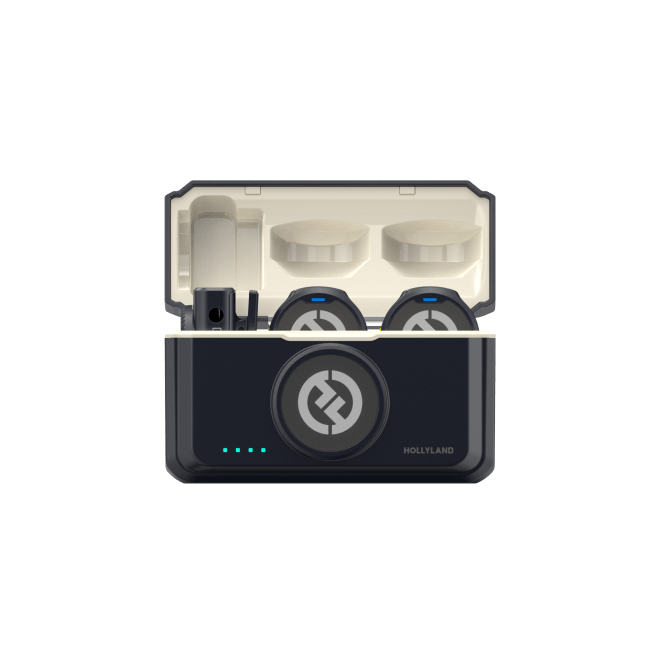
The button-size everyday clip for fast, clean audio
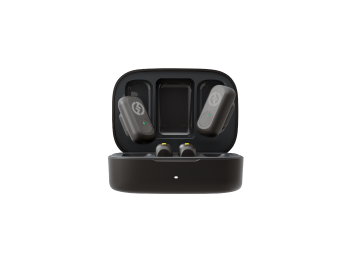
The magnetic snap-on for smartphone content makers
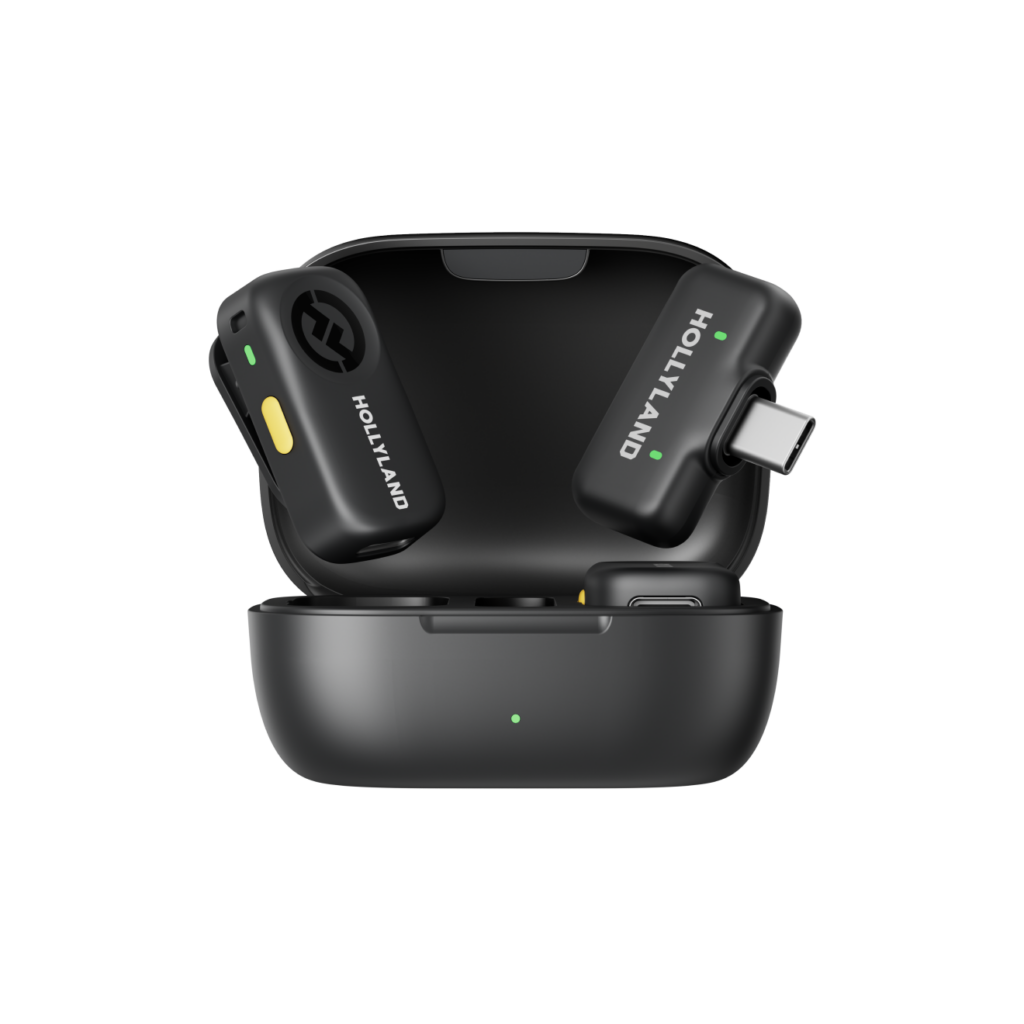
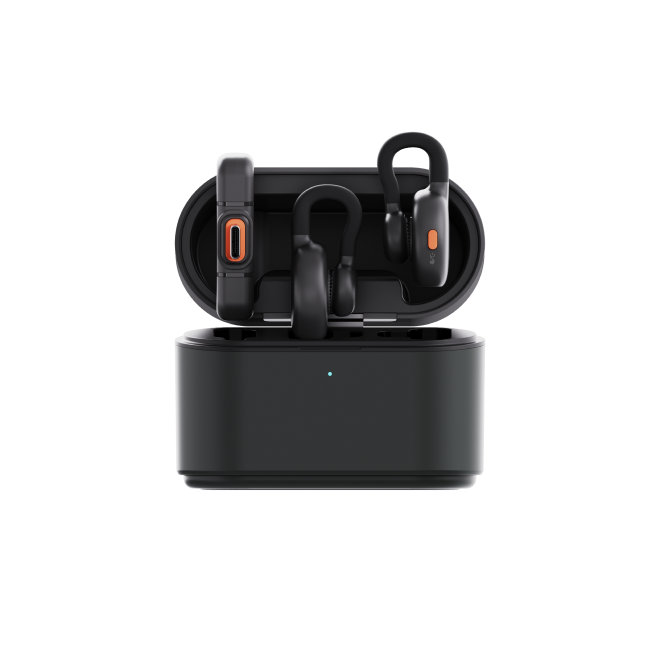
The AI-smart clip for solo mobile creators
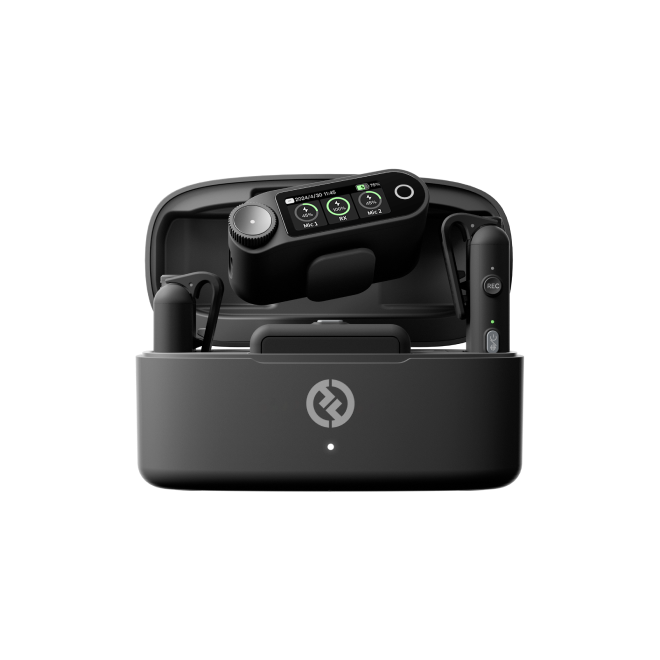
The pro-tier wearable for advanced audio workflows
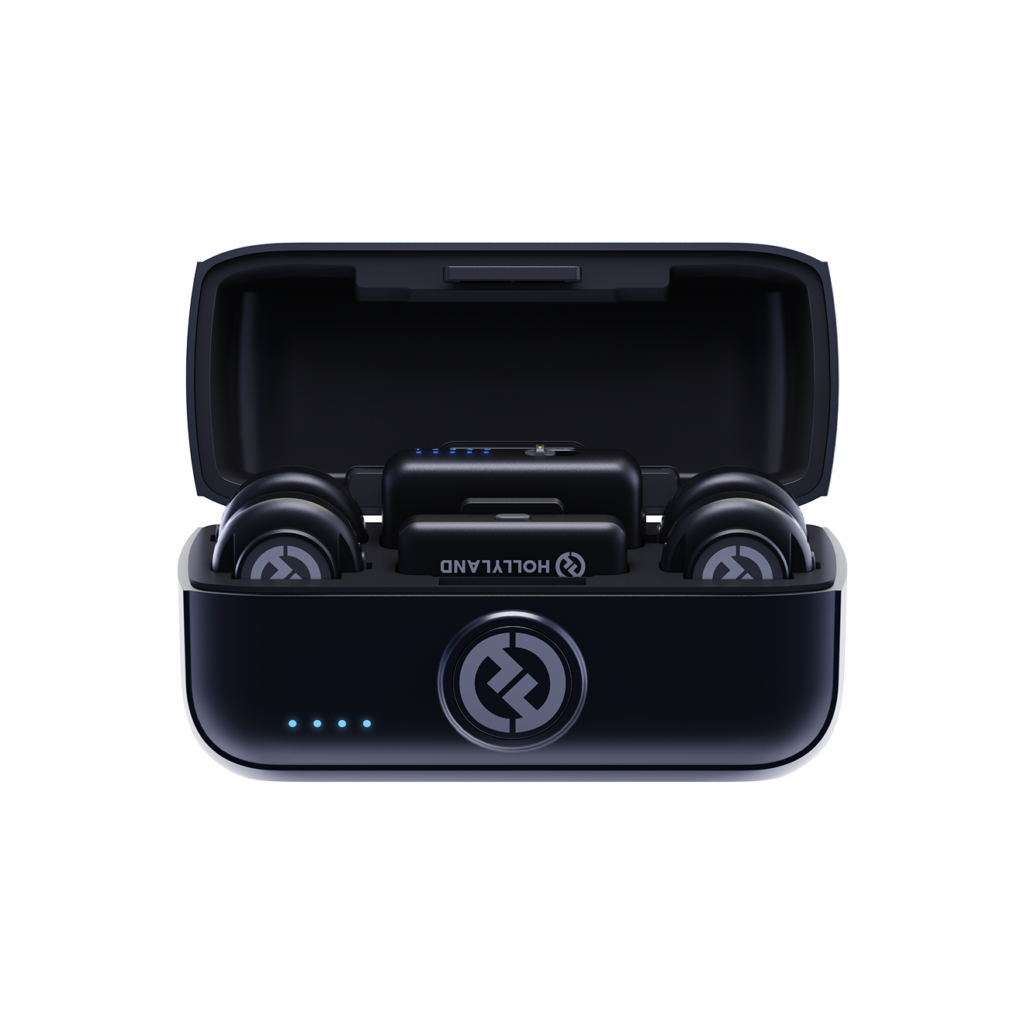
The scalable 32-bit float system for multi-mic broadcast workflows
| Model |
LARK M2S
|
LARK M2
|
LARK A1
|
LARK A2
|
LARK MAX 2
|
LARK M3
|
|---|---|---|---|---|---|---|
| Transmitter Weight | 7g | 9g | 8g | 8.5g | 14g | 9g |
| Recording Format | 48kHz / 24-bit | 48kHz / 24-bit WAV | 48kHz / 24-bit | 48kHz / 24-bit | 48kHz / 32-bit Float; 48kHz / 24-bit | 48kHz / 24-bit & 48kHz / 32-bit Float |
| Signal-to-Noise Ratio | >70dB | >70dB | ≥67dB | ≥68dB | ≥72dB | ≥70dB |
| Maximum SPL | 116dB SPL | 115dB SPL | 128dB SPL | 120dB SPL | 128dB SPL | 125dB SPL |
| Wireless Range (LOS) | 300m / 1000ft | 300m / 1000ft | 200m / 650ft | 200m / 656ft | 340m / 1115ft | 300m / 1000ft |
| TX Battery Life | ~9 hours | ~10 hours | ~9 hours | ~7 hours | ~11 hours | ~8 hours |
| Total Battery Life | Up to 30 hours | Up to 40 hours | Up to 54 hours | Up to 21 hours | Up to 36 hours | Up to 48 hours |
| Noise Cancellation | ENC Environmental Noise Cancellation | ENC Environmental Noise Cancellation | 3-Level Intelligent Noise Cancellation | AI-Powered Noise Cancellation | AI Noise Cancellation | Adaptive AI Noise Cancellation |
| Compatible Devices | Mobile / Camera / Combo | Mobile / Camera / Combo | Smartphones (Plug & Play) | Smartphones / Mobile Devices (Plug & Play) | Camera / OWS Monitor (up to 4 TX per RX) | Camera / Mobile (up to 4 TX & 4 RX) |
| Standout Feature | No-Logo Invisible Fit + Titanium Build | Button-Size Design + Plug & Play | Magnetic Design + EQ / Reverb Adjustment | Dual Safety Track + AI Auto-Limit Clip Protection | 32-bit Float + Timecode + Wireless Audio Monitoring | 32-Bit Float + Scalable 4-Mic System + Custom Voice Tuning |
| Shop | Shop | Shop | Shop | Shop | Shop |
When every option in the category looks small, the real differences live in the details. These are the factors worth weighing before you buy.
The defining quality of a mini mic is how little you notice it — on your body and on camera. Transmitter weight is the most useful spec to compare:
If the mic will appear on screen, weight and clip profile deserve as much attention as any audio specification.
A common concern with compact mics is whether small size compromises sound quality. At the professional tier, it doesn't have to. Here's what to look for:
For most vlog and social media content, solid 24-bit audio with a strong SNR is more than sufficient. For broadcast, event coverage, or documentary-style production, prioritize both SPL handling and a higher SNR floor.
Noise cancellation is one of the most meaningful differentiators in a portable mic — and not all implementations deliver the same results:
For controlled indoor recording, ENC is sufficient. If your shoots involve travel, outdoor environments, or unpredictable acoustic settings, AI-powered cancellation offers a meaningful upgrade.
Mini wireless mics typically come in two primary compatibility configurations:
If you're currently shooting on a smartphone but plan to add a camera to your kit, a combo version future-proofs your setup without locking you into one workflow.
Battery life specs are listed two ways, and both matter depending on how you work:
For daily content creators or journalists covering full-day assignments, total capacity and case charging speed deserve the same attention as per-session runtime.
For interviews, documentary work, or any content where the mic appears in frame, how the transmitter looks on camera matters:
If discretion is a priority, look specifically for mics designed with a no-logo, low-profile form factor. The LARK M2S is built around this requirement.
Mini mics range from truly zero-setup tools to feature-rich systems with app control, internal recording backup, and professional monitoring. Matching the mic to your workflow matters:
For most social media creators and solo vloggers, simplicity wins every time. For filmmakers, journalists, or multi-mic setups, a feature-rich system like the LARK MAX 2 or the new LARK M3 — which supports up to 4 TX & 4 RX with 32-bit float recording in a featherweight 9g body — delivers the professional control set that justifies the step up.
I love my new LARK M2 mics. These were so good, and I really enjoyed testing out the new LARK M2 from Hollyland.
Sarah Grace Tech Creator · 3.2M YouTube subscribers
The Hollyland LARK MAX is the wireless microphone system with the clearest and crispest audio of any wireless mic system I have ever tried.
Goenrock Cinematographer · 107K Instagram subscribers
LARK MAX is doing an excellent job of dropping the sound of the air conditioner, which is something l always have to remove and post with our shotgun mic.
Film Riot Filmmaking Educator · 2.2M YouTube subscribers
Yes — and that's the core premise every mic in the Hollyland LARK lineup is built to prove. Every model records at 48kHz / 24-bit, the same standard used in professional audio production. The LARK MAX 2 and the new LARK M3 go further with 32-bit float recording, which captures an enormous dynamic range and virtually eliminates clipping in unpredictable sound environments.
Signal-to-noise ratios across the range reach up to ≥72dB, and every mic covers the full 20Hz–20kHz frequency spectrum. On top of clean signal capture, ENC or AI noise cancellation actively filters background interference in real time.
Small size is an engineering challenge — not a reason to accept compromised audio. Hollyland has solved both.
It depends on the model:
All models are plug-and-play — no drivers, no complex pairing, no learning curve.
Long enough to outlast most shoot days on a single charge. Here's how each model compares:
| Model | TX per Charge | Total Battery Life |
|---|---|---|
| LARK A1 | ~9 hrs | Up to 54 hours |
| LARK M3 | ~8 hrs | Up to 48 hours |
| LARK M2 | ~10 hrs | Up to 40 hours |
| LARK MAX 2 | ~11 hrs | Up to 36 hours |
| LARK M2S | ~9 hrs | Up to 30 hours |
| LARK A2 | ~7 hrs | Up to 21 hours |
Total battery life figures include the charging case, which keeps transmitters topped up between takes. The LARK A2 supports 1.5-hour quick charging if you're running low mid-shoot. The LARK MAX 2 also records audio internally on the transmitter for up to 14 hours — a local backup that protects your take regardless of what happens to the wireless link.
Minimally — and for some models, barely at all. Transmitters in this range weigh between 7g and 14g and are designed to clip flat against clothing with a low-profile footprint that reads as nearly invisible from typical camera distances.
If discretion is a top priority, the LARK M2S is purpose-built for it. At just 7g — the lightest in the range — it features a No-Logo Invisible Fit design that removes all branding from the front face, so nothing breaks the clean look of your shot. Its titanium construction adds a minimal, premium finish that blends naturally on camera without drawing the eye.
For content where the mic needs to disappear entirely, the M2S is the answer.
Hollyland mini mics use high-stability wireless transmission built for real-world shooting conditions. Line-of-sight transmission ranges across the range are:
For indoor or non-line-of-sight environments — crowded events, rooms with obstacles — usable range is shorter but comfortably covers most real-world subject-to-camera distances.
For added security, the LARK MAX 2 stores a 32-bit float recording directly on the transmitter for up to 14 hours. If anything interrupts the wireless signal, your audio is already saved locally on the mic itself.
Both technologies reduce unwanted background noise, but they work differently:
ENC (Environmental Noise Cancellation) — used in the LARK M2 and LARK M2S — uses microphone array processing to detect and suppress ambient noise like wind, hum, and crowd sound while preserving the speaker's voice clearly and naturally.
AI Noise Cancellation — used in the LARK A2, LARK M3, and LARK MAX 2 — applies machine-learning models trained on real voice and noise data to intelligently separate speech from background interference in real time, with more adaptive and aggressive suppression.
3-Level Intelligent Noise Cancellation on the LARK A1 gives you manual control over how aggressively noise is filtered — useful when you want to retain some ambient sound for atmosphere rather than stripping it out entirely.
All three approaches produce noticeably cleaner dialogue compared to recording without noise reduction — especially valuable outdoors, in crowded spaces, or anywhere you can't control the acoustic environment.
Here's a quick guide by use case:
Not sure where to start? Identify your primary device (phone or camera), decide how visible you're comfortable with the mic being, then match your audio control needs to the right tier.
For anyone creating video content with any regularity, yes — and the practical gap is significant. Wired lavs tether your subject to the camera, restrict natural movement, require cable management that slows setup and sometimes appears in frame, and can introduce handling noise when the subject moves.
Hollyland mini mics eliminate every one of those friction points. Clip on, connect wirelessly, and record 48kHz / 24-bit audio with active noise cancellation — no cables in frame, no movement restrictions, setup in seconds.
The gains compound quickly: cleaner shots, more natural subject movement, faster workflow, and professional-grade audio on every take. For regular creators, the upgrade pays for itself in time saved and usable footage gained — starting from the very first shoot.