

.png)
 简体中文
简体中文 
Repurposing long videos into short-form clips is one of the most practical ways to stretch your content across YouTube Shorts, TikTok, and Instagram Reels. But knowing which CapCut tool to use makes all the difference. CapCut offers three distinct methods: manual splitting for precise control, Auto Highlight for AI-assisted speed, and Auto Reframe for fixing landscape footage. This guide walks you through all three, as well as the export settings each platform needs.

What You Need Before You Start?
Before jumping into any method, run through this quick checklist to avoid the most common setup mistakes:
- Duplicate your source file first. CapCut edits your timeline without changing the original file. But keeping a backup of your video helps avoid accidental loss.
- Update CapCut to the latest version. AI tools such as Auto Highlight and Auto Reframe depend on the version. Older versions of CapCut will not have these options.
- Know your working environment. Some features work differently or appear in different menus on mobile (iOS/Android) compared to desktop. But in this guide, we have shown the steps for mobile users.
- Have your target clip length in mind. YouTube Shorts cap at 60 seconds; knowing your target length before you start editing saves revision time.
Method 1 – Manually Trim and Split a Long Video Into Short Clips
Manual trimming gives you the most creative control and is the right choice when you already know which moments are worth saving.
Here’s the full mobile workflow:
- Open CapCut and tap the Project tab. Tap “Create,” choose your long video from your camera roll, and tap “Add.”


- Tap “Edit” at the bottom of the interface to see the timeline.

- Play through and find your clip’s start point. Drag the playhead to the exact moment you want the short to begin.

- Then tap “Split.” This cuts the clip at the playhead position, creating a clean break point.

- Move the playhead to where you want the short to end and tap “Split” again. You now have three segments: the part before, your clip, and the part after.

- Tap each unwanted segment and tap “Delete.” Only your target short remains on the timeline.

- Change the canvas ratio to 9:16. To do that, tap the Aspect Ratio icon. Select 9:16 for vertical portrait mode.


- Note on the 9:16 ratio step: If your original footage is horizontal (16:9), the Fill option will crop the sides.
- Preview and confirm the duration. The timeline timestamp at the bottom should show 60 seconds or less (depending on where you made the Split) for YouTube Shorts compatibility. Once done, tap the “Export” button.

- Repeat the process for additional clips from the same source video by undoing the deletions or re-importing the original file.
This method takes more time than the AI options but lets you select exact frames. It is ideal for highlighting moments from a live stream, a punchy quote from a podcast, or a tutorial step you want to isolate.
Method 2 — Use CapCut’s Auto Highlight to Pull the Best Moments Automatically
When you’re working with a 30, 60, or 90-minute recording and don’t want to scrub through every minute manually, Auto Cut is the fastest path to usable shorts. So, in this method, you will upload the video to the timeline using the Auto Cut feature.
On mobile:
- Open CapCut and tap “Auto Cut” on the main screen. If you see a prompt asking for certain permissions, select “Allow.”


- Select the video from the camera roll (gallery) and tap Next. This tool will take a few seconds (depending on the video length) to process the video and extract the best moments compiled into a shorter clip.

- Review the suggested clips. CapCut presents several options. Tap each to preview. Keep the ones that work; discard the rest.
- Edit any clip that needs adjustment. Use the manual split and trim tools (Method 1) to fine-tune start and end points on any AI-selected clip.
- Confirm the aspect ratio is set to 9:16 before exporting (same step as Method 1, Step 6).

On CapCut desktop: The equivalent feature is labeled “Smart Tools” or appears within the AI panel in the right-hand sidebar. The workflow mirrors mobile—import, select the clip, find the AI highlight option, set duration, and generate. A desktop may offer more granular duration controls.
Pros and Cons of Auto Highlight vs. Manual
| Auto Highlight | Manual Trim | |
|---|---|---|
| Speed | Fast – AI does the scanning | Slower – requires manual scrubbing |
| Control | Lower – AI chooses moments | Full – you choose every frame |
| Best for | Podcasts, interviews, tutorials | Known highlight moments, music, B-roll |
| Accuracy | High for speech-heavy content | N/A – 100% intentional |
| Cleanup needed | Sometimes (B-roll-heavy footage) | Rarely |
Note: Auto Highlight performs best on speech-driven content where audio energy is a reliable signal. If your footage is primarily B-roll with ambient sound, AI results may feel random. Plan on a manual cleanup pass for those cases.
Method 3 – Use Auto Reframe to Resize Landscape Video for Vertical Shorts
If your video is horizontal, whether recorded on a camera, downloaded from YouTube, or captured from your screen, Auto Reframe fixes the main issue. It helps fill a 9:16 frame without black bars or stretching the image.

Auto Reframe tracks a moving subject and automatically adjusts the crop position throughout the clip. Here’s how to use it:
- Import your horizontal clip into CapCut and place it on the timeline.
- Tap the clip, then look for “Auto Reframe” in the editing toolbar.

On some versions, it appears under the “Format” or “Edit” menu. On the desktop, it’s accessible from the right-panel tools.
- Select 9:16 as your output ratio. CapCut will immediately apply an AI-tracked crop to your clip.

- Play through the preview. The crop window should follow your subject as they move or turn. Look for any moment where the tracking drifts or cuts off the subject’s face or hands.
- Manually override problem moments. Tap the keyframe option and adjust the crop position at any frame where the auto-tracking fails. Set a new keyframe to snap the crop back to the right position.

- Confirm duration and export as noted in the export section below.
When Auto Reframe works well:
- Talking-head videos and interviews with one or two subjects
- Vlogs where the camera follows a single person.
- Tutorial videos with a centered presenter.
When to avoid it (or adjust manually):
- Wide landscape scenic shots with no clear subject.
- Multi-person scenes where subjects are split to opposite sides of the frame.
- Action footage where motion is too fast for reliable tracking.
Note: If Auto Reframe consistently misses the subject, the manual positioning fallback (placing the crop on a subject using keyframes) is reliable and takes only a few extra minutes per clip.
Export Settings for YouTube Shorts, TikTok, and Instagram Reels
Getting the steps right inside CapCut doesn’t matter much if you export at the wrong resolution or ratio. Use this reference table before every export.
To access export settings on mobile: Tap the “Export” button (top-right arrow icon) → tap “Settings” or the gear icon beneath the preview to expand resolution and frame rate options.
On desktop: Click “Export” → the export panel opens on the right, showing resolution, frame rate, and format options.
| Platform | Recommended Settings | Duration Cap |
|---|---|---|
| YouTube Shorts | 1080×1920 (9:16), 30fps, MP4, Quality: Highest | ≤60 seconds |
| TikTok | 1080×1920 (9:16), 30fps (60fps for action content), MP4, Quality: Highest | Up to 10 min; algorithm favors ≤60s |
| Instagram Reels | 1080×1920 (9:16), 30fps, MP4, Quality: Highest | ≤90 seconds |
Additional export guidance:
- Always select “Highest” quality in CapCut. The app compresses slightly on upload to each platform, so exporting at max quality preserves headroom.
- Use the MP4 format for universal compatibility across all three platforms.
- For 60fps exports (TikTok action content), verify your original source footage was also recorded at 60fps—upconverting 30fps footage to 60fps adds no real quality benefit.
- If you plan to upload directly from CapCut using the built-in share feature, the app auto-applies the correct settings for the target platform.
Tips to Make Your Shorts More Watchable After Editing
A well-trimmed clip still needs a few finishing touches before upload. These are the steps most creators skip:

- Add auto-captions. Silent autoplay is the default behavior on Shorts, TikTok, and Reels. CapCut’s built-in “Auto Captions” feature (found in the Text menu) generates subtitles automatically, and measurably increases watch time. Edit any misread words before exporting.
- Audit your first 1-2 seconds. CapCut’s split precision makes it easy to trim dead air or slow lead-ins. The first frame must grab the viewer’s attention. Remove anything that doesn’t catch interest right away.
- Use CapCut’s audio cleaner for noisy source footage. Found under the Audio menu as “Noise Reduction,” this tool can salvage usable dialogue from imperfect recordings. It’s not magic, but it removes consistent background hum and room noise effectively.
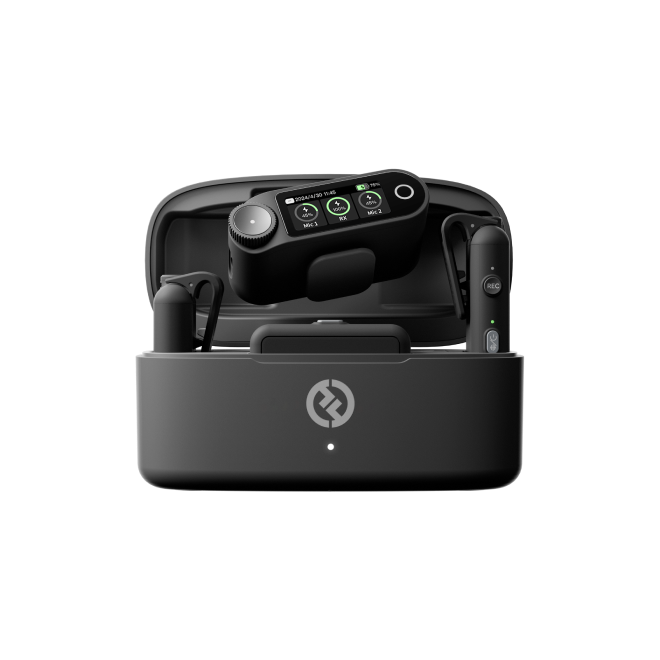
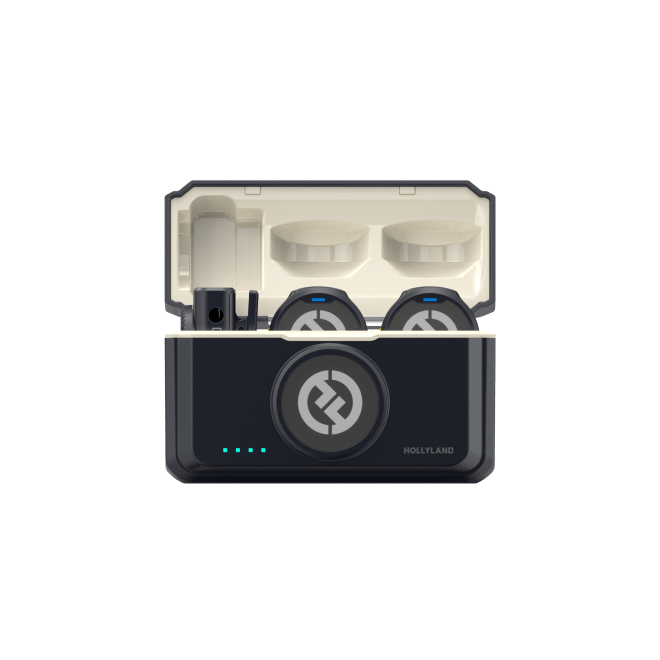
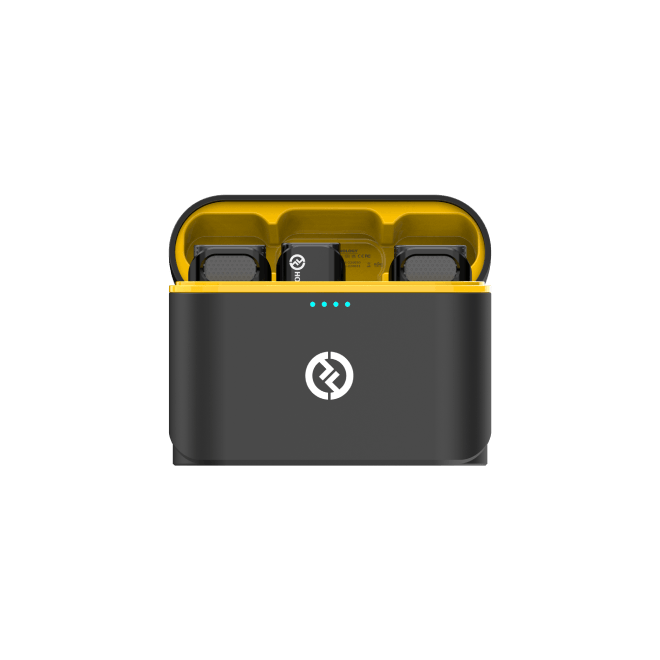
- Start with clean audio if you’re recording original content. If you’re filming talking-head videos, vlogs, or interviews specifically to repurpose into Shorts, clean source audio eliminates the noise reduction step entirely. A compact wireless mic like the Hollyland LARK M2 is just 9g and coin-sized with a 40-hour battery. It connects directly to your phone or camera without needing a separate adapter.
- Export a test clip before batch exporting. Run one short through the full export and upload process to confirm aspect ratio, captions, and audio are correct before processing a larger batch.
FAQs
Can CapCut export directly to YouTube Shorts or TikTok?
Yes. After editing, tap the “Export” button and select “Share to” or the TikTok/YouTube icon if shown. CapCut will finalize the export and open the target app with the video pre-loaded for upload. You’ll still need to add your caption, hashtags, and thumbnail inside the platform’s native interface.
Does CapCut reduce video quality when trimming?
No, trimming and splitting in CapCut are non-destructive timeline operations. Quality is only affected at export. To preserve original quality, set the export resolution to match your source (e.g., 1080p) and select the highest quality setting available before exporting.
How do I make multiple shorts from one long video in CapCut?
Use the Split tool to mark all desired segments across the full timeline, delete the unwanted sections between them, then export each remaining clip individually. Alternatively, re-import the original file into a fresh project for each new short to keep timelines clean and avoid confusion.
Is CapCut’s Auto Highlight available on desktop?
Yes, but availability depends on your app version. On desktop, look for it under the AI or “Smart Tools” panel in the right sidebar. If you don’t see it, update to the latest version of CapCut for PC or Mac. The feature set on desktop occasionally lags behind mobile by one update cycle.
What’s the maximum video length I can import into CapCut?
CapCut doesn’t publish a hard duration cap, but practical limits depend on your device’s available memory and storage. On mobile, files over 30-40 minutes can cause slow scrubbing or occasional crashes on older devices. On a desktop, the limit depends mainly on your RAM and free disk space. Most modern computers can handle imports that are an hour long without problems.
Can I do this on CapCut’s free version without a watermark?
Yes. CapCut’s core editing tools, such as split, trim, Auto Highlight, Auto Reframe, and standard exports, are fully available on the free plan with no watermark. Some premium templates, effects, and AI features require a CapCut Pro subscription, but watermark-free export of your own edited footage is free by default.
Conclusion
For full control over what appears in your Shorts, use Method 1 with manual split and trim. If you have long recordings and want the AI to help, Method 2’s Auto Highlight saves a lot of editing time. For turning horizontal videos into vertical ones, Method 3’s Auto Reframe tracks subjects without needing manual cropping. Check the export settings table before uploading to each platform. Next, learn how to add captions in CapCut so every Short works on silent autoplay.