.png)
 简体中文
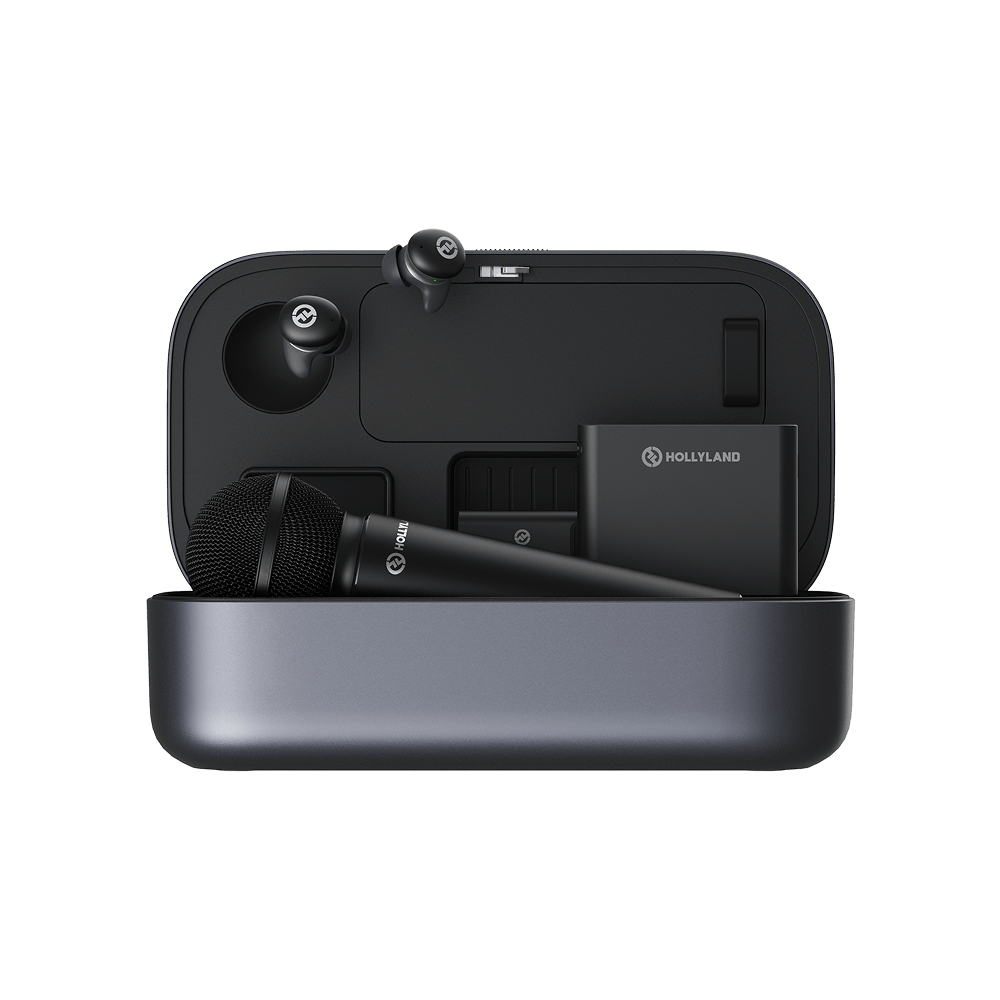
MELO P1
Live Stage & Home Studio Rock Vocals
- 145dB Max SPL
- Cardioid Wireless
- 100+ Pro Presets

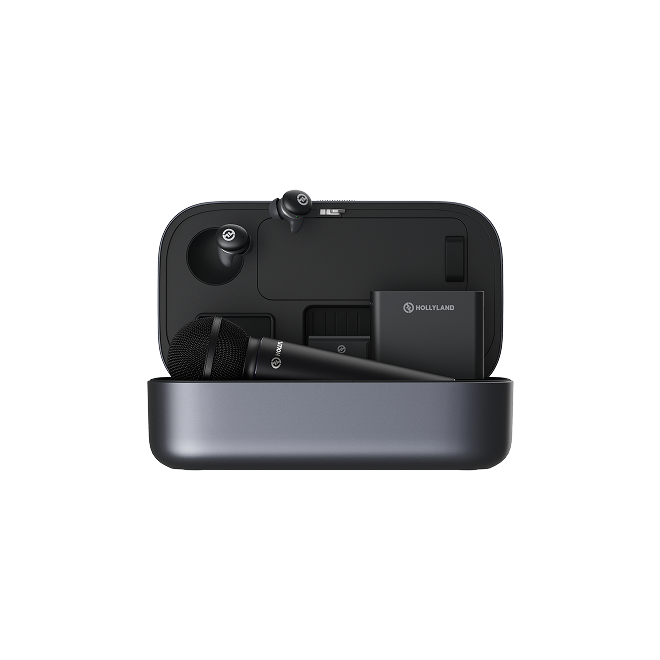
Rock vocals hit hard — your mic should too. The MELO P1 handles up to 145dB SPL, delivers cardioid feedback rejection, and offers true wireless freedom with 100+ pro presets tuned for live stage performance and aggressive vocal dynamics.
Ideal for live gigs, band rehearsal, and home studio rock recording.

Live Stage & Home Studio Rock Vocals
This is the first decision most rock vocalists face — and the answer isn't always straightforward.
Dynamic microphones are the traditional choice for rock vocals, and for good reason:
n- They handle extremely high sound pressure levels (SPL) without distorting
n- They're naturally less sensitive to room noise and stage bleed
n- Their built-in proximity effect adds warmth and body to aggressive vocal tones
n- They're more physically rugged — designed to take abuse on stage
Condenser microphones offer a different trade-off:
n- Wider, more extended frequency response (typically capturing more air and detail)
n- Higher sensitivity — which works well in controlled studio environments but requires careful management on loud stages
n- Better suited for nuanced or melodic rock vocal styles than screaming or full-belt delivery
For most live rock performances, a dynamic capsule is the safer, more reliable choice. For home studio recording or lower-SPL rock styles, a condenser can deliver a more open, detailed sound. If you perform across both contexts, look for a mic system that gives you both capsule types to switch between — so you're never locked into one sound character.
SPL (Sound Pressure Level) tolerance tells you how loud a signal a microphone can accept before the signal clips or distorts.
Rock vocals — especially screaming, belting, or metal techniques — can push 130dB SPL or higher at close range. A microphone rated below this threshold will introduce audible distortion exactly when your performance is at its most powerful.
What to look for:
n- Dynamic capsule: Aim for 140dB SPL or higher for screaming/metal vocals
n- Condenser capsule: 130dB SPL+ for rock, with headroom to spare for aggressive delivery
n- Avoid microphones that list maximum SPL specs closer to 115–120dB — these are built for speech or gentle acoustic sources, not live rock performance
Rule of thumb: If the spec sheet doesn't list maximum SPL, that's a red flag for live rock use.
For live rock performance, cardioid is the only polar pattern worth considering.
A cardioid mic picks up sound primarily from the front and rejects sound from the sides and rear. This matters for two critical reasons on a rock stage:
Omnidirectional microphones — while excellent for certain recording and content-creation applications — are not suitable for live rock stage use. They pick up sound equally from all directions, which makes feedback control almost impossible in a loud monitor environment.
If you're browsing wireless microphone systems more broadly, pay close attention to this spec. Many wireless clip-on and lavalier systems use omnidirectional capsules and are built for video/broadcast workflows, not vocal performance.
For stage use, the wireless system matters as much as the microphone capsule itself. A mic that sounds incredible but drops out mid-set is not a stage-ready tool.
Key things to evaluate:
Running out of battery mid-set is a real risk with wireless systems, especially on longer gig nights or marathon rehearsal sessions.
Practical benchmarks to apply:
Also check whether the receiver/mixer unit has its own battery life spec — some systems have transmitters with strong battery life but receivers that die faster.
One of the most overlooked aspects of live rock vocal performance is how well you can hear yourself during the show.
If you're using in-ear monitors connected through your wireless mic system, the latency of the monitoring path becomes critical. Even a few milliseconds of delay creates an unnatural doubling effect that throws off pitch and timing.
Look for systems that:
n- Offer a dedicated low-latency monitoring path — separate from the main transmission
n- Allow volume and mix control from the mic or a small stage mixer
n- Support wireless earphone monitoring so you're not tethered to a floor wedge
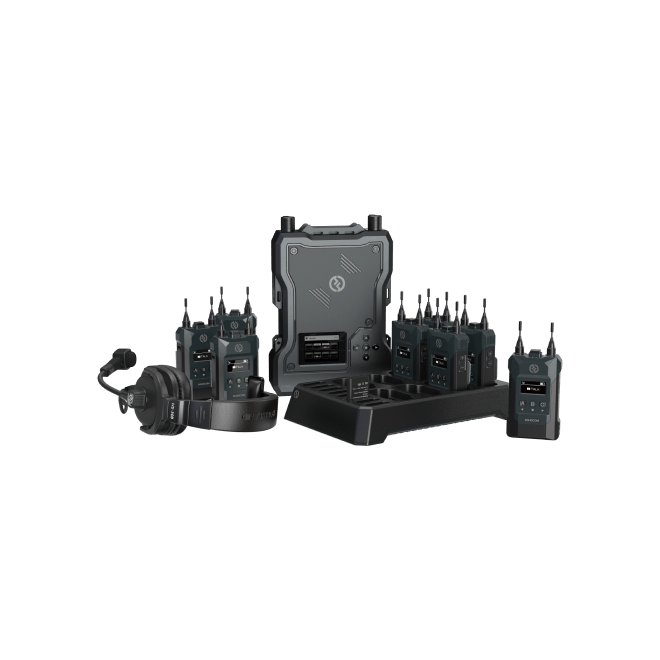
For rock vocalists moving toward wireless in-ear monitoring, an all-in-one system (mic + smart mixer + wireless earphone) simplifies the setup and eliminates the need for a separate IEM transmitter.
Beyond specs, the character of how a mic sounds on aggressive vocals matters — especially if you're recording or streaming live content alongside performing.
Consider:
| Use Case | Top Priority |
|---|---|
| Live stage performance | Cardioid pattern, high SPL, wireless reliability, low-latency monitoring |
| Band rehearsal room | SPL headroom, feedback rejection, durable build |
| Home studio rock recording | Capsule type flexibility, frequency response, low noise floor |
| Content creation / music video | Sound character, preset control, all-in-one wireless simplicity |
I love my new LARK M2 mics. These were so good, and I really enjoyed testing out the new LARK M2 from Hollyland.
Sarah Grace Tech Creator · 3.2M YouTube subscribers
The Hollyland LARK MAX is the wireless microphone system with the clearest and crispest audio of any wireless mic system I have ever tried.
Goenrock Cinematographer · 107K Instagram subscribers
LARK MAX is doing an excellent job of dropping the sound of the air conditioner, which is something l always have to remove and post with our shotgun mic.
Film Riot Filmmaking Educator · 2.2M YouTube subscribers
Yes — and it's built specifically for that. The MELO P1 is rated at **145dB SPL in Dynamic mode**, one of the highest SPL ceilings available in any handheld wireless vocal mic. Whether you're delivering a controlled belt or a full-throttle scream, the dynamic capsule captures it cleanly without clipping or breaking up. The Condenser capsule option handles up to **132dB SPL** as well, giving you headroom well beyond what most rock performances demand. Combined with **32-bit float** signal capture, the system preserves every dynamic peak without distortion — even when you push hard.
The MELO P1 uses a **cardioid polar pattern** — the industry-standard choice for live vocal performance precisely because it captures sound from in front while rejecting bleed from the sides and rear. That directional design keeps feedback from floor monitors, drum kits, and guitar amps from entering your signal path. On top of the cardioid pickup, the MELO P1's **25dB AI noise cancellation** adds a second layer of stage isolation, keeping your vocal clean and intelligible even in a high-volume mix.
The MELO P1 transmits over **2.4GHz** with a **60m / 196ft line-of-sight range** — more than sufficient coverage for club stages, rehearsal rooms, and mid-size live venues. The system is engineered for real performance conditions, not just controlled studio environments. For the vast majority of live applications, 60m of wireless coverage gives you full-stage freedom with consistent signal stability and no mid-set drop fears.
No. The MELO P1 uses a **dual-band zero-lag monitoring system**, so what you hear in your earphone is effectively real-time — no perceptible delay between what you sing and what you hear back. For live performance, even small monitoring delays can throw off pitch and timing. This system is engineered to eliminate that problem entirely, giving you a natural in-ear experience as close to a wired connection as wireless can deliver.
The microphone itself runs for approximately **12 hours per charge**, and the smart mixer runs for around **8 hours**. With the included **5,000mAh charging case**, total system battery life extends to up to **40 hours** — enough to cover multiple sets, a full day of rehearsals, or an entire weekend of back-to-back gigs without hunting for a wall outlet between performances.
For most live rock performances, the **dynamic capsule** is the recommended choice. Dynamic mics are the classic rock vocal tool — built for high-SPL environments, naturally suited to aggressive singing styles, and forgiving in loud, unpredictable stage conditions. The MELO P1 dynamic capsule handles up to **145dB SPL** with a frequency response of **50Hz–17kHz**, delivering the punch and warmth that rock vocals are known for.nnIf you're recording in a home studio or want more air and detail in your sound, the **condenser capsule** (**132dB SPL**, **20Hz–20kHz**) offers extended frequency capture — useful for studio takes where nuance and precision matter. The fact that the MELO P1 gives you both options in one system is a real advantage for vocalists who both perform live and record.
The **100+ pro presets** are available through the **HollyAudio App** and are built for real-world vocal performance scenarios — not generic EQ snapshots. From raw and dry to more processed, high-presence tones, the preset library gives you a solid starting point and the flexibility to adjust from there. You can dial in your sound before the set and switch or tweak via the **Bluetooth remote controller** without interrupting your performance or breaking stage position.
The MELO P1 is built from the ground up as a **live vocal performance microphone** — not a repurposed lavalier or content-creator device adapted for stage use. Its handheld form factor, cardioid polar pattern, 145dB SPL handling, zero-lag monitoring, and wireless system architecture are all oriented around the demands of live performance. It also ships with a **5,000mAh charging case** that doubles as a carry case for transport between venues, making it a genuinely road-ready system rather than a studio piece pressed into service on stage.