.png)
 简体中文
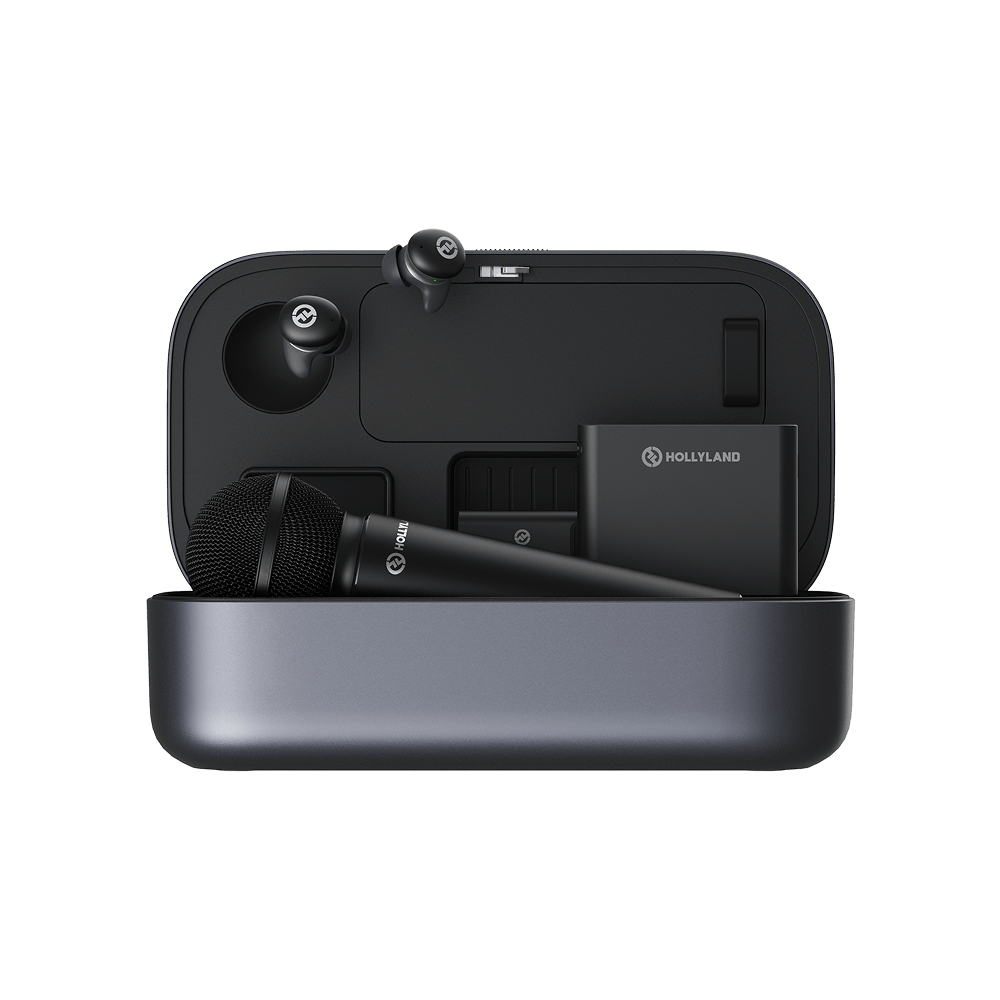
MELO P1
For live acoustic performers and singer-songwriter creators
- 60m Wireless Range
- 25dB AI Noise Cancellation
- 32-bit Float Recording

From bedroom demos to live stage sets, find the right microphone for your acoustic guitar. Whether you're recording at home, streaming performances, or creating content on the move, our wireless mic systems capture every nuance — clean, natural, and cable-free.
Works straight into your phone, laptop, or PA system — no audio interface required.

For live acoustic performers and singer-songwriter creators
Acoustic guitar has a wide dynamic range and a rich tonal character — from the deep resonance of the body through to the delicate shimmer of fretted strings. The microphone type you choose shapes how much of that character gets captured.
Large-diaphragm condenser microphones are the most widely used for acoustic guitar in home and studio recording. They offer wide frequency response (often 20Hz–20kHz), high sensitivity, and a natural, full-bodied representation of the instrument — making them the default choice when tonal accuracy matters most.
Small-diaphragm condenser microphones (also called pencil condensers) are favoured in professional recording contexts for their precise transient response and consistent off-axis rejection. They're particularly useful when positioning the microphone away from the soundhole to capture the full character of the instrument body and strings together.
Dynamic microphones are built for durability and SPL tolerance rather than fine tonal nuance. They suit loud, uncontrolled live environments where feedback rejection outweighs the need for detailed acoustic capture — but they're generally not the first choice for home recording or content creation.
Quick guidance: For recording at home or creating content, start with a condenser. For high-volume live stages where feedback is a genuine concern, a dynamic's resilience becomes a meaningful advantage.
Your connection format determines how the microphone integrates with your setup — and how complex that setup needs to be.
USB microphones connect directly to a computer or tablet with no additional hardware. They're the fastest path to recording and a strong choice for home recording musicians, content creators, and streamers who want a straightforward plug-and-play workflow without investing in an audio interface.
XLR microphones use a balanced analogue connection and require an audio interface or mixing desk to operate. They offer more flexibility — precise gain control, phantom power, integration with broader signal chains — and are the standard in professional studio and live sound environments. The trade-off is added cost and setup complexity.
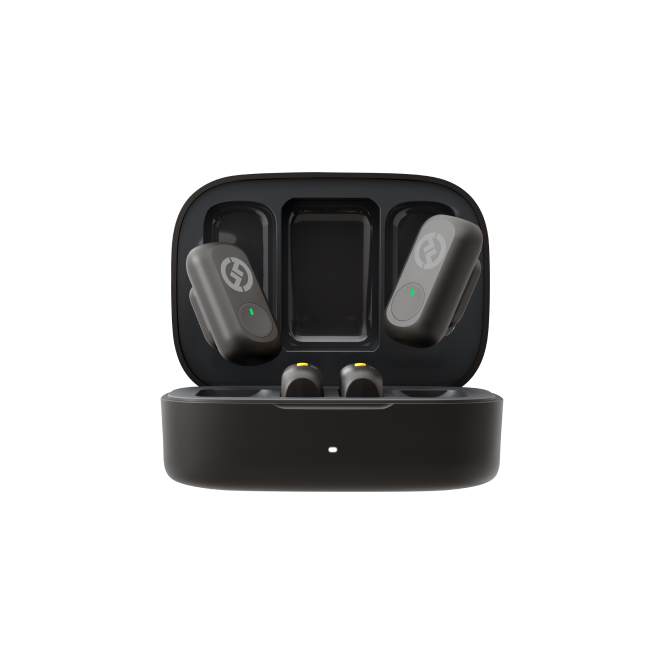
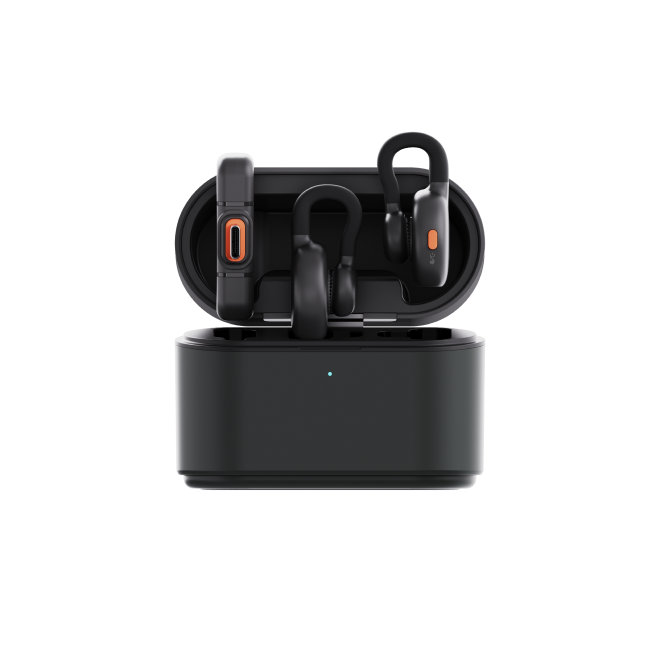
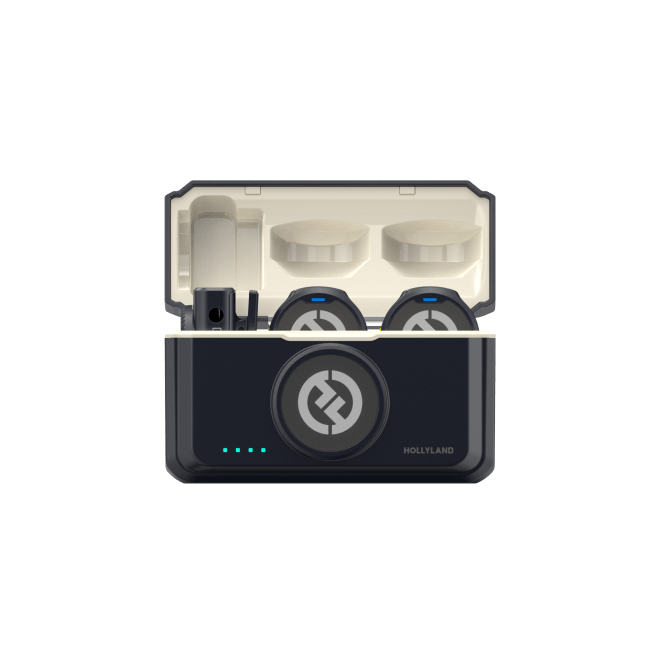
Wireless microphone systems replace the cable entirely with a digital transmission link. For live acoustic performers, this is the most significant practical upgrade available: no cable across a stage, no restriction on movement, no cable management between sets. Modern 2.4GHz wireless systems have matured considerably and deliver audio quality that holds up under professional scrutiny.
| Format | Best For | Trade-Off |
|---|---|---|
| USB | Home recording, content creation, streaming | Limited pro integration |
| XLR | Studio recording, live sound rigs | Requires interface or mixer |
| Wireless | Live performance, streaming, location recording | Higher initial investment |
Different acoustic guitar applications pull in genuinely different directions. The right choice depends more on where and how you're using the microphone than on any single spec.
Home studio and bedroom recording
nPrioritise tonal accuracy and wide frequency response. A large-diaphragm condenser positioned at the 12th fret captures the natural character of the guitar without over-emphasising either the bass-heavy soundhole or the thin brightness of the upper bout. A quiet room helps significantly — even basic acoustic treatment makes a meaningful difference.
Singer-songwriter content creation
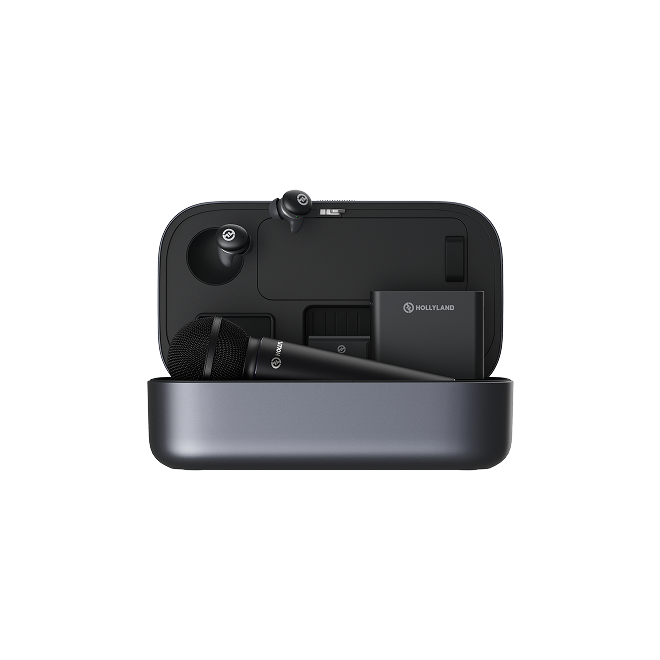
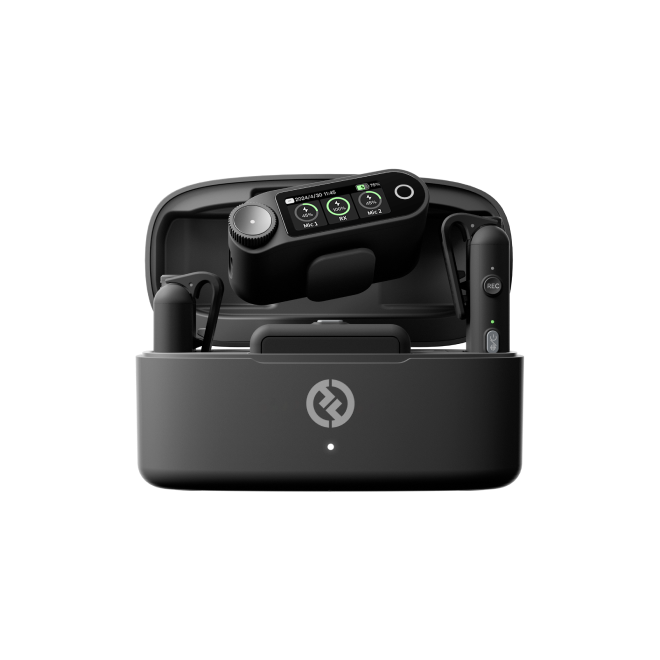
nThe challenge here is capturing voice and guitar together cleanly, without building a complex rig around a single camera setup. All-in-one systems that combine wireless capture with onboard mixing and sound shaping — such as the MELO P1, which integrates a large-diaphragm condenser, a DSP mixer, and 100+ presets into a single portable unit — can replace a desktop recording setup without sacrificing output quality.
Live acoustic performance
nFeedback rejection becomes the dominant concern. Tight cardioid polar patterns help, but so does mic placement — keeping the microphone away from monitor wedges and angled off-axis to floor reflections. Wireless systems add the further advantage of eliminating cable-related signal issues and freeing the performer to move naturally on stage.
Live acoustic streaming
nStreamers need clean, low-latency signal capture with direct output to a streaming device. Wireless systems with USB-C or direct smartphone connectivity remove the need for a separate audio interface in the chain. Hardware-level AI noise cancellation is especially useful here — it handles room noise and ambient sound in real time without introducing post-processing latency.
On-the-go and location recording
nPortability and noise handling take priority over studio-grade precision. Microphones with built-in noise cancellation or onboard signal processing reduce dependence on a controlled acoustic environment. Long battery life and a compact carrying case are practical advantages that matter in this scenario.
Polar pattern determines which directions the microphone is sensitive to — and for acoustic guitar, this has a direct impact on the recorded tone and how much of the room gets captured alongside the instrument.
Cardioid is the standard pattern for most acoustic guitar applications. It captures sound primarily from the front while rejecting sound from the rear, making it effective at isolating the guitar from room noise, background ambience, and stage monitors.
X-Y stereo configurations — two cardioid capsules angled apart — capture the spatial character of an acoustic guitar more naturally, producing a wider, more three-dimensional sound. This approach is worth considering in dedicated recording contexts where stereo imaging is a priority.
Placement matters as much as pattern. Common starting positions include:
There's no universal correct position. Adjusting distance and angle by just a few centimetres in either direction can significantly change the character of the captured sound — experimentation is part of the process.
One of the most common frustrations when recording acoustic guitar at home is capturing the room as much as the instrument — HVAC hum, street noise, reflective surfaces, and general ambience all compete with the guitar signal.
Practical approaches to managing this:
For live performance, feedback rather than room noise is the primary concern. Keeping stage monitor levels controlled, maintaining a tight cardioid pattern, and positioning the microphone away from speaker lines are the most reliable mitigation strategies.
This is a practical consideration that's often underweighted in microphone buying decisions.
A traditional XLR condenser microphone requires an audio interface with phantom power, a mic stand, a cable, and recording software configured on a computer. For a dedicated home studio workflow, this is entirely manageable — but it's a meaningful barrier for a singer-songwriter who wants to record a quick video, or a live streamer who needs clean audio without a full desk setup.
All-in-one wireless systems address this directly. A system that combines the microphone, a DSP mixer, monitoring, and direct smartphone output into a single portable unit removes most of the technical complexity from the signal chain. The MELO P1 is built around this principle — it functions as a complete wireless audio rig that can move from case to streaming-ready in minutes, with onboard sound shaping that removes the need for a separate EQ or compressor in most content creation and performance workflows.
The right level of complexity depends on your workflow:
Choose the format that removes friction from your most common workflow — not the format that theoretically covers every scenario you might eventually encounter.
I love my new LARK M2 mics. These were so good, and I really enjoyed testing out the new LARK M2 from Hollyland.
Sarah Grace Tech Creator · 3.2M YouTube subscribers
The Hollyland LARK MAX is the wireless microphone system with the clearest and crispest audio of any wireless mic system I have ever tried.
Goenrock Cinematographer · 107K Instagram subscribers
LARK MAX is doing an excellent job of dropping the sound of the air conditioner, which is something l always have to remove and post with our shotgun mic.
Film Riot Filmmaking Educator · 2.2M YouTube subscribers
Condenser microphones are the most widely recommended choice for acoustic guitar — their extended frequency response (typically 20Hz–20kHz) captures the full tonal range of the instrument, from the warmth and body resonance in the low-mids to the transient shimmer of the high strings. Large-diaphragm condensers deliver a rich, warm character suited to singer-songwriter recording; small-diaphragm condensers offer precise, natural reproduction that works well for fingerpicked styles and close-mic studio tracking.
n
Dynamic microphones are more durable and handle high SPLs confidently, making them a practical choice for loud stage environments where feedback risk is high — but they typically sacrifice high-frequency detail compared to condensers.
n
For most acoustic guitar use cases — home recording, content creation, and live streaming — a large-diaphragm condenser with a cardioid polar pattern is the strongest all-round starting point.
It depends on the microphone format you choose. Traditional XLR condenser microphones require phantom power, which means you'll need an audio interface or mixer in the signal chain. USB microphones have a built-in interface, so they connect directly to a computer with no extra hardware.
n
All-in-one wireless systems take this further. The Hollyland MELO P1, for example, integrates a dual-chip DSP Smart Audio Mixer directly into the wireless receiver — handling signal processing, EQ, compression, and monitoring without any external interface. It outputs 48kHz / 32-bit float audio via USB-C directly to your smartphone or computer. If you want a simplified, portable acoustic guitar rig with no gear stack, this is the format that eliminates the most friction.
Mic placement has more impact on your acoustic guitar sound than almost any other variable. Three common starting positions:
n
n
n
n
n
For distance, 6–12 inches (15–30cm) is a practical starting range. Closer placement increases low-end via the proximity effect; moving back introduces more room sound. Record a short test at a few positions and compare playback before committing to a take.
Yes — and for singer-songwriters creating content at home, it's one of the most practical approaches. A large-diaphragm condenser placed at the 12th fret / neck junction, angled slightly upward toward your face, naturally captures both voice and guitar in a single performance pass.
n
The trade-off is flexibility in post-production: a single combined take is harder to edit independently. If you want cleaner source separation — for example, to adjust vocal levels or add different processing to each — a two-microphone setup gives you that control. The Hollyland MELO P1 supports dual-mic configurations, making a two-source acoustic guitar and vocal capture possible within a single all-in-one wireless system, without adding interface complexity.
Modern 2.4GHz wireless systems have closed the quality gap significantly. The key specifications to evaluate are transmission resolution and dynamic range — not just wireless range.
n
The Hollyland MELO P1 transmits and records at 48kHz / 32-bit float, which meets or exceeds the output resolution of many wired USB microphones. The 32-bit float format is specifically valuable for acoustic guitar, where the dynamic range between a soft fingerpicked passage and a full strum can span 25–30dB. It effectively eliminates clipping risk during capture, even without precise gain staging.
n
For live acoustic performance, streaming, and content creation, a quality wireless system is a fully capable choice. For critical studio tracking where imperceptible latency and maximum isolation are priorities, a high-end wired XLR condenser remains the professional benchmark — but for the majority of real-world acoustic guitar use cases, wireless quality is no longer a meaningful compromise.
A few practical approaches that compound well together:
n
n
n
n
n
n
For most home recording environments, combining a cardioid mic with basic room softening handles the majority of ambient noise issues without additional investment.
Yes — condensers are used on acoustic guitar stages regularly — but their higher sensitivity does require more careful management than a dynamic. The fundamentals:
n
n
n
n
n
The MELO P1's 25dB AI noise cancellation also reduces the raw ambient sensitivity that drives feedback risk on stage. For performers who encounter persistent feedback issues, a dynamic capsule (which the MELO P1 also supports via swappable capsule design) or a dedicated acoustic instrument pickup system may offer a more robust solution in very loud stage environments.
32-bit float is a recording format that dramatically expands the dynamic range available during capture — effectively eliminating the two most common recording errors: clipping (recording too loud and causing digital distortion) and noise floor problems (recording too quietly and losing detail).
n
For acoustic guitar, this matters because the instrument has a wide natural dynamic range. A fingerpicked verse and a full-strum chorus might differ by 20–30dB. With standard 16-bit or 24-bit recording, getting your gain staging wrong at the start of a session can ruin a take. With 32-bit float, the full dynamic detail is preserved regardless of your input gain setting — you recover it cleanly in post-production.
n
The Hollyland MELO P1 records at 48kHz / 32-bit float, which makes it a strong choice for acoustic musicians who want clean, flexible recordings without the technical overhead of precise gain management.
Yes — and it's simpler than most acoustic musicians expect. The most direct workflow uses a microphone system that outputs audio via USB-C to your smartphone, bypassing the need for a laptop, interface, or DAW entirely.
n
The Hollyland MELO P1 is designed for exactly this. Its onboard Smart Audio Mixer handles all signal processing — EQ, compression, reverb, and 100+ HollyAudio presets — before audio reaches your streaming app. The 2.4GHz wireless earphone provides zero-latency monitoring during the stream. The result is a self-contained acoustic streaming rig that fits in a case the size of a lunchbox, with no additional gear required.
n
For acoustic musicians who stream to Twitch, Instagram Live, YouTube, or TikTok, this eliminates the most common barrier: the complexity of routing audio from a microphone through a computer to a streaming platform.
Budget tiers break down broadly as follows:
n
n
n
n
n
Your use case matters more than the budget tier alone. A live acoustic performer who needs cable-free stage freedom has fundamentally different requirements from a bedroom producer who only needs a single clean take into a DAW. Matching the microphone system to your primary use case is more valuable than simply spending more.