
Shop Smart Save Big
BLACK FRIDAY Shop Now
Camera Wireless Mics

Microphones for Camera

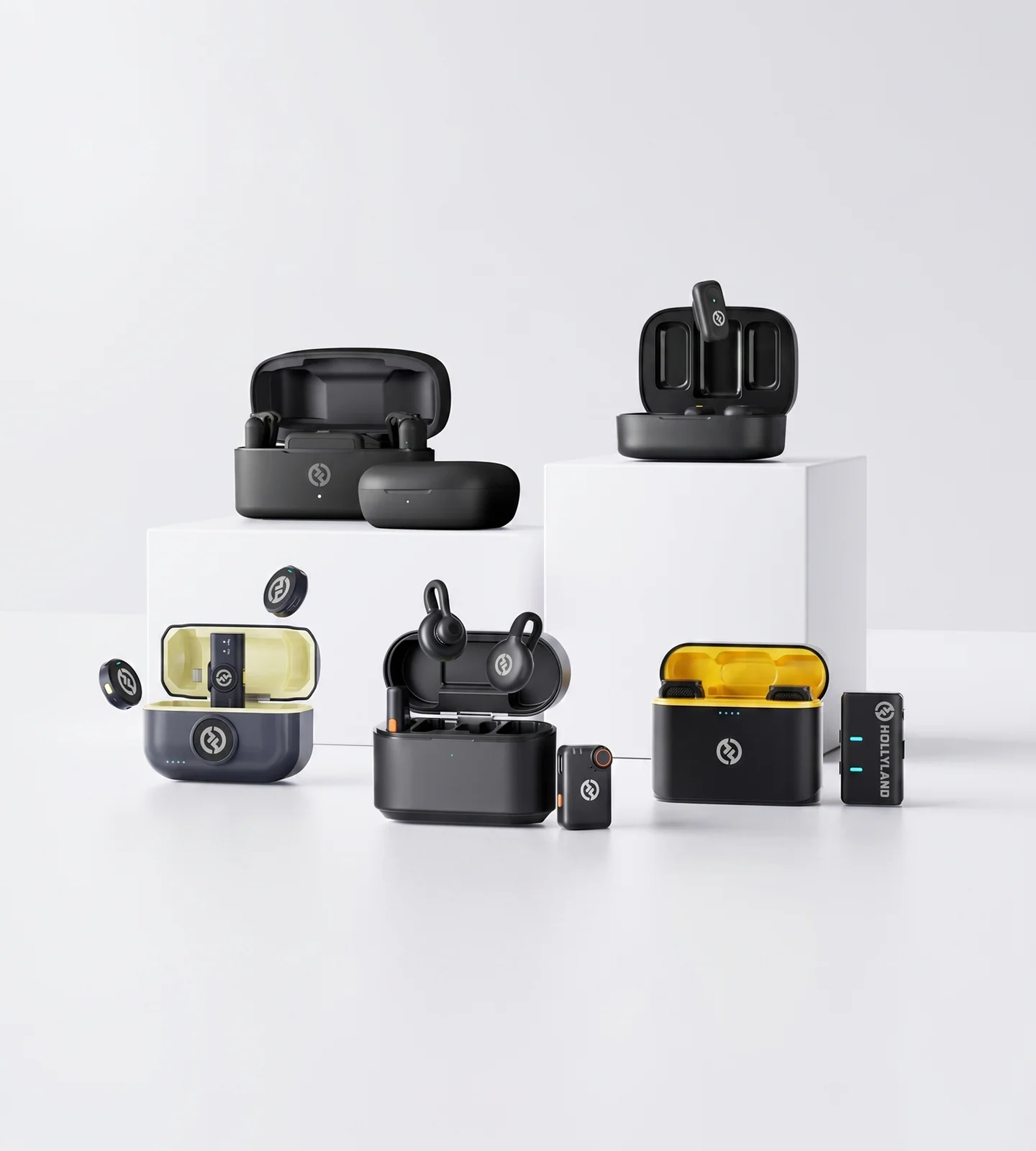
Capture broadcast-quality audio straight into your camera. Hollyland's wireless mics feature dedicated Camera RX receivers, ENC and AI noise cancellation, and ultralight transmitters — built for run-and-gun, documentary, and vlog workflows.

Shop Now Compare Models

Dedicated Camera RX · 3.5mm & cold shoe mount · Mirrorless & DSLR ready
  • Camera RX Plug-and-Play
  • ENC & AI Noise Cancellation
  • 7–9g Ultralight Transmitter
  • All-Day Battery Life
Editor's pick LARK MAX 2 32-bit Float · Timecode Sync
4.7 / 5 From 1.5M+ verified creators
Shop Models

Camera Wireless Microphones

Four camera-ready wireless mics — choose by workflow, from run-and-gun simplicity to full professional multi-mic production.
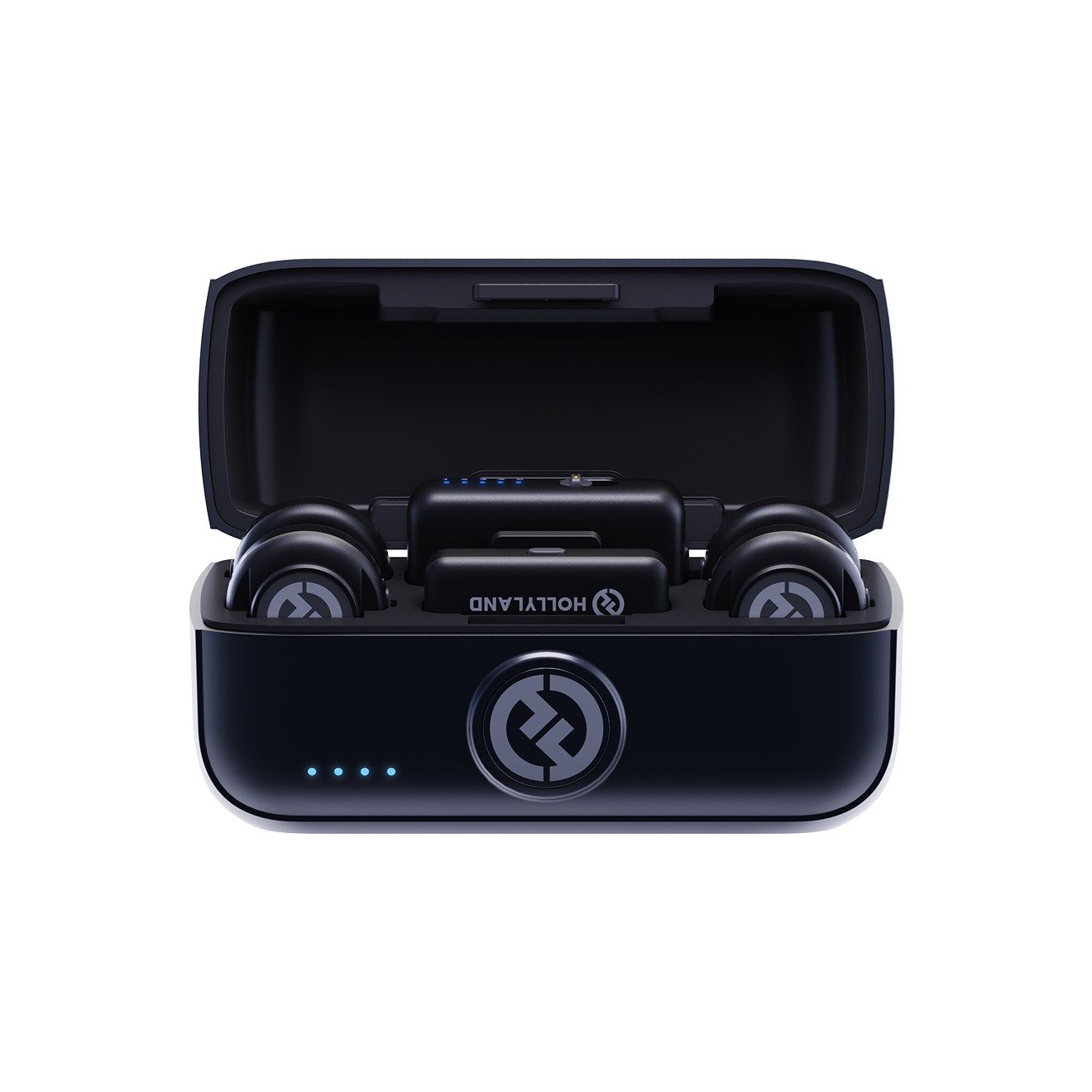
LARK M2

LARK M2

Plug in and shoot — no setup, no compromise

  • 300m Range
  • 9g Transmitter
  • ENC Noise Cancellation
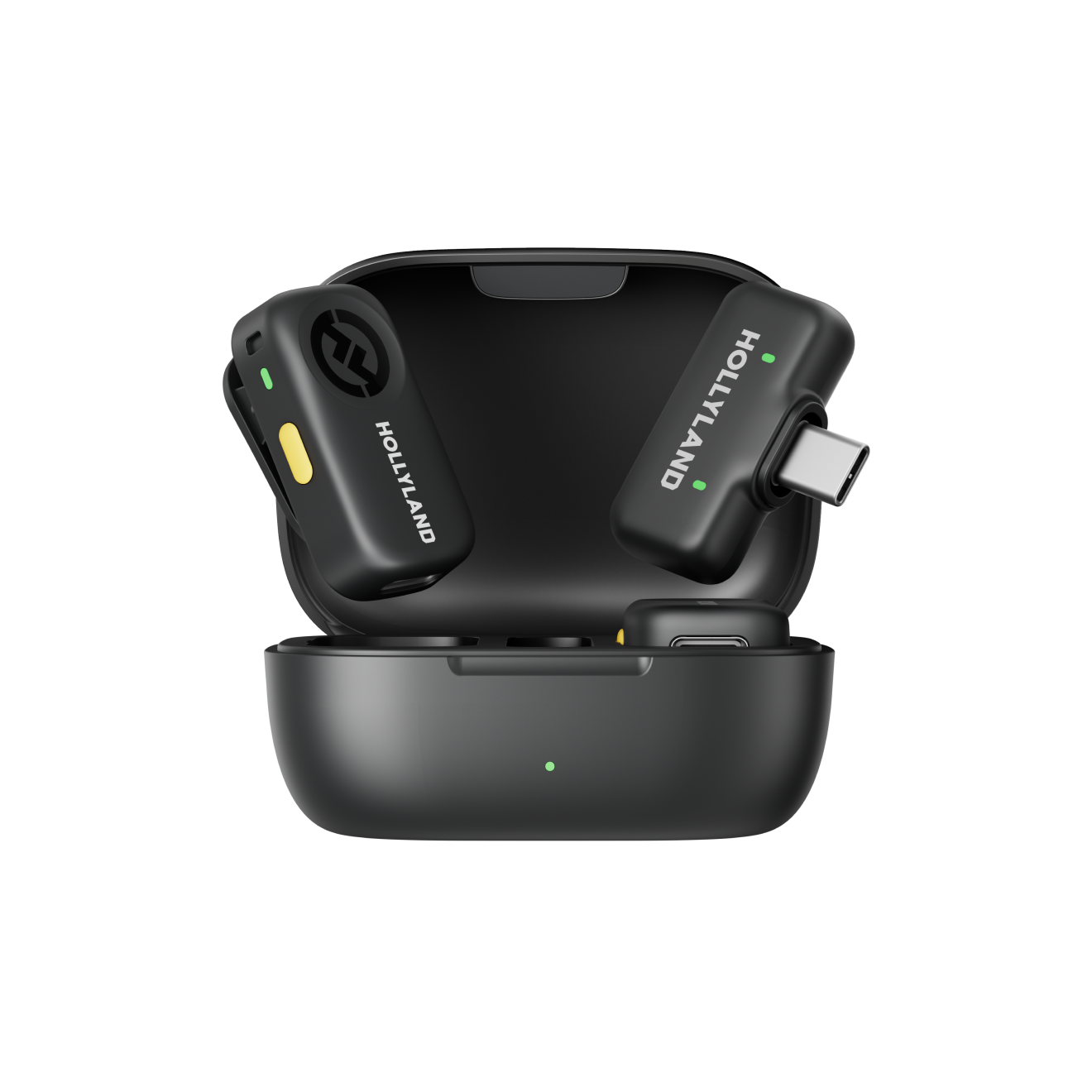
LARK M2S

LARK M2S

Premium wireless audio that disappears on your talent

  • 7g Transmitter
  • No-Logo Invisible Fit
  • Titanium Design
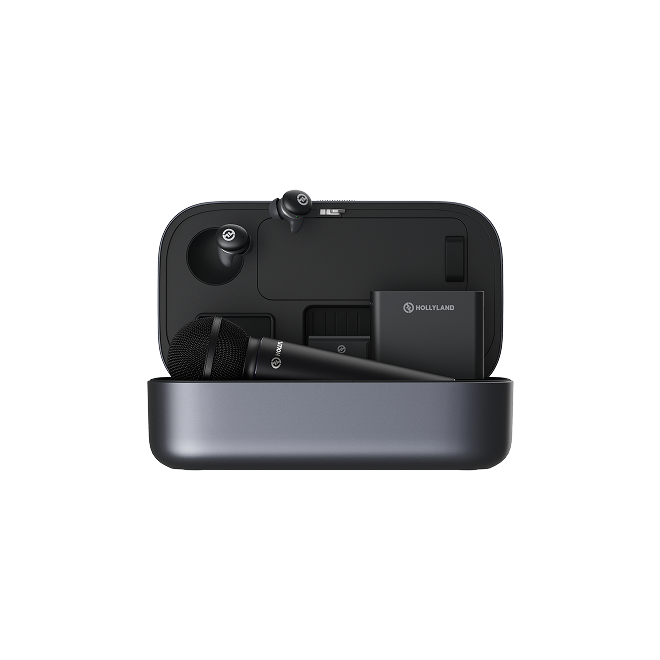
LARK MAX 2

LARK MAX 2

Full professional control for multi-camera and complex productions
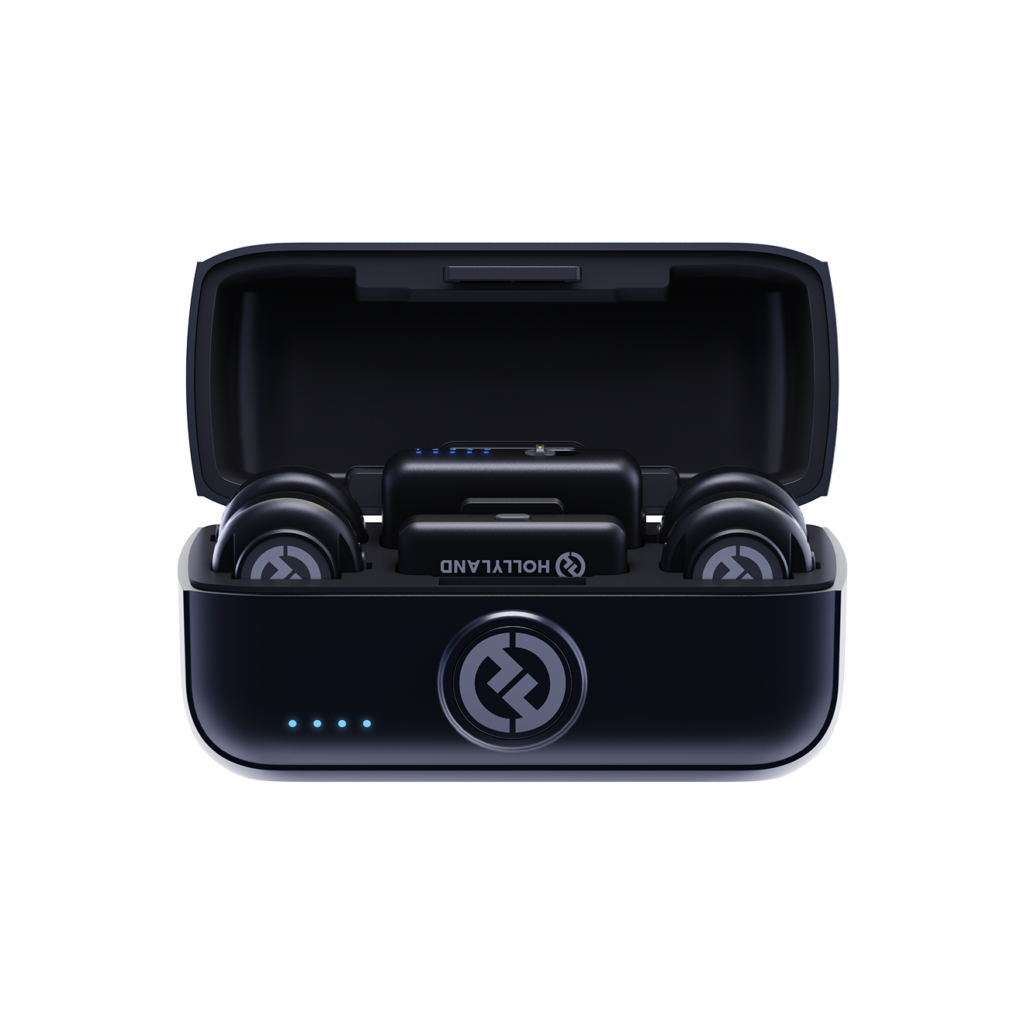
  • 32-Bit Float Recording
  • Timecode Sync
  • 1 RX → 4 TX
LARK M3

LARK M3

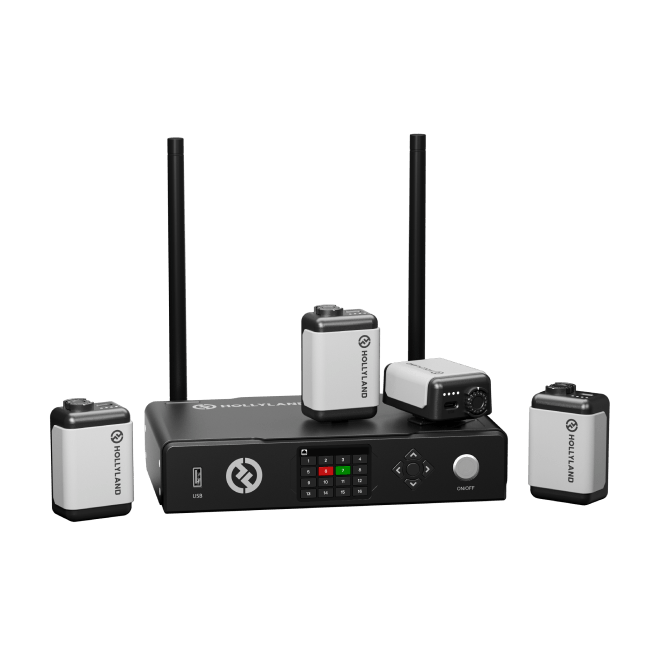
Scalable multi-mic system with 32-bit float audio and AI noise cancellation

  • 32-Bit Float Recording
  • Up to 4 TX & 4 RX
  • 9g Featherweight TX
Side-by-side

Compare & Choose

Side-by-side specs for every camera shooter — whether you need a featherlight everyday mic, a premium titanium build, a full pro system with 32-bit float and timecode, or a scalable multi-mic setup with up to 4 TX & 4 RX.
Model LARK M2 LARK M2 LARK M2S LARK M2S LARK MAX 2 LARK MAX 2 LARK M3 LARK M3
Recording Format 48kHz / 24-bit 48kHz / 24-bit 48kHz / 32-bit Float 48kHz / 24-bit & 48kHz / 32-bit Float
Wireless Range (LOS) 300m / 1000ft 300m / 1000ft 340m / 1115ft 300m / 1000ft
Transmitter Weight ~9g ~7g ~14g ~9g
Transmitter Battery Life ~10 hours ~9 hours ~11 hours ~8 hours
Camera RX Battery Life ~9 hours ~8.5 hours ~12 hours ~9 hours
Noise Cancellation ENC ENC AI Noise Cancellation AI Noise Cancellation
Internal Recording Backup — — 32-bit Float, up to 14h —
Timecode Sync — — ✓ —
Multi-TX Support — — 1 RX → up to 4 TX Up to 4 TX per RX
Multi-RX Support — — — Up to 4 RX per TX
Shop Shop Shop Shop
Buying Guide

How to Choose the Right Camera Microphone

Not every wireless microphone is built for a camera. Before you buy, it's worth understanding which features actually matter on a real shoot — and which specs separate a good-enough solution from one you'll rely on every time.
  1. Is the Receiver Actually Designed…
  2. Wireless Range: LOS vs. NLOS —…
  3. Audio Quality: The Specs That…
  4. Form Factor: Grams Matter More…
  5. Battery Life: Plan Around Your…
  6. Noise Cancellation: Your Insurance…
  7. Setup Speed: When Plug-and-Play…
  8. Advanced Features: When Your…
  9. Quick Decision Framework

Is the Receiver Actually Designed for Your Camera?

This is the first question to answer — before range, before audio quality, before anything else.

A wireless mic system built for smartphones uses a different receiver entirely. What you need for camera work is:

  • A dedicated Camera Version RX that mounts cleanly in your cold shoe and connects via a standard 3.5mm output — no dongles, no adapters
  • Plug-and-play pairing so you can be recording in seconds, not minutes
  • A low-profile receiver form factor that doesn't unbalance your rig, obstruct your viewfinder, or require a separate cable run

If a product's specs reference smartphone or mobile-only compatibility, it's the wrong tool for this workflow — regardless of how good the audio sounds.


Wireless Range: LOS vs. NLOS — Know the Difference

Every wireless mic quotes a maximum range figure. What matters in practice is the NLOS (Non-Line of Sight) number — the effective range when there are walls, people, or obstacles between the transmitter and receiver.

  • LOS (Line of Sight) — maximum range in open, unobstructed conditions; useful as a headroom indicator
  • NLOS — the number that reflects real shooting environments: conference rooms, event halls, street locations

For interview and indoor event work, an NLOS range of 40–70m covers most scenarios. For open-air or run-and-gun shooting, strong LOS performance matters more. Either way, buy more range than you think you need — real-world RF environments always reduce the spec.


Audio Quality: The Specs That Actually Matter

When comparing systems, focus on three figures:

  • Bit depth and sample rate — 48kHz / 24-bit is the professional video standard and delivers broadcast-quality audio for most productions. 32-bit float goes further: it captures a full dynamic range without any risk of clipping, even if gain wasn't set before the take — a meaningful safety net for unpredictable moments
  • Signal-to-Noise Ratio (SNR) — aim for 70dB or higher. Lower SNR introduces audible noise in quiet passages and limits how far you can push the audio in post
  • Maximum SPL — the loudness threshold before distortion. 115dB+ handles events, crowds, and louder-than-expected environments without peaking

For most camera video work, 48kHz / 24-bit with a strong SNR is the right baseline. 32-bit float becomes essential when you're operating without a dedicated sound person, or when the scene can change in an instant.


Form Factor: Grams Matter More Than You'd Expect

A transmitter worn by a subject should be easy to forget it's there.

  • Weight — lighter transmitters (under 10g) reduce subject discomfort during long takes and are less likely to shift position mid-interview
  • Size — a smaller body hides more easily under clothing or at a lapel position, keeping the subject looking natural on camera
  • Visual discretion — for interviews and narrative work where the mic may be partially visible, a no-logo, neutral-finish transmitter reads far less as a piece of equipment on screen

If your workflow is more rig-based — mounting a mic to a cage or boom rather than on a person — weight is less of a priority. But for any shoot involving a wearable transmitter, go as light as the spec allows.


Battery Life: Plan Around Your Longest Day

Don't just look at TX battery life — check the receiver too. A mismatch between the two creates unexpected interruptions.

  • Short-form or solo content creation — 6–8 hours per charge covers most shooting days
  • Full-day event or documentary work — target 9–12 hours on both TX and Camera RX
  • Extended or multi-day productions — look at total battery life across charge cycles, including the charging case

Also consider whether the system offers internal recording on the transmitter as a backup. If the receiver battery runs out or signal drops, a local recording on the TX saves the take.


Noise Cancellation: Your Insurance Policy for Unpredictable Locations

Background noise is the enemy of clean dialogue. Two types of noise reduction appear in wireless systems at this level:

  • ENC (Environmental Noise Cancellation) — hardware-level filtering built into the transmitter that attenuates ambient sound before it's ever transmitted. Effective against wind, air conditioning, crowd murmur, and general room noise
  • AI Noise Cancellation — model-based, software-driven voice isolation that separates speech from complex backgrounds in real time. More aggressive suppression, better for difficult acoustic environments like street interviews, live venues, or construction sites

ENC covers the majority of shooting scenarios and should be considered a baseline expectation. AI noise cancellation is the stronger tool when your environments are genuinely unpredictable and audio cleanup in post isn't a reliable fallback.


Setup Speed: When Plug-and-Play Beats Every Other Feature

The best audio setup is the one that doesn't slow you down.

  • Plug-and-play systems auto-pair on power-up and output audio immediately with no configuration required — the right default for fast-moving shoots, solo operators, and anyone who can't afford a technical delay between setup and rolling
  • App-assisted control adds remote gain adjustment, level monitoring, and ENC tuning from your phone — valuable when you want more oversight or are managing multiple audio sources from a distance

For most camera workflows, prioritize plug-and-play reliability first. App control is a useful layer on top, not a reason to choose one system over another.


Advanced Features: When Your Production Outgrows Basic Wireless

If you're running more complex productions, look for systems that scale:

  • Internal recording backup — the transmitter stores a full-quality local file as insurance against RF interference or receiver dropout. Non-negotiable for single-take, high-stakes situations
  • Timecode sync — aligns audio and video across multiple cameras in post without manual correction. Essential for multi-camera interviews, panels, and any production using a dedicated audio recorder alongside camera bodies
  • Multi-transmitter support — a single receiver that manages 2, 3, or 4 transmitters simultaneously simplifies crew audio without multiplying your receiver count

These capabilities are the domain of professional-tier systems — the LARK MAX 2, for example, supports up to 4 TX per receiver and pairs 32-bit float recording with timecode and AI noise cancellation. The LARK M3 takes the multi-mic concept further with a fully modular architecture: up to 4 TX and 4 RX can operate simultaneously, each TX pairing with up to 4 receivers and vice versa — ideal for multi-camera event coverage and panel productions. If you're running a simpler 1-to-1 or 1-to-2 setup, a more streamlined system like the LARK M2 or LARK M2S handles those workflows cleanly without the added overhead.


Quick Decision Framework

If you need… Prioritize…
Fastest possible setup Plug-and-play Camera RX, minimal configuration
Maximum subject comfort Lowest transmitter weight, compact/no-logo design
Clean audio outdoors ENC or AI noise cancellation
Confidence without a sound person 32-bit float recording, internal TX backup
Multi-camera or crew productions Timecode, multi-TX support, long RX battery life
All-day continuous shooting 9–12h TX and RX battery life per charge
Scalable multi-mic, multi-camera system Up to 4 TX & 4 RX, AI noise cancellation, 32-bit float
Every Shoot. Every Setup.

Built for How You Actually Shoot

From solo vlogs to multi-camera film sets, Hollyland camera wireless mics are engineered around real production workflows — fast to deploy, dependable on location, and clean enough to skip the audio rescue in post.

Solo Vlogging & Self-Shooting

Clip the transmitter to your collar, slide the Camera RX into your cold shoe, and hit record — no crew, no cables, no trade-offs. Plug-and-play pairing means you spend your time in front of the lens, not troubleshooting audio before every take.
  • Solo Creator
  • Vlogging
  • Tripod & Gimbal

Interview & Documentary Shooting

Hand your subject a 7–9g transmitter they'll forget they're wearing and let them move, gesture, and turn naturally. ENC noise cancellation filters the café hum, street traffic, and HVAC roar so the only thing your camera records is their voice.
  • Documentary
  • Interview
  • On-Location Audio

Event & Wedding Videography

Ceremony to reception, all-day battery life and up to 300m line-of-sight range keep you locked on audio no matter where the moment takes you. No battery swaps mid-vow. No signal gaps during the first dance.
  • Event Video
  • Wedding
  • All-Day Shooting

Run-and-Gun & ENG Shooting

When the story moves fast, plug-and-play setup takes you from bag to rolling in seconds. The compact Camera RX sits flush on your rig without throwing off gimbal balance, while ENC keeps dialogue clean even when you're chasing the shot.
  • Run-and-Gun
  • ENG
  • Fast Setup

Multi-Camera & Professional Production

Connect up to four transmitters to a single camera receiver, lock timecode across your entire camera package, and let 32-bit float internal recording act as an unclippable safety net. Built for the sets where nailing audio in-camera is non-negotiable.
  • Multi-Camera
  • Timecode
  • Film Production
Trusted by creators

1.5M+ creators picked LARK microphones for their audio

A decade of wireless engineering for film crews and broadcasters — packaged for modern creator workflows.
  • 4.7 Avg. rating · 120K+ reviews
  • 1.5M+ Verified creators
  • 160+ Countries shipped
  • 98% Would recommend

I love my new LARK M2 mics. These were so good, and I really enjoyed testing out the new LARK M2 from Hollyland.

Sarah Grace Sarah Grace Tech Creator · 3.2M YouTube subscribers

The Hollyland LARK MAX is the wireless microphone system with the clearest and crispest audio of any wireless mic system I have ever tried.

Goenrock Goenrock Cinematographer · 107K Instagram subscribers

LARK MAX is doing an excellent job of dropping the sound of the air conditioner, which is something l always have to remove and post with our shotgun mic.

Film Riot Film Riot Filmmaking Educator · 2.2M YouTube subscribers
  • No Film School
  • Newsshooter
  • CineD
  • RedShark
  • CAMERA JABBER
  • Photowebexpo
FAQ

Common Questions About Hollyland Camera Microphones

Are these wireless microphones compatible with my camera?

Yes. The LARK M2, LARK M2S, LARK MAX 2, and LARK M3 each include a dedicated Camera Version receiver that mounts to any standard cold shoe and connects to your camera via a 3.5mm TRS cable — the same input used by wired microphones. This makes them plug-and-play compatible with mirrorless and DSLR cameras from Sony, Canon, Nikon, Fujifilm, Panasonic, Blackmagic Design, and virtually any other brand that has a 3.5mm mic jack. No drivers, adapters, or proprietary docking required.

Will wireless audio cause sync issues in my video?

No. Because the Camera Version receiver plugs directly into your camera's 3.5mm mic input, audio is recorded onto your camera's own timeline in real time — exactly like a wired microphone. Any wireless transmission latency is negligible and stays constant, so there is no drift between audio and picture. For multi-camera productions that require frame-accurate sync, the LARK MAX 2 supports timecode, eliminating manual sync work in post entirely.

What's the wireless range — is it enough for my shoot?

The LARK M2 and LARK M2S both reach up to 300m / 1000ft in line-of-sight (LOS) conditions. The LARK MAX 2 extends to 340m / 1115ft LOS. For non-line-of-sight shooting — through walls, around corners, across a crowded venue — the LARK M2 Camera Version reaches 40m / 130ft, while the LARK MAX 2 reaches 70m / 230ft. For most interview, event, documentary, and vlogging scenarios, all three systems provide ample range. For larger outdoor productions or complex venue environments, the LARK MAX 2's extended NLOS performance offers the most headroom.

What's the difference between the LARK M2, LARK M2S, LARK MAX 2, and LARK M3?

All four are camera-ready wireless microphone systems, but they target different production needs:

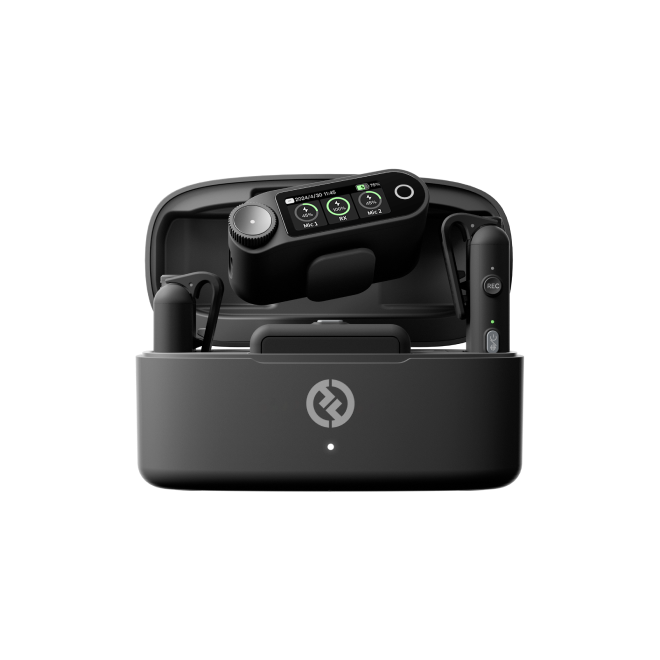
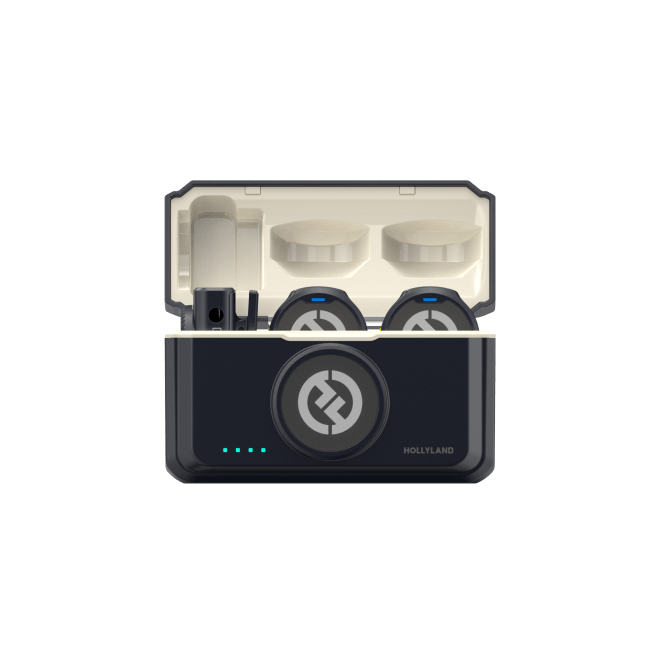
  • LARK M2 — The core camera wireless system. Ultra-light 9g transmitter, 300m LOS range, ENC environmental noise cancellation, 48kHz/24-bit audio, and up to 10 hours of TX battery life. The go-to choice for videographers and creators who want professional wireless audio at an accessible entry point.
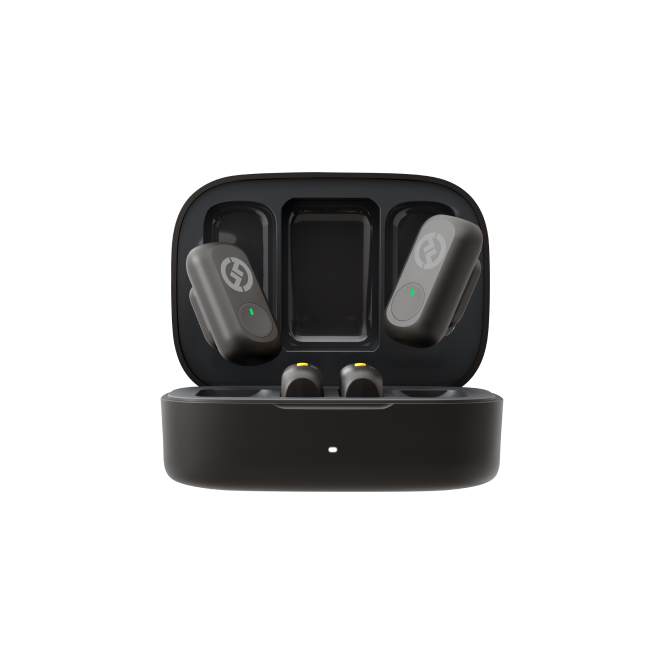
  • LARK M2S — The premium version of the M2 platform. The transmitter drops to just 7g with a titanium build and a no-logo design that disappears on talent — ideal for shoots where on-camera aesthetics and subject comfort matter most.
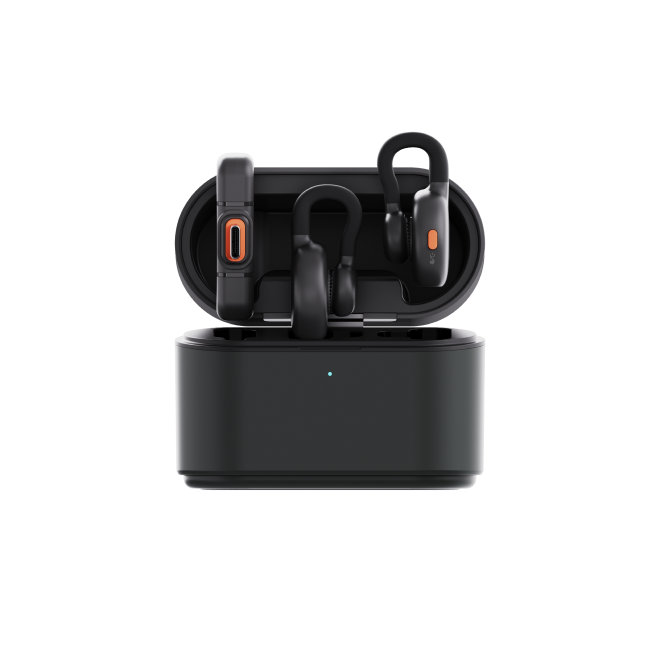
  • LARK MAX 2 — The professional-grade system. Steps up with 32-bit float internal recording, AI noise cancellation, timecode sync, support for up to 4 transmitters per receiver, and a 12-hour camera RX battery. Built for complex multi-subject productions, live events, and professional broadcast workflows.
  • LARK M3 — The scalable multi-mic system. Delivers 32-bit float recording, AI noise cancellation, and a fully modular architecture supporting up to 4 TX and 4 RX simultaneously — with each TX able to pair with up to 4 receivers and vice versa. At just 9g per transmitter and with 4 independent isolated tracks, it's built for multi-camera event coverage, panel shoots, and any production that needs maximum routing flexibility without a dedicated audio recorder.
How easy is it to set up with a camera?

Setup takes under a minute. Mount the Camera Version receiver to your cold shoe, plug the included 3.5mm cable into your camera's mic input, clip the transmitter to your subject, and you're rolling. The transmitter and receiver pair automatically — no app is required to start recording. Optional app control is available on the LARK M2 and M2S for fine-tuning gain, ENC settings, and monitoring, but the system works straight out of the box without it. There's no menu diving, no driver installation, and no configuration that slows down a live shoot.

How do these microphones handle wind and background noise?

The LARK M2 and LARK M2S feature ENC (Environmental Noise Cancellation), which actively reduces ambient background noise — crowd noise, air conditioning, traffic — to keep your subject's voice clear. The LARK MAX 2 takes it further with AI Noise Cancellation, trained to separate voice from complex and unpredictable background environments. For outdoor shooting, all three systems are compatible with windscreen accessories to reduce wind rumble. Whether you're shooting in a busy event space, an outdoor market, or a windy field, these systems are engineered to deliver clean dialogue audio regardless of the environment.

How long will the battery last during a shoot?

All four systems are built to cover a full production day on a single charge:

  • LARK M2: TX ~10 hours per charge · Camera RX ~9 hours · Up to 40 total hours with charging case
  • LARK M2S: TX ~9 hours per charge · Camera RX ~8.5 hours · Up to 30 total hours with charging case
  • LARK MAX 2: TX ~11 hours per charge · Camera RX ~12 hours · Up to 36 total hours with charging case
  • LARK M3: TX ~8 hours per charge · Camera RX ~9 hours · Up to ~48 total hours with charging case (case provides 2 additional full TX recharges)

The LARK MAX 2's 12-hour Camera RX battery is especially well-suited for marathon event days or back-to-back shooting sessions where recharging isn't an option. For multi-mic productions, the LARK M3's 48-hour total battery life across the charging case keeps an entire crew running through extended shoot days.

What is 32-bit float recording, and do I need it?

32-bit float is an audio recording format that captures an exceptionally wide dynamic range. In practice, it means you can record loud, unpredictable audio events — a sudden shout, a crowd burst, a clap of thunder — without clipping, and quiet recordings can be boosted in post without introducing noise. It removes the need to set gain levels before a shoot. On the LARK MAX 2, 32-bit float internal recording is built into each transmitter, capturing a safety backup audio file directly on the mic — independent of whatever the camera is recording. This is a significant safeguard for weddings, live events, news gathering, or any scenario where audio levels are unpredictable and retakes are impossible. For controlled interview or studio setups where levels are predictable, the 48kHz/24-bit recording on the LARK M2 and LARK M2S delivers excellent professional-grade audio quality.

Explore further

A few more places to go from here

A curated link map of the surrounding content — related categories, the most useful guides, head-to-head comparisons and setup help.
Ready when you are

Better Audio Is One Plug Away

Dedicated Camera RX, ENC and AI noise cancellation, and plug-and-play setup across all four LARK mics — including the new LARK M3 scalable multi-mic system.
Shop Now Compare Models
  • Free shipping over $99
  • 30-day returns
  • 1-year warranty
apec
US