.png)
 简体中文
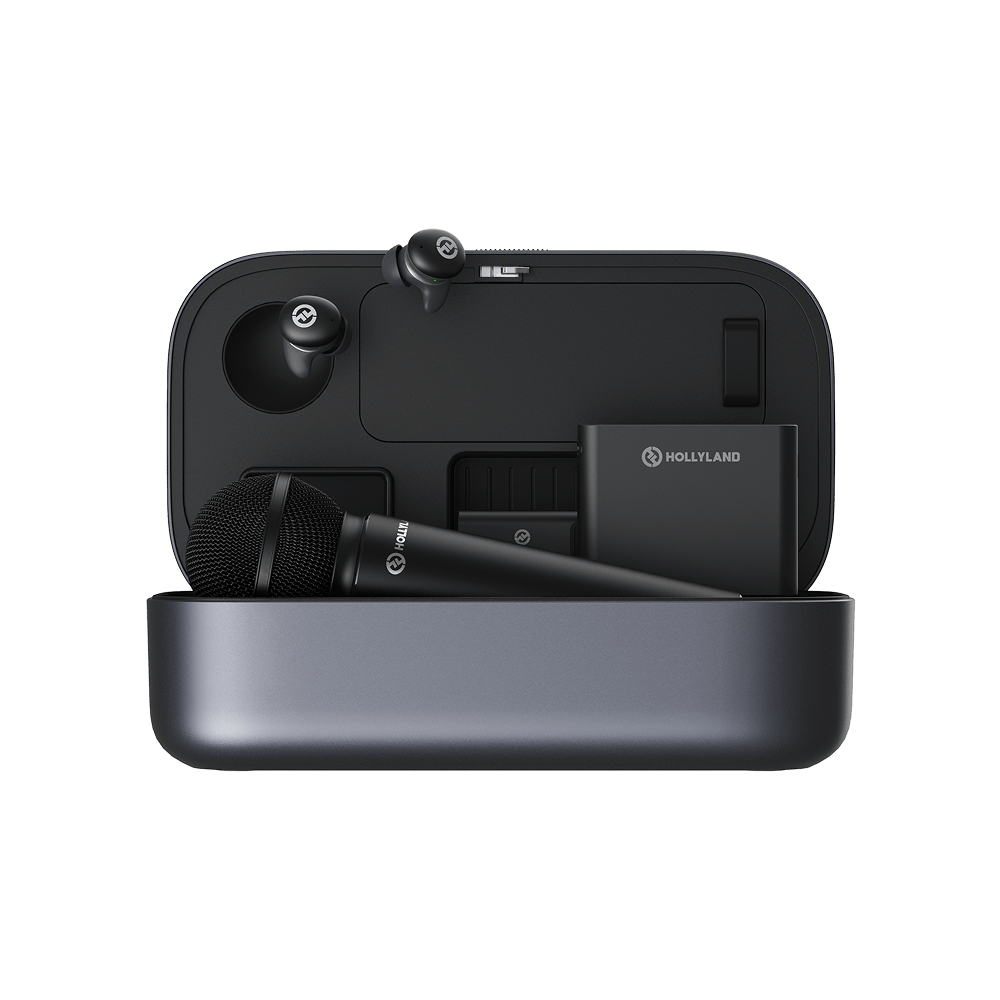
MELO P1
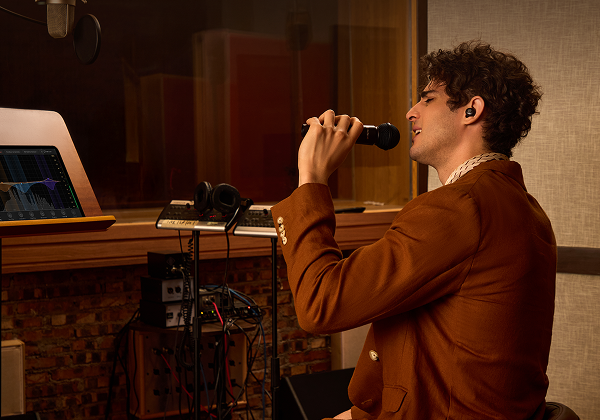
All-in-one wireless vocal system for stage, stream, and studio
- 100+ Vocal Presets
- 60m Wireless Range
- 40H Battery Life

Explore wireless microphones built for every vocal scenario — from home recording and live streaming to stage performance and podcasting. Studio-grade condenser clarity, 25dB AI noise cancellation, and 100+ vocal presets, all in one cable-free system.
No mixer required · Works with iPhone, Android & PC out of the box
All-in-one wireless vocal system for stage, stream, and studio
The capsule is the heart of any vocal microphone — and the choice between condenser and dynamic shapes everything from recording detail to how well the mic holds up in loud, noisy environments.
Condenser capsules use a thin, highly sensitive diaphragm that captures fine acoustic detail. They deliver extended frequency response (typically 20Hz–20kHz), natural warmth, and the kind of vocal presence that makes singing, voiceover, and spoken-word content sound polished. They perform best in quieter, controlled environments where that sensitivity works in your favor.
Dynamic capsules are more physically robust and less sensitive by design. They handle high volume without distorting, reject ambient noise more naturally, and hold up better in loud, untreated, or unpredictable spaces. If your use case involves powerful live vocals, beatboxing, or recording in noisy environments, a dynamic capsule is the more forgiving choice.
Which suits you?
- Singing, recording, podcasting, streaming in quieter settings → condenser
- Live performance, high-energy vocals, beatboxing, noisy locations → dynamic
- Both scenarios → look for microphones with a swappable capsule design, which lets you toggle between modes depending on the task. The MELO P1, for example, ships with a condenser capsule and supports a full dynamic capsule swap — giving you one microphone body for multiple vocal contexts.
A wired microphone is technically reliable — but it constrains where you can move, what gear you need nearby, and how quickly you can set up and pack down.
Wireless microphones have become the practical standard for live performance, content creation, and mobile recording. When evaluating a wireless system, focus on:
Background noise is one of the most common frustrations in vocal recording, streaming, and live performance. There are several overlapping layers of noise management to understand before buying:
Polar pattern
A cardioid polar pattern focuses microphone pickup directly in front of the capsule and naturally rejects sound from the sides and rear. It's the standard choice for vocal use and the most fundamental line of defense against ambient noise. Most handheld vocal microphones use a cardioid pattern.
AI noise cancellation
Some modern microphone systems include hardware-level AI noise cancellation that processes noise in real time — before it reaches your output. This is distinct from software-based noise reduction applied in post-production. Systems with 25dB or more of AI noise cancellation can meaningfully improve vocal clarity in home environments, cafés, event spaces, and outdoor locations.
Physical isolation
Internal shock-absorbing cavities reduce handling noise and vibration transmitted through the microphone body during use. This is a commonly overlooked but practically important feature for handheld, mobile, and live applications.
Monitoring — hearing your own voice during capture — is as important as the microphone itself for singers, streamers, and live performers. Without proper monitoring, pitch, phrasing, and mix balance all become harder to manage in the moment.
Key things to look for:
If you work with a wired setup and audio interface, make sure the interface supports direct monitoring — routing your input back to your headphones before it passes through your computer, which would otherwise introduce latency.
Where and how you'll use the microphone should anchor every other decision.
Home recording and home studio
Condensers excel here. A cardioid pickup pattern combined with AI noise cancellation manages room noise, HVAC hum, and environmental bleed. You have control over the space, so condenser sensitivity becomes an advantage rather than a liability.
Live stage and performance
Wireless range, SPL handling, and durability take priority. Dynamic capsules perform reliably under louder stage conditions. Zero-latency wireless monitoring and remote preset control — allowing you to adjust your sound from the stage without approaching the mixer — are features worth prioritizing for performers who operate independently.
Live streaming and content creation
Minimal setup complexity and consistent near-studio output quality matter most. Direct output to a smartphone or laptop via USB-C, built-in processing that reduces post-production work, and a compact system that doesn't require an interface or mixer are practical priorities for this use case.
On location — interviews, events, field reporting
Noise rejection and portability take priority. A wireless system with at least 60m of range handles most venue and outdoor scenarios. AI noise cancellation performs well against crowd noise, ambient street sound, and architectural reverb.
Not every vocal user wants to open a DAW to finish their sound. The gap between raw capture quality and publish-ready quality can be bridged in very different ways.
Built-in processing — presets, EQ, compression, reverb, de-esser — lets you shape your sound in real time, before you even hit record. This approach suits:
- Streamers and content creators who want a polished sound without post-production
- Live performers who need to switch between vocal characters mid-show
- Podcasters who need consistent output across variable recording environments
- Users without audio engineering backgrounds who want a reliable starting point
Look for systems offering a broad library of genre-specific vocal presets, combined with a full effects chain that you can control via a companion app or Bluetooth remote — without interrupting your performance.
Clean, unprocessed output suits users who prefer full control in software — producers, engineers, or anyone who values DAW-based shaping. In this case, prioritize microphone transparency and recording format. 32-bit float output significantly reduces the risk of clipping during loud or unpredictable vocal takes, providing a wide safety net in post-production regardless of gain staging.
SPL (Sound Pressure Level) is the measure of how loud a sound a microphone can handle before it distorts or clips.
The practical rule: Leave yourself at least 10–15dB of headroom above your expected peak vocal level. If your style is aggressive, close-miked, or involves rapid dynamic variation, always check the max SPL spec. A dynamic capsule rated for 145dB SPL, combined with 32-bit float recording, creates an effectively unclippable signal path — a meaningful safety net for high-energy or unpredictable vocal work.
For wireless vocal systems, these three factors are closely linked — and often underweighted during the buying decision.
Battery life benchmarks to look for:
- Microphone: 12 hours per charge is a strong baseline for handheld wireless use — enough for a full day of rehearsal, event hosting, or back-to-back recording sessions
- Monitoring earphone: 8–9 hours per charge covers most full-day workflows
- Integrated charging case: A case with a 5,000mAh capacity can deliver up to 40 hours of total system runtime — valuable for touring musicians, event professionals, or anyone who can't always access power between uses
Setup complexity:
Traditional vocal setups require a microphone, cable, audio interface or mixer, and a separate monitoring solution — multiple components, multiple price points, and a real learning curve. All-in-one wireless systems that ship the microphone, receiver/mixer, monitoring earphone, and remote controller in a single charging case dramatically reduce this overhead — and lower the barrier to professional-quality results without technical expertise.
Compatibility checklist before buying:
- Does it output via USB-C for direct phone or laptop connection?
- Does the receiver double as an audio interface, or is a separate interface required?
- Is there a companion app for preset management and real-time control?
- Does it support two simultaneous microphones — relevant for co-hosted podcasts and interviews?
- Is it compatible with your streaming software, camera rig, or recording setup?
I love my new LARK M2 mics. These were so good, and I really enjoyed testing out the new LARK M2 from Hollyland.
Sarah Grace Tech Creator · 3.2M YouTube subscribers
The Hollyland LARK MAX is the wireless microphone system with the clearest and crispest audio of any wireless mic system I have ever tried.
Goenrock Cinematographer · 107K Instagram subscribers
LARK MAX is doing an excellent job of dropping the sound of the air conditioner, which is something l always have to remove and post with our shotgun mic.
Film Riot Filmmaking Educator · 2.2M YouTube subscribers
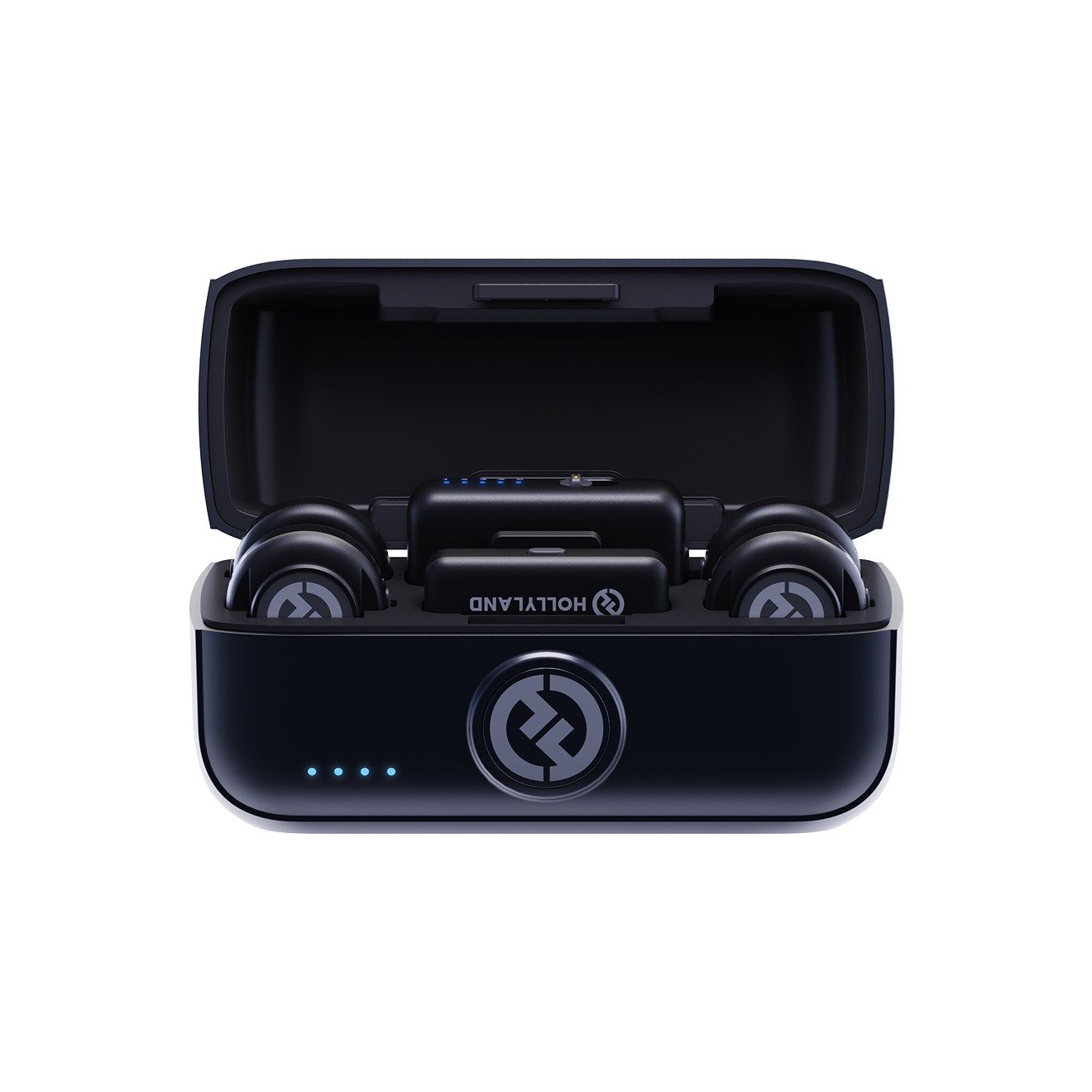
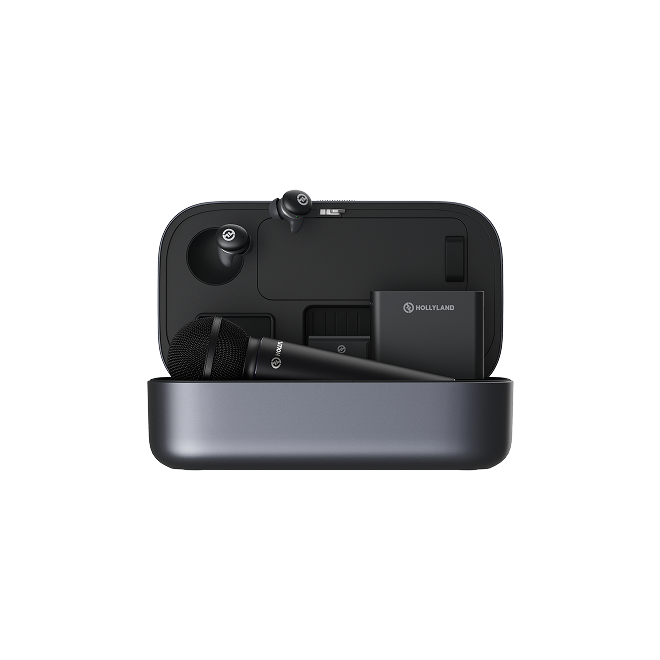
No — and that's one of the MELO P1's biggest advantages. The Smart Audio Mixer included in the system functions as both the wireless receiver and a full-featured dual-chip DSP mixer in one 55g unit. There's no audio interface to buy, no external mixer to route through, and no receiver box to mount. The entire rig — microphone, mixer, monitoring earphone, and Bluetooth remote — stores and charges in a single case. You plug the mixer into your phone or laptop via USB-C and you're ready to go.
Background noise is handled at two levels. First, the MELO P1 uses a cardioid polar pattern that naturally rejects sound coming from the sides and rear — keeping the focus on the voice in front of the capsule. Second, hardware-level AI noise cancellation reduces ambient noise by up to 25dB in real time, directly on the microphone itself. This isn't a software filter applied in post — it's onboard processing that works during live streaming, live performance, and on-location recording. Whether you're in a busy café, on a stage, or streaming from a room that isn't acoustically treated, you get a clean, focused vocal signal.
The MELO P1 ships with a 25mm large-diaphragm condenser capsule installed, and an interchangeable dynamic capsule is available separately. **Condenser mode** (20Hz–20kHz, 132dB max SPL) captures a wider frequency range with more detail and sensitivity — ideal for singing, harmonies, voiceover, podcasting, and any scenario where tonal accuracy and warmth matter most. **Dynamic mode** (50Hz–17kHz, 145dB max SPL) is built for higher output levels and more aggressive vocal styles — live stage performance, beatboxing, shouting, and high-energy MC work where the condenser's sensitivity could be too much. If you're unsure, start with the condenser; switch to dynamic if your vocal style pushes volume and intensity to the extreme.
The MELO P1 uses 2.4GHz wireless transmission with a 60m (196ft) line-of-sight range between the microphone and mixer — covering most stage, studio, and indoor content creation environments with headroom to spare. The wireless earphone monitoring also runs on 2.4GHz with zero-latency return, meaning you hear yourself in real time with no perceivable delay. The Bluetooth remote controller operates on a separate 70m channel, so preset switching and effect triggering don't interfere with the audio transmission path. Transmission reliability and latency performance are core to the system's design as a live performance tool, not an afterthought.
The microphone itself runs for approximately 12 hours on a single charge — long enough to cover most full-day events, multi-set shows, or marathon streaming sessions. The Smart Audio Mixer lasts approximately 8 hours, and the wireless monitoring earphone runs for around 9 hours. When any component needs recharging, the 5,000mAh charging case tops everything back up, bringing total system battery life to up to 40 hours across the full case cycle. In practical terms: you can run an entire day of events, a weekend of shows, or a week of daily recording sessions before you need to plug the case into the wall.
The MELO P1 is designed to cover both — and the full range of vocal use cases in between. For **live performance**, the 60m wireless range, Bluetooth remote for on-stage preset switching, zero-latency monitoring earphone, and 145dB max SPL dynamic capsule give you a complete wireless stage rig. For **content creation and streaming**, the USB-C output connects directly to a phone or laptop, the 100+ vocal presets in the HollyAudio App let you shape your sound instantly, and 32-bit float recording eliminates clipping risk during capture. The same system also handles podcasting, field interviews, karaoke, and public speaking. The swappable condenser/dynamic capsule means you're not locked into one sound profile — the hardware adapts to the context.
32-bit float is a recording format with an exceptionally wide dynamic range — so wide that it effectively eliminates the risk of clipping (distortion caused by audio that's too loud) or noise floor issues (loss of quality when audio is too quiet). With a traditional 16-bit or 24-bit setup, you have to carefully set your input gain before recording. If a vocal performance suddenly gets louder than expected, the recording clips and that take is ruined. With 32-bit float at 48kHz, the MELO P1 captures everything — from the quietest whisper to a full-power belt — with enough headroom to recover and adjust levels cleanly in post-production. For live streamers and podcasters who can't stop and re-record, and for singers who push their dynamics, this is a meaningful safety net.
The MELO P1's 25mm large-diaphragm condenser capsule — the same capsule format used in most professional studio vocal microphones — captures vocals with a frequency response of 20Hz–20kHz, a 116dB dynamic range, and 48kHz / 32-bit float output quality. The dual-chip DSP Smart Mixer applies studio-grade processing including EQ, compression, de-essing, and reverb. The 100+ presets in the HollyAudio App are precision-tuned rather than generic one-click filters. The result is a system that matches or exceeds what most home studio setups produce — without the interface, the cables, or the fixed recording environment. For professional studio tracking in a purpose-built booth, a high-end large-diaphragm condenser and dedicated preamp will always hold an advantage. For everything else — streaming, live performance, home recording, podcasting, and on-location work — the MELO P1 is built to close that gap.
Yes. The Smart Audio Mixer outputs via USB-C and is compatible with smartphones (iOS and Android), laptops, and standard streaming and recording software. The HollyAudio App is available on both iOS and Android for preset management, EQ adjustments, and effect control. For live streaming platforms like TikTok, YouTube, and Instagram Live, the mixer appears as a standard audio input device — no driver installation or complex routing required. The Bluetooth remote works independently of your phone, so you can control your sound from the stage or set without touching the mixer or opening the app.