.png)
 简体中文

LARK M2
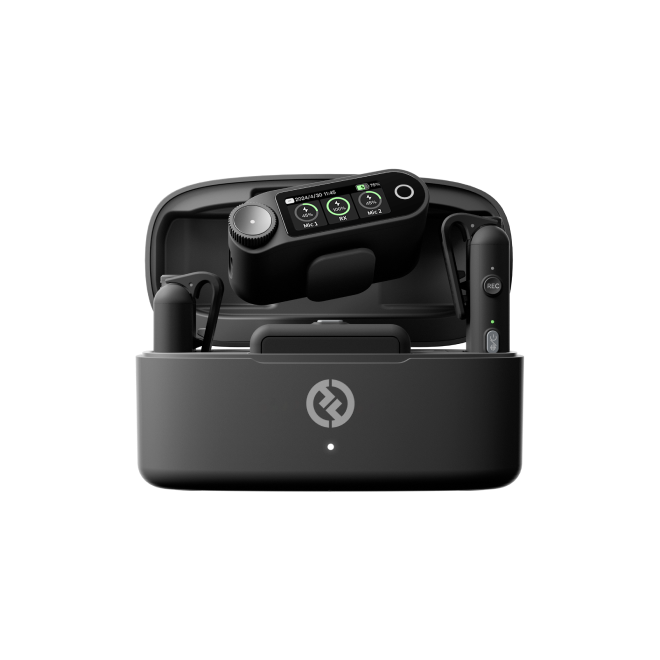
All-around wireless audio for camera and phone vloggers
- ENC Noise Cancellation
- 300m Range
- Plug & Play

Shop wireless microphones built for vloggers — ultra-compact transmitters from 7g, ENC and AI noise cancellation, plug-and-play setup, and all-day battery. Whether you shoot on a smartphone or camera, find the right LARK mic for your device, budget, and creative style.
Compatible with iPhone, Android, Sony, Canon & more.
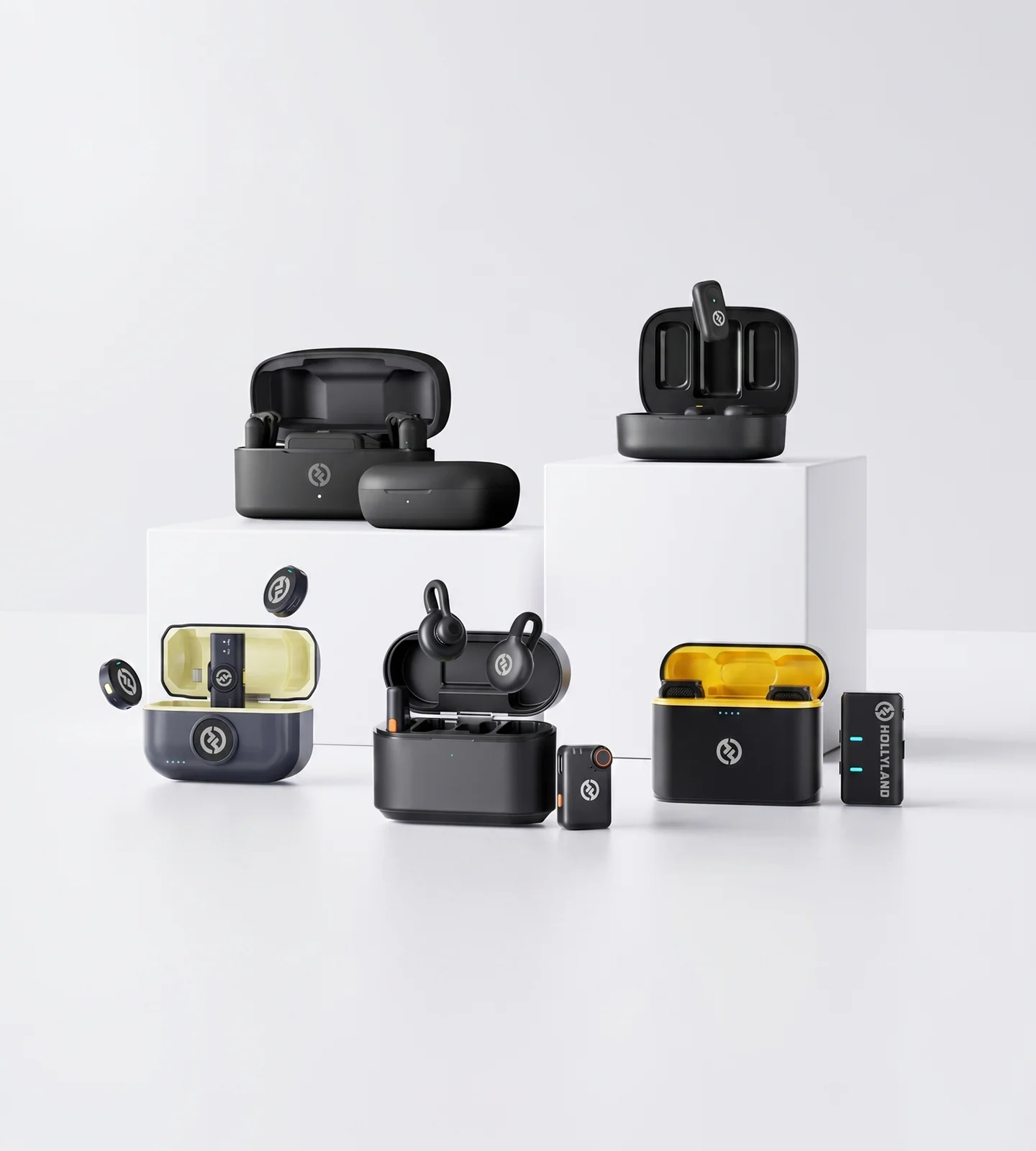
All-around wireless audio for camera and phone vloggers

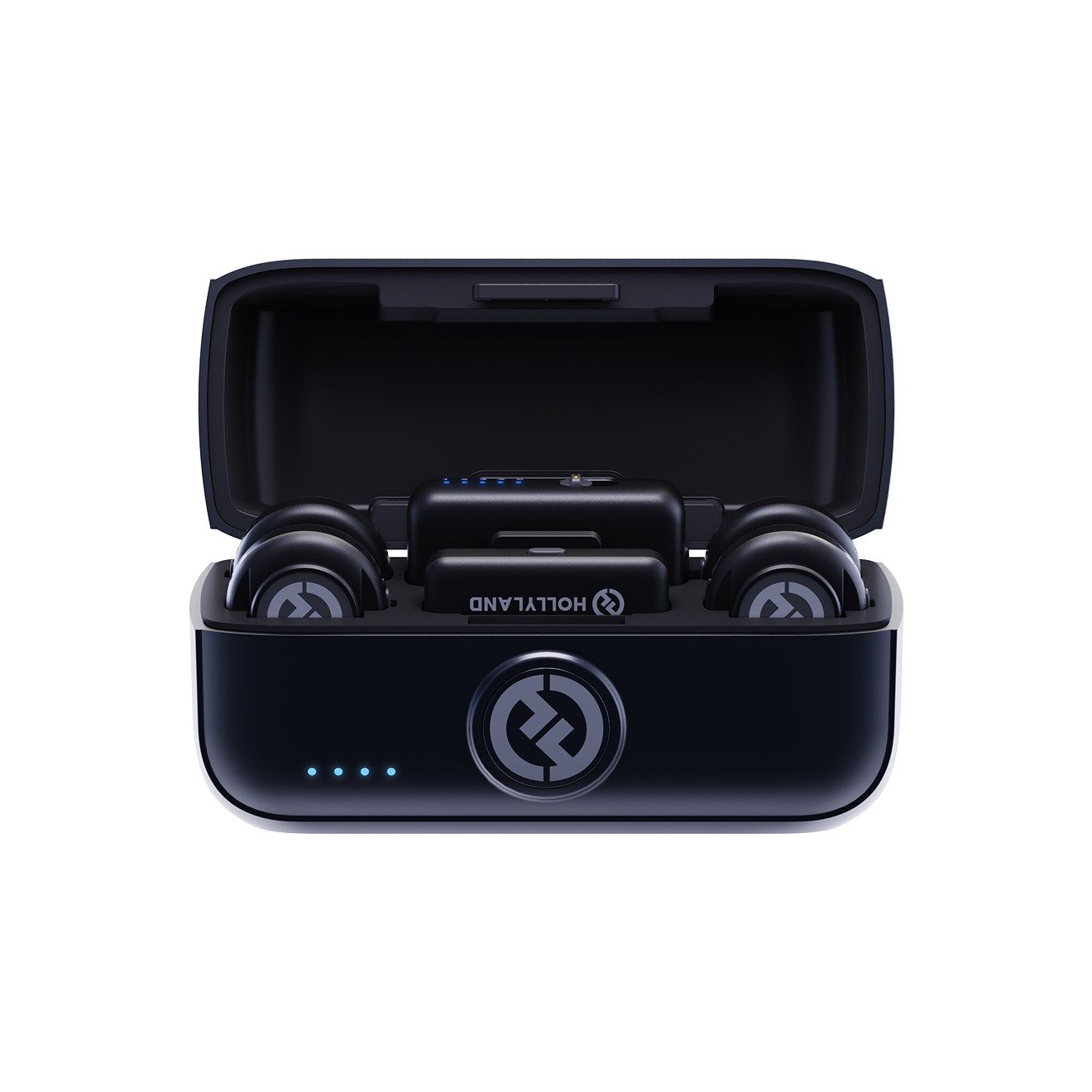
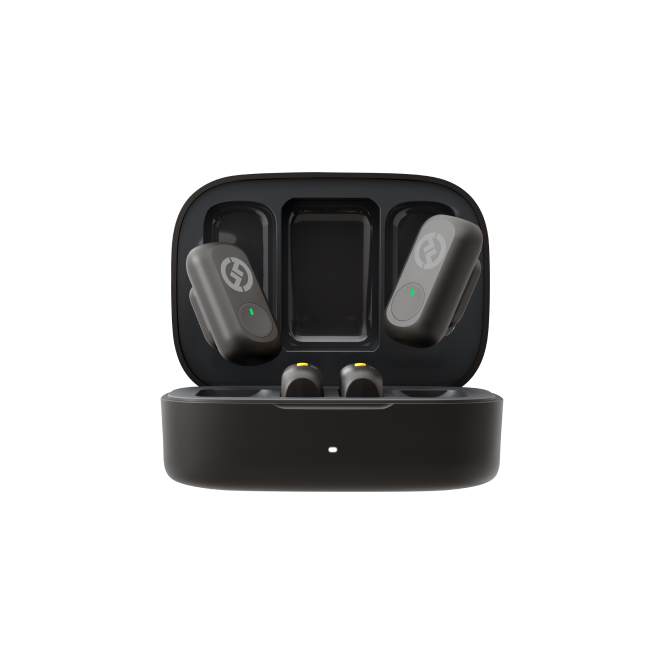
Stay invisible on screen without compromising sound

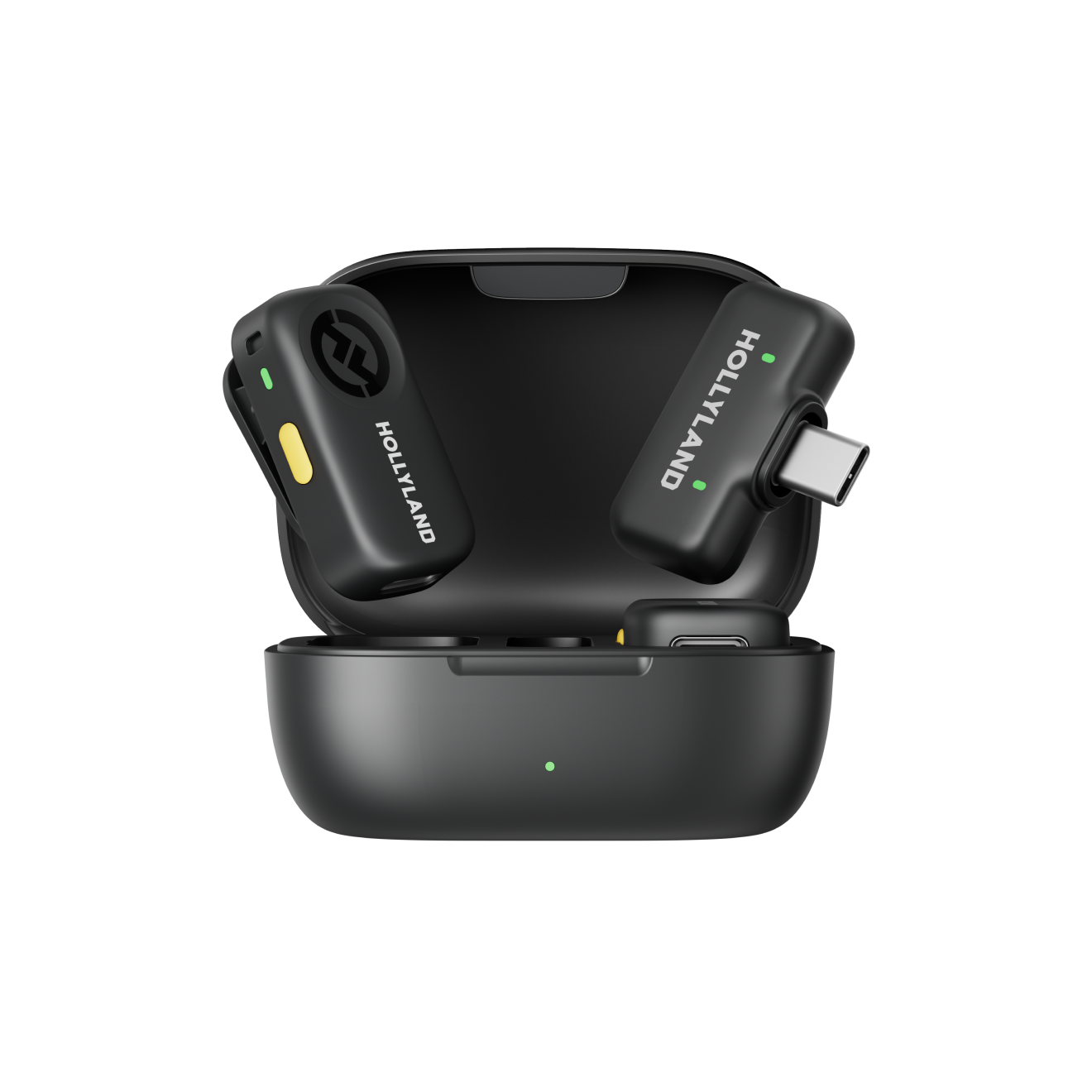
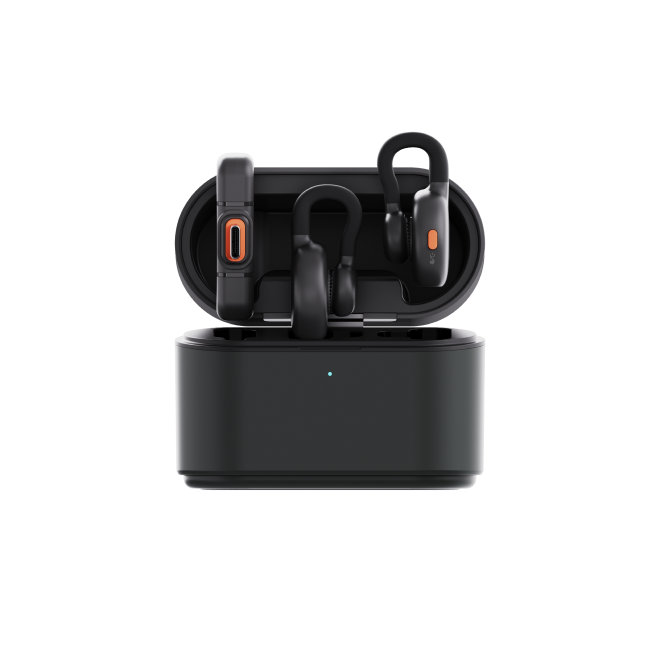
Plug into your phone and shoot all day

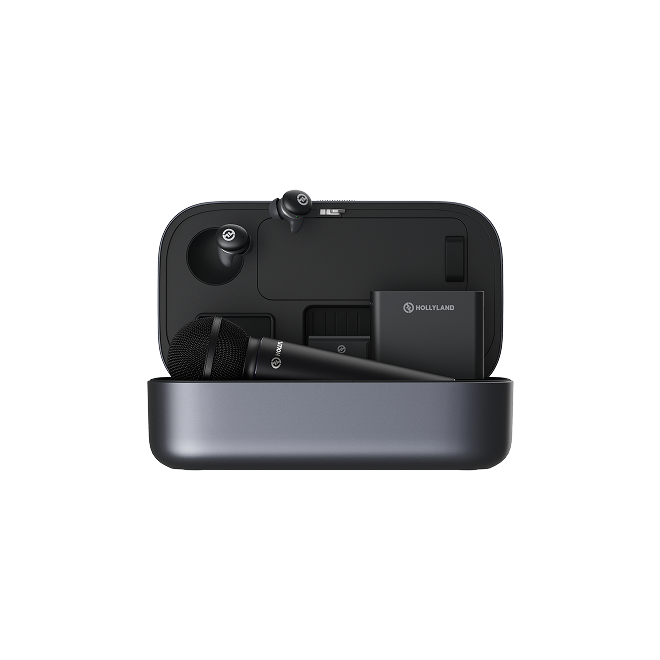
Studio-grade audio for high-output content production
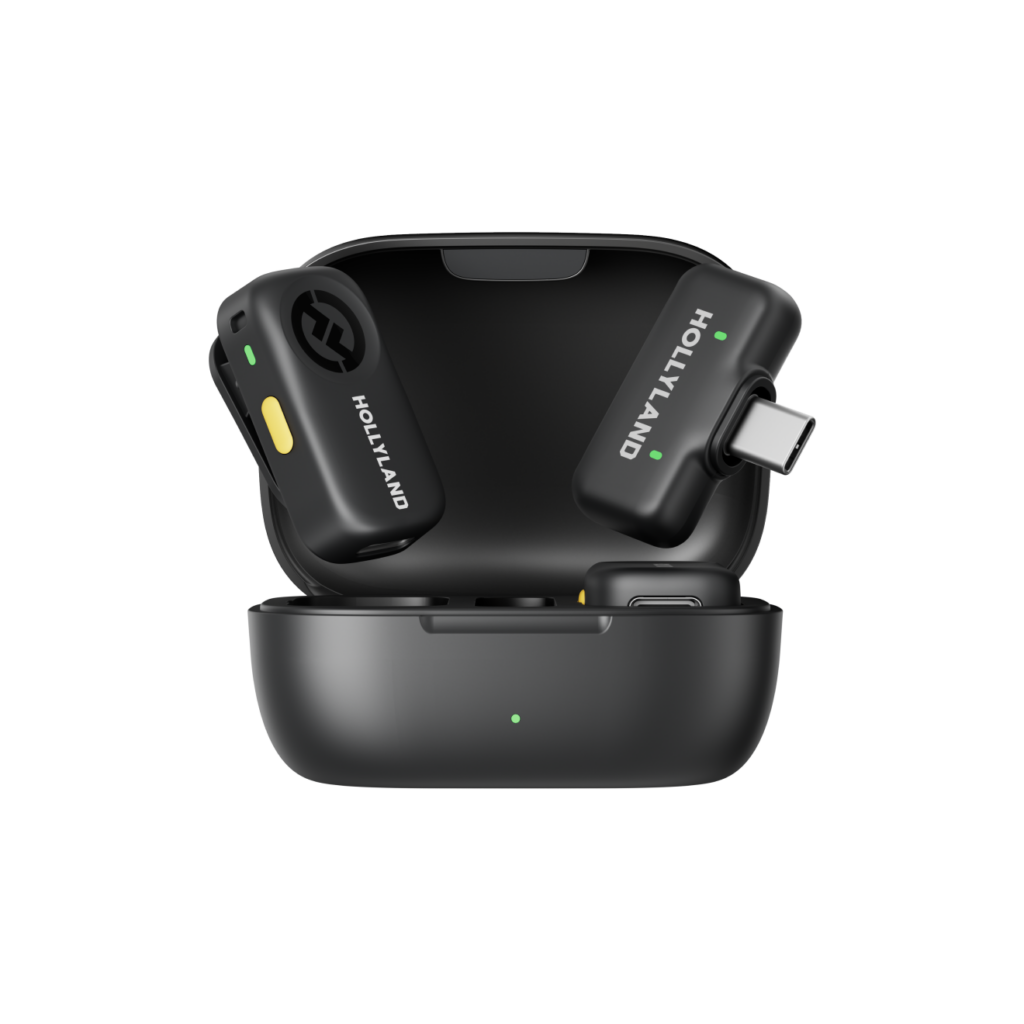
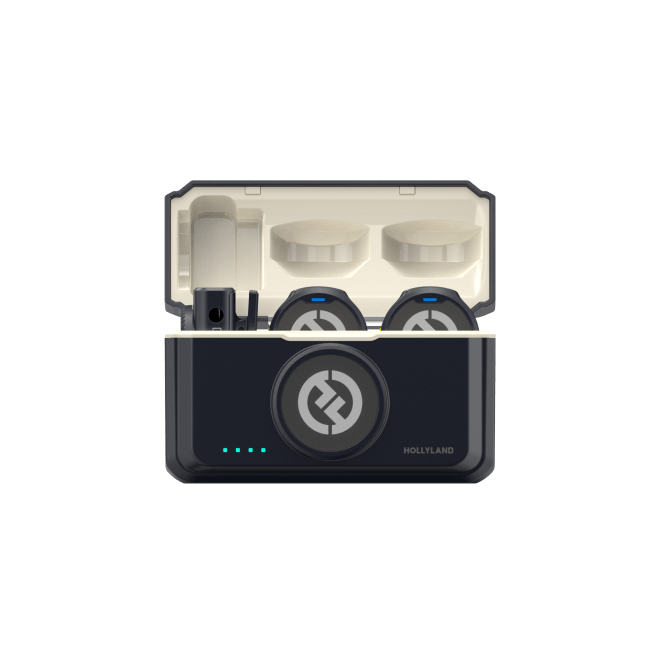
Clip-and-go AI audio built for mobile-first creators
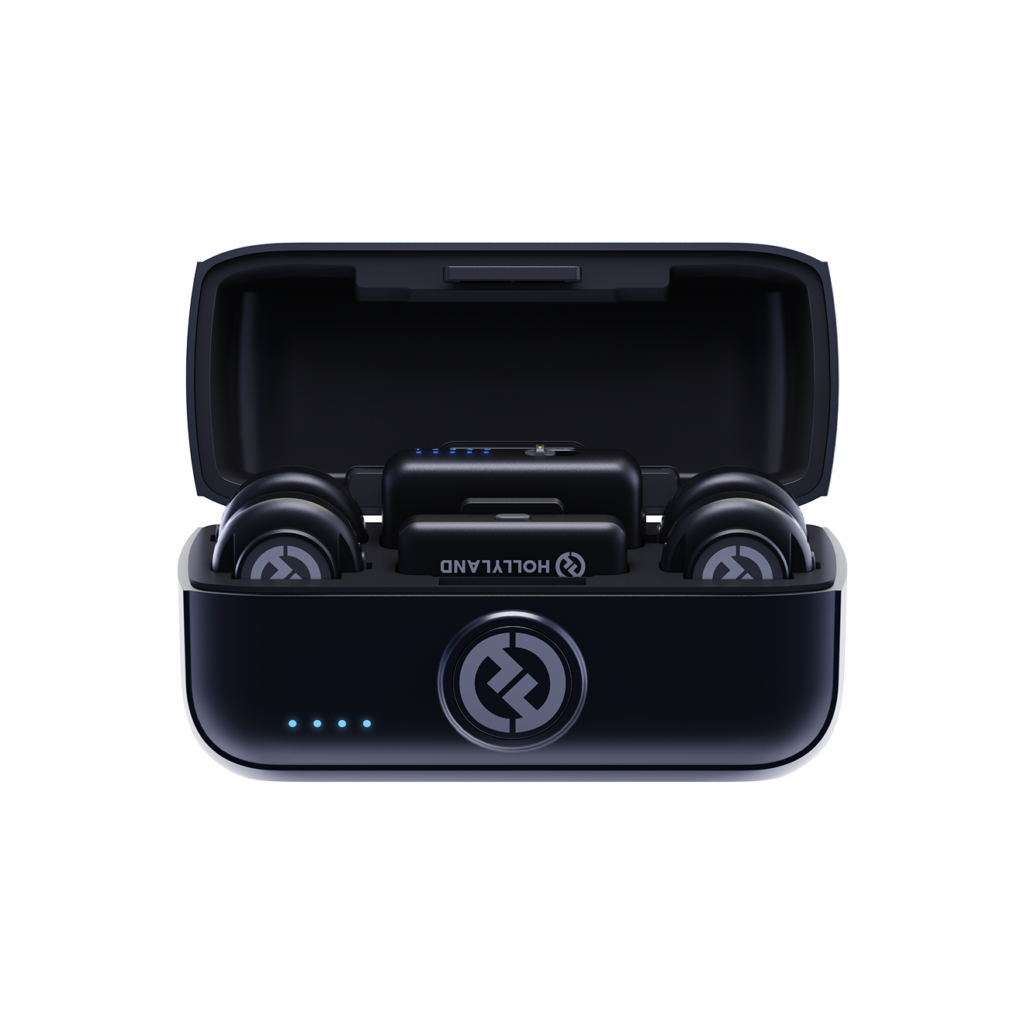
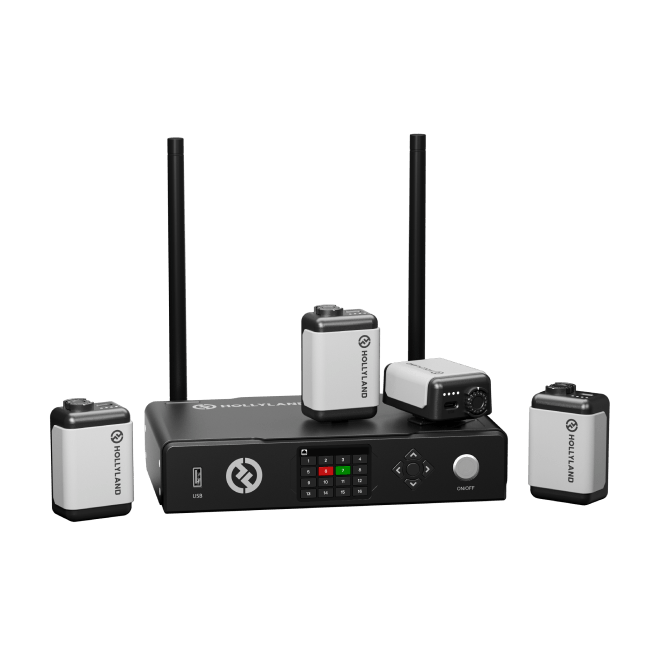
Broadcast-grade 32-bit float audio in a featherweight 9g body
| Model |
LARK M2
|
LARK M2S
|
LARK A1
|
LARK MAX 2
|
LARK A2
|
LARK M3
|
|---|---|---|---|---|---|---|
| Transmitter Weight | 9g | 7g | 8g | 14g | 8.5g | 9g |
| Wireless Range (LOS) | 300m / 1000ft | 300m / 1000ft | 200m / 650ft | 340m / 1115ft | 200m / 656ft | 300m / 1000ft |
| Total Battery Life | Up to 40 hours | Up to 30 hours | Up to 54 hours | Up to 36 hours | Up to 21 hours | Up to 48 hours |
| Noise Cancellation | ENC Environmental | ENC Environmental | 3-Level Intelligent NC | AI Noise Cancellation | AI-Powered NC | Adaptive AI NC |
| Recording Format | 48kHz / 24-bit WAV | 48kHz / 24-bit | 48kHz / 24-bit | 48kHz / 32-bit Float | 48kHz / 24-bit | 48kHz / 24-bit & 32-bit Float |
| Device Compatibility | Smartphone + Camera | Smartphone + Camera | Smartphone | Smartphone + Camera | Smartphone | Smartphone + Camera |
| Best For | Versatile creators on any device | Lifestyle & travel vloggers | Mobile creators who shoot all day | Semi-pro & high-volume creators | AI-forward mobile vloggers | Scalable multi-mic & broadcast creators |
| Shop | Shop | Shop | Shop | Shop | Shop |
Compatibility is the first filter — and the most commonly overlooked.
Shooting on a smartphone?
- Look for a mic designed to plug directly into your phone's Lightning, USB-C, or 3.5mm port
- Smartphone-native options are optimized for mobile recording and typically include touch controls and companion app features built around solo mobile creators
Shooting on a mirrorless or DSLR camera?
- You'll need a receiver that connects to your camera's 3.5mm input or mounts via hot shoe
- Camera-compatible receivers draw power directly from the camera body, keeping your rig clean and cable-light
Shooting on both?
- Combo versions ship with both a phone receiver and a camera receiver, giving you full flexibility without buying two separate systems
Always confirm whether the version you're ordering is the mobile, camera, or combo variant before adding to cart.
Vlogging rarely happens in controlled audio environments. Street noise, wind, crowd chatter, and passing traffic are the reality of on-location content — and your microphone needs to handle all of it.
Two main approaches to noise cancellation:
Adjustable noise cancellation levels add another layer of control — letting you dial intensity up or down depending on how noisy your environment is, without over-processing your voice.
The practical question: Where do you create most often? If the answer includes anywhere outside a quiet room, noise cancellation should be a non-negotiable requirement, not a bonus feature.
A wireless transmitter clips to your clothing and stays visible for the duration of your shoot. Its size and look affect both your comfort during movement and how professional your content appears on screen.
Transmitter weight matters more than it seems:
- Options in the 7–9g range sit invisibly against fabric and won't pull at collars, lapels, or shirt buttons during movement
- Slightly heavier transmitters (around 14g) remain compact but may shift more noticeably on lighter materials
On-camera visibility is a genuine concern for creators who regularly shoot with a mic clipped to their chest or neckline:
- A logo-free or low-profile design keeps your frame clean — particularly important for lifestyle, fashion, and beauty vloggers where aesthetics are part of the content
- Matte finishes and neutral colorways reflect less light and draw less attention in-frame
If on-screen appearance is a priority for your content, the LARK M2S is purpose-built for this — its no-logo, invisible-fit design specifically addresses the aesthetic needs of on-camera creators.
Running out of battery mid-shoot isn't just inconvenient — it can mean losing content with no way to recover it. Two numbers matter here:
Matching battery capacity to your workflow:
| Shooting scenario | What to prioritize |
|---|---|
| Day trips, city shoots | Per-charge battery life is usually sufficient |
| Multi-day travel or festival content | Total case capacity becomes the more critical number |
| Short-burst, unpredictable schedules | Look for quick-charge support to top up in tight windows |
How much configuration you want to do between shots should shape which system you choose.
Plug-and-play setups require zero configuration:
- Connect the receiver, clip on the transmitter, and start recording
- Ideal for beginner and intermediate vloggers who want to focus on content, not settings
- Works reliably without an app, a paired phone, or a settings menu to navigate on location
App-controlled mics offer more flexibility in exchange for slightly more setup:
- Adjust gain, noise cancellation level, EQ, and monitoring settings directly from your phone
- Better suited to creators who fine-tune audio for different shooting environments
- Some systems offer app control as an optional layer while still functioning in plug-and-play mode when you don't need it
For most vloggers, plug-and-play is the right starting point. You can always move into more advanced control as your needs and technical confidence grow.
Range figures are typically quoted at their best-case line-of-sight (LOS) distance — transmitter and receiver in clear, unobstructed view of each other. That's rarely how vlogging actually works.
The more useful figure is non-line-of-sight (NLOS) range, which reflects real-world shooting conditions:
- You're moving through a crowd with your camera bag between you and the rig
- You're shooting indoors with walls, furniture, or people in the signal path
- Your jacket, body position, or arm movement is partially blocking the transmitter
For the vast majority of vlogging scenarios, a NLOS range of 40–70m is more than sufficient — covering solo-to-camera filming, two-person interviews, and indoor and outdoor location work alike.
Don't let headline LOS range figures drive your decision. NLOS performance in variable real-world environments is what determines whether your signal actually holds during a shoot.
If you're producing content at volume, shooting in unpredictable environments, or delivering work where audio quality cannot be compromised, a few features meaningfully raise the floor.
32-bit float recording
- Captures a wider dynamic range than standard 24-bit, making clipping essentially impossible
- Particularly valuable in fast-changing audio situations: live events, surprise moments, loud outdoor locations
- Both the LARK MAX 2 and the LARK M3 support 32-bit float recording — the MAX 2 for creators who need professional monitoring and timecode, the M3 for those who want broadcast-grade audio in a featherweight 9g body with a scalable multi-mic setup
Safety track
- Records a second, lower-gain backup track alongside your primary recording
- Provides insurance against unexpected volume spikes or clipping — especially useful for interview or two-person content
Real-time audio monitoring
- Lets you hear your recorded audio through an earphone while shooting, so problems are caught on location rather than in post
- Critical for creators who can't afford to discover a bad recording after the fact
Dual-transmitter support
- One receiver connecting to two transmitters enables clean two-person setups for interview or co-hosted content
- Eliminates the need for separate recording systems or audio sync in post-production
Scalable multi-mic system
- The LARK M3 goes further, supporting up to 4 TX & 4 RX simultaneously with 4 independent isolated tracks
- Each track is recorded separately, giving you full control in post over every speaker or audio source in the scene
- The right choice for panel discussions, group shoots, event coverage, or any workflow where two mics are not enough
These features aren't necessary for every vlogger. But if you've ever lost a take to clipped audio, a signal dropout, or an unusable interview recording, each one represents a problem you won't have to solve again.
I love my new LARK M2 mics. These were so good, and I really enjoyed testing out the new LARK M2 from Hollyland.
Sarah Grace Tech Creator · 3.2M YouTube subscribers
The Hollyland LARK MAX is the wireless microphone system with the clearest and crispest audio of any wireless mic system I have ever tried.
Goenrock Cinematographer · 107K Instagram subscribers
LARK MAX is doing an excellent job of dropping the sound of the air conditioner, which is something l always have to remove and post with our shotgun mic.
Film Riot Filmmaking Educator · 2.2M YouTube subscribers
Every microphone in the Hollyland LARK range is built for creator device flexibility. The LARK A1 and LARK A2 plug directly into smartphones — iOS and Android — with no app or pairing required. The LARK M2, LARK M2S, and LARK M3 are available in dedicated Mobile and Camera versions, or a Combo version that covers both, making them compatible with mirrorless cameras, DSLRs, and phones alike. The LARK MAX 2 connects via its receiver to cameras and supports advanced multi-device setups. Check individual product pages for device-specific connector and version details.
Significantly better. Built-in microphones capture your voice and everything around it — traffic, wind, crowd noise, room hum — with no differentiation. Every LARK mic records in 48kHz / 24-bit studio-grade audio; the LARK MAX 2 and LARK M3 also support 32-bit float recording for an even wider dynamic range. Signal-to-noise ratios reach up to ≥72dB with full 20Hz–20kHz frequency response across the range. Active noise cancellation — ENC on the M2 and M2S, 3-level intelligent noise cancellation on the A1, AI-powered processing on the A2, MAX 2, and M3 — filters environmental interference in real time, so your audience hears your voice, not your surroundings.
Hollyland LARK mics are engineered for real-world shooting, not just controlled environments. The LARK M2, LARK M2S, and LARK M3 reach up to 300m / 1,000ft in line-of-sight conditions; the LARK MAX 2 extends that to 340m / 1,115ft. The LARK M3 uses 2.4 GHz Adaptive Frequency Hopping to maintain a rock-solid connection even in RF-congested environments. For typical vlogging scenarios — streets, markets, parks, and event spaces — NLOS working ranges of 40–70m keep your connection reliable as you move through a scene. ENC and AI noise cancellation provide a further layer of protection by filtering acoustic interference from ambient sound, keeping your recording clean regardless of how busy the environment gets.
Long enough to cover a full shoot day without stopping. Per-charge transmitter battery life ranges from 7 hours (LARK A2) to 11 hours (LARK MAX 2), and charging case capacity extends total runtime significantly. The LARK A1 leads the range with up to 54 total hours across transmitters and case — enough for multiple shoot days away from an outlet. The LARK M2 provides up to 40 total hours; the LARK MAX 2 up to 36 hours; the LARK M3 up to 48 total hours (approx. 8 hours per TX charge, with the charging case providing 2 additional full recharges). The LARK A2 supports 1.5-hour quick charge, so a short break between sessions can restore meaningful battery before your next shoot.
Plug-and-play is the default across the range. The LARK A1, LARK A2, LARK M2, and LARK M2S all begin recording the moment you connect the receiver to your device — no Bluetooth handshake, no menus, no manual required on location. Optional app control is available on the M2 and M2S for creators who want to adjust settings remotely when it suits them. The LARK M3 adds custom voice tuning and per-track control for multi-mic setups while remaining straightforward to operate out of the box. The LARK MAX 2 adds advanced capabilities — 32-bit float recording, timecode sync, and wireless audio monitoring — that reward creators ready to use them, without adding friction to straightforward recording workflows.
Every transmitter in the LARK range is compact enough to stay discreet on clothing. The LARK M2S addresses on-screen appearance directly: its 7g titanium transmitter carries no visible logo or branding, engineered to blend into any outfit. Across the full lineup, transmitters weigh just 7–14g — the LARK M3 comes in at 9g — small enough to clip under a collar, sit flat against a shirt, or tuck behind a lapel without creating a noticeable bump in frame. For creators who need to stay invisible on screen, the LARK M2S is the purpose-built choice.
The right choice depends on your device, shooting style, and experience level:
Noise management is built into every mic in the LARK range. The LARK M2 and LARK M2S use ENC Environmental Noise Cancellation to continuously filter ambient sound in real time. The LARK A1 offers 3-level intelligent noise cancellation — adjustable to match your recording environment, from a quiet indoor space to a loud outdoor location. The LARK A2, LARK M3, and LARK MAX 2 apply AI-powered noise cancellation that identifies and suppresses background noise throughout your recording, keeping your voice front and center whether you're on a busy street, at an outdoor market, or inside a crowded venue.