.png)
 简体中文
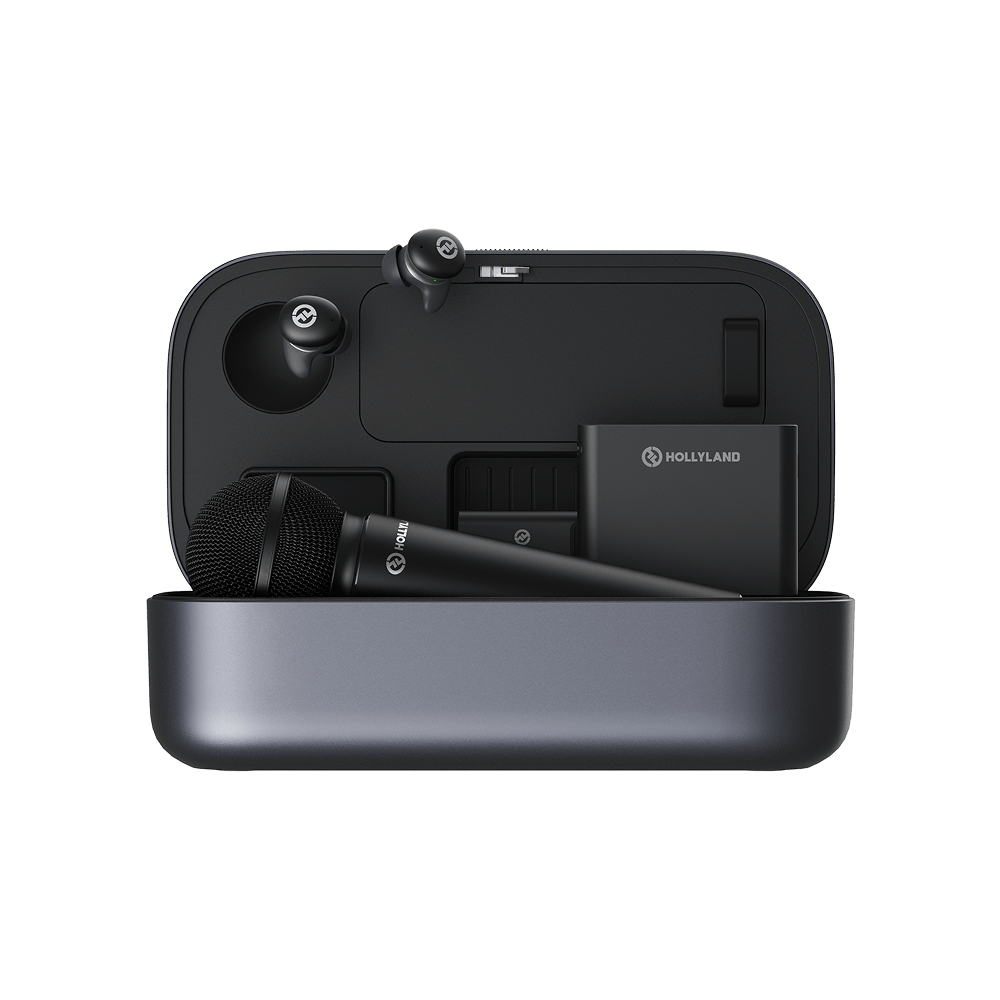
MELO P1
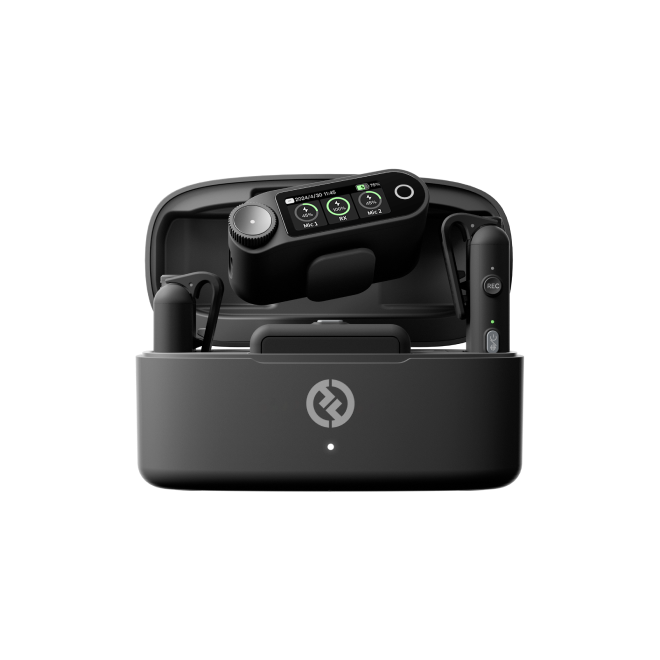
Full wireless vocal rig for stage, stream, and home recording
- 60m Wireless Range
- Zero-Latency IEM
- 100+ Vocal Presets

Find the wireless microphone purpose-built for your voice. From live stage performances to home recording and streaming, get studio-quality vocal sound, zero-latency monitoring, and all-day battery — without the complexity of traditional gear.
Compatible with smartphones, cameras, and PA systems — no extra gear needed.

Full wireless vocal rig for stage, stream, and home recording
The capsule is the heart of any microphone, and for singers, this choice has a direct impact on how your voice sounds.
Condenser capsules capture the full frequency spectrum of a vocal — including the high-frequency air, harmonic detail, and subtle nuances that give a voice its character. They're the go-to choice for:
n- Home recording and studio-style vocal capture
n- Acoustic performances and delicate singing styles
n- Livestreaming where tonal richness and presence matter
Dynamic capsules are built for louder, higher-energy environments. They handle extreme volume levels without distorting and reject more background noise naturally, making them well-suited for:
n- Live stage performances in loud venues
n- High-intensity vocal styles — belting, screaming, beatboxing
n- Outdoor shoots or environments with unpredictable acoustics
Some systems, including the Hollyland MELO P1, offer a swappable capsule design — meaning a single microphone body supports both condenser and dynamic modes. This is worth considering if you move between studio recording and live performance, or if your vocal style varies widely across different performances.
For singers, wireless range isn't just a spec — it's the difference between a confident, free-moving performance and a cautious one.
Look for these markers of a reliable wireless system:
Dropouts mid-performance are one of the most disruptive failures a wireless mic can have. Prioritize systems with a track record of clean, stable transmission at realistic stage distances — not just under ideal lab conditions.
The ability to monitor your own voice in real time is one of the most underrated features a wireless vocal system can offer — and one of the most important for pitch accuracy, confidence, and performance quality.
When evaluating in-ear monitoring capability, look for:
Singers who have performed with real-time monitoring rarely want to go back. If in-ear monitoring is important to your workflow, confirm that the system you're considering supports it natively — not just as an optional add-on.
For most singers, the goal is a great vocal sound — not mastering a mixing console.
Modern wireless vocal systems vary significantly in how much sound shaping capability they include:
For singers who want great sound quickly — without deep technical knowledge — built-in presets tuned for vocal performance are a significant time-saver. Look for systems that offer a broad preset library (covering pop, rock, jazz, R&B, and more) alongside the option to fine-tune settings for your voice.
Also consider how effects are controlled mid-performance. A dedicated remote controller that lets you switch presets and trigger reverb without approaching the mixer is a meaningful advantage during live sets.
Traditionally, building a wireless vocal rig meant assembling multiple pieces of gear: a handheld transmitter, a wireless receiver, an audio interface or mixer, and a separate in-ear monitor system.
That's changing. A new generation of integrated wireless vocal systems combines the microphone, receiver/mixer, and IEM into a single portable package — significantly reducing setup time, cable clutter, and the technical knowledge required.
All-in-one systems are best suited for:
n- Singers who want a fast, reliable setup with minimal gear
n- Performers who move between venues, studios, and streaming setups frequently
n- Beginners who want a capable system without audio engineering expertise
Component-based setups are still worth considering for:
n- Singers already invested in a specific mixer or PA infrastructure
n- Professionals who need deep customization across multiple input channels
n- Situations where one part of the chain (e.g., a specific IEM system) is already preferred
For most independent vocalists and creators, an all-in-one system offers the better balance of quality, convenience, and value.
Battery performance is a practical trust factor that often gets overlooked until it matters most.
For singers, key battery considerations include:
Total system runtime — microphone, mixer, and earphone combined — is a more meaningful figure than any single component spec when evaluating real-world usability.
For singers who gig, travel, or create content outside a fixed studio, the physical footprint of their wireless setup matters.
Look for:
The best portable vocal systems are the ones that go with you everywhere — from a home recording session in the morning to a live gig that night — without requiring a separate gear bag.
Before buying, confirm that the wireless system you're considering connects cleanly to the devices in your existing workflow.
Key compatibility questions to answer:
A system that fits your voice is only as useful as one that fits your setup.
I love my new LARK M2 mics. These were so good, and I really enjoyed testing out the new LARK M2 from Hollyland.
Sarah Grace Tech Creator · 3.2M YouTube subscribers
The Hollyland LARK MAX is the wireless microphone system with the clearest and crispest audio of any wireless mic system I have ever tried.
Goenrock Cinematographer · 107K Instagram subscribers
LARK MAX is doing an excellent job of dropping the sound of the air conditioner, which is something l always have to remove and post with our shotgun mic.
Film Riot Filmmaking Educator · 2.2M YouTube subscribers
It's a fair concern — and the honest answer is that it depends entirely on the microphone. Many compact wireless systems sacrifice capsule quality to hit a price point, and that's exactly where vocal sound suffers.
n
The Hollyland MELO P1 is built differently. It uses a 25mm large-diaphragm condenser capsule — the same capsule format found in dedicated studio recording microphones — with a frequency response of 20Hz–20kHz and a 116dB dynamic range. That means it captures the full warmth, detail, and character of your voice, not a compressed or rolled-off version of it. Audio is processed through a dual-chip DSP Smart Mixer and output at 32-bit float / 48kHz — the same standard used in professional recording workflows. Wireless convenience, studio-grade output.
For singers, monitoring latency isn't a minor inconvenience — it's a performance-breaker. Even a few milliseconds of delay between what you sing and what you hear can throw off your pitch, timing, and confidence.
n
The MELO P1 uses a dedicated 2.4GHz wireless link between the Smart Mixer and the monitoring earphone — a separate transmission channel from the microphone itself — delivering zero-latency real-time monitoring. You hear yourself exactly as you sing, with no perceivable delay. The wireless earphone runs up to 9 hours per charge, holding up through full rehearsals, gigs, and long streaming sessions without interruption.
The MELO P1 operates on 2.4GHz wireless transmission with a 60-meter (196ft) line-of-sight range. For the vast majority of live venues, rehearsal rooms, and streaming setups, that covers the entire performance space — end to end — without signal dropout.
n
The Bluetooth remote controller extends even further, to 70 meters, so you can switch presets and trigger effects from anywhere on or off stage without approaching the mixer. Both wireless links are engineered for stable, interference-resistant operation in environments with competing wireless signals.
No. The MELO P1 is a fully self-contained system — the mixer is already built in.
n
The 55g Smart Audio Mixer functions as both the wireless receiver and the full-featured signal processor. It handles EQ, compression, reverb, de-essing, and all vocal processing onboard, then outputs a clean, processed signal via USB-C directly to your phone, camera, PA system, or recording device. No external mixer, audio interface, or additional hardware required.
n
This is one of the most meaningful differences between the MELO P1 and traditional wireless setups, which typically chain together a receiver, a mixer, and an interface before reaching your output device. The MELO P1 collapses that entire signal path into a single portable unit.
Yes — and it's specifically engineered for this.
n
The condenser capsule handles up to 132dB SPL, covering the full range of powerful vocal performances including belt-heavy singing and high-volume live delivery. For even more demanding scenarios — beatboxing, extreme dynamics, or very high-energy stage performance — the swappable dynamic capsule raises the ceiling to 145dB SPL, significantly exceeding the 130–135dB limit of most standard handheld microphones.
n
Onboard 25dB AI noise cancellation keeps the vocal signal focused and clean regardless of what's happening around you. And the 32-bit float recording format provides such a wide dynamic safety net that gain-staging errors — the most common cause of unintentional distortion — are effectively eliminated.
The MELO P1 is built for sustained, multi-session use. Per single charge: the microphone lasts approximately 12 hours, the Smart Audio Mixer approximately 8 hours, and the wireless monitoring earphone approximately 9 hours.
n
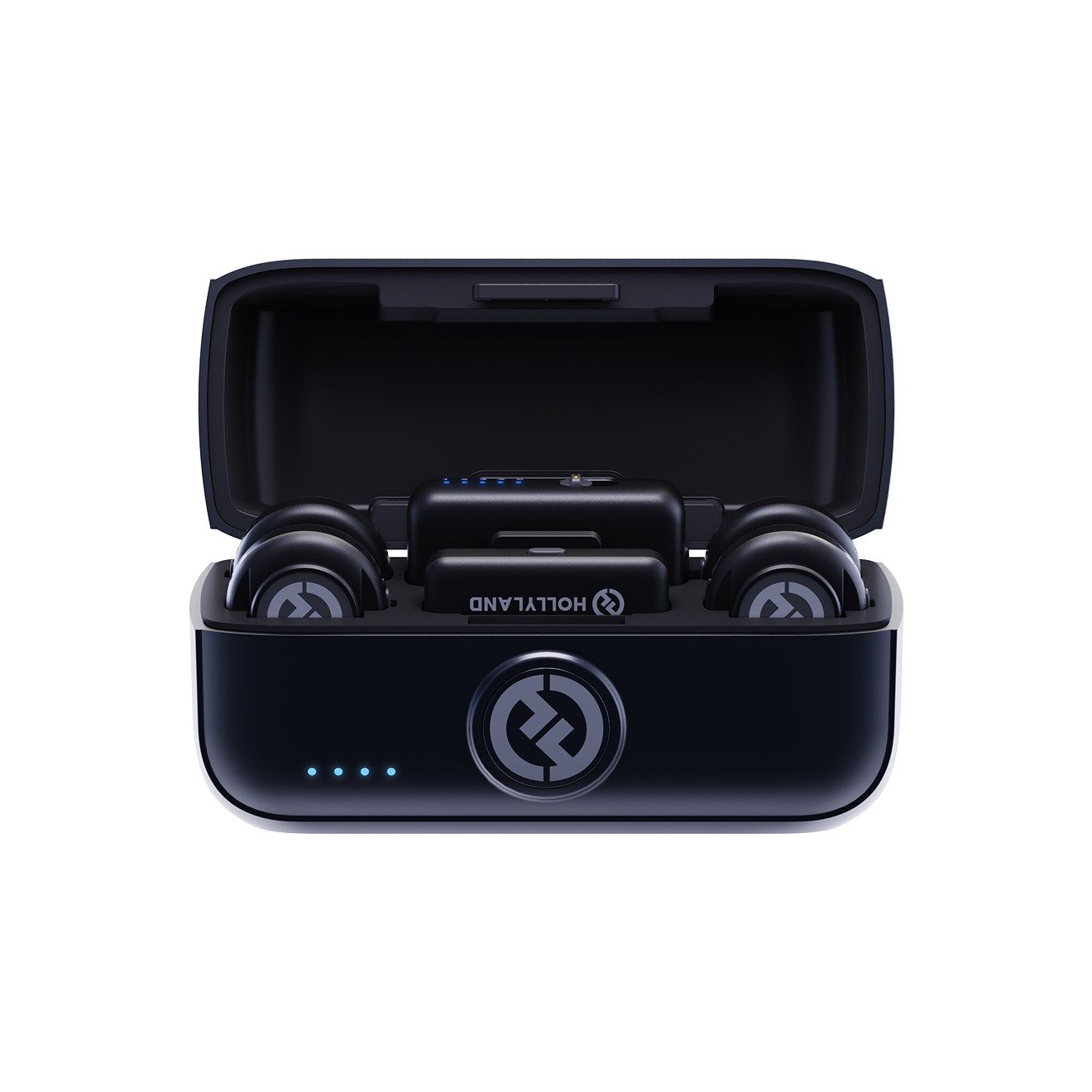
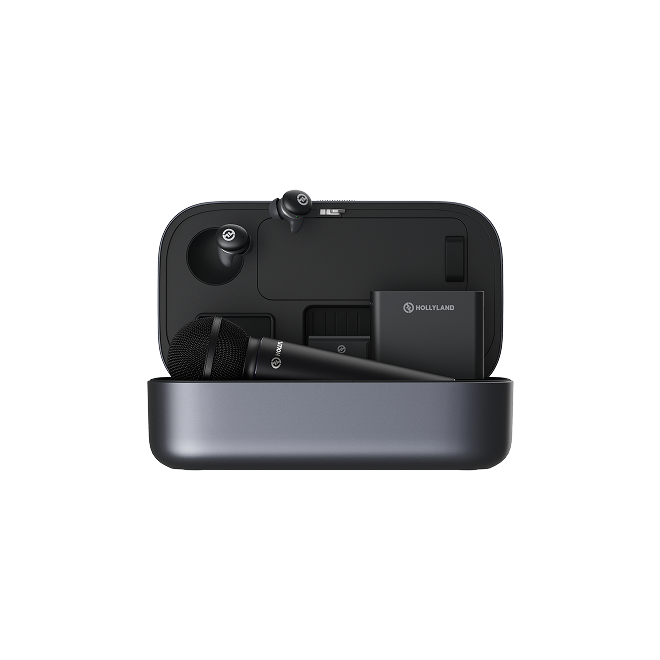
All components charge and store inside a single 5,000mAh charging case, extending total system battery life to up to 40 hours. In practice, that means rehearsals, performances, and streaming sessions across multiple days before needing to recharge the case itself — one less logistical concern on a busy performance schedule.
The Smart Audio Mixer connects to devices via USB-C, covering modern smartphones (Android and recent iPhone models), mirrorless and action cameras, laptops, and USB-equipped PA systems or interfaces.
n
The HollyAudio App (iOS and Android) gives you access to the full preset library, EQ and effects customization, and system configuration. The Bluetooth remote controller pairs wirelessly with the mixer for on-stage control without requiring your phone to be in reach.
n
For PA and traditional audio routing, the mixer's USB-C output delivers a fully processed signal ready to feed directly into your system — no additional adapters or interface hardware needed in most setups.
You don't need to. The MELO P1 is designed around the principle that singers should be focused on performing, not engineering.
n
The HollyAudio App includes 100+ professionally tuned vocal presets spanning a wide range of styles — pop, R&B, rock, live performance, intimate recording, and more. Select a preset and the entire signal chain — EQ, compression, reverb, de-esser — is configured for you. If you want to adjust from there, every parameter is accessible. If you don't, the presets are performance-ready out of the box.
n
The Bluetooth remote controller also puts shortcut buttons for reverb adjustment and effect switching directly in your hand during a performance, so you can shape your sound in real time without touching the app.
One MELO P1 covers all three without reconfiguring your rig.
n
Live performance: The 60m wireless range, zero-latency in-ear monitoring, and remote preset switching deliver a complete cable-free stage setup.
n
Home recording: The 25mm large-diaphragm condenser and 32-bit float / 48kHz output capture studio-quality vocals directly to any DAW or recording app via the USB-C mixer.
n
Live streaming: The Smart Mixer outputs a fully processed, broadcast-ready signal straight to your phone or camera — no additional hardware in the chain.
n
The swappable condenser/dynamic capsule lets you match the microphone's physical characteristics to the scenario. Everything travels in a single charging case, making it a genuinely portable all-in-one vocal rig for performers who move between gigging, recording, and creating content.
The MELO P1 includes a 25mm large-diaphragm condenser capsule and supports a swappable dynamic capsule. The right choice depends on your vocal style and environment.
n
Condenser capsule (20Hz–20kHz, 132dB max SPL): Captures the full tonal character of your voice — warmth, breath, nuance. Best for home recording, streaming, and melodic singing where fidelity and detail matter most.
n
Dynamic capsule (50Hz–17kHz, 145dB max SPL): Built for high-output, high-energy performance. Better suited for loud live singing, beatboxing, extreme vocal dynamics, and noisy stage environments where you need maximum headroom and durability under pressure.
n
If you primarily record or stream melodic vocals at home, start with the condenser. If you perform live with a powerful delivery or push your voice to its limits, the dynamic capsule gives you more ceiling and stage resilience.