.png)
 简体中文
简体中文 
If you need powerful audio editing software without a monthly fee, Audacity is the answer. It’s open-source, lightweight, and offers a level of precision that basic online audio cutters just can’t match.
Whether you’re editing a podcast, shortening a song for a ringtone, or cleaning up a voiceover, learning how to manipulate the waveform is your first step toward professional audio. But “cutting” isn’t just about deleting files; it’s about pacing, removing dead air, and creating a smooth listening experience.
In this guide, we’ll move beyond simple deletion and cover the specific workflows you need to know to learn how to cut MP3 files in Audacity effectively:
- Removing Mistakes (Cutting): Deleting “umms,” “ahhs,” or coughs.
- Isolating Clips (Trimming): Keeping a specific selection and removing everything else.
- Splitting Tracks: Separating a long recording into multiple distinct files.
- Exporting Correctly: Saving your new MP3 without ruining the audio quality.
Getting Started: Importing Your MP3
Before you can make any edits, you need to get your audio file onto the timeline. Audacity handles MP3 files natively, so the setup is quick.
You have two ways to load your file:
- Drag and Drop (Easiest): Simply find your MP3 file on your computer and drag it directly into the gray workspace inside Audacity.
- The Menu Method: Go to File > Import > Audio (or press Ctrl+Shift+I / Cmd+Shift+I on Mac). Locate your MP3 and click Open.

Once imported, you will see a blue visual representation of the sound, known as the waveform.
Pro Tip: Always Backup Your Original
Before you drag that file into Audacity, make a copy of it. Audacity edits are “non-destructive” while working in the project file, but accidents happen during export. Always keep a raw, untouched copy of your source audio in a separate folder. If you cut too much, you can always restart from the source.
Method 1: How to Cut and Delete Unwanted Audio (The Basics)
This is the bread and butter of editing. Whether you are removing a cough, a long pause, or a mistake in your recording, this method removes the selected audio and automatically shifts the remaining track to the left to close the gap.
Follow these steps to remove audio:
- Select the Tool: Click the Selection Tool in the top toolbar. It looks like a capital “I” (I-beam icon). You can also press F1.

- Highlight the Audio: Click and drag your mouse over the section of the waveform you want to remove. The selected area will turn a different color (usually light blue or white).

- Delete the Section: Press Delete or Backspace on your keyboard. (Shortcut: Ctrl+K).
- Check the Edit: The gap closes instantly. Press the Spacebar to play back the edit and make sure the transition sounds natural.
“Cut” vs. “Delete”: What’s the difference?
While beginners often use these terms interchangeably, Audacity treats them differently:
- Delete (Backspace): Removes the audio permanently from the timeline. It’s gone unless you Undo.
- Cut (Ctrl+X): Removes the audio from the timeline but saves it to your clipboard. Use this if you want to remove a section from the beginning and Paste (Ctrl+V) it somewhere else later in the track.
Method 2: How to “Trim” Audio (Keep Selection, Delete Rest)
Beginners often confuse Cutting and Trimming, but they do opposite things.
- Cutting: You remove the selection and keep the rest.
- Trimming: You keep the selection and remove everything else.
Trimming is the fastest workflow when you need to isolate a specific segment, like extracting a sound bite for a podcast intro or saving a specific chorus from a song. Instead of manually deleting the beginning and then deleting the end, you can do it all in one keystroke.
Step-by-Step: How to Trim Audio
- Select the Audio: Use the Selection Tool (I-beam icon) to highlight the exact portion of the waveform you want to keep.
- Verify: Press Spacebar to play just your selection. Make sure you captured the full phrase or beat.
- Apply Trim: Press Ctrl + T (Windows) or Cmd + T (Mac).
- Result: Audacity immediately deletes all audio outside of your selection, leaving you with just the isolated clip.
Note: If you want to keep the original file intact and just move the selection to a new file, skip the trim command. Just highlight the audio, press Ctrl + C (Copy), open a new project (File > New), and press Ctrl + V (Paste).
Method 3: How to Split MP3s into Separate Tracks
Sometimes, you don’t want to delete audio; you simply want to divide a long recording into manageable chunks. This is essential for podcasters breaking an episode into chapters or musicians separating a single live recording into individual songs.
Unlike “Cut” (which removes data), Split creates a clean break in the waveform, allowing you to move sections independently.
Step-by-Step: Using the Split Command
- Select the Cursor: Ensure the Selection Tool is active.
- Position the Break: Click on the exact spot in the waveform where you want to divide the track.

- Execute the Split: Press Ctrl+I (Windows) or Cmd+I (Mac). You can also go to Edit > Audio Clips > Split.

- Verify: You will see a thick vertical line appear at your cursor position. The audio is now two separate clips.
Once separated, you can move these clips independently. Hover your mouse over the Clip Handle (the title bar at the top of the waveform) and drag the clip left or right. This is useful for inserting silence, background music, or a transition effect between two segments.
Pro Tip: How to Make “Clean Cuts” (Avoid Clicking Sounds)
Have you ever cut a section of audio, played it back, and heard a distracting “click” or “pop” exactly where you made the edit? This is the most common sign of an amateur edit, but it’s incredibly easy to fix.
Why Clicks Happen
Audio waveforms move up and down from a center line (silence). If you cut the audio while the wave is at a high peak or a low valley, you create a jagged edge. When the playback cursor hits that edge, the speaker snaps from high voltage instantly to zero. That sudden drop creates the audible click.
To avoid this, you must always cut at the Zero Crossing—the exact millisecond where the waveform touches the center line.
How to Use the Zero Crossing Tool
You don’t need to zoom in microscopically to find these points manually. Audacity aligns your edits for you automatically.
Follow this workflow for every single cut you make:
- Make your selection using the standard Selection Tool.
- Before you press delete, press the Z key on your keyboard. (Or go to Select > At Zero Crossings).

- Finish the Cut: You will see your shaded selection shift very slightly. Audacity has adjusted your start and end points to the nearest “safe” spot on the wave.
Now, when you press Delete or Cut, the two remaining pieces of audio will join together seamlessly without any popping sounds.
Workflow Upgrade: Cut Less by Recording Better Audio
The most draining part of editing in Audacity isn’t creative cutting—it’s “rescue editing.” This happens when you have to cut out sections of your audio not because the content is bad, but because the audio quality failed.
If you find yourself constantly cutting out distorted peaks (where the waveform touches the top and bottom edges) or deleting sections ruined by sudden background noise, your hardware is likely the bottleneck.
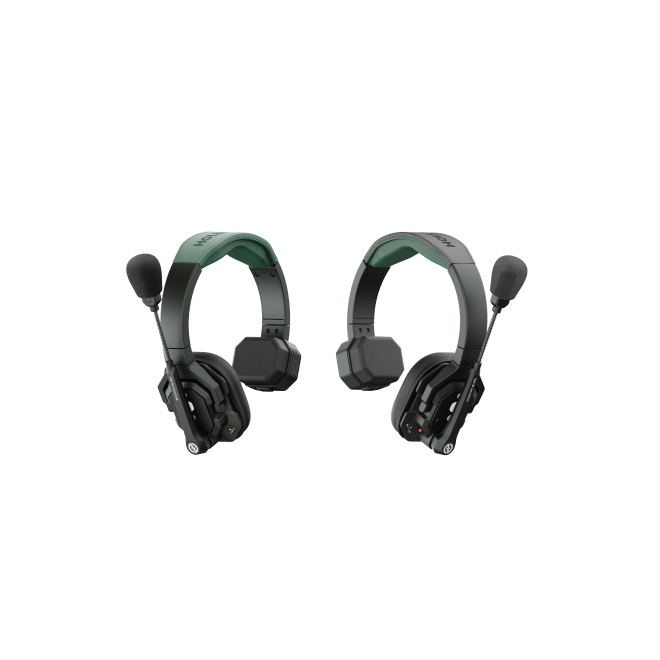
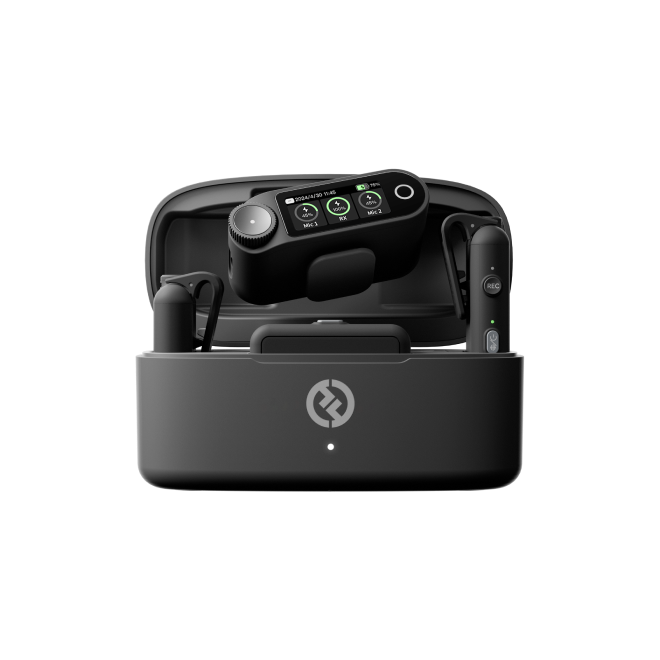
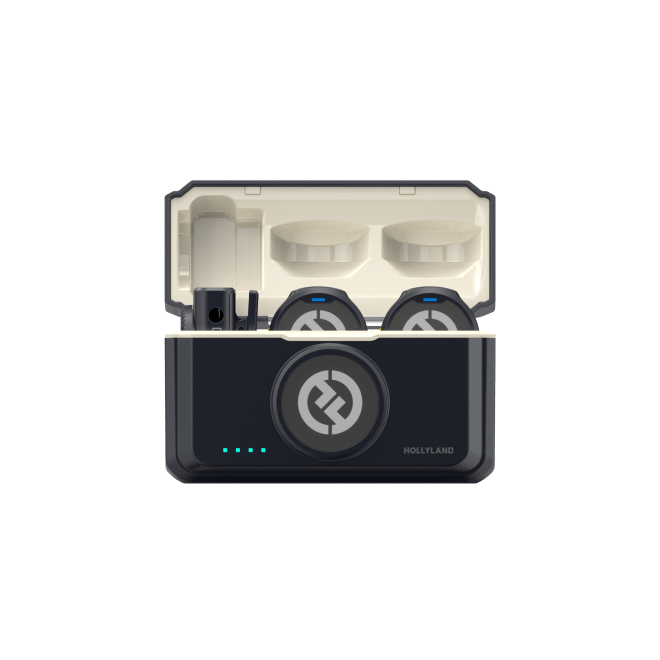
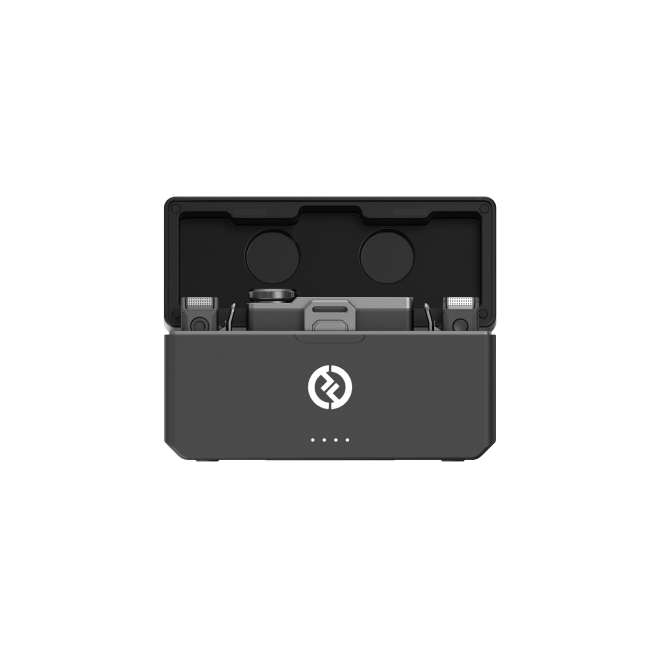
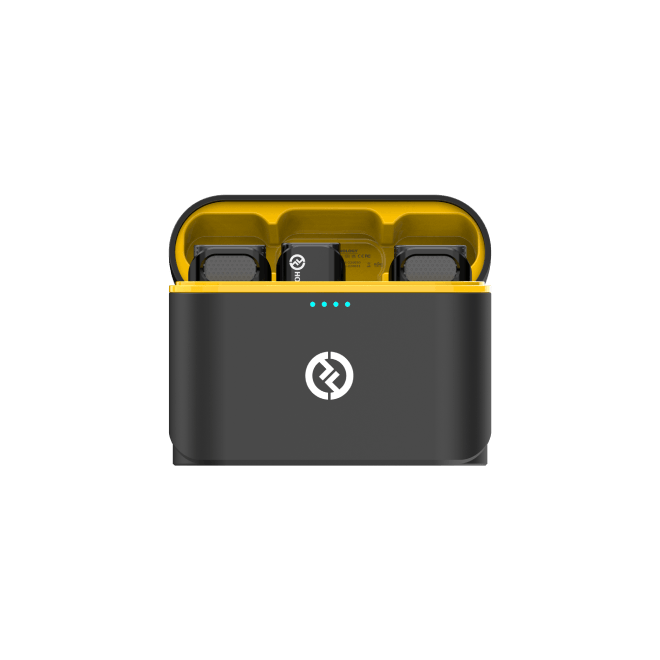
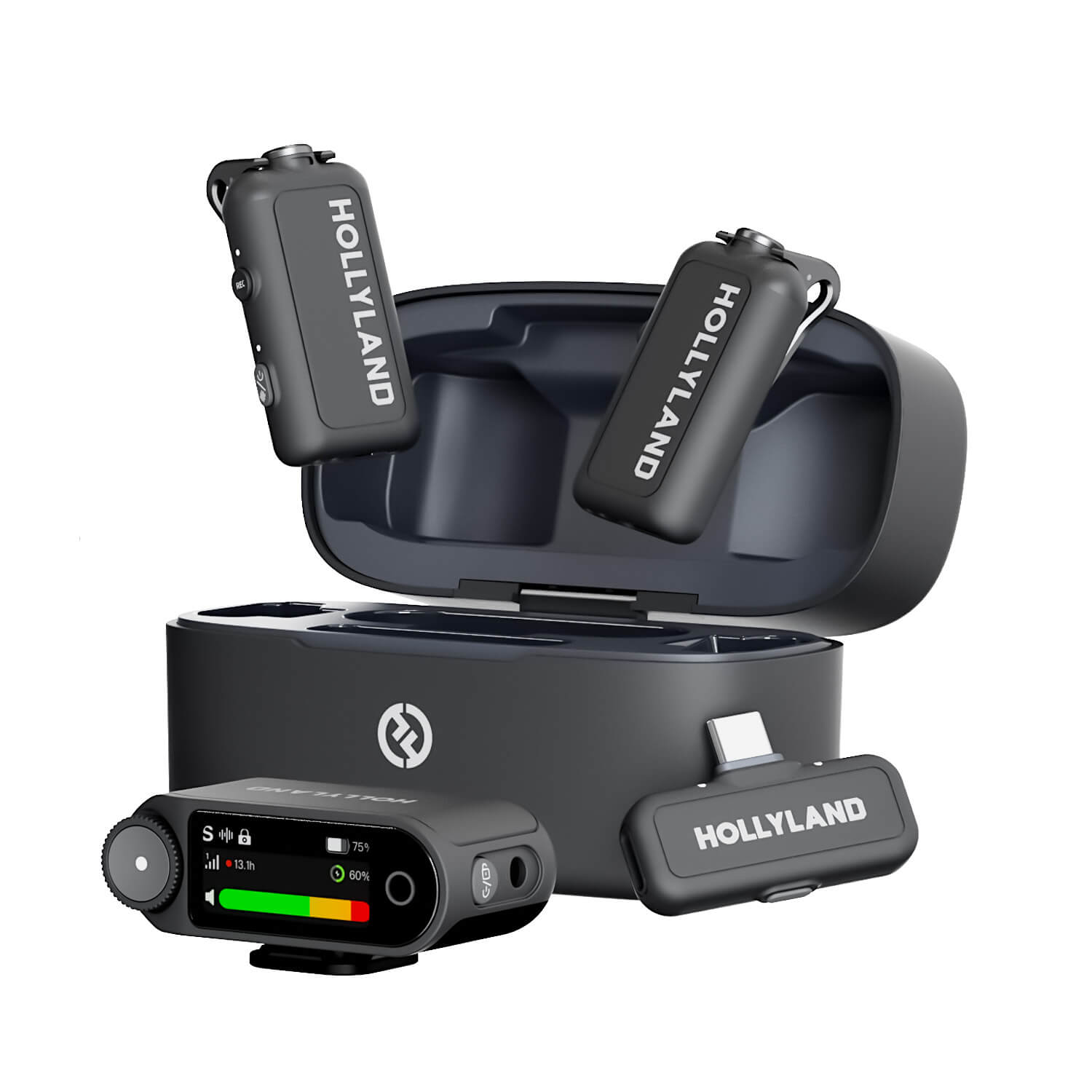
The best way to speed up your editing is to capture audio that doesn’t need rescuing. For this, we recommend the Hollyland LARK MAX 2.

Why Hardware Matters for Editing
When you record with standard microphones, sudden loud noises (like laughter or shouting) cause clipping. In Audacity, this looks like a flat block at the top of your waveform. Once audio clips, the data is lost forever, forcing you to cut that segment.
The Hollyland LARK MAX 2 solves this with 32-bit Float Recording.
- Never Lose a Take to Distortion: 32-bit float technology captures a massive dynamic range. If you scream into the mic and the waveform looks like a solid block, the audio isn’t actually distorted. You can simply lower the volume in Audacity, and the crystal-clear detail is still there. This eliminates the need to “cut” peaked audio.
- Studio Quality Source: Recording at 48kHz/24-bit, the LARK MAX 2 provides a rich sound profile that responds better to Audacity’s effects than low-quality MP3 recordings.
By upgrading to a system that prevents audio failure, you stop editing to fix mistakes and start editing to create content.
How to Save and Export Your Cut MP3
One of the most common mistakes beginners make is hitting Ctrl+S and expecting an MP3 file. In Audacity, “Save Project” creates an .aup3 file. This file cannot be played in media players like Spotify or on your phone.
To get a playable audio file, you must Export your work.
Step-by-Step Export Guide
Once you are happy with your cuts:
- Stop Playback: Ensure your audio is fully stopped (press the Yellow Square button), not just paused. If it’s paused, the export options will be grayed out.
- Go to Menu: Select File > Export Audio.

- Name Your File: Choose a folder and name your file.
- Format Options: At the bottom of the window, you will see quality settings.
- Constant Bitrate (CBR): This is the industry standard for podcasts. It forces the file to stay at a specific quality level.
- Quality: Select 192 kbps (standard) or 320 kbps (maximum).
- Save: Click save. You can ignore the “Metadata Tags” window if you want, just hit OK.
⚠️ Important: Beware of Generation Loss
MP3 is a “lossy” format. Every time you open an MP3, edit it, and export it as an MP3 again, you lose a little more audio quality—like making a photocopy of a photocopy. If possible, always record in WAV first, and only convert to MP3 as the very last step.
Frequently Asked Questions (FAQ)
Can I cut an MP3 in Audacity without re-encoding?
Technically, no. Audacity is a multi-track editor, not a direct stream editor. When you import an MP3, Audacity converts it into raw audio data for editing. When you export it back, it re-compresses the file. For most podcasts and videos, this quality loss is unnoticeable if you export at a high bitrate (192kbps+). If preserving 100% of the original data is critical, look for a tool like mp3DirectCut.
How do I undo a cut in Audacity?
If you accidentally delete the wrong section, don’t panic.
- The Shortcut: Press Ctrl + Z (Windows) or Cmd + Z (Mac) to immediately undo.
- The History Window: If you need to go back several steps, go to View > History. This opens a list of every edit you’ve made, letting you jump back to any previous state.

Why is the “Cut” option grayed out?
This is the most common frustration for new users. If the scissors icon or Ctrl+X isn’t working, check these two things:
- Is the audio paused? Audacity locks editing while paused. Click the Stop button (Yellow Square).
- Is anything selected? You must tell Audacity what to cut. Use the Selection Tool to highlight a section of the waveform first.
Conclusion
Cutting MP3s in Audacity is the foundation of professional audio editing. By mastering the core shortcuts like Cut (Ctrl+X), Trim (Ctrl+T), and the essential Zero Crossings (Z) tool, you can speed up your workflow significantly and avoid those amateur “clicking” sounds.
Before you tackle your main project, take a few minutes to practice these techniques on a test file. Get comfortable with the Selection Tool and remember that Undo (Ctrl+Z) is always there if you get too chop-happy.
Finally, remember that the best way to reduce your editing time is to capture high-quality audio from the start. If you’re tired of fixing bad takes, consider the Hollyland LARK MAX 2. With 32-bit Float Recording, you can capture clear audio that requires far less “rescue editing,” giving you more time to focus on the creative side of your content.