.png)
 简体中文

A microphone can sound close and clear from several feet away in one room, then struggle at half that distance somewhere noisier. Each time the distance from a sound source doubles, its level at the microphone drops by about 6 dB.
That drop gives the room more space in the recording, making reflections and background noise harder to ignore. Microphone type matters too, since omnidirectional, shotgun, and lavalier mics handle distance very differently.
This guide explains what determines pickup range, realistic distances by mic type, how environments affect usable range, common misconceptions, and what to expect in real-world recording situations.
What Determines Mic Pickup Range?
A microphone can keep detecting your voice even when distance has already changed the recording. As you move farther away, the voice gets weaker while room reflections and background noise become more noticeable. How quickly that happens depends mainly on the mic’s polar pattern, sensitivity, and the space around it.
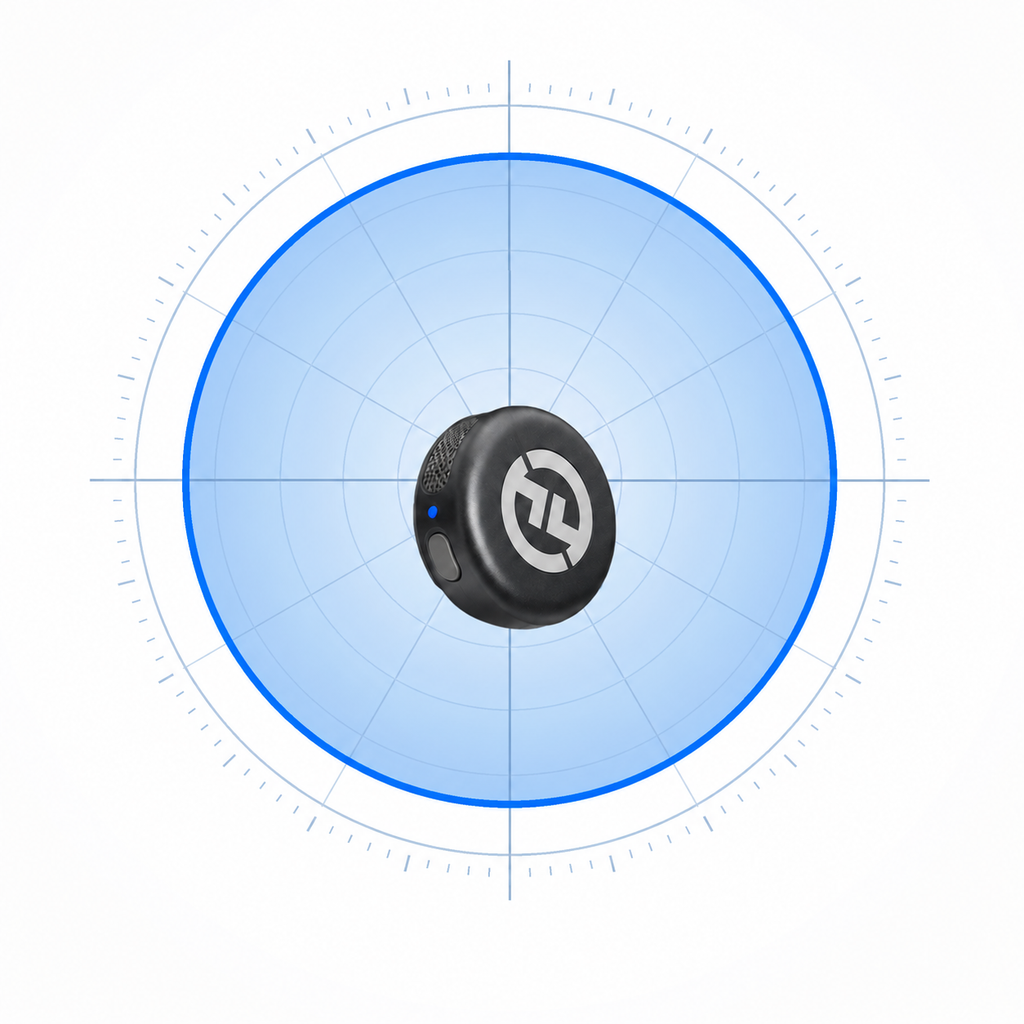
Polar Pattern
This controls how strongly the mic responds to sound arriving from different directions. Good rejection from the sides or rear can help keep unwanted sound down, which becomes increasingly important as the source moves farther away. The less separation there is between the voice and the surrounding noise, the sooner the recording starts to lose clarity.
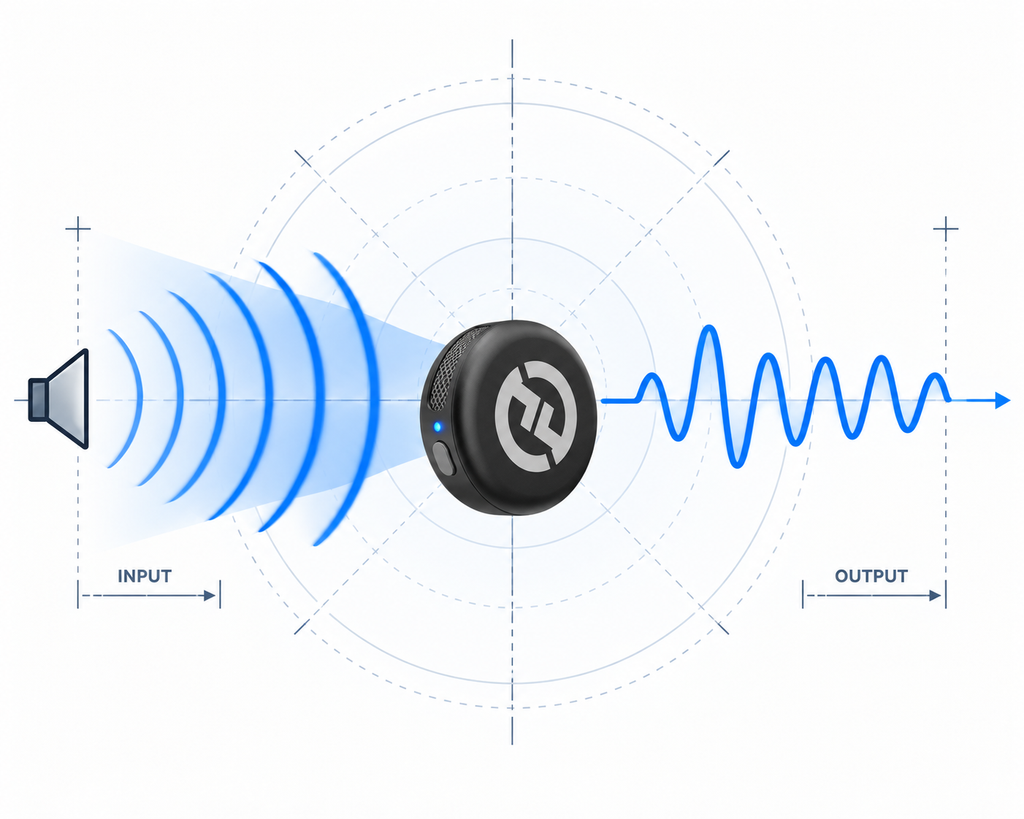
Sensitivity
It is how strongly the mic turns incoming sound into an electrical signal. A more sensitive mic can give you more level from the same voice, which helps with quieter sources. Distance is a different problem. Once the voice, room noise, and reflections are all reaching the mic together, sensitivity brings all of them up at once.
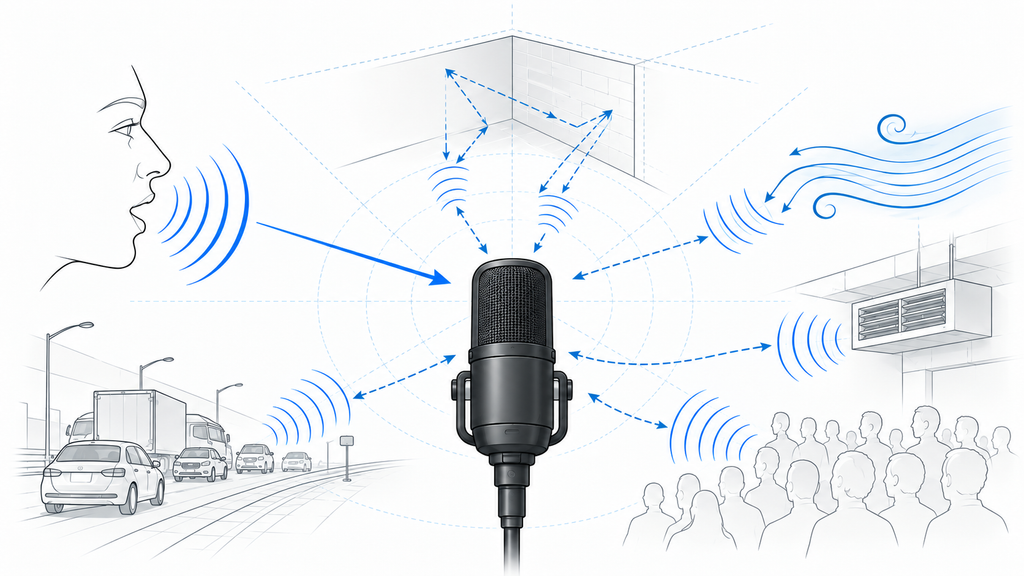
Environment
The room can change the result just as much as the mic. In a bare space, reflections can build up fast. Outdoors, wind and traffic may take over instead. The farther the speaker moves away, the easier it is for surrounding sounds to compete with the voice.
Polar Patterns and Range
The polar pattern matters more as the speaker moves away from the microphone. At close range, the voice is strong enough to dominate the recording. Add a few feet of distance, and sounds coming from the sides and rear start competing with it.
Omnidirectional
Distance gets unforgiving pretty quickly when the mic is hearing the whole room. As the speaker moves back, their voice drops in level while reflections, chatter, traffic, and other nearby sounds keep feeding into the recording from every direction.

In a quiet space, that can still sound open and natural. In a noisier one, the voice starts blending into everything around it much sooner, so the usable range tends to shrink fast.
Cardioid and Shotgun
Directional pickup gives you more breathing room. A cardioid keeps most of its attention toward the front, which helps the speaker stay clearer as the distance grows and cuts down some of the spill coming from the sides and rear.
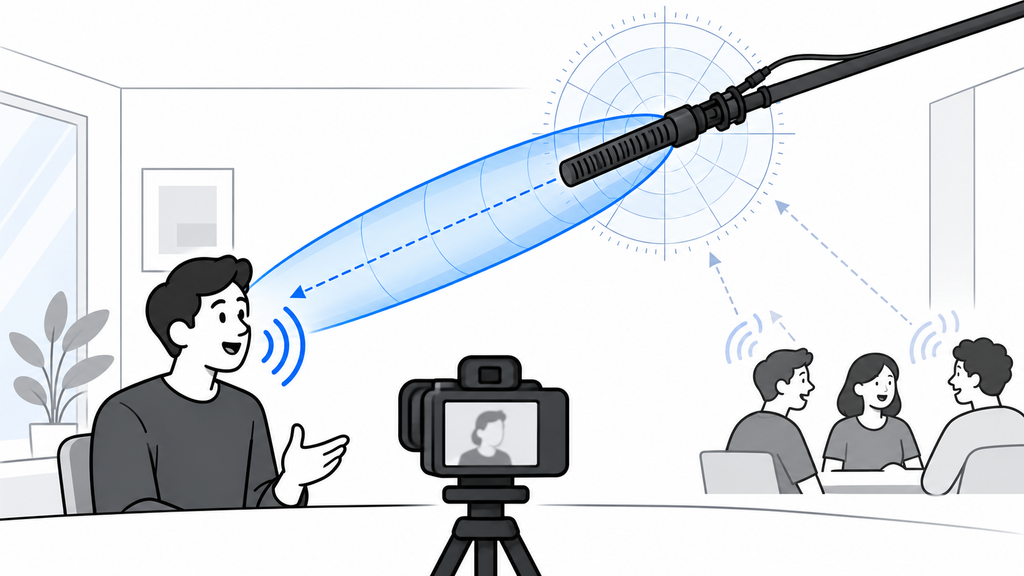
A shotgun pushes that idea further with a much tighter pickup area. Aim it properly, and you can keep dialogue cleaner from farther away, especially when getting the mic physically close is difficult. The tradeoff is that positioning matters more too. Once the speaker moves off axis, that extra reach can disappear quickly.
Lavalier
A lav sidesteps most of the distance problem by moving with the person. Clip it near the chest, and the mic stays roughly the same distance from the voice whether the camera is three feet away or across the room.
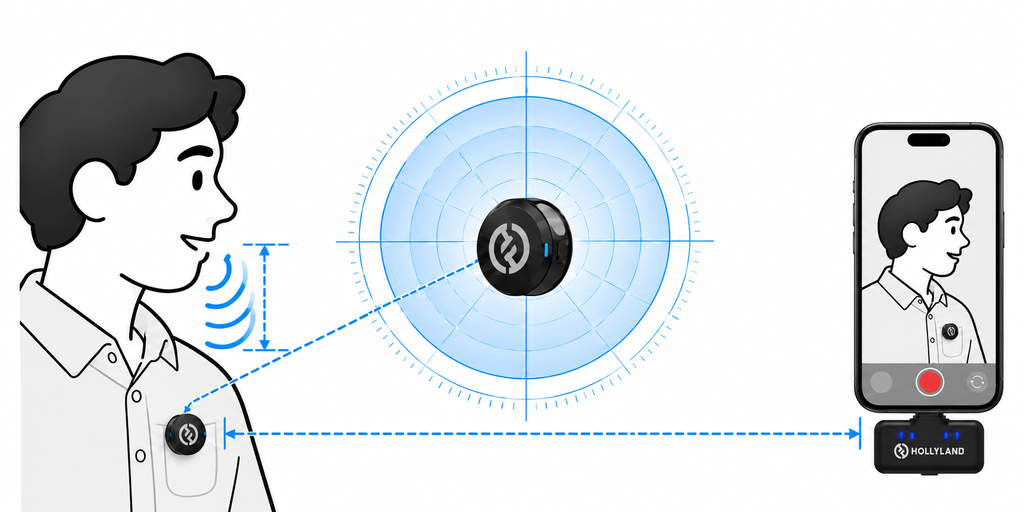
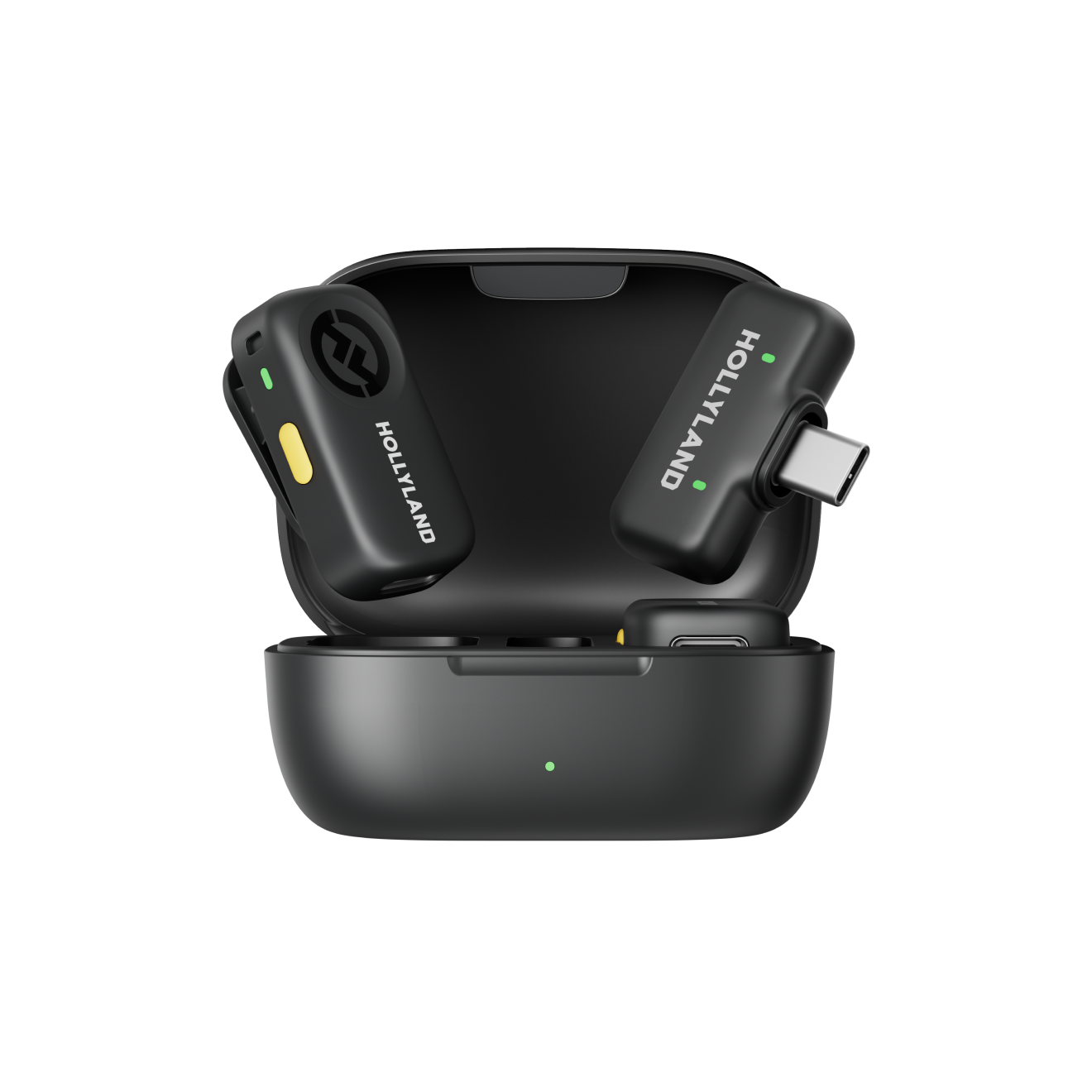
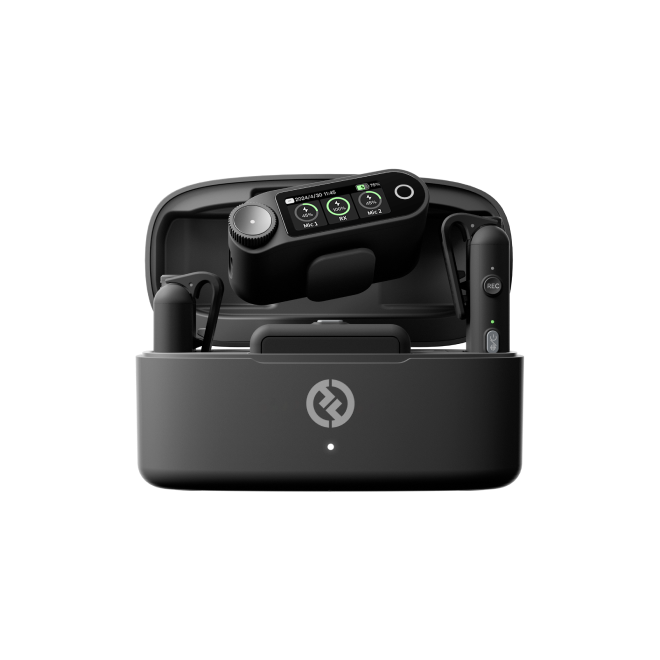
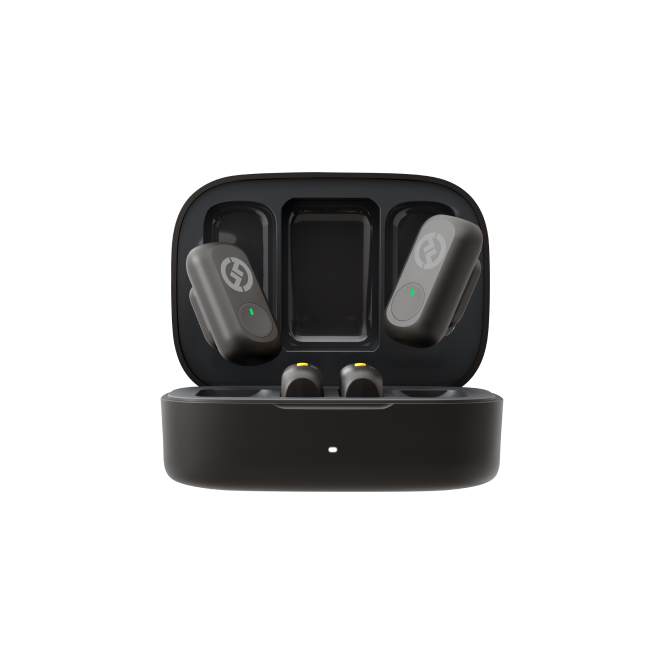
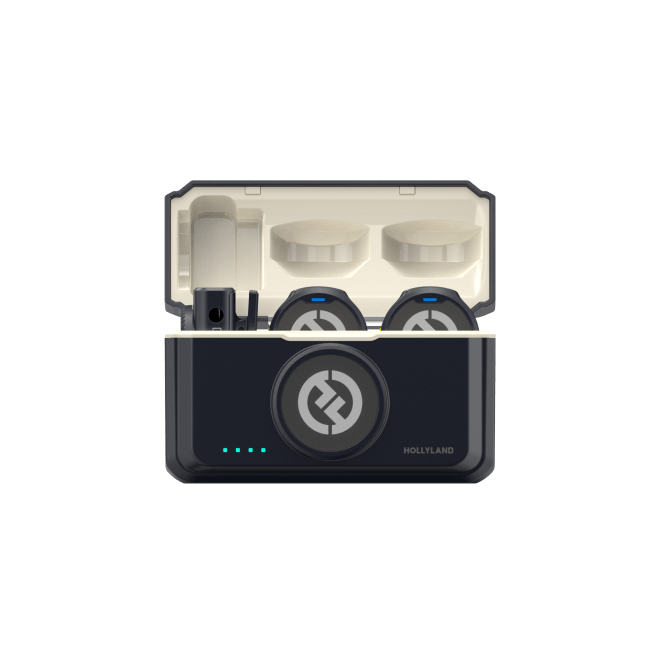
That makes wireless lavs especially useful for interviews, walk-and-talk videos, presentations, and other shoots where the camera keeps moving. With a system like the Hollyland LARK M3, the mic stays on the speaker while the receiver remains with the camera, so camera distance has much less influence on how close the voice sounds.
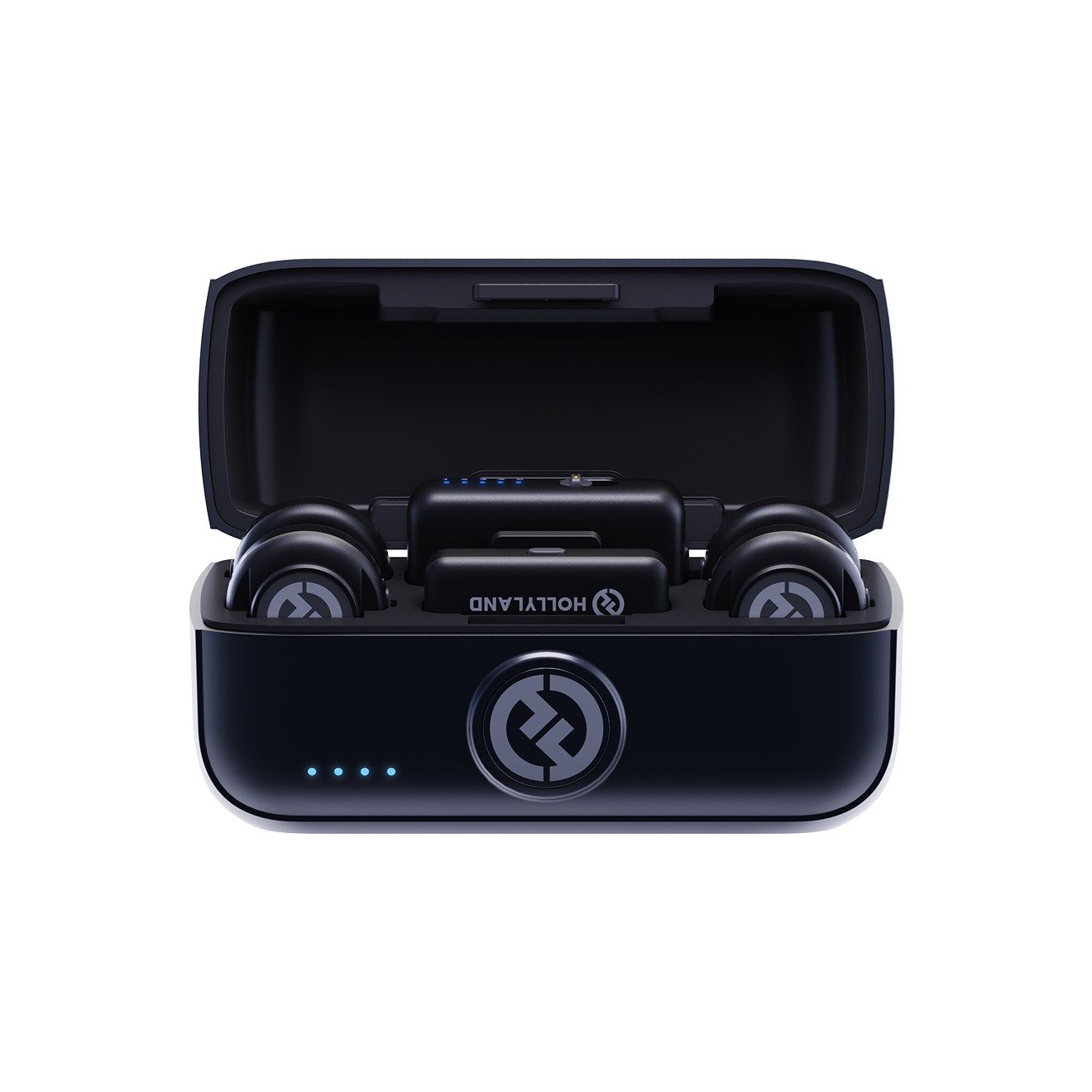
Hollyland LARK M3 - 32-Bit Float Mini Microphone
An ultra-compact 9g wireless microphone system featuring 32-bit float recording and 4-channel scalability for professional, zero-distortion sound.
Key Features: 32-Bit Float Recording | Up to 4 TX & 4 RX | 300m Range
Realistic Range by Mic Type
So how far can a microphone actually pick up your voice? There is no single distance that works in every setup, but some rough ranges are useful. The room, background noise, and mic placement can all push that limit closer or farther.
| Microphone type | Typical usable range for speech | Where it works best |
| Omnidirectional | Around 1–3 ft | Quiet rooms where background noise is already under control |
| Cardioid | Around 2–6 ft | Indoor recording, podcast setups, interviews, and spaces with some background noise |
| Shotgun | Around 3–10+ ft | Film, interviews, boom setups, and situations where the mic needs to stay out of frame |
| Lavalier | Usually 6–12 in from source | Vlogs, presentations, interviews, and moving subjects |
How Environment Shrinks Usable Range
As the mic moves farther from the speaker, the voice gets weaker, which gives room reflections, traffic, fans, and other background sounds more room to show up in the recording.
Untreated Rooms
Bare walls, tile, glass, and hard floors throw the voice back toward the microphone a fraction of a second later. Up close, the direct voice still dominates. Move farther away and those reflections start sitting much closer to the level of the voice itself, which is when speech begins to sound roomy, hollow, or washed out.
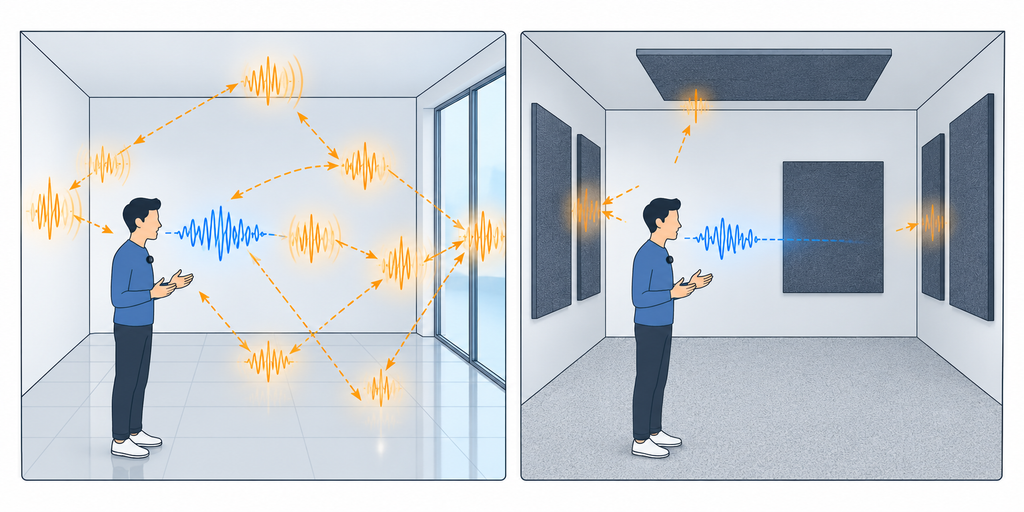
A bedroom with curtains and furniture can give you far more usable distance than an empty kitchen or office with hard surfaces.
Outdoor Wind
Wind can wreck usable range surprisingly fast because it reaches the microphone directly. As the speaker moves farther away, their voice gets weaker, while the wind hitting the capsule stays right there.
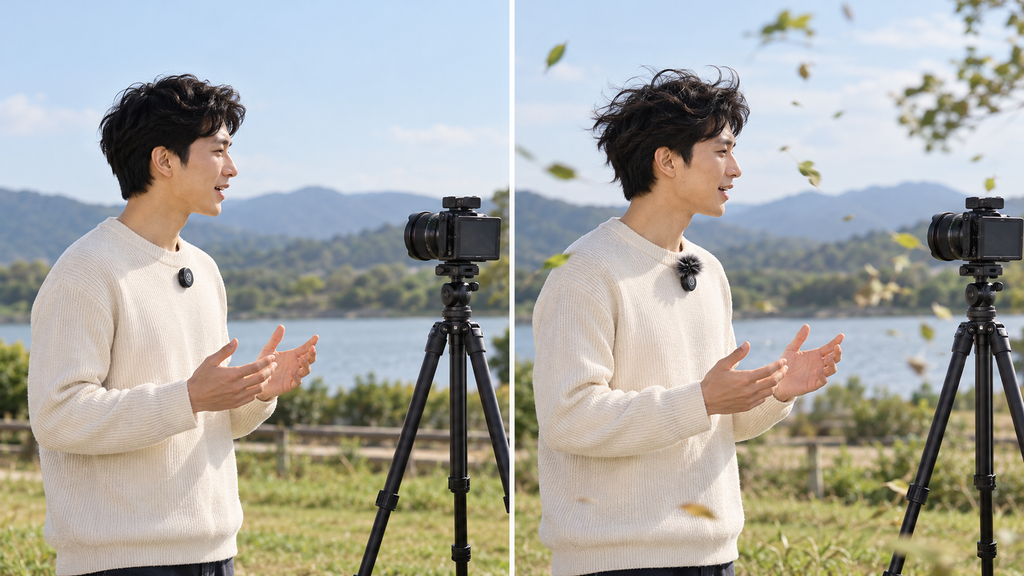
A good windscreen can tame a lot of that rumble, though you will usually get cleaner audio by keeping the mic fairly close.
Loud Venues
Crowds, music, PA systems, and nearby conversations all compete for the same recording. At close range, the speaker can still sit well above that noise. Add a few more feet, and the gap starts closing quickly.
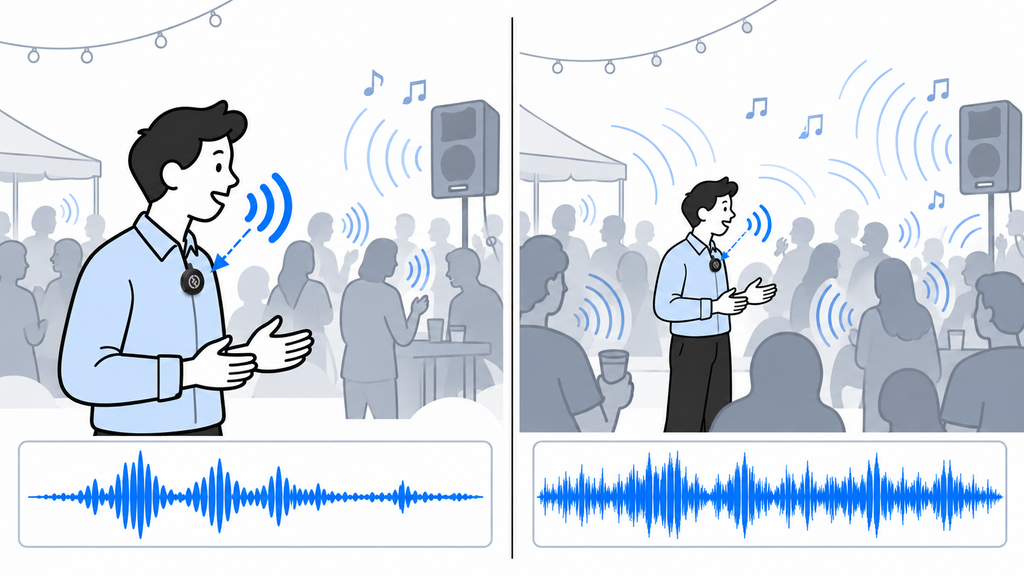
At events, clubs, and busy trade shows, interviews usually sound much cleaner when the mic stays close to the speaker rather than trying to pick them up from across the room.
The Inverse Square Law in Plain Language
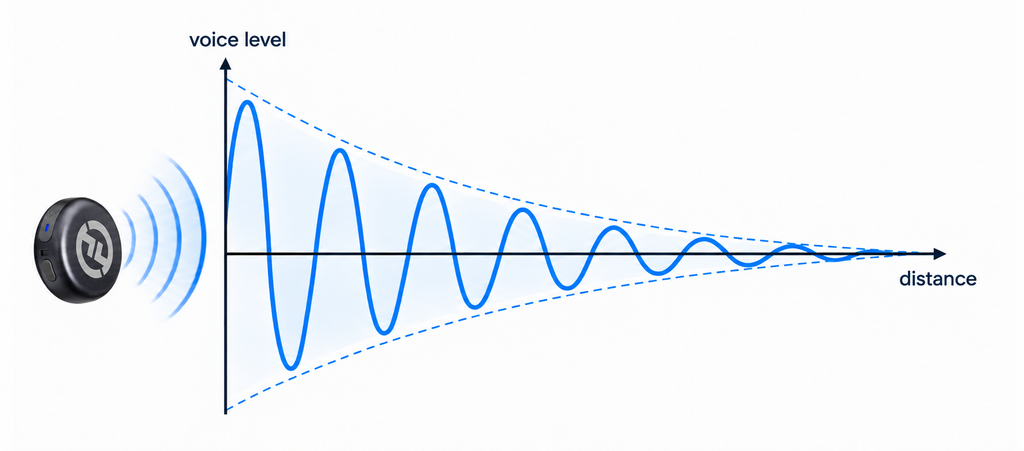
Every step away from the mic costs you some of the voice. In open space, doubling the distance drops the sound pressure level by about 6 dB, so the difference between one foot and two feet is already noticeable.
Sound Intensity1d2
Keep backing up, and it adds up fast. A speaker at four feet is roughly another 6 dB down from where they were at two feet. The mic is still hearing them, but there is simply less voice arriving at the capsule each time the distance doubles.
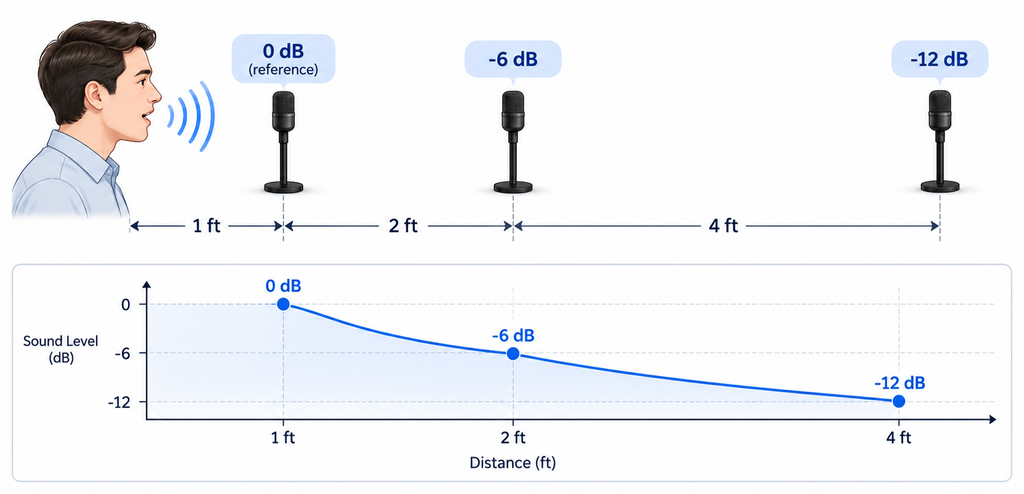
That becomes a problem once the voice starts sitting closer to the level of the room, wind, or crowd around it. The recording has less clean speech to work with, which is where distance starts becoming a real limit rather than just a number
Common Misconceptions About Mic Range
| Misconception | Reality | What to do |
| More sensitivity means more range | It gives you more output, not cleaner distant audio. | Focus on placement and noise first. |
| More gain means more reach | Gain turns up the voice and the noise together. | Use gain for level, not distance. |
| Shotguns “zoom in” on sound | They reject more sound from the sides. | Aim carefully and keep them as close as you can. |
| Wireless range = pickup range | Wireless range is the transmitter-to-receiver link. | Keep the mic close to the speaker. |
| If the mic hears it, it’s usable | A voice can be audible and still sound bad. | Judge clarity, not just audibility. |
FAQs
Can I fix a distant voice by turning the gain up?
Partially, more gain will make the voice louder, but it also brings up the room noise, hiss, and everything else the mic has already captured. If the voice is buried, moving the mic closer will usually do far more than touching the gain knob.
Why does a shotgun mic still sound roomy from far away?
A shotgun can reject a lot from the sides, but it cannot stop the voice itself from getting weaker with distance. Once the mic is too far back, reflections from the room can start arriving almost as strongly as the direct voice, so the recording still ends up sounding distant.
Does a longer wireless range mean the microphone can hear farther?
No. Wireless range is about how far the transmitter can stay connected to the receiver. The microphone itself is still only picking up what reaches it. That is why a lav can work so well from across a room: the camera is far away, but the mic is still sitting right next to the speaker.
Why can I hear something in headphones even when it barely shows on the recording?
Headphones can make very quiet details easier to notice, especially when you are listening in a silent room. That does not mean the sound was captured strongly. It may still be sitting only slightly above the microphone’s noise floor or the background noise in the track.
Conclusion
The best microphone range is really the distance your setup can handle before the voice starts giving way to the room around it. A quiet bedroom gives you more freedom than a busy event, while a well-aimed shotgun or a mic placed close to the speaker can keep that distance from becoming a problem too quickly.
For creators who are constantly changing shots, walking around, or filming with the camera farther back, keeping the mic with the speaker is often the easier route. A wireless lav such as the Hollyland LARK M3 does exactly that, keeping the voice close to the microphone wherever the camera ends up. The result is one less distance to worry about when you hit record.