.png)
 简体中文
MELO P1
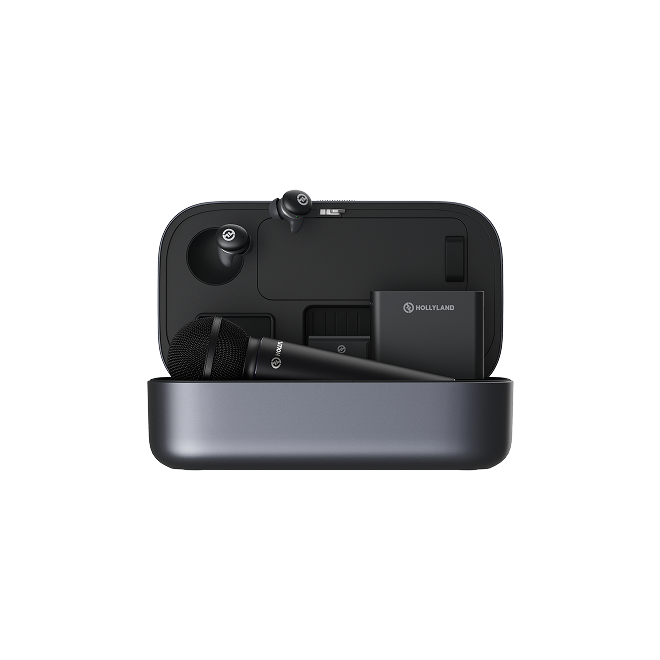
Complete wireless studio for vocalists, creators, and live performers
- 25mm Large-Diaphragm Condenser
- 32-Bit Float Recording
- Up to 40h Battery

Capture studio-grade vocals with a cardioid condenser microphone built for real-world use. The MELO P1 delivers large-diaphragm clarity, 25dB AI noise cancellation, and fully wireless freedom — no mixer, no cables, no compromises. Ideal for creators, podcasters, singers, and live performers.
No audio interface or phantom power required · Compatible with smartphones, computers, and cameras

Complete wireless studio for vocalists, creators, and live performers
The diaphragm is the engine of any condenser microphone — its size directly shapes how the microphone captures sound.
For most voice-led use cases — singing, podcasting, live streaming, or spoken word — a large-diaphragm condenser capsule will deliver the presence and character that listeners associate with professional vocal audio.
The cardioid polar pattern focuses pickup in a tight forward arc while rejecting sound from the sides and rear. But polar pattern performance varies considerably across microphones — real-world isolation depends on how well off-axis rejection holds at different frequencies, not just what the spec sheet states.
Two things worth evaluating:
For users in untreated rooms or noisy environments, the cardioid pattern alone may not be sufficient. Look for microphones that combine cardioid pickup geometry with hardware-level noise cancellation — this dual-layer approach handles background noise and room acoustics that polar pattern design cannot fully eliminate on its own.
A condenser microphone's frequency response defines which frequencies it captures and how accurately it represents them.
Condenser microphones are inherently more sensitive than dynamics. This rewards good source control — consistent mic positioning, appropriate gain staging, and a reasonably quiet capture environment.
The connection type determines which devices the microphone works with and how much additional hardware you'll need to build a functional recording chain.
If you are recording at a fixed desk, USB or wireless removes the need for a separate interface entirely. If you are shooting video on a camera or phone, wireless transmission eliminates the cable that would otherwise restrict your movement or tether your subject. XLR remains the right choice when you already have interface infrastructure in place and need maximum signal precision.
Traditional condenser microphones are wired — which is entirely appropriate for fixed studio environments but creates real constraints for live performance, run-and-gun video, and on-location recording.
Wired systems offer:
n- Maximum signal stability with no transmission interference
n- Lower cost for dedicated, studio-only workflows
n- Direct compatibility with existing XLR or USB infrastructure
Wireless systems offer:
n- Full freedom of movement — essential for live performers, event hosts, and field reporters
n- Simplified cable management for streamers and video creators
n- The ability to relocate between environments without reconfiguring your signal routing
When evaluating a wireless system, look beyond transmission range. Latency and monitoring design matter just as much — a microphone that removes the cable but still requires a wired earpiece or wired return feed has only partly solved the mobility problem. A fully integrated wireless system — where the microphone, monitoring, and control all operate cable-free — represents the most complete solution for live and mobile use cases.
Condenser microphones capture detail with precision — but raw condenser audio typically benefits from processing (EQ, compression, de-essing) before it sounds polished and broadcast-ready. In a traditional signal chain, this processing happens in a DAW or through an external mixer. For many users, that adds both cost and technical friction.
When evaluating a cardioid condenser system, check whether it includes:
For users who don't want to build a full signal chain — interface, DAW, plugins, monitoring — a self-contained system with built-in mixing and preset management significantly reduces the technical barrier while still delivering professional results.
Condenser microphones have historically been studio instruments — sensitive to handling noise, dependent on phantom power, and not designed for mobile use. That is changing, but it is still worth evaluating portability if you plan to record outside a fixed setup.
Key things to check:
A microphone that runs for 12 hours per charge, supported by a case that extends total system life to 40 hours, is meaningfully more practical for touring performers and location creators than one requiring frequent mains access or separate charging for each component.
Use this summary to align the right specification priorities with your recording context:
Home studio (vocals or acoustic instruments)
n→ Large-diaphragm capsule · Wide frequency response (20Hz–20kHz) · Low self-noise · Onboard processing or DAW integration
Live streaming and content creation
n→ AI noise cancellation · Simplified workflow · USB or wireless connectivity · Preset control via app
Podcasting and voice acting
n→ Consistent tonal character · Low self-noise · 32-bit float output · Minimal post-production dependency
Live stage performance
n→ Long wireless range · Zero-latency monitoring · High SPL handling · On-the-fly preset switching
Field interviews and reporting
n→ Compact portability · Hardware noise cancellation · Wireless transmission · Direct smartphone or camera compatibility
Event hosting and public speaking
n→ Extended battery life · Wireless freedom · Lightweight body · Ease of use without technical setup
I love my new LARK M2 mics. These were so good, and I really enjoyed testing out the new LARK M2 from Hollyland.
Sarah Grace Tech Creator · 3.2M YouTube subscribers
The Hollyland LARK MAX is the wireless microphone system with the clearest and crispest audio of any wireless mic system I have ever tried.
Goenrock Cinematographer · 107K Instagram subscribers
LARK MAX is doing an excellent job of dropping the sound of the air conditioner, which is something l always have to remove and post with our shotgun mic.
Film Riot Filmmaking Educator · 2.2M YouTube subscribers
A cardioid condenser microphone combines two defining characteristics: a condenser capsule — which uses a thin, electrically charged diaphragm to capture audio with high sensitivity and a wide frequency response — and a cardioid polar pattern, which picks up sound from directly in front while naturally rejecting noise from the sides and rear.
n
This combination makes it the preferred choice for vocal recording, content creation, podcasting, and live streaming where tonal detail and source isolation both matter. If your priority is capturing the natural character and nuance of a voice or acoustic instrument — while keeping background noise under control — a cardioid condenser is the right starting point.
n
The exception: extreme SPL environments or heavily uncontrolled acoustic spaces may call for a dynamic capsule instead. The Hollyland MELO P1 covers both scenarios with a swappable condenser and dynamic capsule in a single microphone body, so you're never locked into one configuration.
This is one of the most common concerns — and a legitimate one. Condenser microphones are inherently more sensitive than dynamic mics, which means they can capture room reflections and ambient noise more readily in untreated spaces.
n
The cardioid polar pattern addresses this directly: it focuses pickup on a heart-shaped zone in front of the microphone, providing natural rejection from the sides and rear. For most home recording and streaming environments, that pattern alone makes a meaningful difference.
n
The MELO P1 adds a second layer: 25dB hardware-level AI noise cancellation that processes the signal in real time — not in post-production. Whether you're recording in a home office, a busy café, or a live venue, the combination of cardioid off-axis rejection and onboard AI noise processing keeps your vocal signal clean and focused without requiring acoustic treatment.
With a traditional condenser microphone, yes. A condenser capsule requires phantom power (+48V) to operate, and most setups also depend on a dedicated audio interface or external mixer for gain staging and signal processing — adding cost, cabling, and setup complexity.
n
The MELO P1 eliminates all of that. Its 55g Smart Audio Mixer — which also functions as the wireless receiver — provides everything in one unit: phantom power delivery, dual-chip DSP processing, EQ, compression, de-esser, reverb, and 100+ professionally tuned presets. Connect directly to your smartphone, camera, or laptop via USB-C. No additional hardware required, no separate power supply, no mixer on your desk.
Yes — with the MELO P1, the entire system is wireless. The microphone transmits audio via 2.4GHz to the Smart Audio Mixer at a line-of-sight range of up to 60m (196ft). The mixer connects to your device via USB-C, making it compatible with smartphones, DSLRs, mirrorless cameras, laptops, and streaming setups.
n
There is no proprietary dongle, no adapter for different device types, and no cable running from performer to camera. For real-time monitoring, the included 2.4GHz wireless earphone delivers zero-latency audio feedback — completing a fully wireless chain from capture to output. The Bluetooth remote controller extends to 70m, giving you live control over presets and effects without ever approaching the mixer.
32-bit float recording captures audio with a dynamic range wide enough that the signal is virtually impossible to clip — even if your gain is set incorrectly. In practical terms: if an unexpected loud moment peaks well beyond your intended level, 32-bit float preserves the full recoverable audio in the file. You correct it in post; you don't reshoot.
n
For content creators, streamers, and podcasters who aren't actively monitoring levels at all times, this is a meaningful safety net. The MELO P1 records at 32-bit float / 48kHz, which means every take — regardless of environment, level inconsistency, or unexpected peaks — is recoverable in editing. It removes one of the most frustrating and avoidable failure points in audio production.
A traditional condenser microphone setup — large-diaphragm mic on a stand, audio interface, cable run, monitoring headphones, possibly a hardware mixer — is studio-anchored by design. It requires AC power, is sensitive to handling and environment, and is not practical for field or mobile use.
n
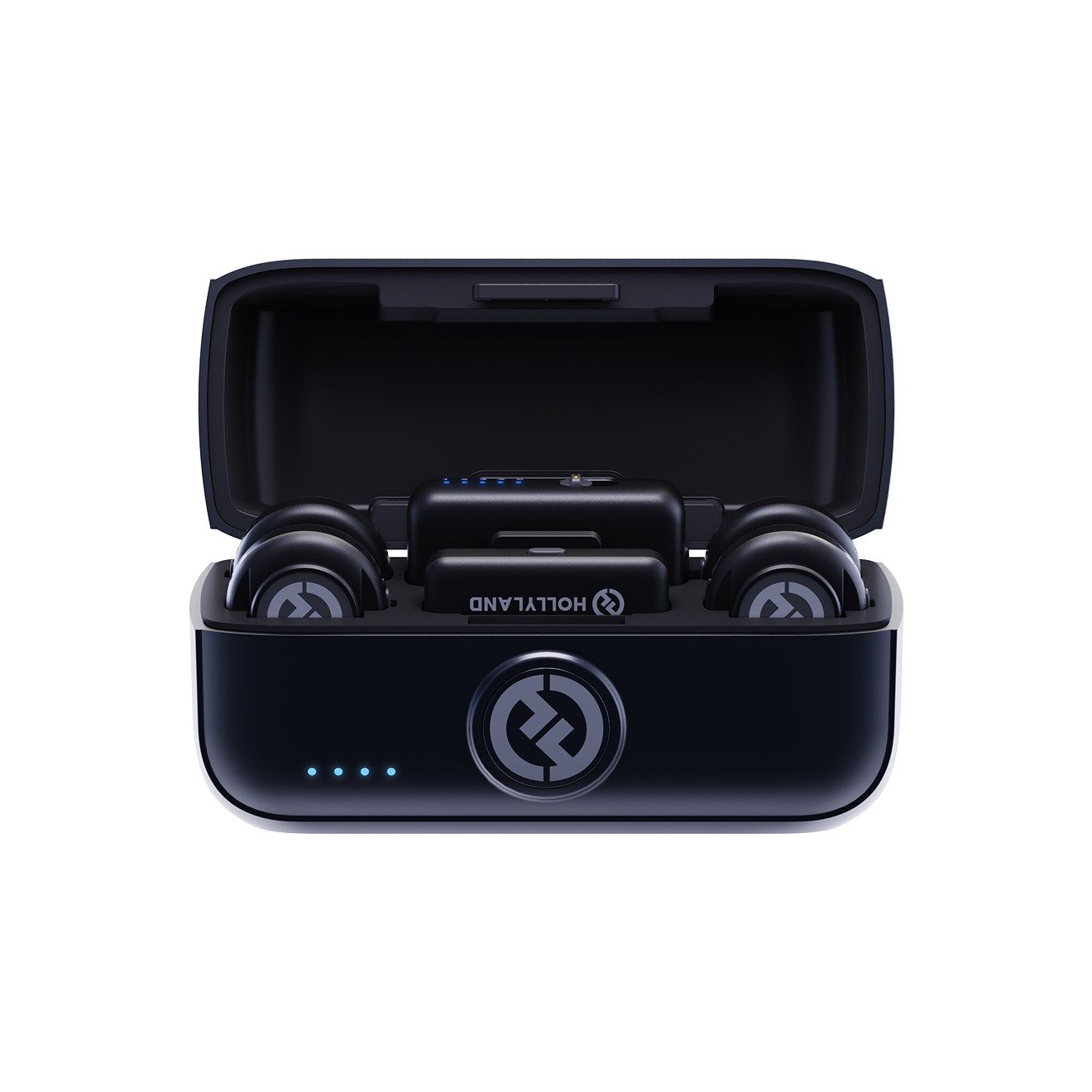
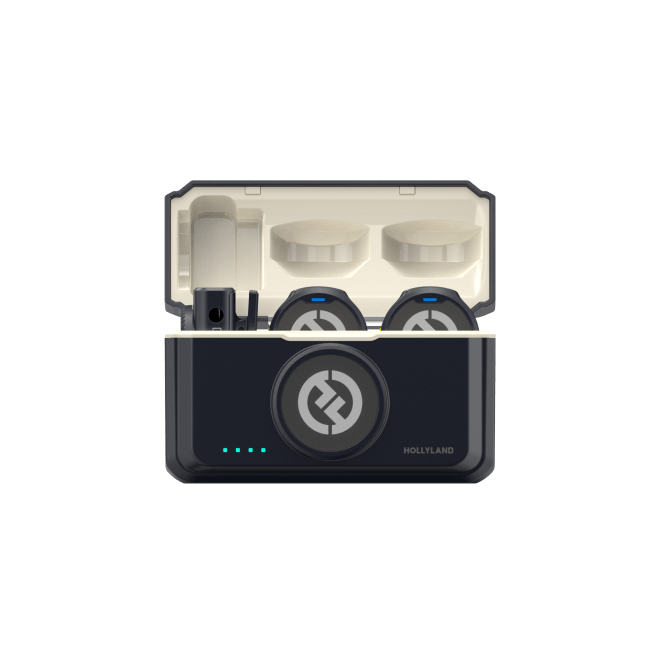
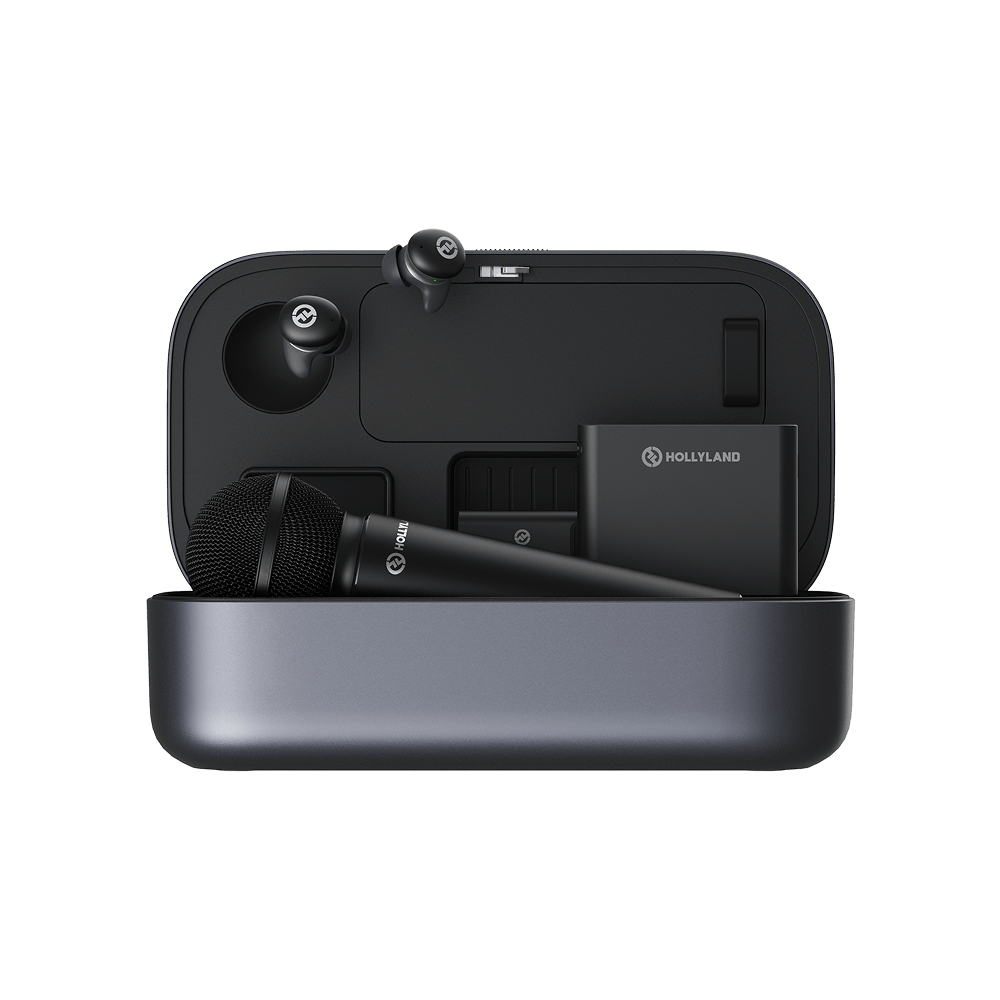
The MELO P1 is the antithesis of that workflow. The complete system — microphone, Smart Audio Mixer, monitoring earphone, and Bluetooth remote — fits inside a single 5,000mAh charging case compact enough for a backpack. The microphone weighs 255g in condenser mode. Total system battery life reaches up to 40 hours with the case. It moves from studio to stage to field location without any reconfiguration, and with no cables to manage at any point.
No. The MELO P1's HollyAudio App provides 100+ professionally tuned presets covering singing, live streaming, podcasting, broadcasting, and more. Each preset is a complete signal chain — EQ, compression, de-esser, reverb, and vocal effects — calibrated for a specific use case and sound character. Select one, adjust to taste using the app's studio-grade processing tools, and save your configuration.
n
During live use, the Bluetooth remote controller lets you switch presets or trigger effects from up to 70m away — mid-performance, without interrupting the moment. Professional-grade condenser microphone sound does not require deep technical knowledge when the processing chain is already built in.
Traditionally, those are treated as separate tool categories: a large-diaphragm condenser for the studio, a dynamic handheld for the stage. The MELO P1 bridges that divide.
n
In condenser mode (20Hz–20kHz frequency response, 132dB max SPL, 116dB dynamic range), it captures the detail and tonal richness required for vocal recording, streaming, and podcasting. Swap to the dynamic capsule (50Hz–17kHz, 145dB max SPL) and the same microphone body handles the extreme dynamics of live performance, high-energy stage work, or beatboxing without distortion.
n
Combine that with a 60m wireless range, zero-latency wireless in-ear monitoring, and a Bluetooth remote for on-stage preset switching, and the MELO P1 functions as a complete live performance rig — no cables on stage, no secondary monitoring system, and no second microphone to carry.
