.png)
 简体中文
MELO P1
All-in-one wireless system for live performance, streaming, and high-SPL vocals
- 145dB Max SPL
- 60m Wireless Range
- Dynamic + Condenser Capsule

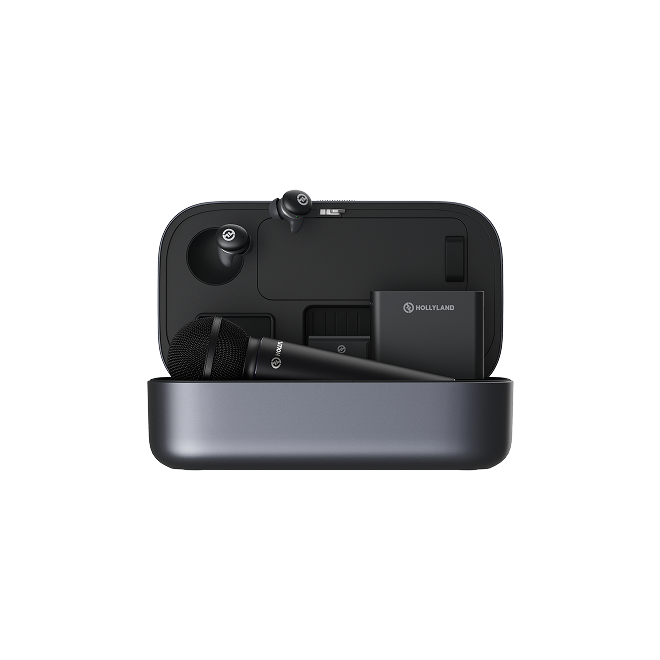
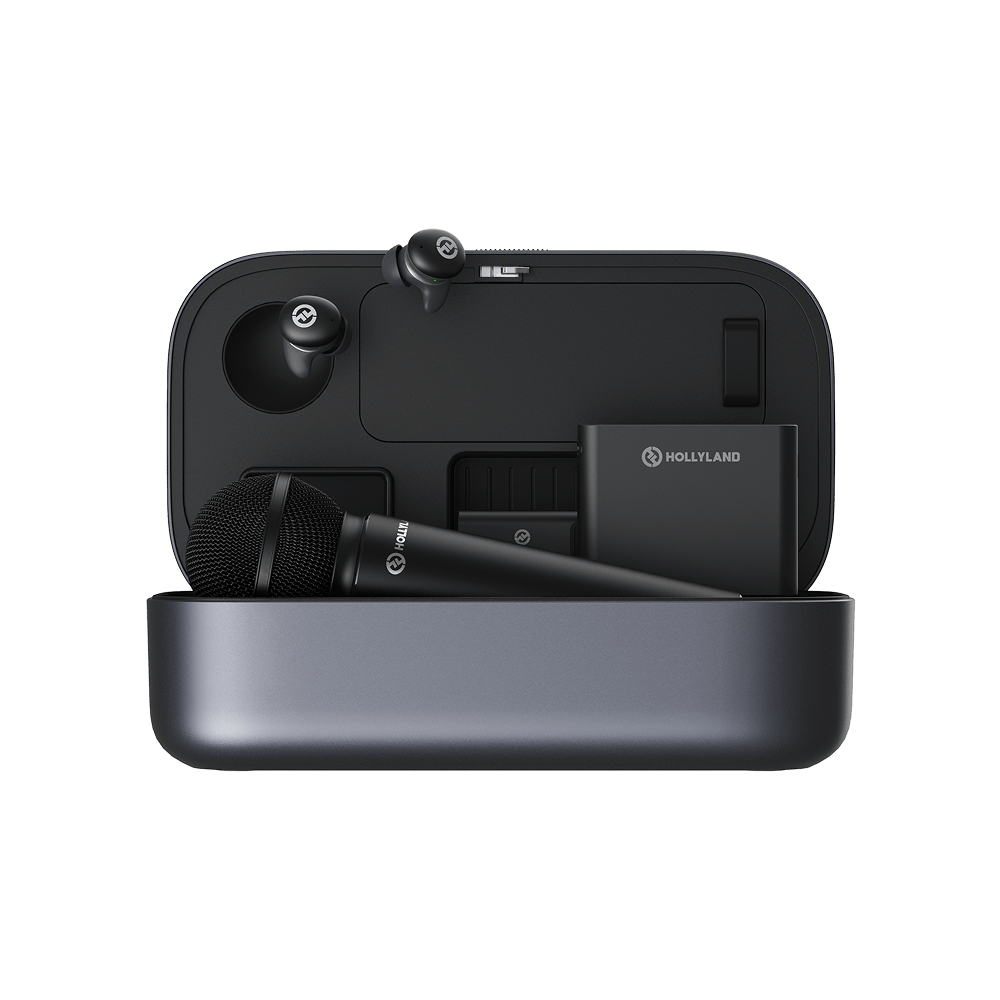
Explore dynamic microphones built for real-world demands — from beatboxing and live stage performance to podcasting and field reporting. Hollyland's MELO P1 delivers 145dB SPL tolerance, 60m wireless freedom, AI noise cancellation, and 100+ onboard presets. One complete system. No cables, no compromises.
Works with smartphones, laptops & PA systems — no external mixer required.

All-in-one wireless system for live performance, streaming, and high-SPL vocals
Before comparing specs, it helps to understand what makes a dynamic microphone distinct — and why it might be exactly what you need.
Dynamic microphones use a moving-coil design that handles high sound pressure levels (SPL) without distorting. They're inherently more rugged than condenser mics, naturally less sensitive to ambient noise, and require no phantom power in wired configurations. This makes them the default choice for:
If you're recording in a controlled environment and prioritize extended frequency detail in the upper registers, a condenser capsule may serve you better. Many modern microphone systems now offer swappable capsule designs that give you access to both — worth considering if your use cases span multiple settings.
Max SPL (Sound Pressure Level) is the single most important specification for anyone performing live or recording loud sources — and one of the most commonly overlooked.
Most handheld dynamic microphones top out around 130–135dB SPL, which is sufficient for typical vocal performance but falls short for extreme use cases.
Match your SPL needs to your use case:
Higher SPL tolerance isn't just about avoiding distortion. It preserves dynamic range, which directly affects how natural and controlled your vocal sounds at the listener's end. If your mic clips during a loud passage, no amount of post-processing will recover what was lost.
Wired dynamic microphones remain reliable workhorses for fixed setups — home studios, podcast booths, and venues with existing cable infrastructure. They're simple, zero-latency, and never run out of battery mid-performance.
Wireless dynamic microphones have matured significantly. For performers, event hosts, and creators who move while they work, the benefits are now decisive:
When evaluating a wireless system, focus on three things:
For performers who need both wireless audio transmission and wireless in-ear monitoring, look for systems that bundle both into a unified setup — this eliminates the need to source and coordinate separate wireless transmitters, which adds cost and complexity. The MELO P1, for example, pairs a 2.4G microphone with a 2.4G monitoring earphone in a single integrated system.
Traditional dynamic microphones output a raw audio signal and rely on an external mixer, preamp, or audio interface to shape the sound. This works well in fixed studio or venue setups where outboard gear is already in place.
But if you're a solo performer, streamer, podcaster, or mobile creator, carrying a mixer and interface adds weight, setup time, and technical complexity.
Microphones with integrated DSP processing address this by moving the signal chain onboard:
For buyers who want professional sound quality without a professional-scale gear setup, onboard DSP meaningfully lowers the barrier to entry. Look for systems that offer a substantial preset library alongside manual adjustment options, so you can move quickly in live scenarios without sacrificing control when you want it.
Before buying, confirm that the microphone outputs in a format compatible with your existing setup.
| Output Type | Best For |
|---|---|
| XLR | Fixed studio setups, professional PA systems, mixing consoles |
| USB-C | Direct connection to laptops, PCs, and modern smartphones |
| 3.5mm / TRS | Cameras, portable recorders, legacy devices |
| Proprietary wireless receiver | All-in-one wireless systems with integrated signal processing |
If you're recording directly to a smartphone or laptop without a dedicated interface, prioritize microphones (or companion receivers) that output via USB-C — this eliminates the need for a separate audio interface in most cases and keeps your signal chain clean and portable.
For live performers, event hosts, and field reporters, battery life is a practical constraint — not just a convenience feature.
Ask yourself before you buy:
General benchmarks to work from:
An integrated charging case that recharges the microphone, receiver, and monitoring earphone between uses significantly extends total operational battery life without requiring a separate power bank or wall outlet between every session.
A dynamic microphone used on stage or in the field needs to withstand real-world conditions — being passed between speakers, carried in a bag, gripped tightly during performance, or occasionally dropped.
What to look for:
Handling noise is a particularly common issue with wireless handheld microphones used for live performance, since performers tend to grip and move them more dynamically than a static desktop setup. A built-in shock absorption system is a meaningful differentiator — especially at higher gain settings where capsule vibration is more easily picked up.
| If you need… | Prioritize… |
|---|---|
| Extreme volume handling (beatboxing, loud stage) | Max SPL 140dB+ |
| Clean vocals in noisy environments | Cardioid polar pattern + AI noise cancellation |
| Full stage freedom without cables | Wireless system with 60m+ range, zero-latency monitoring |
| Pro sound without a mixer or interface | Onboard DSP with presets, EQ, and compression |
| All-day events or multi-day touring | 12h+ mic battery; charging case with 40h+ total |
| Direct phone or laptop recording | USB-C output, no external interface required |
| Versatility across vocal and studio use | Swappable condenser/dynamic capsule |
I love my new LARK M2 mics. These were so good, and I really enjoyed testing out the new LARK M2 from Hollyland.
Sarah Grace Tech Creator · 3.2M YouTube subscribers
The Hollyland LARK MAX is the wireless microphone system with the clearest and crispest audio of any wireless mic system I have ever tried.
Goenrock Cinematographer · 107K Instagram subscribers
LARK MAX is doing an excellent job of dropping the sound of the air conditioner, which is something l always have to remove and post with our shotgun mic.
Film Riot Filmmaking Educator · 2.2M YouTube subscribers
Dynamic microphones use a moving-coil capsule that handles high sound pressure levels without distortion — making them the go-to choice for loud environments, live performance, beatboxing, and any scenario where the source gets aggressive. They're also more forgiving of background noise and handling vibration than condenser mics.
n
Condenser microphones, by contrast, are more sensitive and capture a wider frequency range — better suited to controlled studio environments where you want fine tonal detail.
n
The Hollyland MELO P1 removes the need to choose: its swappable capsule design lets you run a dynamic capsule (50Hz–17kHz, 145dB max SPL) for high-energy live use, or switch to the condenser capsule (20Hz–20kHz, 132dB max SPL) for nuanced vocal recording — one microphone body, both worlds.
Most handheld dynamic microphones top out around 130–135dB SPL before clipping becomes an issue. The MELO P1's dynamic capsule is rated to 145dB max SPL — meaningfully above that ceiling.
n
In practice, that means the mic handles the full dynamic range of beatboxing, screamed vocals, and high-energy live performance without distorting on transient peaks. If you're a beatboxer, a loud-stage vocalist, or a performer whose dynamics push into territory that clips standard mics, the 145dB rating is a real, spec-backed advantage — not a marketing figure.
Dynamic microphones use a cardioid polar pattern that naturally focuses on the source directly in front of the capsule and rejects sound coming from the sides and rear. For live performance, podcasting, and field reporting, this physical rejection is your first line of defense against crowd noise, room ambience, and off-axis bleed.
n
The MELO P1 goes further with 25dB hardware-level AI noise cancellation — processed onboard in real time, not applied as a software effect in post. In street-level interviews, live event environments, or noisy home setups, that combination of cardioid rejection and active AI filtering keeps the vocal signal clean and articulate even when the surroundings aren't.
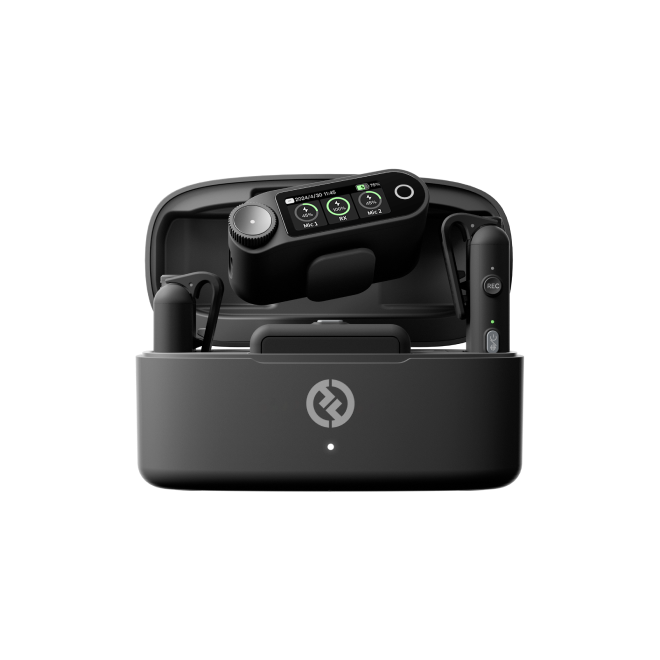
No. The MELO P1 is designed as a standalone all-in-one system — the 55g Smart Audio Mixer included in the kit functions as both the wireless receiver and a full-featured DSP processor. You get EQ, compression, reverb, de-esser, and 100+ precision-tuned presets built in, with no external mixer required.
n
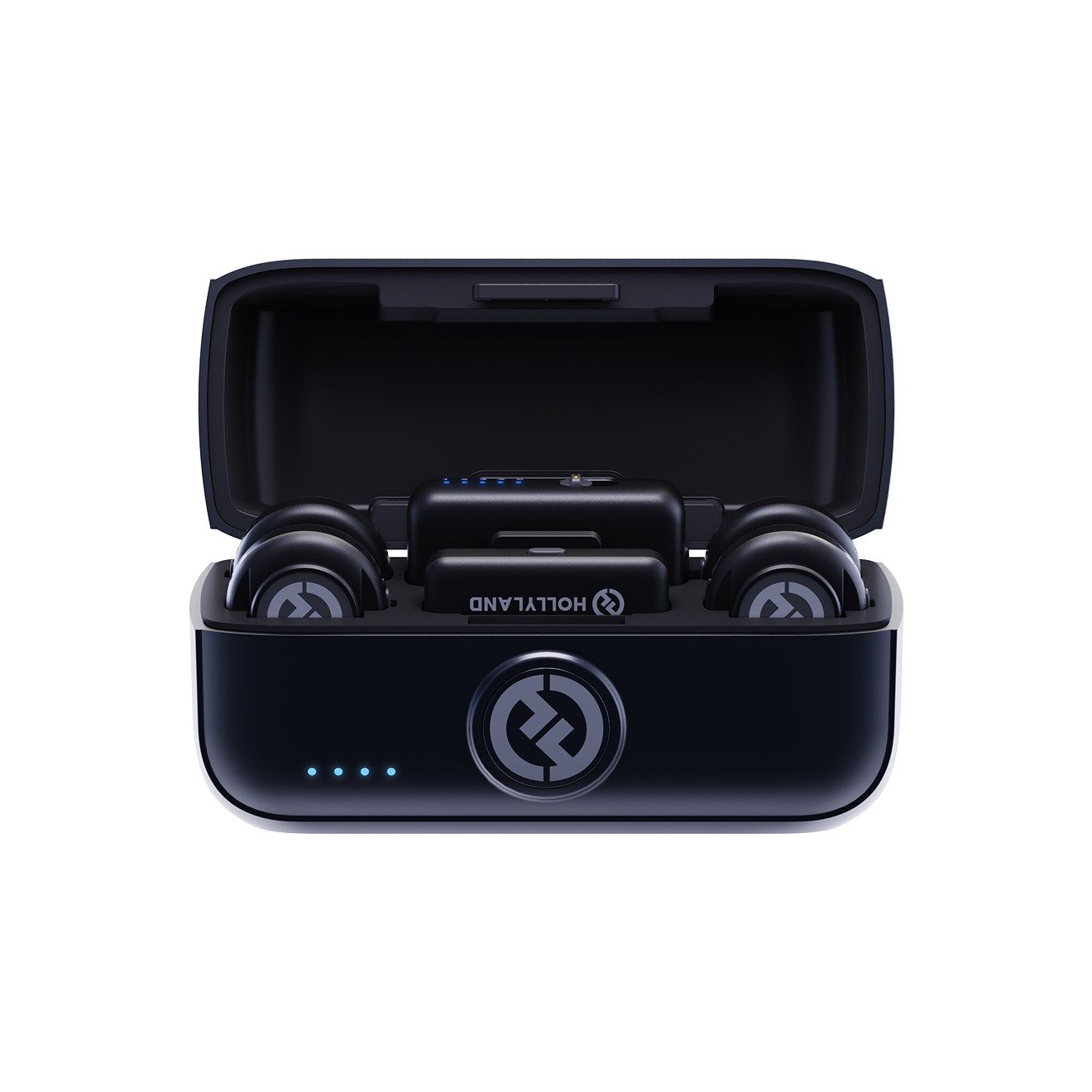
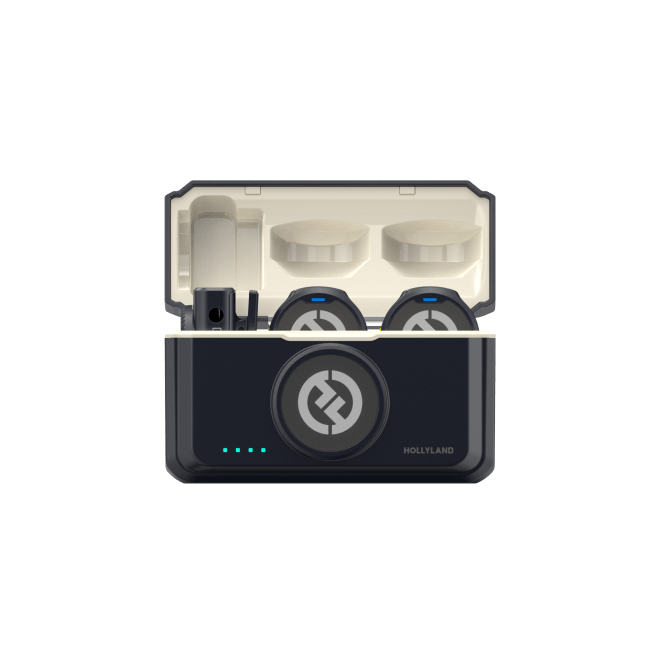
The mixer outputs via USB-C and connects directly to your smartphone, laptop, camera, or streaming device. For monitoring, the included 2.4G wireless earphone delivers zero-latency real-time feedback. The entire system — microphone, mixer, earphone, and Bluetooth remote controller — ships in a single charging case and is ready to use out of the box.
The MELO P1 uses 2.4GHz audio transmission with a 60m (196ft) line-of-sight range — enough to cover full stage depth, a conference floor, or an outdoor field reporting setup without signal drop.
n
Latency is a common concern for performers who monitor in-ear. The included wireless earphone runs on a dedicated 2.4G link — separate from the audio transmission channel — and delivers zero-latency real-time monitoring, so what you hear in your ear matches what you're singing in real time. The Bluetooth remote controller extends to 70m, letting you switch presets and trigger effects from anywhere on stage without walking to the mixer.
The MELO P1 is built for all-day use. Per-charge runtimes are approximately 12 hours for the microphone, 8 hours for the Smart Audio Mixer, and 9 hours for the wireless earphone. The 5,000mAh charging case extends total system battery life to up to 40 hours across multiple charges.
n
For most live events, full-day conferences, or extended streaming sessions, a single case charge is more than sufficient. The components recharge inside the case between uses — no separate chargers, no cable management overhead.
The Smart Audio Mixer outputs via USB-C, which connects directly to smartphones (iOS and Android), laptops, tablets, cameras, and streaming rigs. No driver installation is required for most platforms — it registers as a standard USB audio device.
n
The HollyAudio App (iOS and Android) gives you access to 100+ presets, a full effects chain, and real-time parameter control from your phone. The Bluetooth remote controller is paired to the mixer and works independently of your phone — meaning you can control your sound on stage without touching your device.
Yes. The MELO P1's Smart Audio Mixer records and outputs at 32-bit float / 48kHz — the same format used in professional broadcast and studio production environments. 32-bit float effectively eliminates clipping and gain-staging errors, which means captured audio retains its full dynamic range even if input levels weren't set perfectly.
n
The dynamic capsule's 116dB dynamic range and the condenser capsule's studio-grade frequency response (20Hz–20kHz) are specifications comfortably within professional territory. Combined with dual-chip DSP processing and 25dB AI noise cancellation, the MELO P1 produces broadcast-ready audio without requiring an external recording chain.
