.png)
 简体中文

There is something quietly addictive about watching someone crack an egg over a cold pan, listening to the slow build of a sizzle, or hearing the delicate scrape of a spatula against cast iron. ASMR cooking videos have carved out one of the most loyal audiences on YouTube, TikTok, and Instagram Reels — not because they teach recipes, but because they make cooking feel like something worth paying attention to.
If you have been curious about how to make ASMR cooking videos yourself, the good news is that you do not need a professional studio. You need the right approach to sound, a thoughtful setup, and the patience to let quiet moments breathe. This guide walks you through everything: planning, gear, filming specific food scenarios, editing, and the mistakes that silently kill ASMR content before it reaches a single viewer.
What Actually Makes an ASMR Cooking Video Work
Before touching a camera, understand what separates ASMR cooking content from a standard recipe tutorial. The difference is not just the absence of voiceover. It is a fundamentally different relationship with sound.
In a regular cooking video, sound is background. In ASMR cooking, sound is the story.

The three pillars of great ASMR cooking content are intimate sound, clean visuals, and deliberate pacing. Crucially, the silence between sounds matters as much as the sounds themselves. The pause before oil hits a hot pan creates anticipation. The moment after bread comes out of the oven and the crust begins crackling on its own is pure ASMR gold — but only if you have not buried it under background noise or a music track.
Popular subgenres include solo midnight snack videos, café-style coffee and drink making, outdoor BBQ content, international cuisine showcases, and baking sequences. Each has its own sound signature, and recognizing that early shapes every decision you make.
Plan Your Video Around Sound, Not Just the Recipe
Most beginner mistakes happen before filming starts. Choosing a recipe without thinking about its sound potential leads to disappointing footage that cannot be fixed in editing.
Pick Ingredients and Techniques With High Sound Value
Some cooking actions are naturally ASMR-rich. Others are not.
High-reward sounds to build videos around:

- Deep-frying tempura or crispy fried chicken — a sustained, layered sizzle
- Steak on a cast iron pan — the aggressive first-contact sear that settles into a steady hiss
- Knife work on a heavy wooden cutting board — a warm, rhythmic thud rather than a sharp clatter
- Mortar and pestle grinding whole spices — gritty, textured, deeply satisfying
- Scoring sourdough with a lame before baking — one clean drag of sound
Sounds to approach carefully:
- Food processor and blender motors are loud and mechanical — use them off-camera or avoid them entirely
- Microwave hum is pure audio pollution in an ASMR context
- Non-stick pans produce a thinner, less resonant sizzle than cast iron or stainless steel
Treat your video like a sound storyboard. Map out the sequence of sounds before you film: the snap of a green bean, water running over vegetables, the first tap of a knife, the bubble building in the oil. Knowing your sound arc in advance means you film with intention rather than hoping something works.
Camera Setup: Angles That Serve the Sound Story
ASMR cooking videos are intimate by nature, and your camera angles should reflect that.

Top-down (flat lay) works beautifully for chopping sequences, mixing, and plating. It puts the viewer directly above the action.
Close-up side angles are essential for sizzling pans, pouring liquids, and slicing through a finished dish. Position the camera low, almost at counter level, to make the viewer feel like they are right there.
Macro or extreme close-ups are your secret weapon: an egg yolk breaking, chocolate melting at the edges of a pan, steam curling off a bowl of ramen. These shots work in slow motion during editing and create the visual texture that matches the audio texture.
For gear, a mirrorless or DSLR camera with a 50mm or macro lens is the reliable starting point. A smartphone with a quality clip-on lens is a completely legitimate alternative, especially for close-up food work. Whatever you use, mount it on a sturdy tripod. Vibrations from a shaky setup transfer directly to any microphone nearby and introduce a low rumble that is difficult to clean up later.
For lighting, resist the temptation to flood your kitchen with bright overhead light. Harsh, even lighting kills the ASMR mood. A single softbox or a large window providing natural side light creates depth and warmth. For midnight snack content, a single warm lamp or even candlelight nearby enhances the cozy, intimate aesthetic that performs exceptionally well on these platforms.
Audio Setup: Where ASMR Videos Are Won or Lost
Camera quality is visible. Audio quality is felt. Viewers may forgive slightly soft focus. They will immediately click away from thin, distant, or noisy audio.
Understanding Your Microphone Options
Three microphone types are commonly used for ASMR cooking content:
- Condenser microphones are highly sensitive and excellent at capturing subtle sounds like sifting flour or cream being slowly poured. Their sensitivity also means they pick up room noise, so your recording environment matters.
- Shotgun microphones are directional, making them useful when you want to isolate a single sound source like a sizzling pan while rejecting noise from other directions.
- Lavalier (clip-on) microphones are compact and flexible — you can position them near the cutting board, then move them close to the pan, then clip them beside the cup for a pour-over coffee sequence, all without repositioning a heavy stand.
The Case for Wireless: Hollyland LARK A2

For ASMR cooking specifically, a wireless clip-on microphone solves a problem that wired setups cannot: kitchen spaces are cramped, and cable management creates noise and limits where you can place the mic.
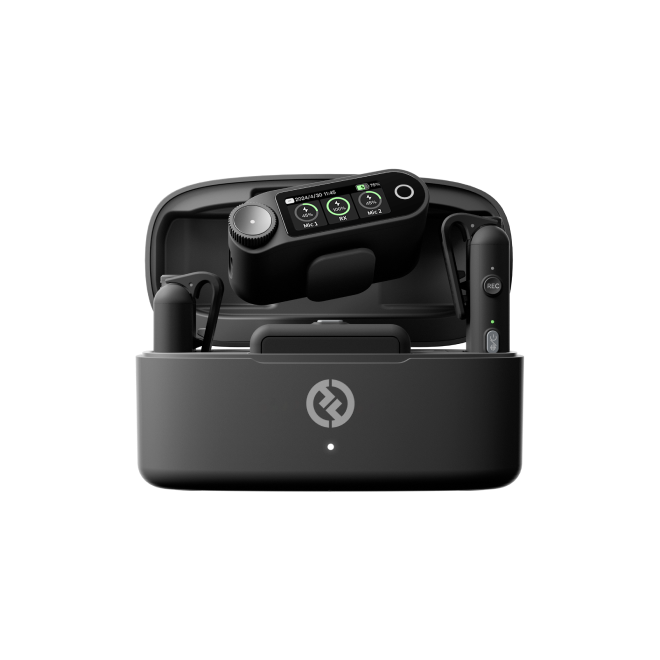
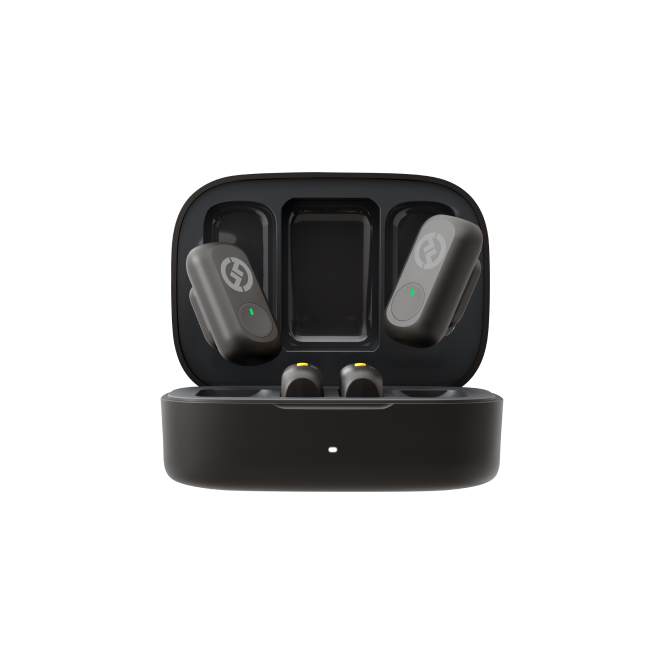
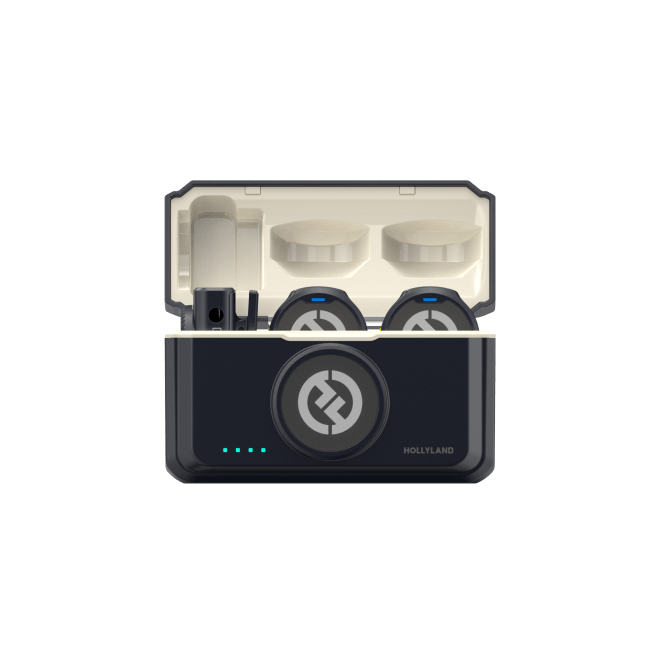
The Hollyland LARK A2 is worth serious consideration here. It features an omnidirectional condenser capsule that captures sound from all directions — practical when you are repositioning the mic near different cooking surfaces throughout a shoot. The 24-bit/48kHz audio resolution captures the fine detail that ASMR demands: the crisp high-end of a knife chop, the textured mid-range of a bubbling broth. Its built-in noise reduction helps suppress low-frequency ambient hum from ventilation or a refrigerator compressor without dulling the sounds you actually want.
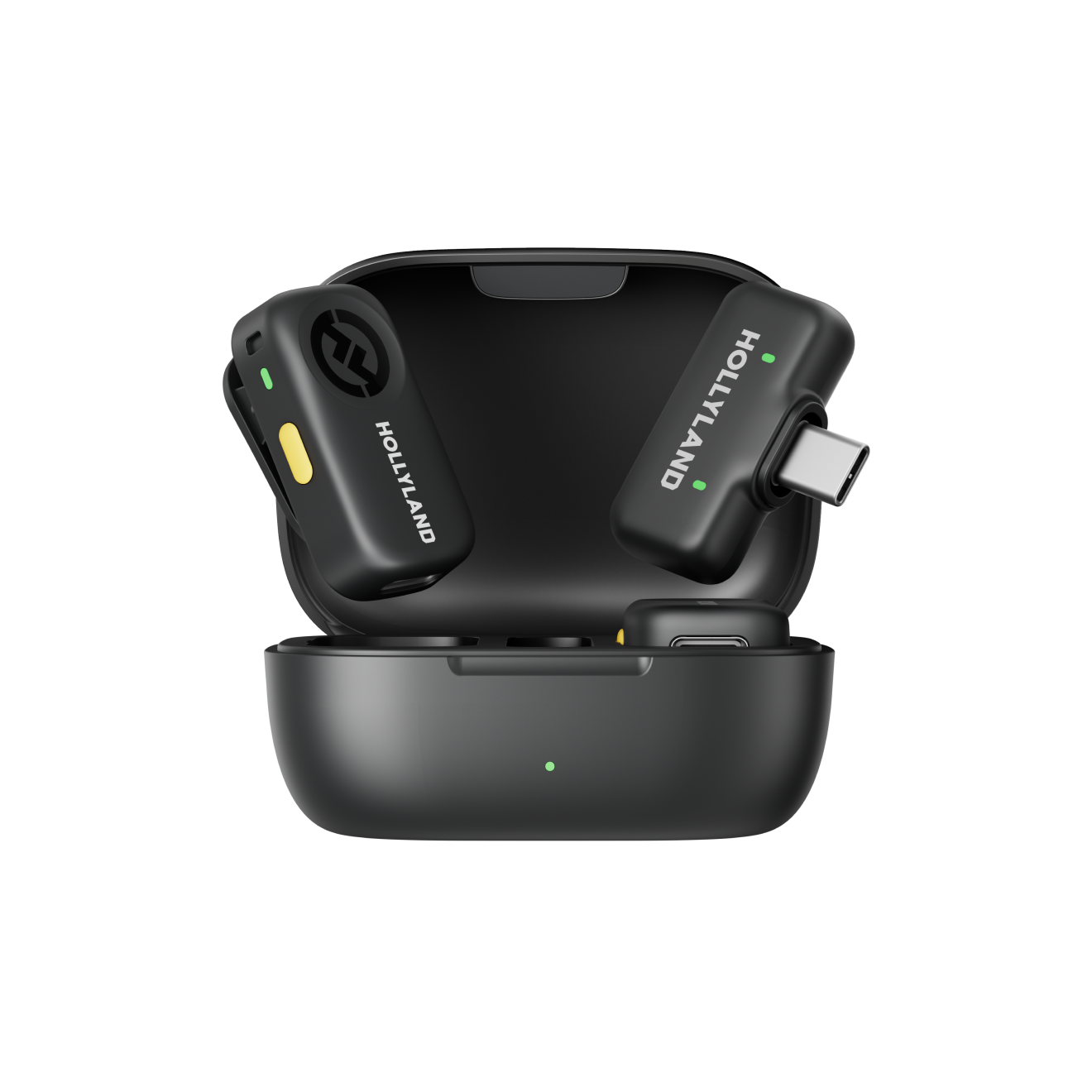
Hollyland LARK A2 - Clip-on Microphone
An ultra-light 8.5g wireless microphone engineered for effortless mobile recording, featuring smart AI noise cancellation and studio-grade sound.
Key Features: 8.5g Clip & Go | AI Noise Cancellation | 42 Hours Battery
In practical terms, clip the LARK A2 transmitter to a small flexible gooseneck arm and position it 10–15 cm from your frying pan. The receiver connects to your camera or smartphone wirelessly, so your camera can stay mounted overhead or at a side angle without a cable running across your workspace. Battery life supports long continuous takes, which matters for ASMR content where you often want one uninterrupted sound sequence rather than edited fragments.
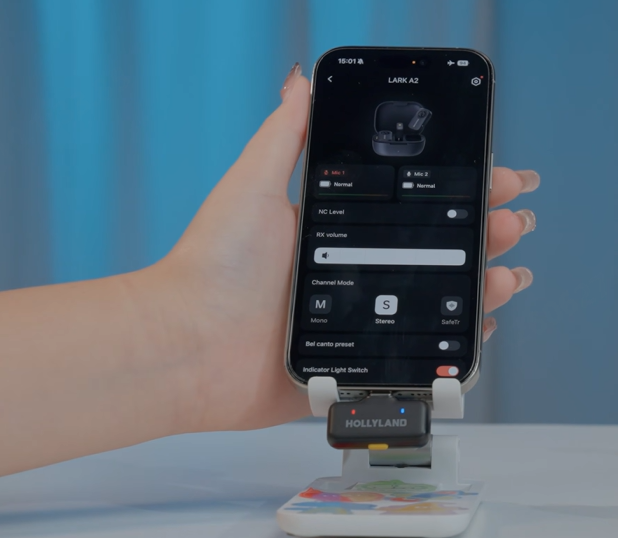
The LARK A2 is also compatible with smartphones directly, which makes it a strong option for creators who are not yet working with a dedicated camera.
Eliminate Distracting Noise Without Killing the ASMR
This is the step most beginners skip, and it is responsible for more failed ASMR videos than any other single factor.
Silence Your Kitchen Before You Press Record
Go through this checklist before every shoot:
- Range hood/exhaust fan: Turn it off. The broadband noise from a ventilation fan will bleed into every second of your recording and is extraordinarily difficult to remove cleanly in post.
- Refrigerator compressor: Unplug it temporarily, or time your recording takes to fall between compressor cycles (most run for 2–3 minutes, then pause).
- HVAC and air conditioning: Seal vents in the room or record during an off cycle.
- Traffic and outdoor noise: Record during low-traffic hours — early morning often works best.
Simple Acoustic Treatment

You do not need a treated studio. You need soft surfaces to absorb sound reflections.
Hang a heavy curtain or drape towels over hard walls near your workspace. Place a thick rug or anti-fatigue mat under your feet and work area. Record in a smaller kitchen or pantry if possible — open-plan kitchens have significant reverb that makes audio sound distant and hollow.
Choose a heavy wooden or bamboo cutting board over marble or metal. Beyond the practical benefits, wood produces a warmer, more resonant thud that sounds infinitely better on camera.
What Frequencies to Protect
Most desirable ASMR cooking sounds — sizzle, chop, pour, scrape — live between approximately 500 Hz and 8,000 Hz. When applying noise reduction in post, use a high-pass filter to remove low-frequency rumble below 80–100 Hz without touching this range. Apply noise reduction plugins at the minimum effective setting. Over-processing creates an unnatural “underwater” quality that is immediately noticeable and destroys the intimacy of ASMR audio.
Filming Specific ASMR Cooking Scenarios
Frying and Searing

Cast iron is your best friend. The sustained, resonant sizzle it produces is richer and fuller than any non-stick pan. Add ingredients gradually — the sound arc from silent oil to the first contact sizzle to a full rolling sear is one of the most satisfying sequences in cooking ASMR. Keep the microphone angled toward the pan edge rather than directly above it to avoid steam condensation on the capsule.
Baking

Baking offers a broader range of sounds than most creators exploit. The whisk hitting the ceramic bowl, the rhythm of hand-kneading dough, the definitive drag of scoring sourdough, and — often overlooked — the sound of a baked loaf crackling as it cools on a rack. These quieter sounds reward a sensitive microphone placed close to the source.
Coffee and Drink Making
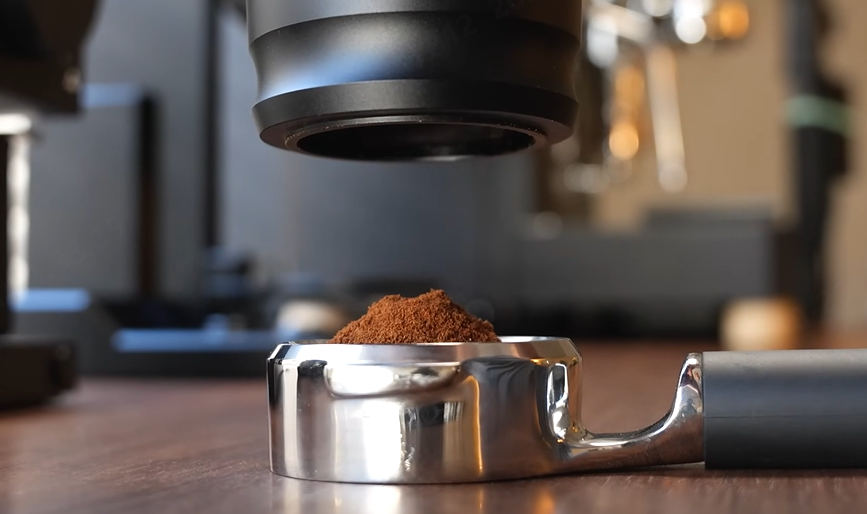
This category consistently overperforms on all platforms. A full real-time pour-over sequence — kettle pouring, coffee blooming, the steady drip rhythm — requires almost no editing and generates strong watch time. For matcha content, the bamboo whisk on ceramic is a distinctive, high-frequency sound that stands out in a crowded feed. For cocktail videos, the crack of ice, the vigorous shake, and the final pour over fresh ice create a satisfying three-act sound structure.
Midnight Snack Videos

The aesthetic here is everything: warm low light, quiet sounds, unhurried movement. Peeling a mandarin, unwrapping chocolate, pouring cereal — these are sounds that feel private and intimate. They work because they are mundane made beautiful. Minimal editing is actually an advantage; the simplicity signals authenticity to ASMR audiences.
Outdoor BBQ

Outdoor shooting introduces new sound possibilities: charcoal crackling, fat dripping onto coals, the deep sizzle of meat on a grate. It also introduces wind noise as a genuine threat. Always use a dead cat windscreen on any microphone you use outdoors. A wireless microphone placed close to the grill while the camera stays at a wider angle — as the LARK A2 setup allows — is particularly well-suited to outdoor BBQ content where cable runs become awkward around an open fire.
International Cuisine
Every cuisine carries a distinct sound identity. Japanese dashi simmering has a completely different character from the aggressive tadka of whole spices hitting hot oil in Indian cooking. Korean kimchi preparation — the squeezing, the packing into jars — is tactile and textured in a way that translates beautifully to ASMR. Italian fresh pasta rolling produces a long, even rhythm that is hypnotic on camera. Lean into these cultural sound signatures as content angles rather than treating them as interchangeable recipes.
Editing Your ASMR Cooking Video
Audio Editing First
Before you touch the visuals, address the audio. In DaVinci Resolve, Adobe Premiere Pro, or Final Cut Pro, normalize your audio levels across clips without compressing away the natural dynamic range. Apply your high-pass filter to remove low-frequency rumble. Use gentle EQ — a slight boost around 3–6 kHz adds crispness to sizzle, chop, and pour sounds without sounding processed.
Leave the silences. Do not fill every quiet moment with ambient music. The standard in ASMR cooking is no background music at all. If you feel the video needs something, a barely audible ambient sound (soft rain, distant café noise) at very low volume is the maximum acceptable addition.
Video Editing for ASMR Pacing
ASMR viewers want to linger. Favor longer takes over rapid cuts. Let the full sizzle play out. Let the pour reach the bottom of the cup before cutting. Use slow motion — 50% or 25% speed — for visually compelling moments: honey drizzling, cheese pulling, melted butter being spooned over a steak.
Color grade toward warm, slightly desaturated tones for cozy baking and midnight snack content. Cleaner, cooler grades work better for café-style drink content. The visual temperature should match the emotional tone of the sounds.
Common Mistakes to Avoid
- Leaving the range hood running. This single mistake ruins more ASMR cooking videos than anything else.
- Placing the mic too far from the sound source. Distant audio sounds thin and uninteresting regardless of how good the microphone is.
- Over-editing audio. Noise reduction applied too aggressively removes the natural character of cooking sounds.
- Using non-stick pans for frying content. Cast iron and stainless steel simply sound better.
- Adding background music by default. It undermines the entire premise of ASMR content.
- Rushing through cooking steps. ASMR requires slow, deliberate movement. Speed creates accidental noise and destroys the pacing that makes these videos work.
FAQ
How do you record ASMR cooking sounds clearly?
Place a sensitive condenser or lavalier microphone 10–20 cm from the sound source, turn off all background appliances before recording, and work in a small space with soft furnishings to minimize reverb.
Do you need a microphone for ASMR cooking videos?
A dedicated external microphone makes a significant difference. Built-in smartphone or camera microphones lack the sensitivity to capture the subtle sounds that define ASMR content. A wireless clip-on mic like the Hollyland LARK A2 is a practical and flexible starting point.
How do you reduce background noise in cooking videos? Physically eliminate noise sources before recording — unplug the refrigerator, turn off the range hood, disable HVAC. Use a microphone with built-in noise reduction as your first line of defense. Apply subtle noise reduction in post-editing at the minimum effective level.
What are the best foods to use for cooking ASMR?
Crispy fried chicken, tempura, sourdough bread, pour-over coffee, steak on cast iron, and fresh pasta are consistently strong performers. The best criterion is a food that produces multiple distinct sounds across its preparation — a multi-stage sound arc that holds attention from start to finish.
Can you make ASMR cooking videos with a smartphone?
Absolutely. Pair your smartphone with an external wireless microphone via USB-C or Lightning, shoot in 4K, and use a clip-on wide or macro lens for close-up shots. The Hollyland LARK A2 is directly compatible with smartphones, which removes the cable management challenge in a tight kitchen setup entirely.
Start With One Sound, Not a Full Production
The most common trap for new ASMR cooking creators is trying to build a full, polished production before understanding what actually works. Start smaller. Choose one recipe with a strong sound arc — a cast iron sear, a pour-over coffee, a hand-rolled pasta. Set up one microphone close to the action. Kill the background noise. Film a single uninterrupted take.
Listen back. You will almost certainly hear something worth building on. That is where ASMR cooking video skills actually develop — not in the equipment research, but in the repeated act of listening closely to what cooking actually sounds like when you give it your full attention.


